
Facial Epilators for Women: What to Check Before You Buy
Facial epilators for women differ in head size, grip mechanism, power source and cleaning. Use this checklist to compare them on specs you can verify.
The Calvedon Team
November 20, 2026 · 6 min read

Facial epilators for women are small handheld devices that grip hairs on the lip, chin and cheeks and pull them out at the root. Before you buy, check five things: the size of the head, how the hair-gripping parts work, the power source, the speed or mode settings, and how the head is cleaned. This guide walks through each check in order, with no brand rankings and no promises about how your skin will look or feel.
Use the table and the decision steps below as a shopping checklist. Every point is something you can verify on a product page or in a manual.
How a facial epilator works
An epilator is a hair removal device that pulls hair from the root instead of cutting it at the surface. Inside the head, small parts such as automatic tweezers or rotating discs close on the hair as the head moves across the face. That mechanism is the main difference from a shaver or a trimmer, which cut hair at the surface.
Body epilators exist too, but their heads are built for legs and arms. A facial model is sized for small facial areas like the upper lip and chin. If you want a device for both face and body, read the head description closely and confirm the maker lists facial use.
If you want a cutting tool instead, our guide to choosing a good electric shaver for women compares foil, rotary and trimmer options, and the Shavers & Precision Trimmers collection lists the devices we stock.
What to check before you buy facial epilators for women
Work through this table from top to bottom. If a product page does not answer a row, keep looking or check the manual.
| Check | What to look for | Why it matters |
|---|---|---|
| Head size | A head described as made for the face, with the width listed in millimeters | A body-sized head is awkward around the lip and chin |
| Mechanism | Tweezer count or disc type stated on the page | Tells you what grips the hair |
| Power source | Rechargeable, battery or corded, plus the charging cable type | Decides where and how you can use it |
| Modes | At least two settings you can switch between | Lets you choose a setting for each facial area |
| Cleaning | A removable cap, a cleaning brush, or a manual that explains head care | Determines your cleaning routine |
| Intended use | Face only, or face and body | Keeps the tool within its stated purpose |
| Box contents | Cable, cap, brush, pouch if listed | Shows what you still need to buy |
Head size and mechanism: tweezers or discs
Head size
The face has curves and tight spots, so a compact epilator head matters more than on the legs. Look for a width given in millimeters and a statement that the head is made for the face. A head that is wide for the lip or chin can be awkward to angle.
Tweezer count and discs
Many product pages list a tweezer count, such as six automatic tweezers. A count tells you how many gripping points are in the head, but it does not describe the whole device, so read it together with head width and mode options. Some facial models use rotating discs instead of a tweezer row. Discs turn as you move the head, which suits curved areas such as the chin.
Do not take any single number as a verdict. Compare the mechanism type, the head width and the stated intended use together.
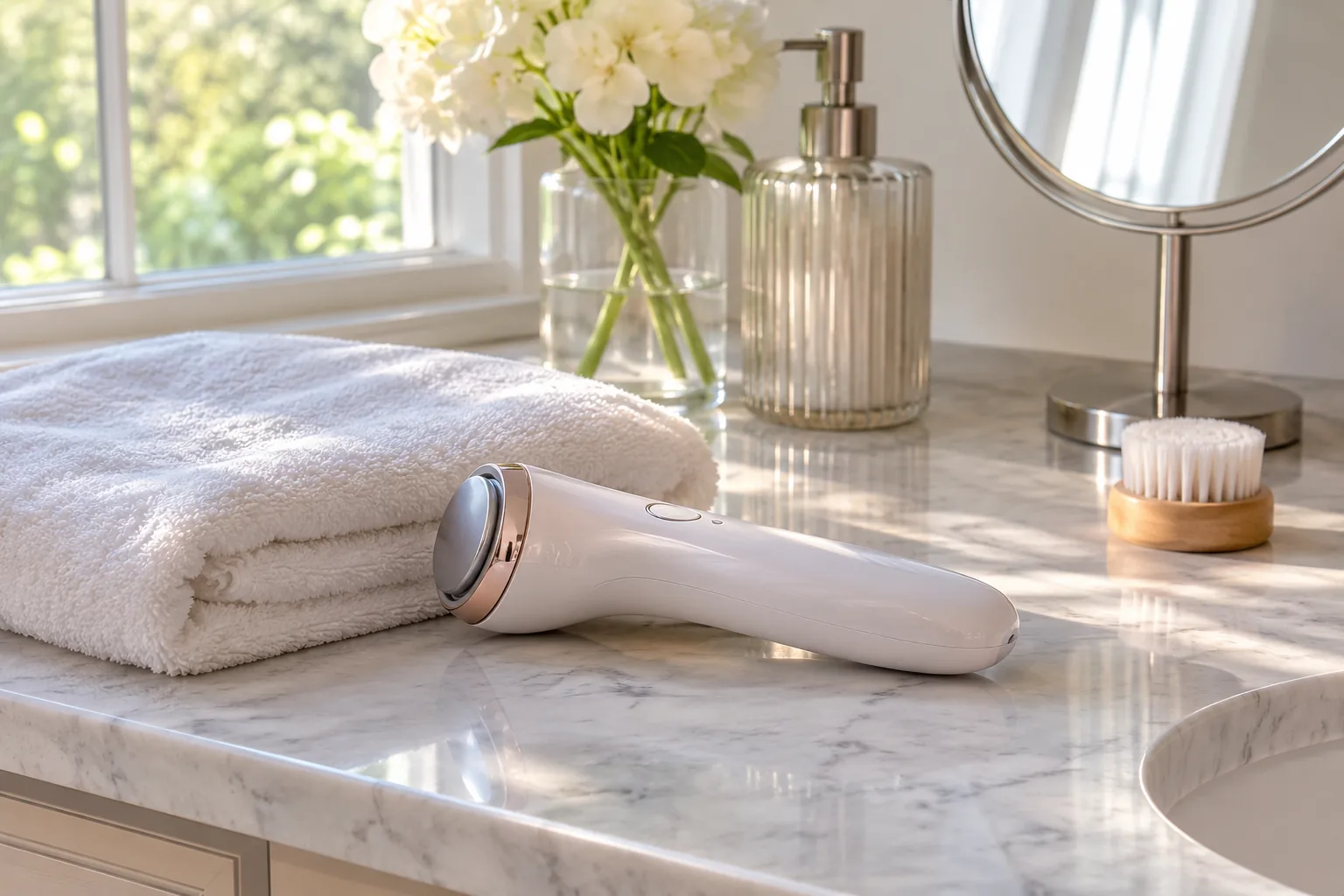
Power source: rechargeable, battery or corded
A cordless epilator lets you stand at a mirror without a cord pulling on the device. A corded one needs an outlet within reach, which can limit where you set up. Battery models need spare cells on hand.
Check three details on the page: how the device charges, what cable comes in the box, and whether the device can run while plugged in. Do not assume any of these. If a page does not say, look for the manual.
One example from our shelves is PetalSilk, a rechargeable facial epilator with 17mm rotating discs. You charge it with the included USB cable, then power it on. The 17mm discs are sized for the face, not the body, and the discs are silver-ion infused, which is a material detail of the discs themselves.
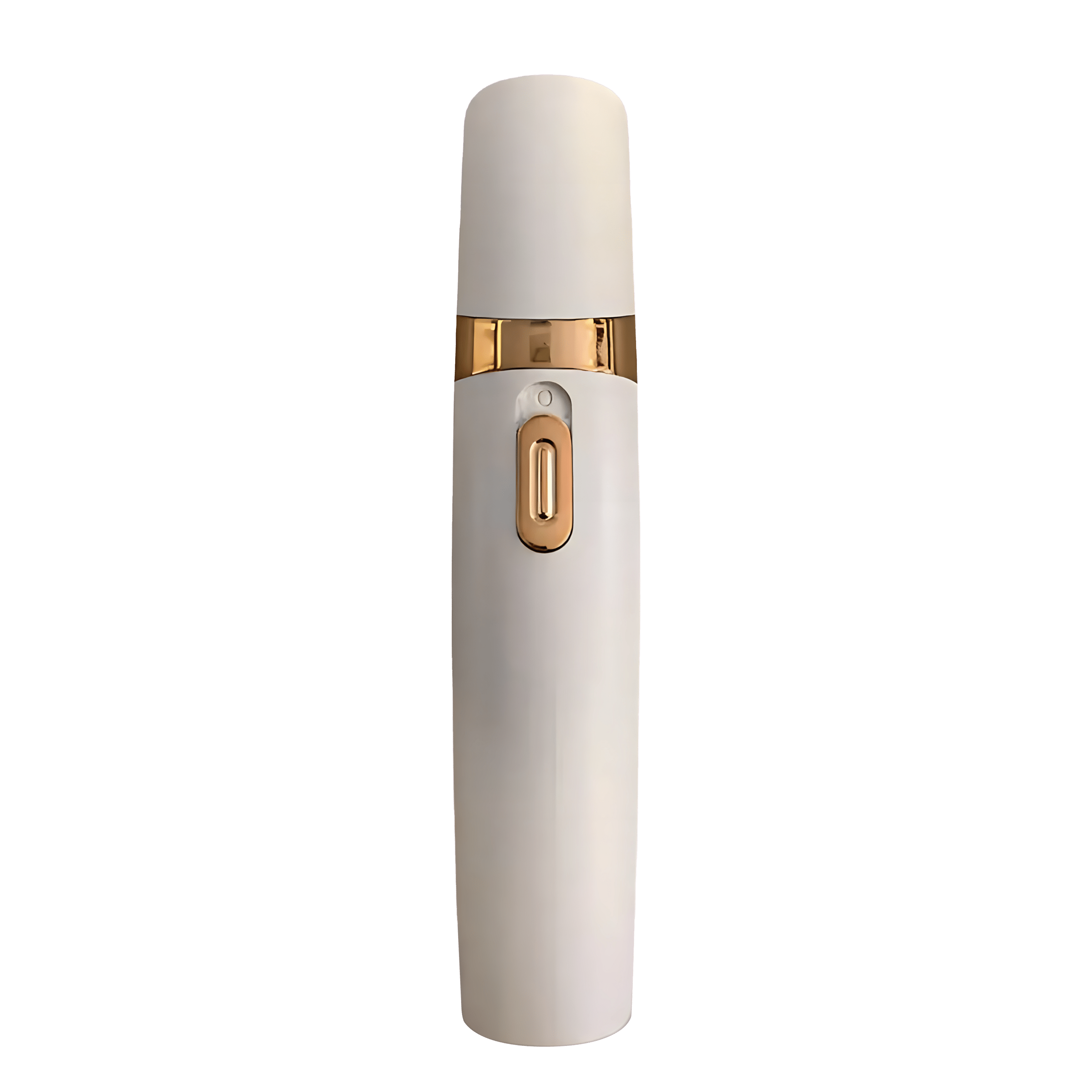 In this guidePetalSilk$79.99View
Modes and facial areas
Cheeks, chin and upper lip are not the same area, so a device with a choice of speed settings or modes gives you a choice per area. PetalSilk offers two modes, Standard and Gentle, so you can pick a setting for everyday areas or for the zones where you want a milder setting.
Whatever model you pick, start from the manual's instructions for the mode and for how long to work on one spot. Glide the head across the area instead of pressing it in. If you have questions about your skin or about hair removal in a particular area, ask a licensed professional before you start.
Where not to use it
Use a facial epilator only where the maker says it is meant for. PetalSilk, for example, is made for the face and not for body use. Skip the bikini line and other areas unless a manual explicitly lists them for that device.
Cleaning and care schedule
A tool that touches your face often needs a routine. Hair and debris collect in the head, so clean it on a fixed schedule and follow the manual for how.
| When | Step |
|---|---|
| Before each use | Check that the head is clean and dry, and that the cap or guard is seated if the device has one |
| After each use | Switch off and unplug, then remove loose hair with the cleaning brush if one came with the device |
| Once a week | Clean around the head as the manual describes, and let it dry fully before storing |
| Between uses | Store it with the protective cap on, in a dry spot away from the sink |
| Before long storage | Check the charge level as the manual advises |
Unplug the device before cleaning. Only rinse the head if the manual says the head can be rinsed. If it does not, use a dry brush. Wait until the head is fully dry before charging or storing it.
Common mistakes when shopping
- Buying a body epilator for the face because the page says "hair removal" without naming facial use.
- Choosing on tweezer count alone and ignoring head width.
- Skipping the power source line, then finding the device needs an outlet or special cells.
- Assuming a cleaning brush is included. Look in the box contents.
- Expecting a product page to settle questions about skin. A page can describe the device; it cannot describe you.
- Trusting ranked lists that name an overall winner without stating the criteria.
For hair that you would rather cut, how to shave your face walks through a step-by-step routine with a shaver.
Decision steps
- Decide which areas you want to work on: lip, chin, cheeks, or also the body.
- Filter for devices that name facial use and list head width in millimeters.
- Read the mechanism line: tweezer count or rotating discs.
- Pick a power source that matches where you will use it.
- Look for two or more modes.
- Confirm the cleaning method, cap and brush in the box contents.
- Read the return terms on the product page before checking out.
Laser and light-based devices are separate categories with their own instructions. Compare them on their own pages instead of mixing the criteria.
Field note
Write down your three must-have specs before you open a product page, for example head width, power source and a cap. Then check each page against that list only.
Frequently asked questions
Keep reading
 Dryers, Irons & Light-Based Hair DevicesRound Brush and Hair Dryer: A Step-by-Step Blowout Routine6 min read
 Shavers & Precision TrimmersHow to Shave Pubic Hair: A Trim-First Routine for Men and Women7 min read
 Dryers, Irons & Light-Based Hair DevicesFlat Irons Hair Straighteners: How to Choose Width, Heat and Plates8 min read