
How to Curl Hair With Straighteners: Step-by-Step Techniques
Clamp a small section, turn the straightener away from your face, and glide down slowly. This guide gives written steps for twist, flat-wave and ribbon curls, plus heat and section sizes.
The Calvedon Team
November 13, 2026 · 6 min read
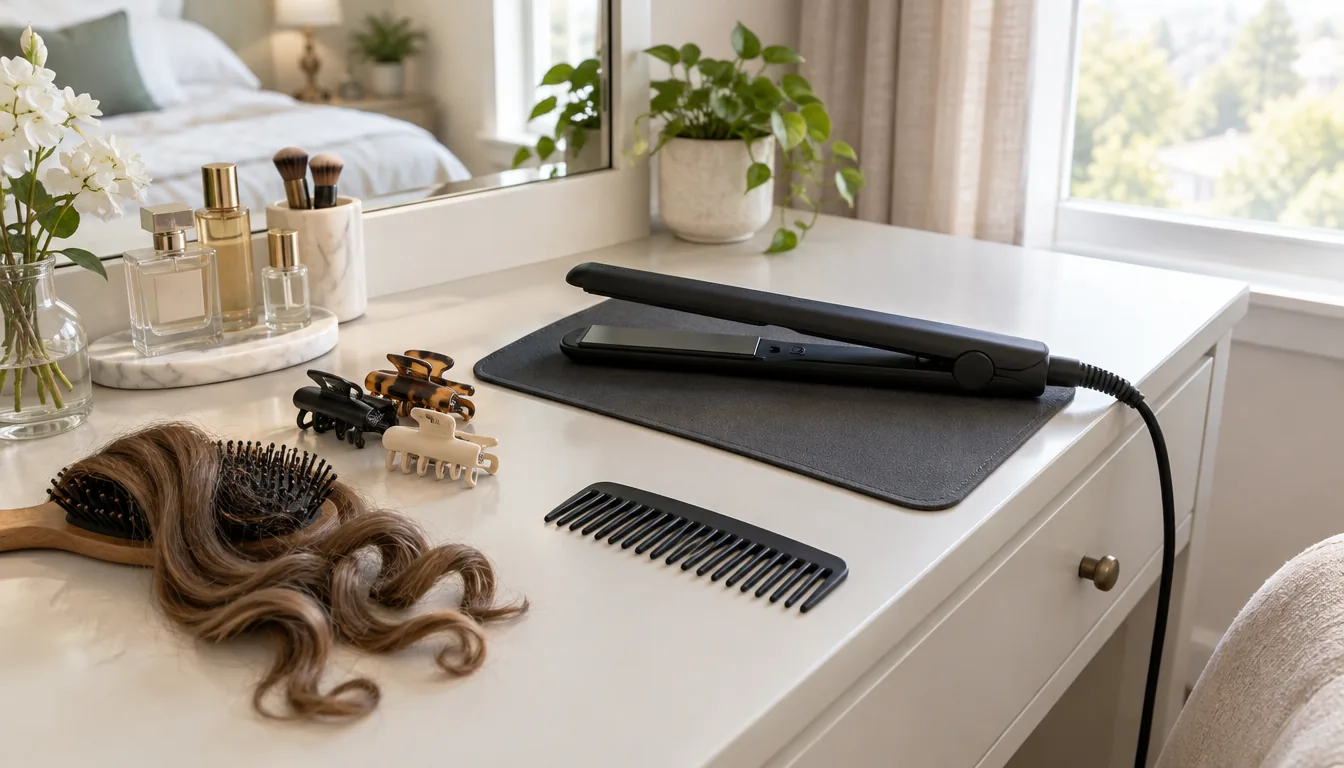
To learn how to curl hair with straighteners, work on dry, sectioned hair with a heat protectant spray, clamp a small section near the root, turn the tool half a rotation, and glide it down at a steady pace. Pick a heat setting that fits your hair type and keep sections narrow so the curl forms evenly. Below are three written methods, twist, flat-wave and ribbon, with section sizes and settings for each.
Straighteners curl hair because the plates shape the strand while it heats. The width of the section, the angle of the tool and the speed of your glide decide whether you get a loose wave or a tight curl.
What You Need Before You Start
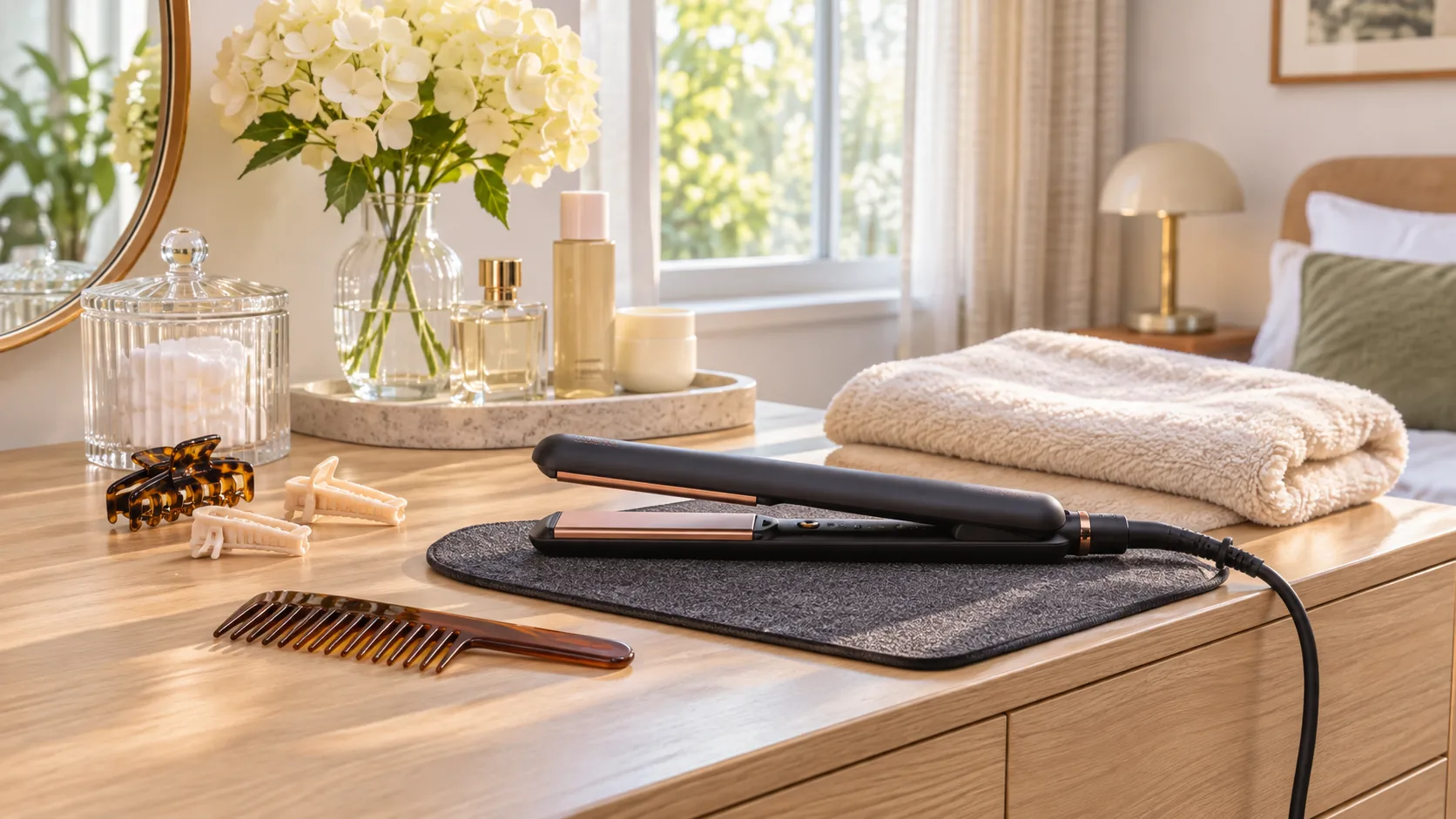
Gather the tools first so you do not stop mid-section with hair cooling in your hand. A flat iron with rounded edges glides through a curl without catching on square corners, so check the plate shape on yours.
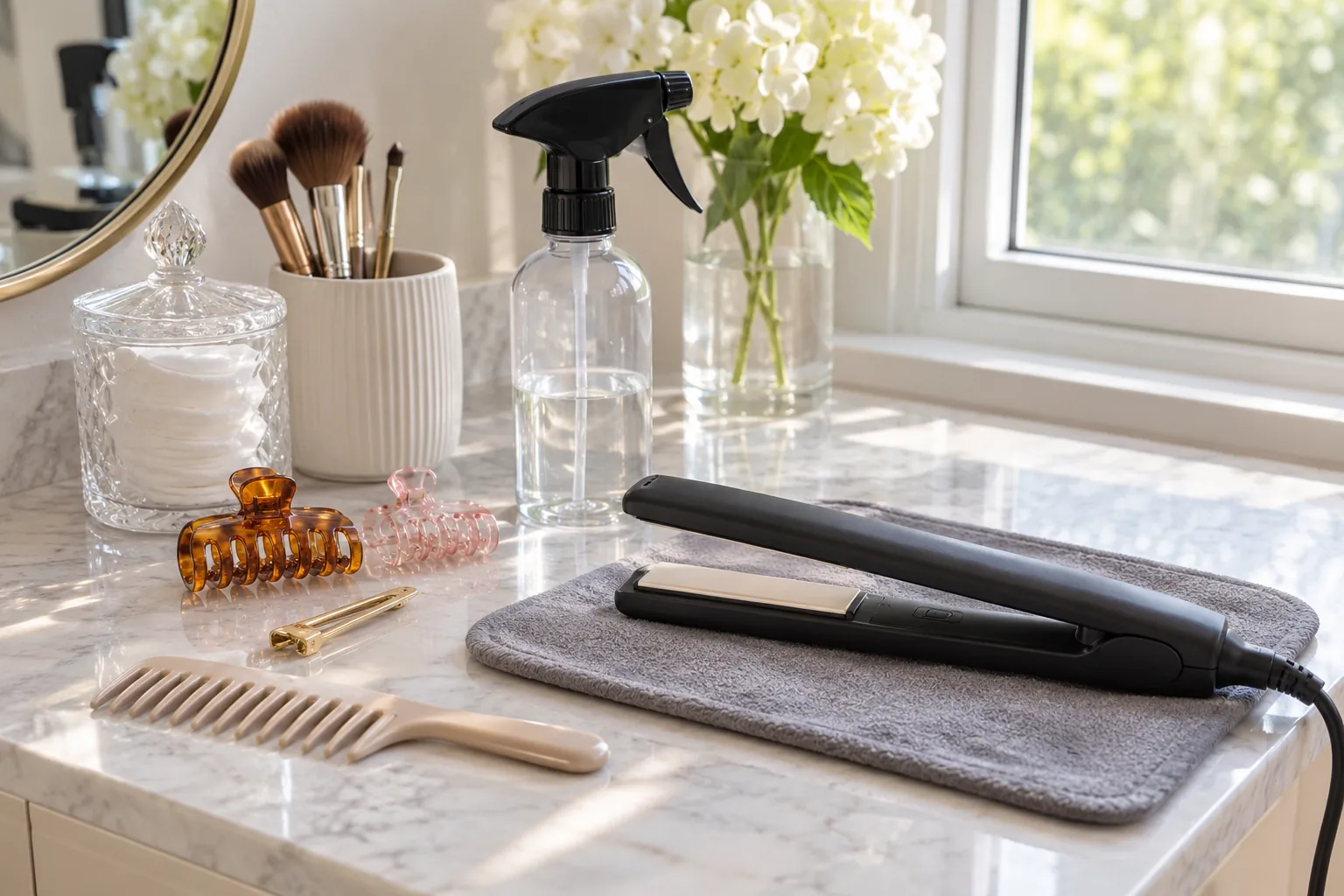
- A straightener with adjustable heat settings and clean plates
- A heat protectant spray, applied as its label directs
- A wide-tooth comb or brush for detangling
- Clips to hold the sections you are not using
- A heat-resistant surface or pouch for the tool when you pause
- A light-hold hairspray for finishing
If you are still choosing a tool, our guide to good hair straighteners covers plate width and heat settings, and titanium vs ceramic plates compares the two plate types by hair type.
Prep and Heat Settings by Hair Type
Start with hair that is fully dry and detangled. Spray a heat protectant spray through each section, comb it in, and let it dry before the plates touch the hair. Clip up the top layers and begin with the lowest layer at the nape.
The StrandVale has four heat settings from 160°C (320°F) to 220°C (430°F), shown on an LED display, so you can pick a level that fits your hair. Fine hair and thick hair rarely suit the same heat, so use the table as a starting point and adjust to what your hair does.
| Hair type | Where to start on the dial | Section width |
|---|---|---|
| Fine or dyed | Low end, around 160°C (320°F) | 2.5 cm (1 in) |
| Medium, wavy | Middle of the range | 2.5 to 4 cm (1 to 1.5 in) |
| Thick or coarse | Upper part, to 220°C (430°F) | 2.5 cm (1 in), since thick hair needs thin sections to heat through |
If a curl does not hold, take a thinner section before you raise the heat. Raising the setting is the last adjustment, not the first.
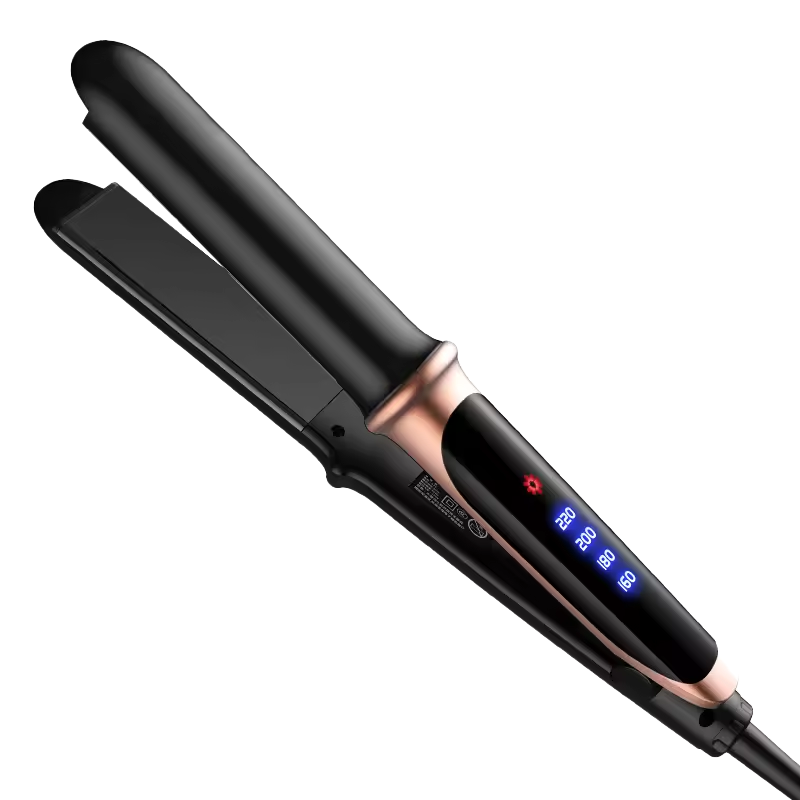 In this guideStrandVale$69.99View
How to Curl Hair With Straighteners: Method 1, the Twist Curl
The twist method gives a spiral shape and suits you if you want to curl with a straightener without rotating the tool. Instead of rotating the tool, you twist the hair.
- Take a 2.5 cm (1 in) section and hold it straight out from your head.
- Twist the section tightly from root to end into a rope, like wringing a towel.
- Clamp the plates near the root of the twisted rope.
- Glide the plates down the rope at a steady pace, without pausing in one spot.
- Let the rope go and let it cool while you move to the next section. Do not pull it straight.
A tighter twist gives a tighter spiral. A loose twist gives a soft bend. Make every section in the same direction for a uniform look, or alternate directions for a casual result.
Method 2: The Flat-Wave
Flat-waves give a bend with no spiral, which suits a relaxed beach look on medium and long lengths.
- Take a 4 cm (1.5 in) section and flatten it between your fingers.
- Clamp the plates about 5 cm (2 in) below the root and turn the tool a half rotation toward the back of your head.
- Move the plates down 5 cm (2 in), clamp again and turn the tool a half rotation the opposite way.
- Repeat the alternating turns down to the ends, then release the section.
- Leave the last 2.5 cm (1 in) of the ends straight for a natural finish.
The alternating turns create the S-shape. Keep the clamp light so the plates leave no hard crease.
Method 3: The Ribbon Curl
Ribbon curls are the rotation method, with a smooth, bouncy loop. It takes a little practice with the tool angle.
- Take a 2.5 cm (1 in) section and clamp the plates about 2.5 cm (1 in) below the root, with the tool held vertically.
- Rotate the straightener a half turn away from your face, so the hair wraps around the outside of the plates.
- Glide the tool down the section slowly and evenly, keeping the rotation steady until the hair slips free at the ends.
- Let the curl drop into your palm and cool in a loop.
- Move to the next section, alternating directions if you want a looser mix.
Turning away from your face opens the face-framing pieces. Turning toward your face closes them, so choose by the look you want. Keep the plates away from your scalp and skin, and follow the manual for your tool.
Field note
Keep the tool moving. A pause in one spot heats that strand longer than the rest and leaves a dent instead of a curl.
Curling Short Hair and Long Hair
Length changes the section size and the technique more than the heat setting.
Short hair
Use thin sections of about 2 cm (0.75 in) and clamp closer to the root. Ribbon curls suit chin-length hair because you only need one half turn. Work from the back forward, and keep the tool angled so the plates stay off your neck and ears.
Long hair
Divide the hair into four to six clipped parts and work from the bottom layer up. Twist curls and flat-waves cover long lengths well, because the repeating motion keeps the wave consistent. If the ends feel dry, curl to just above them and leave them straight.
| Goal | Method | Section width | Hair length |
|---|---|---|---|
| Spiral curls | Twist | 2.5 cm (1 in) | Medium to long |
| Beach waves | Flat-wave | 4 cm (1.5 in) | Medium to long |
| Bouncy loops | Ribbon | 2.5 cm (1 in) | Short to long |
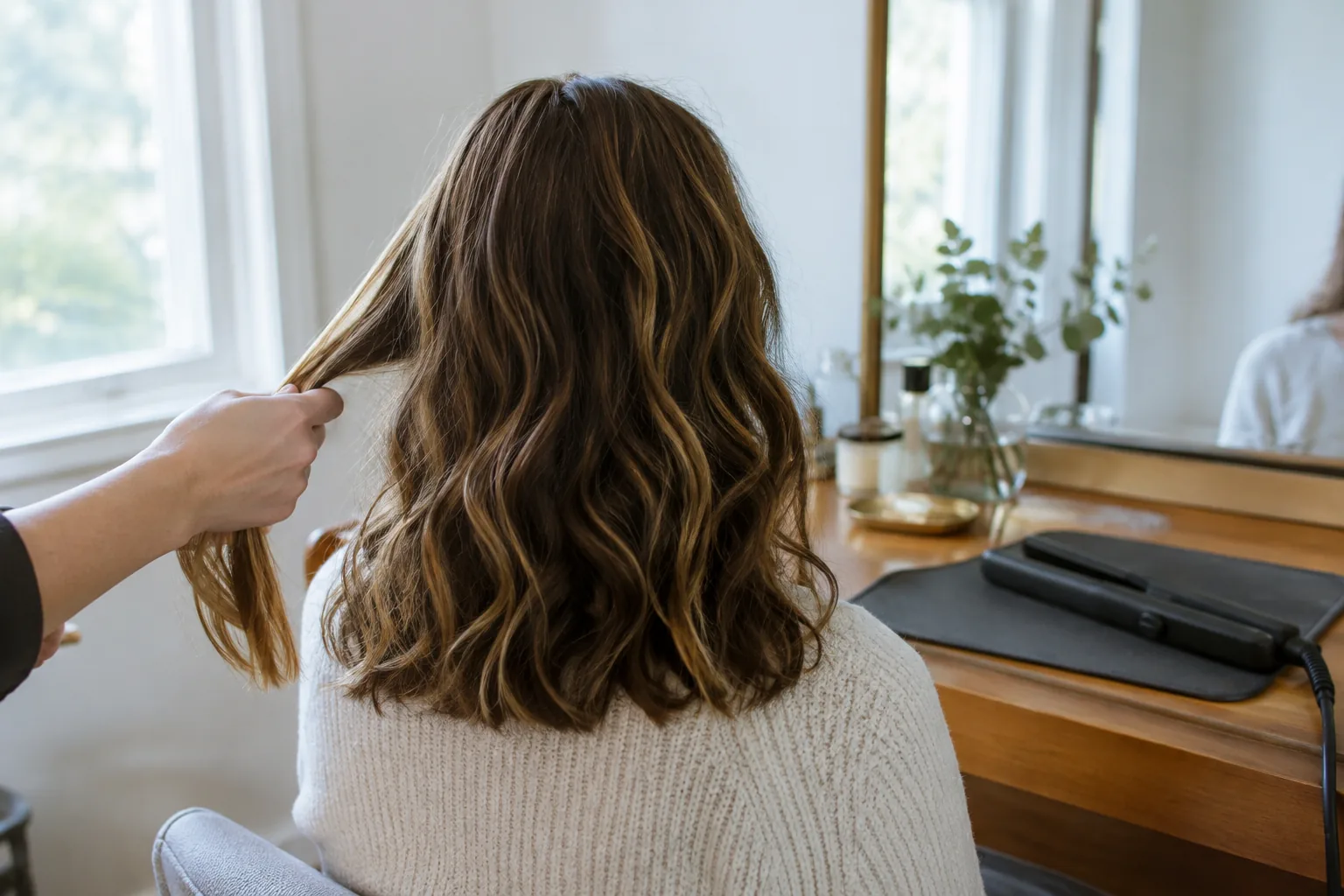
Common Mistakes and Finishing Touches
Uneven results often trace back to a few habits you can adjust.
- Sections that are too wide, so the inner hair never shapes
- Curling damp hair; let it dry fully first
- Skipping the heat protectant spray
- Setting the heat too high for fine hair
- Brushing curls while they are still warm
Once every section is done, let the curls cool completely. Then break them up with your fingers for waves, or leave them as ribbons for definition. Finish with a light finishing spray held at arm length.
Reapplying heat to the same section repeatedly stresses the hair, so make one pass per section and redo only the pieces that fell flat.
Care and Storage After Styling
Switch the straightener off and unplug it, then let it cool fully on a heat-resistant surface before you handle it. Wipe the plates with a soft cloth once they are cool, since leftover product can build up and catch on hair. The StrandVale comes with a heat-resistant storage pouch, and you should only pack it once the plates are cool.
For a wider look at tools that style with heat, browse the dryers, irons and light-based hair devices collection. Practice how to curl hair with straighteners on a weekend before an event so you know which method suits your hair, and keep notes on the heat setting and section size that worked.
Frequently asked questions
Keep reading
 Dryers, Irons & Light-Based Hair DevicesFlat Irons Hair Straighteners: How to Choose Width, Heat and Plates8 min read
 Dryers, Irons & Light-Based Hair DevicesGood Hair Straighteners: Plates, Width and Heat Settings to Check8 min read
 Dryers, Irons & Light-Based Hair DevicesRound Brush and Hair Dryer: A Step-by-Step Blowout Routine6 min read