
Good Hair Straighteners: Plates, Width and Heat Settings to Check
Good hair straighteners come down to plate width, plate material, a temperature range with several steps, and auto shutoff. Use these decision steps, then learn to curl with them.
The Calvedon Team
October 31, 2026 · 8 min read
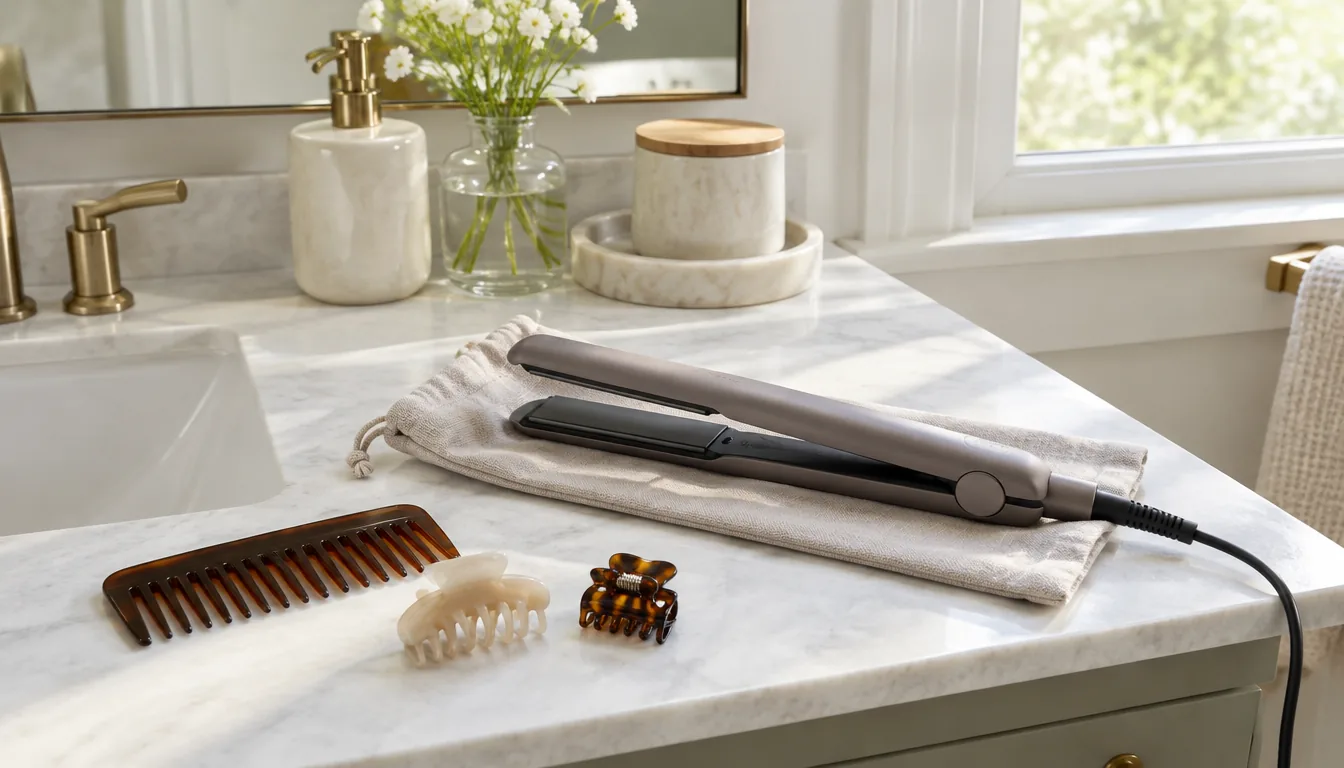
Good hair straighteners match your hair, not a brand name: check the plate width, the plate material, a temperature range with several settings, and an auto shutoff. Narrow plates suit short hair and bangs, wide plates suit long or thick hair, and lower heat settings suit fine hair. This guide sets those checks out as decision steps, then covers how to curl hair with straighteners.
The four checks for good hair straighteners
Spec sheets list a lot of numbers, but four of them decide how a flat iron behaves in your hands. Work through them in this order and you can rule out many models before comparing anything else.
- Plate width: pick a width for your hair length and thickness.
- Plate material: ceramic, tourmaline ceramic, ionic ceramic or titanium.
- Temperature range: several fixed settings, shown on a display, let you pick a level for your hair.
- Safety features: auto shutoff, a heat-resistant rest or pouch, and a cord that moves freely.
Ranked lists often lead with a brand. A brand tells you little about whether the plates fit your bangs or whether the lowest setting is low enough for fine hair. The specs do.
Step 1: Choose plate width by hair length and thickness
Plate width controls how much hair fits in one pass. Plates that are too wide cannot get close to the roots on short hair, and plates that are too narrow turn long, thick hair into a long session of small sections.
| Hair | Plate width to look for | Why it fits |
|---|---|---|
| Short hair, bangs, a pixie cut | Narrow, about 1/2 to 3/4 inch | Reaches close to the roots and handles small sections |
| Shoulder length, fine to medium | Standard, about 1 inch | Works for straightening and for curling |
| Long or thick hair | Wide, about 1.25 to 2 inches | Takes larger sections in each pass |
| Curly or coarse hair | Standard to wide, with floating plates | Plates shift with each section as you glide |
If you also want to make curls or waves, a slim body and rounded outer edges matter more than extra width. A flat, squared edge makes a crease instead of a curve.
Floating plates
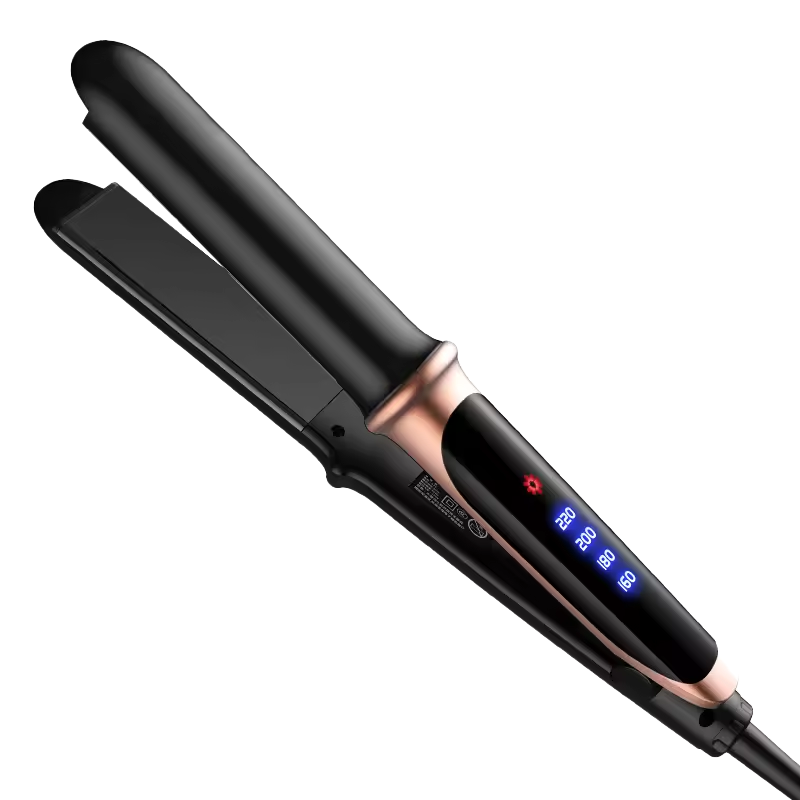
Some plates sit on cushioning and shift as you pull the iron through a section. The StrandVale has cushioned, floating tourmaline ceramic plates that shift with each section as you glide from root to end.
Step 2: Compare plate materials
Plates are ceramic, ceramic with a tourmaline or ionic coating, or titanium. The material changes how heat spreads across the plate and how the plate glides, and each has a trade-off.
| Material | What it is | Check before you buy |
|---|---|---|
| Ceramic | Plates with a ceramic surface | Look for a smooth, even surface with no gaps at the edges |
| Tourmaline ceramic | Ceramic with tourmaline mixed in | Check which heat settings come with it |
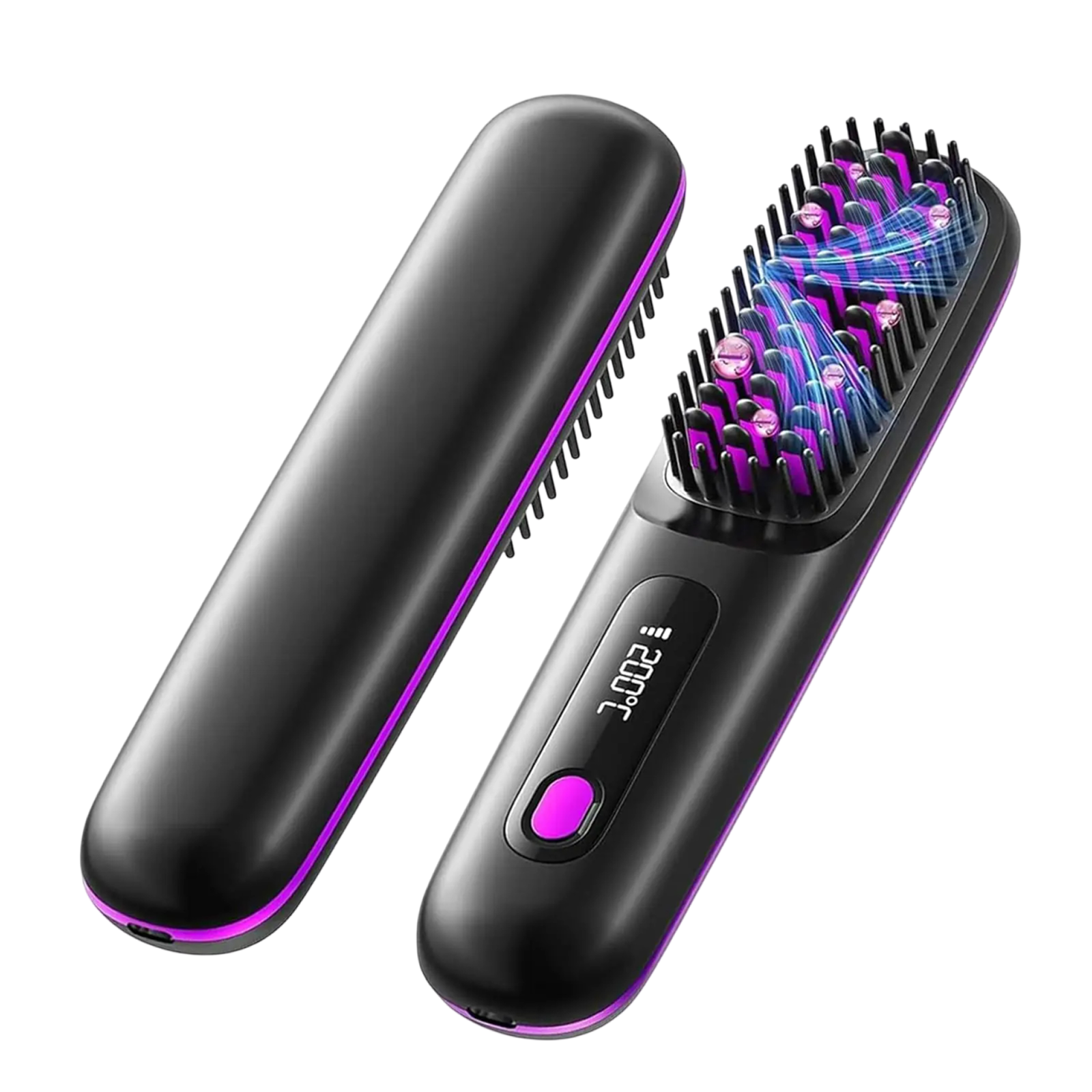
| Ionic ceramic | Ceramic plates with an ionic infusion | Found on straightening brushes such as the SleekWisp |
| Titanium | Metal plates | Check the lowest setting, since fine hair needs a low one |
On the question of ceramic or titanium for your hair: ceramic is a starting point for fine, thin or dyed hair, while titanium is worth a look if your hair is thick and coarse and you need a high setting. Our article on titanium plate flat irons versus ceramic goes through each hair type in more detail. For the ionic side of the story, see what an ionic hair dryer is.
Step 3: Match the temperature range to your hair type
A flat iron with one fixed heat gives fine hair and coarse hair the same temperature, which is how heat damage starts. Look for a range with several steps and a display that shows the setting. Start at the lowest setting that straightens a test section, and raise it one step at a time. Hair texture matters here, so judge each step by how the section responds.
| Hair type | Where to start | Notes |
|---|---|---|
| Fine, thin or dyed | Low end of the range | Make one pass per section |
| Normal or wavy | Middle of the range | Raise one step if the section does not smooth out |
| Thick, coarse or curly | Middle to upper end of the range | Use smaller sections instead of jumping straight to the top setting |
As an example of temperature settings, the StrandVale has four heat settings from 160°C to 220°C (about 320°F to 428°F), shown on an LED display. The SleekWisp straightening brush has three heat levels for fine, normal or coarse hair, also shown on an LED display.
Wet hair and steam
Do not use a flat iron on wet hair unless the manual says the tool is made for it. Water on hot plates can damage the strand. Dry hair fully, or use a model whose manual lists towel-dried hair. The StrandVale has a steam-vent design and can be used on towel-dried or dry hair.
Whether steam-vent plates suit your hair is not something a spec can settle. Take the vent as a feature that fits a routine, and use a lower setting on damp hair.
Step 4: Check heat-up, auto shutoff and cord
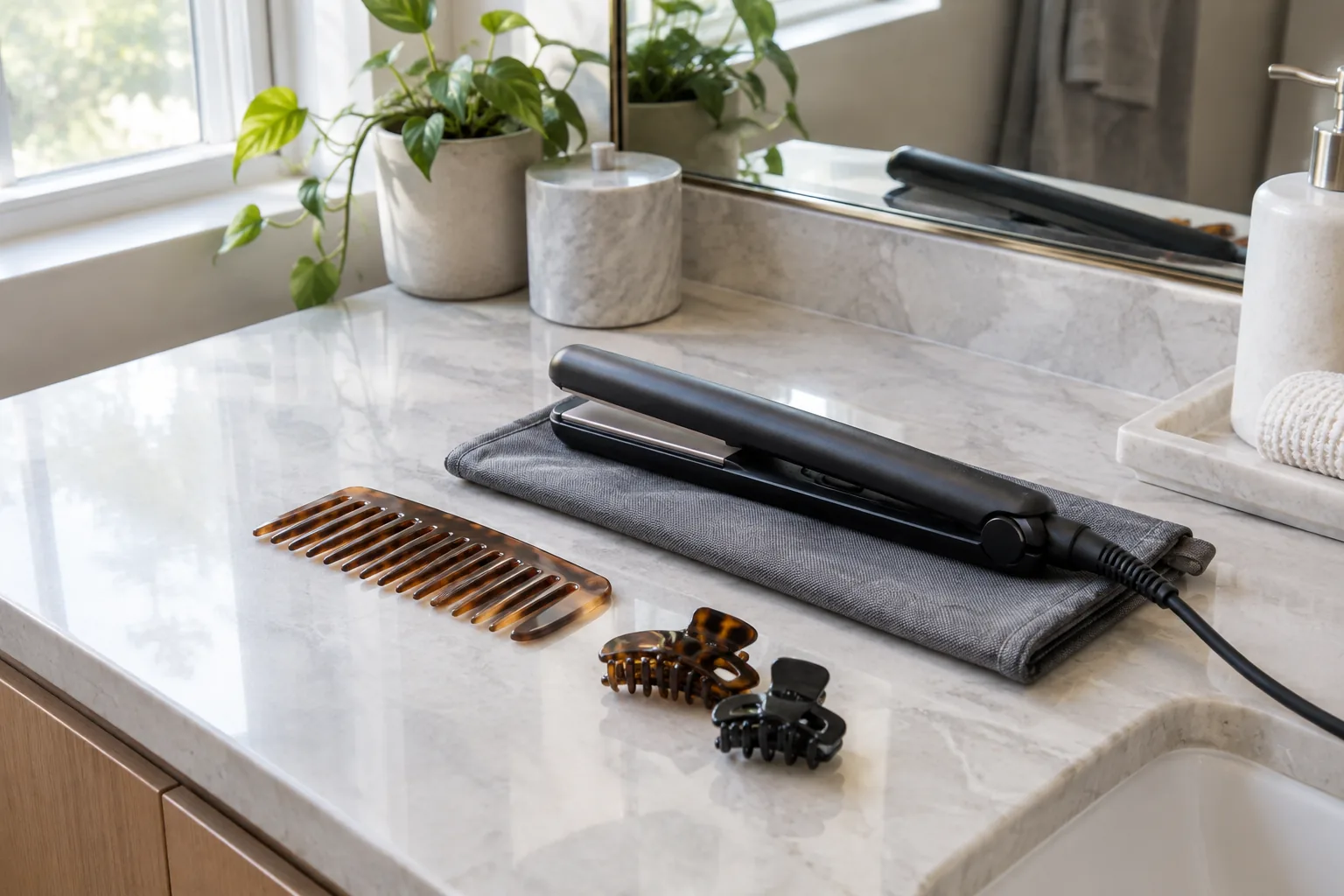
These are the safety and convenience details that spec lists skip. Read the product page and the manual for each one.
- Auto shutoff: check whether the iron switches itself off after a period of no use, and what that period is.
- Heat-up: look for a display or indicator that shows when the plates reach the chosen setting. Wait for it before the first pass.
- Cord: a swivel cord moves with your hand. A short, stiff cord limits your reach in the bathroom.
- Rest and storage: a heat-resistant pouch or rest gives you somewhere to set the iron down. Let the plates cool before packing.
- Voltage: if you travel, check whether the tool supports universal voltage and whether you need only a plug adapter.
Always follow the manual, keep hot plates away from your scalp, face and the cord, and unplug the iron after use. Ask a stylist if you are unsure about the right heat for dyed or chemically straightened hair.
Two tools to compare against the checklist
Our collection of dryers, irons and light-based hair devices has more options. These two cover the plate and heat-setting checks, so they work as a reference when you compare good hair straighteners. Check the product pages for auto shutoff and cord details.
The StrandVale is a hair straightener with tourmaline ceramic plates, four heat settings and universal voltage. It suits you if you want a range of temperature steps, floating plates and a tool for home and travel. It comes with a user manual and care guide and a heat-resistant storage pouch.
 In this guideStrandVale$59.99View
The SleekWisp is a cordless straightening brush with ionic ceramic plates and an anti-scald comb. It charges through USB Type C, weighs 210 grams (about 7.4 ounces) and has three heat levels. Choose it if you prefer a brush format, work near the roots, or style away from an outlet.
 In this guideSleekWisp$49.99View
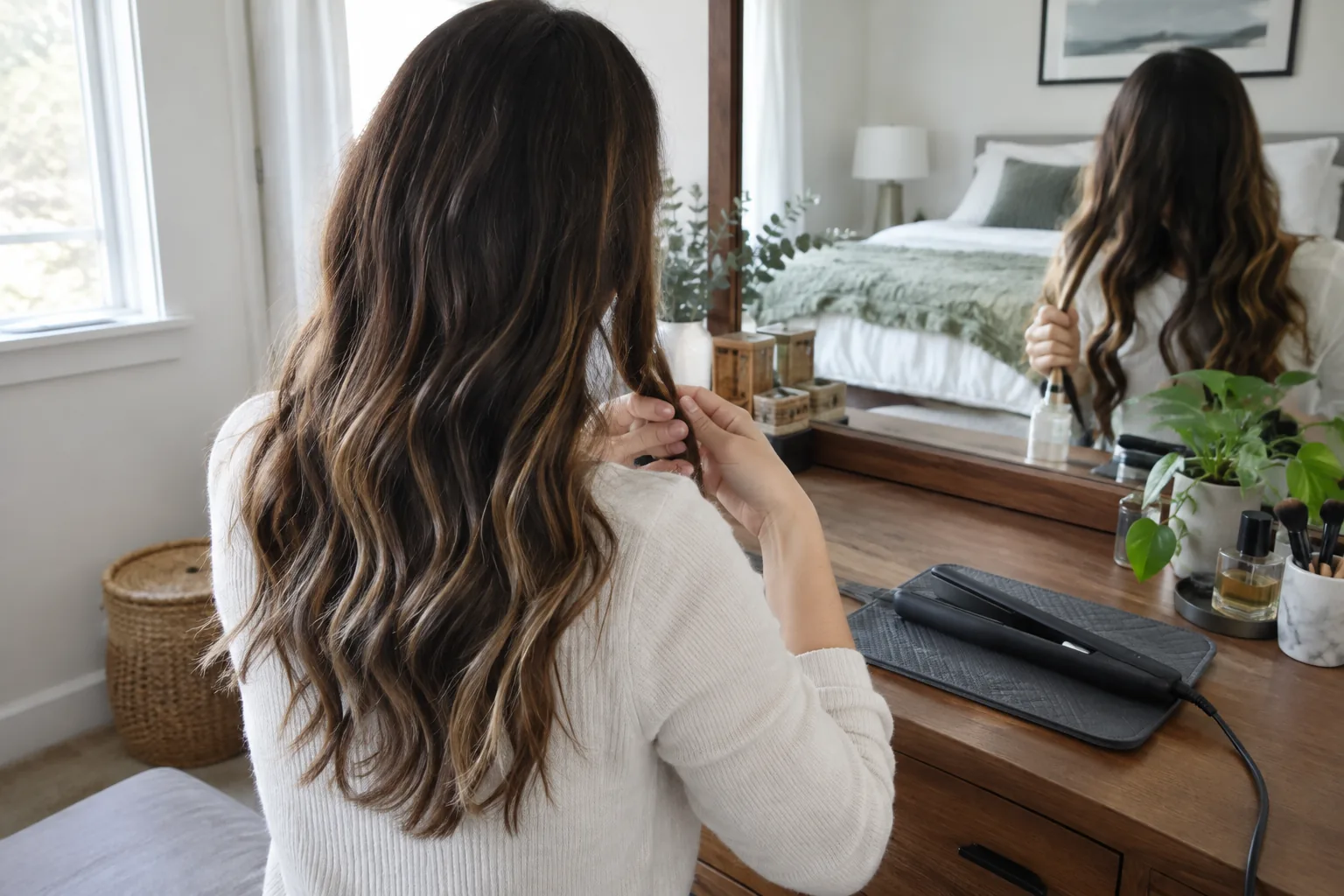
How to curl hair with straighteners
You can curl hair with straighteners if the plates have rounded outer edges and a slim body. Wide, boxy plates leave a bend instead of a curl. The method below works for waves and loose curls.
- Start with dry, brushed hair. Use a heat protectant if you have one.
- Choose a low to middle setting for your hair type. Curls do not need the top setting.
- Divide the hair into sections about 1 to 2 inches wide and clip away the rest.
- Clamp the plates on the section near the roots, with the iron held flat and the plates closed.
- Turn the iron away from your face by a half turn, so the hair wraps around the outside of the plates.
- Slide the iron down the section slowly and steadily, keeping the turn, until the hair leaves the plates.
- Let each curl cool in place before touching it, then repeat on the next section.
- Brush the curls out with your fingers for waves, or leave them as they are for defined ringlets.
To change the look, turn the iron the opposite direction on alternate sections for a mixed, natural pattern. A steady, slower slide gives tighter curls, while a looser pace gives waves. Keep fingers away from the plates, and use a comb to guide the end of the section.
Field note
Test any new setting on a hidden underlayer section first. If the hair does not hold a curl, raise the heat by one step or use a smaller section instead of going back over the same strand.
Common mistakes and a care schedule
These habits are worth avoiding, whichever of the good hair straighteners you choose.
- Using the highest setting on fine hair.
- Straightening hair that is still damp, unless the manual allows it.
- Working with sections too wide for the plates.
- Making repeated passes over the same strand.
- Leaving a hot iron on a bathroom counter or bed.
Hair type changes the routine too. For frizz, use smaller sections and a middle setting. For thin hair, choose a slim iron and a low setting. For curly or textured hair, use a heat protectant and floating plates, and pass slowly through detangled hair.
Care schedule
| When | What to do |
|---|---|
| After each use | Unplug, let the plates cool, then store in the pouch or on a heat-resistant surface |
| Weekly | Wipe cooled plates with a soft, slightly damp cloth, following the care guide |
| Monthly | Check the cord for kinks or fraying and the plates for residue |
If you use a heated brush as well, see how to clean hair brushes, including heated and thermal brushes for the cleaning steps.
Frequently asked questions
Keep reading
 Shavers & Precision TrimmersHow to Shave Your Face: A Step-by-Step Routine8 min read
 Dryers, Irons & Light-Based Hair DevicesHow to Clean Hair Brushes, Including Heated and Thermal Brushes7 min read
 Dryers, Irons & Light-Based Hair DevicesGoing to Sleep With Wet Hair: A Timed Pre-Bed Drying Routine6 min read