
Going to Sleep With Wet Hair: A Timed Pre-Bed Drying Routine
Going to sleep with wet hair leads to tangles, frizz and breakage. Towel-dry, dry on a moderate setting, check the roots and nape, and use a plan for nights with no time.
The Calvedon Team
October 24, 2026 · 6 min read
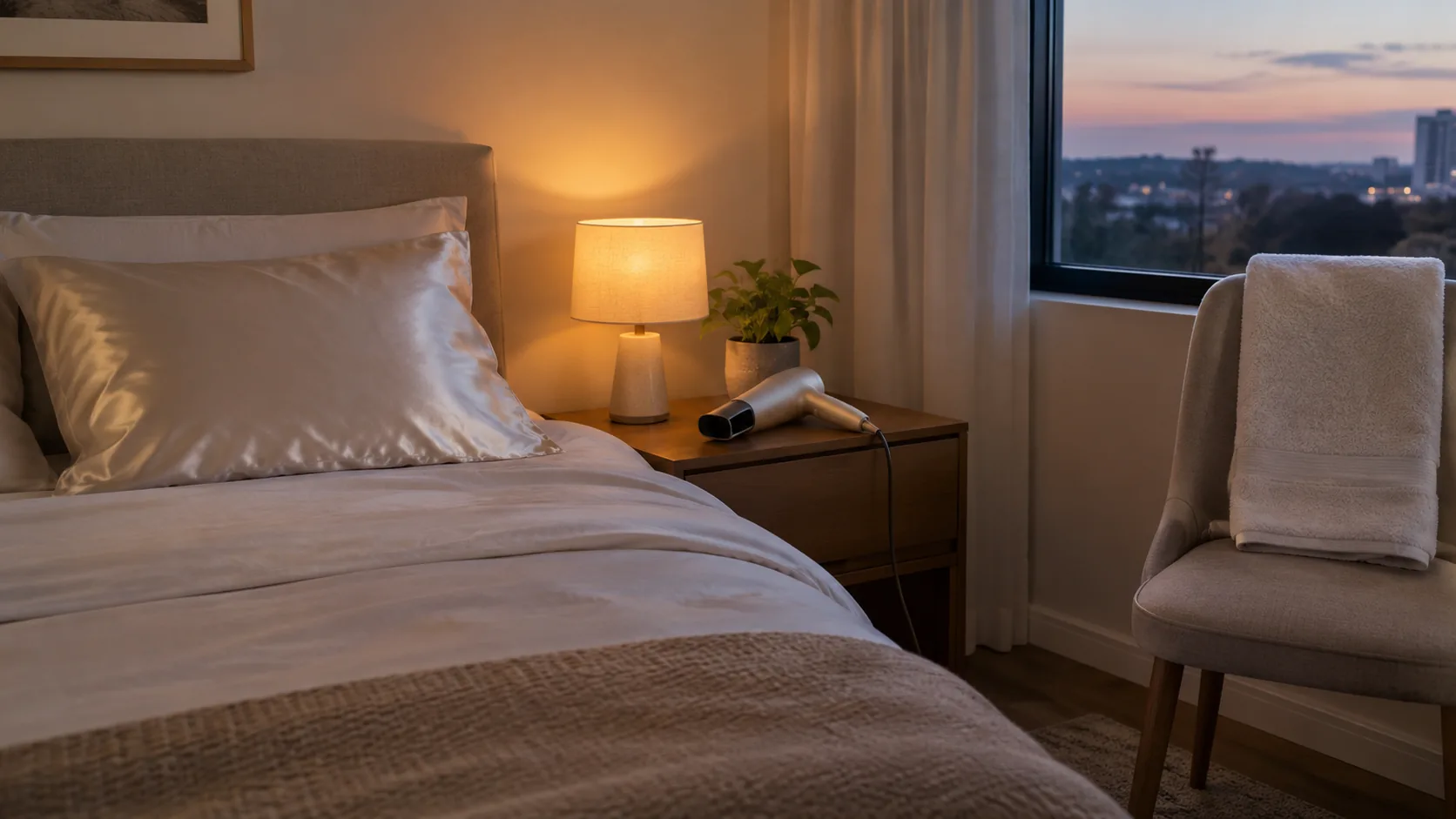
Going to sleep with wet hair is a hair-care problem more than anything else: damp strands rub against the pillowcase, tangle, and wake up frizzy or flattened on one side. The fix is to get hair mostly dry before you lie down, using a towel, a moderate heat setting, and a simple check at the end. This guide gives you an order of steps, settings by hair type, and a plan for nights when you have no time.
It covers hair condition only. For health or scalp questions, ask a healthcare provider.
What wet hair does overnight
Hair swells when it is wet, and it is more flexible and easier to stretch in that state. Turning on a pillow adds friction, which can roughen the outer surface of each strand. The result in the morning is often tangles, frizz, and breakage along the ends.
Shape changes too. Hair that dries while pressed against a pillow sets in that position, so you can wake up with kinks, a flat side, or waves in odd places. Curly hair can lose its pattern and look puffy.
For the hair itself, an occasional damp night is manageable if you prepare it, as the sections below show. Making it a habit asks more of your strands.
A pre-bed drying routine, step by step
Squeezing out as much water as you can with a towel first lets you keep the dryer on a moderate setting. Work through the steps in this order.
| Step | What to do | Why it matters |
|---|---|---|
| 1. Squeeze | Press sections of hair into a towel from roots to ends. Do not rub. | Rubbing roughens the surface and adds frizz. |
| 2. Detangle | Use a wide-tooth comb, starting at the ends and working up. | Wet hair stretches, so comb with light strokes. |
| 3. Add leave-in | Smooth a small amount of leave-in conditioner through the lengths. | Adds slip while you detangle. |
| 4. Section | Clip the top layer away and dry the underneath first. | The inner layers hold water longest. |
| 5. Dry | Move the dryer steadily through each section on a medium heat setting. | A moving dryer avoids hot spots. |
| 6. Cool | Finish with a cool setting or cool-shot button if your dryer has one. | Hair sets in place as it cools. |
| 7. Check | Run the dry-enough check below. | Finds damp pockets before bed. |
The towel method
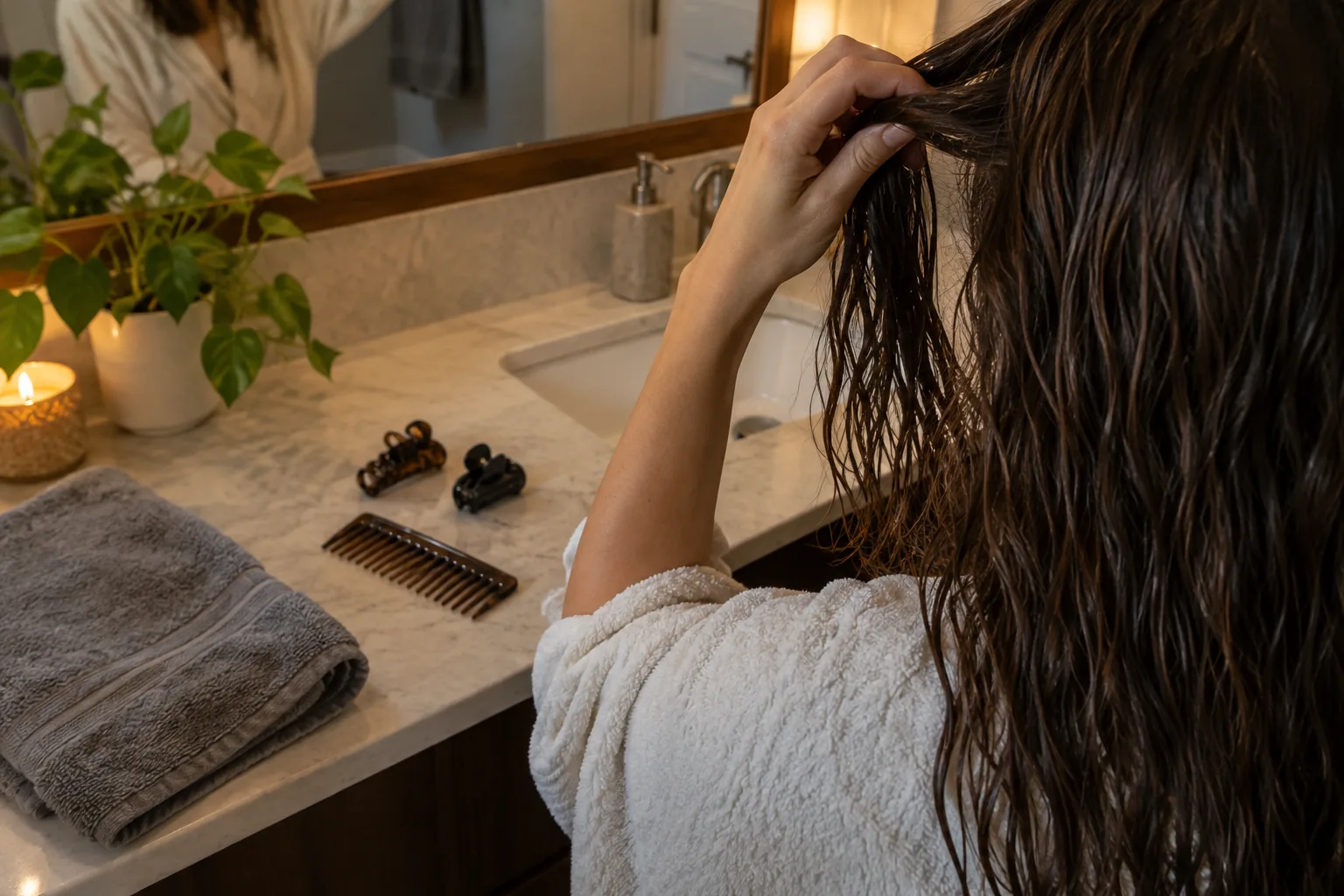
A microfiber towel or an old cotton T-shirt holds water without the loops of a regular terry towel catching on strands. Wrap, squeeze, and release. Repeat on the lengths until the dripping stops and the hair feels damp rather than wet.
Timing the routine around bedtime
Drying time varies with length, thickness and hair type, so plan the evening backward from your wind-down time instead of timing each step.
- Wash earlier in the evening, well before you plan to be in bed.
- Towel-dry and detangle right after you step out, while the hair is still wet.
- Add leave-in and section the hair.
- Dry the roots and nape first, then the lengths, so the dryer is off before your wind-down time begins.
- Finish with the cool step.
- Do the dry-enough check last, and go back to any damp spot it finds.
Dryer heat and airflow settings by hair type
Heat and airflow do different jobs. Airflow moves water off the hair, while heat evaporates it but strains strands when it is high. A dryer with separate heat and speed controls lets you keep the heat moderate and lean on airflow.
| Hair type | Heat | Airflow | Tip |
|---|---|---|---|
| Fine or straight | Low to medium | Medium | Lift roots with your fingers as you dry. |
| Thick | Medium | High | Work in small sections. |
| Wavy | Low to medium | Low to medium | Use a diffuser to limit frizz. |
| Curly | Low | Low | Scrunch lightly and skip the brush. |
| Colored or damaged hair | Low | Medium | Hold the dryer farther from the ends. |
Keep the dryer a short distance from your hair and point the nozzle down the hair shaft, from roots to ends. That direction lays the outer surface flat. Always follow the manual, and unplug the dryer once you are done.
Where an ionic dryer fits
An ionic dryer adds negative ions to the airflow while it blows warm air. To see how that differs from ceramic, read our explainer on ionic vs ceramic dryers.
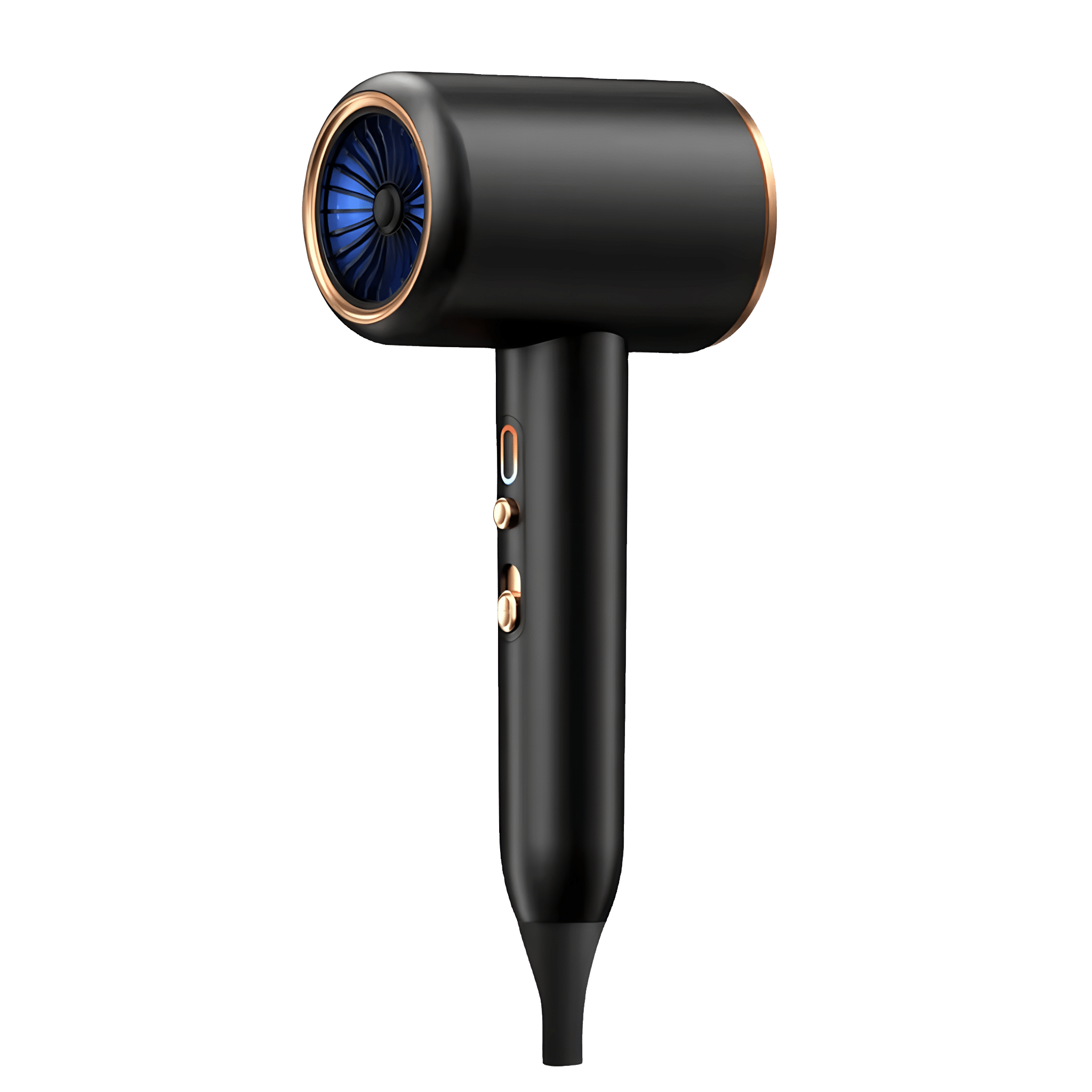
Ionavia is an ionic dryer with an 18,000 RPM brushless motor and several heat and speed settings, so you can pick the combination from the table above. It includes a precision concentrator nozzle for focused airflow, and the compact body folds down and has a dual-voltage design for use at home or on the road.
 In this guideIonavia$118.99View
How to tell your hair is dry enough for bed
Hair that feels dry on the surface can still hold water underneath, especially near the nape and the roots. Use this checklist before you turn off the light.
- Press a section of hair against your cheek or inner wrist. It should not feel cool or clammy.
- Lift the hair at the nape and check the underlayer, since it dries last.
- Squeeze a thick section in your palm. No moisture should transfer to your skin.
- Look at the ends. Damp ends clump together, while dry ones separate.
- Wait a moment after drying. If hair still feels cool, the warm air may have moved only the surface moisture.
Thick, long, or curly hair holds water longer than short or fine hair. For these types, plan more time for the roots and nape. Slightly damp hair is an acceptable stopping point only if you prepare it, as covered next.
Field note
Dry the roots and nape first, then the ends. Roots hold water longest, and the ends can finish with air at a lower setting.
Going to sleep with wet hair on nights with no time
Some nights the full routine is out of reach. In that case, limit friction and keep the hair contained so it does not set in an awkward shape.
- Towel-dry with the squeeze method and detangle with a wide-tooth comb.
- Apply a small amount of leave-in conditioner to the ends.
- Spend the time you have on a dryer's airflow, concentrating on the roots and nape.
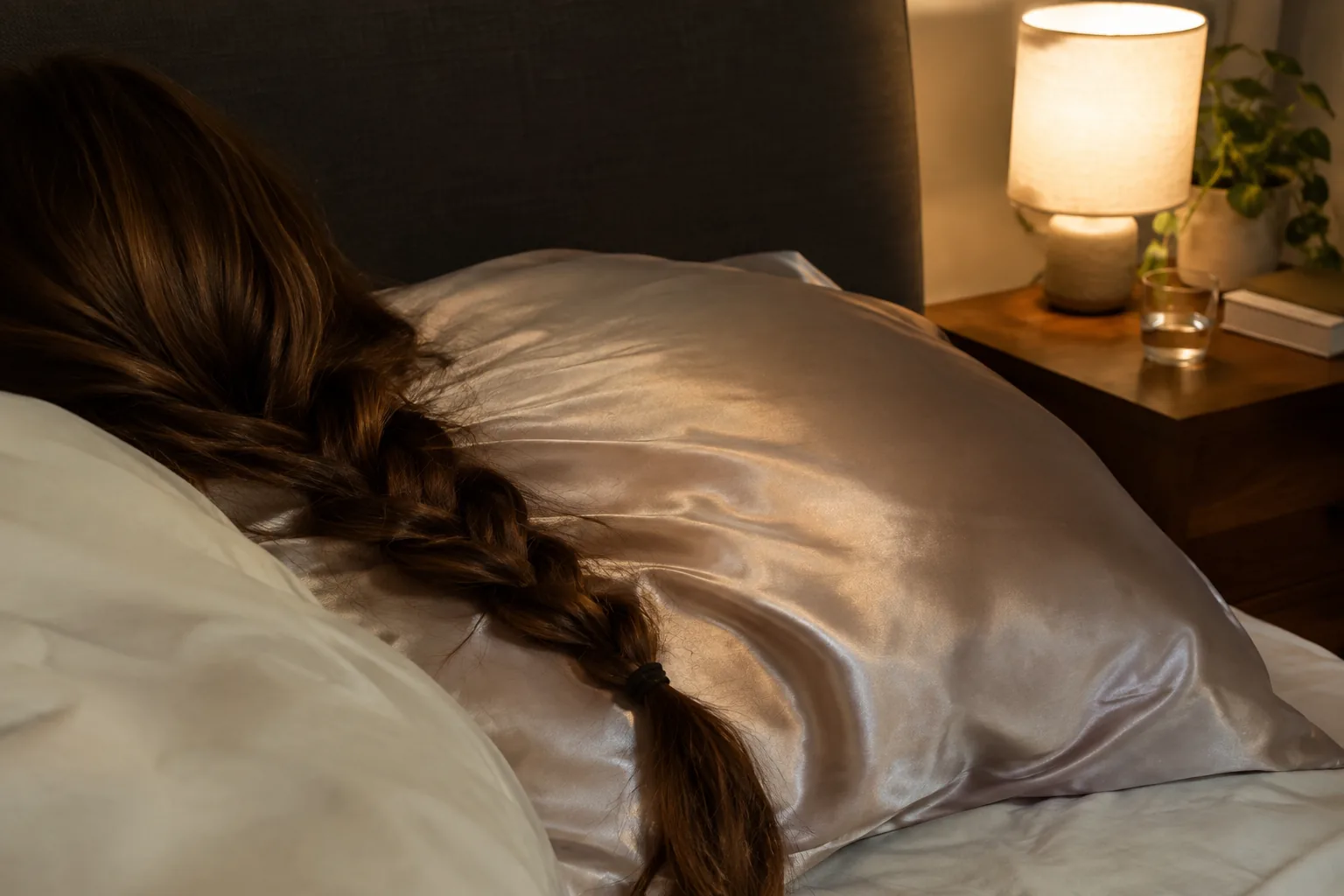
- Loosely braid long hair, or twist it into a loose bun on top. Skip tight elastics.
- Use a silk pillowcase or a satin bonnet to limit friction.
- Put a dry towel over the pillow if the hair is still damp.
Resetting your hair the next morning
If you did sleep on damp hair, mist the lengths lightly with water or a leave-in spray, then loosen any tangles with a wide-tooth comb, starting at the ends.
Flat roots or kinks can be reshaped with a short pass of low heat and moderate airflow. Wash the pillowcase on your usual schedule.
Drying and styling with one handle
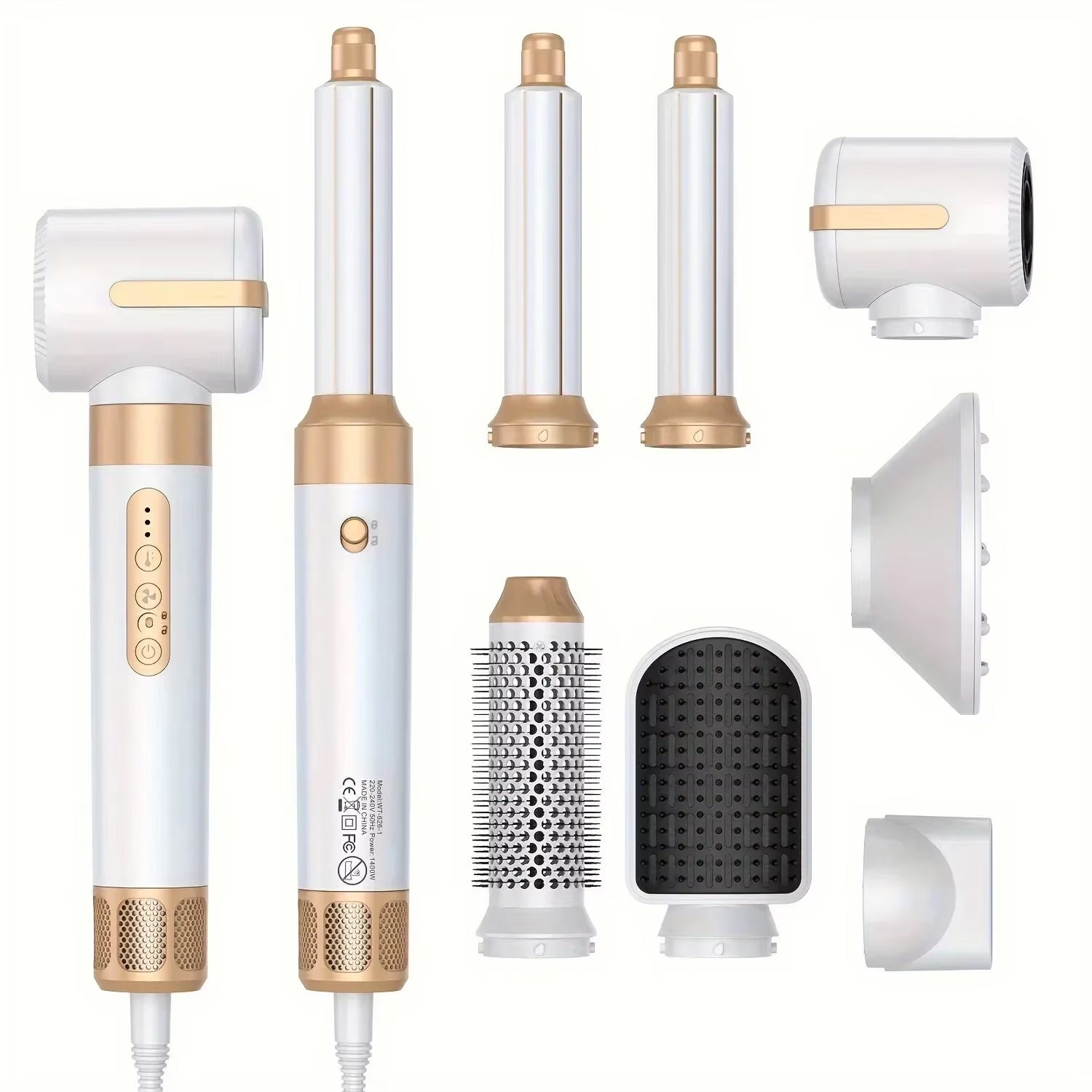
If you also style, a dryer with swappable heads keeps drying and styling on one handle. Luxeva is a 7-in-1 ionic styler and dryer with a brushless motor and seven interchangeable attachments, including a diffuser and a concentrator nozzle. It has heat settings and a cool-shot button for finishing a style, which matches step 6 above.
 In this guideLuxeva$149.99View
Common mistakes to skip
- Rubbing hair hard with a towel, which roughens the surface.
- Brushing soaking-wet hair with a paddle brush instead of combing from the ends.
- Using the highest heat to rush the job, which strains the strands.
- Holding the dryer in one spot instead of moving it.
- Tying wet hair in a tight ponytail, which can leave a crease and stress the hair at the elastic.
- Skipping the cool step, so hair does not hold its shape.
For more dryers and tools, browse the dryers, irons and light-based hair devices collection.
Frequently asked questions
Keep reading
 Dryers, Irons & Light-Based Hair DevicesWhat Is an Ionic Hair Dryer? Ionic vs Ceramic Explained7 min read
 Dryers, Irons & Light-Based Hair DevicesTitanium Plate Flat Iron vs Ceramic: Which Suits Your Hair Type8 min read
 Shavers & Precision TrimmersShaving Head With Electric Shaver: A Step-by-Step Routine8 min read