
Shaving Head With Electric Shaver: A Step-by-Step Routine
Trim long hair first, shave on a clean scalp in short passes, then clean the heads. This guide covers wet vs dry, direction by zone, missed spots and care.
The Calvedon Team
October 17, 2026 · 8 min read

Shaving head with electric shaver comes down to four moves: trim long hair short, start on a clean scalp that is dry (or prepared for wet use only if your manual allows it), shave in small sections with the first pass going with the hair growth, then clean the heads. Go across or against the grain only where stubble remains, and keep light pressure throughout.
This guide gives you one checklist for your first shave and for every shave after it. It covers the wet vs dry choice, direction by zone, how to check for missed spots, and what to do with the shaver afterward.
The routine at a glance
Use this table as the short version. The sections below explain each step.
| Step | What to do | Why it matters |
|---|---|---|
| 1. Check the device | Charge it, read the manual, check the heads (and foil screen, if your shaver has one) for damage | Tells you whether wet use is allowed |
| 2. Reduce length | Use a trimmer or guide comb on long hair | Rotary heads are meant for short stubble, not long hair |
| 3. Prep the scalp | Wash and dry fully, or prep as the manual describes for wet use | Clears oil and product that can clog the heads |
| 4. Shave in sections | Front, top, sides, then back | Keeps your coverage organized |
| 5. Check by touch | Run your hand over each zone | Shows missed patches |
| 6. Clean and store | Rinse or brush the heads, dry, cover | Keeps the heads ready for next time |
Choose the right shaver type first
Electric shaver or razor for a bald head
A blade razor (safety or cartridge) needs water, cream or gel, and a steady hand around the curves of the skull. An electric shaver keeps the cutting parts behind the heads or a screen, so the setup is shorter and you can start with a dry scalp.
Some people prefer a razor for the finish and the ritual of a close shave. You can also keep both: the electric shaver for routine upkeep and a razor for an occasional finishing pass. If you are new to head shaving, start with the electric shaver and add other tools later.
Foil or rotary
Electric shavers come in two main designs. Foil shavers use a thin perforated screen with blades moving behind it, and they suit flat areas. Rotary shavers use round heads that circle and, on many models, pivot. Because a scalp is curved, rotary heads that pivot can follow those curves, which is why rotary is the usual design for an electric head shaver for bald head routines.
| Feature | Foil | Rotary |
|---|---|---|
| Head shape | Flat screen | Round heads |
| Stroke style | Straight lines | Small circles or overlapping arcs |
| Curved areas (crown, back) | Needs more angle changes | Pivoting heads follow the curve |
| Typical use | Flat cheek and jaw areas | Cheeks, jaw and scalp |
If you want the same comparison for other body areas, see Choosing a Good Electric Shaver for Women: Foil, Rotary or Trimmer.
A rotary option with a head-friendly body
OmniShave Pro is an electric rotary shaver with seven independently floating heads. Each head pivots on its own, so the heads tilt along the top, sides and back of the scalp. The body is a cup-grip shape with a weighted grip, which helps you hold it and turn it toward the back of your head, including with wet hands.
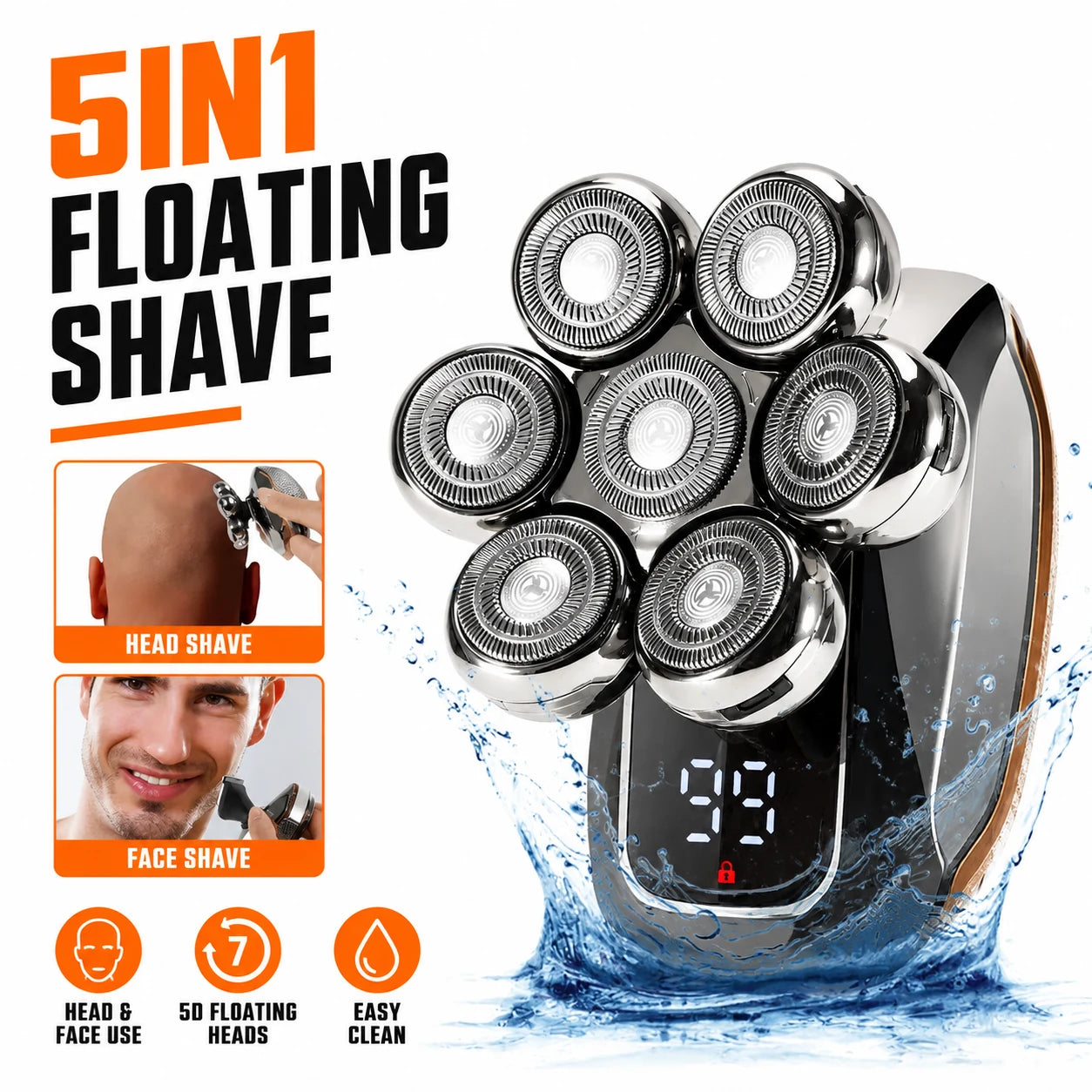 In this guideOmniShave Pro$79.99View
Shaving head bald with electric shaver: the first-time steps
Going from hair to bald is easier when you do it in two stages. Do not take a shaver straight into long hair.
- Charge the shaver. OmniShave Pro charges over USB-C with the included cable, from a power bank, computer port or wall adapter.
- Read the manual. It states how the device may be used and cleaned. Follow it over any general advice here.
- Cut length down. Shorten long hair with a trimmer first. The OmniShave Pro set includes a precision trimmer head and four guide combs; check the manual for which comb fits which head.
- Wash and dry your scalp. Clean skin means less oil on the heads. Dry thoroughly if you plan a dry shave.
- Hold the shaver in your palm. Cup the body so the heads sit flat on the skin.
- Make the first pass with the grain. Move slowly with light pressure and let the heads do the work.
- Make a second pass across or against the grain only where the first pass left stubble and your skin feels fine.
- Check with your hand, then touch up missed spots.
- Clean the shaver before you put it away.
How short should the hair be before you start
Aim for short stubble before the shaver touches the scalp. If the hair is long, work it down in stages with the largest guide comb first, then a smaller one, following the manual. Hair that is too long pulls into the heads and slows every pass.
Field note
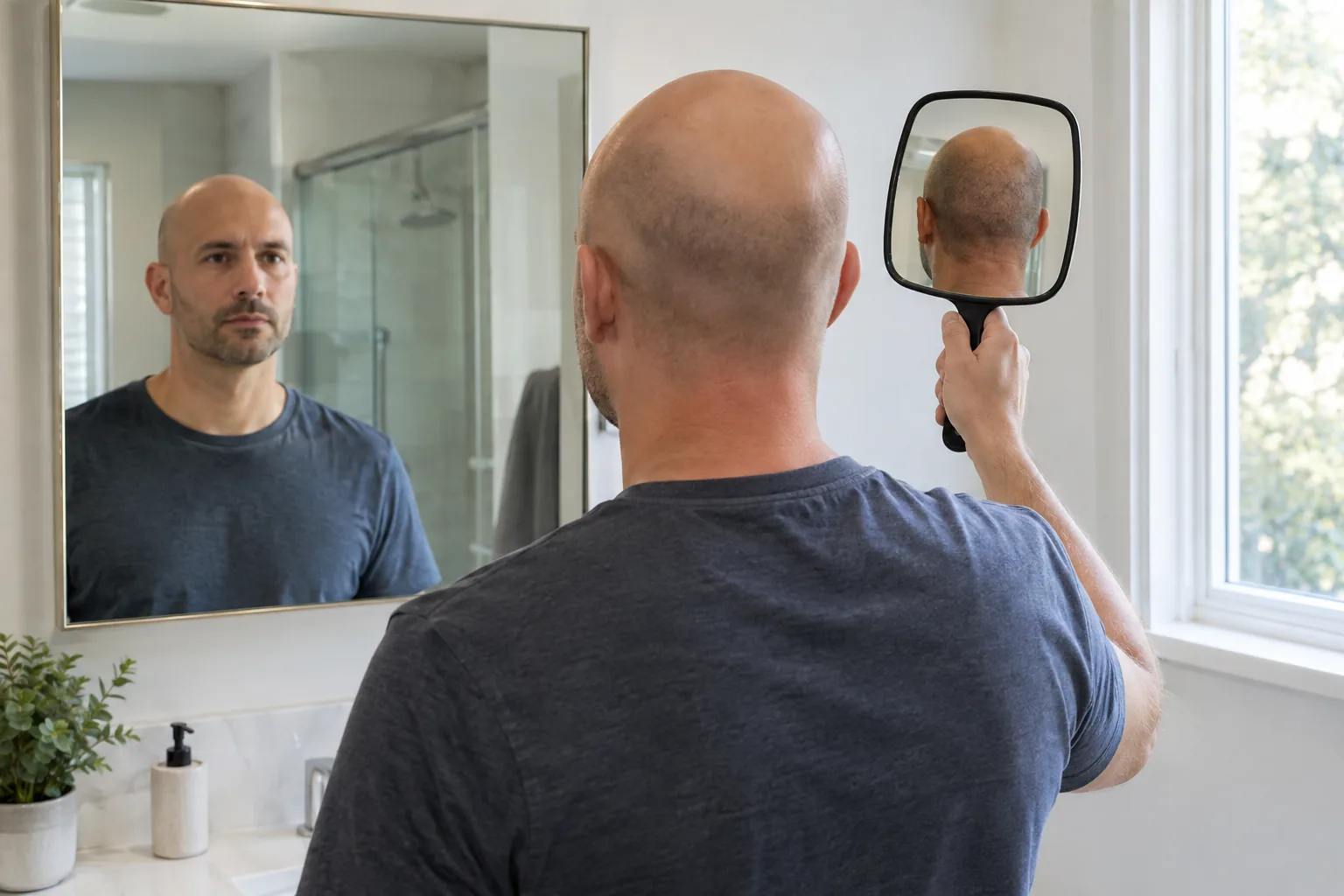
Do your first full shave when you are not rushed and have good light. A wall mirror plus a handheld mirror lets you see the crown and back, where missed patches hide.
Wet or dry: how to decide
Both can work, but the right one depends on your shaver and your skin. The manual decides first. Only use a shaver with water, foam or gel if its manual says that is allowed. Many models are made for dry use only, and some handle wet and dry use.
| Question | Dry shave | Wet shave |
|---|---|---|
| Who it suits | First-timers, quick routines | Those who like a slick glide and whose manual allows it |
| Skin prep | Clean, fully dry scalp | Warm water; cream or gel only if the manual allows |
| Sensitive scalp | Light pressure, slow strokes, fewer passes | Same habits; rinse product off fully |
| Cleanup | Brush out hair | Rinse thoroughly so product does not build up |
| Main caution | Moisture or oil left on the skin | Using a device not made for wet use |
Can you use shaving cream with an electric head shaver?
Only if the manufacturer says so. Some electric shavers are made for use with foam or gel, and others are for dry use only. Creams can clog heads on a dry-only model. If the manual does not mention it, shave dry and apply moisturizer afterward.
Before or after a shower
For a dry shave, wait until the scalp is completely dry; damp skin drags under the heads. If your manual allows wet use, a shave in the shower is an option, and warm water softens the stubble before the first pass. Either way, finish with a rinse of the scalp and a pat dry.
Direction and missed spots when shaving head with electric shaver
Move zone by zone
Divide the head into zones and finish one before moving on. That keeps you from going over the same area again and again.
- Front and forehead: use short strokes. Keep the skin flat by stretching it lightly with your free hand.
- Top: move front to back, then side to side. Floating heads tilt as the surface curves.
- Sides above the ears: hold the skin taut and use downward strokes. Take care around the ear.
- Crown and back: turn the shaver in your palm so the heads face the skin. The cup-grip body is shaped for this reach.
- Nape: use upward and sideways strokes in small sections, slowly.
Hair grows in different directions on the head, especially around the crown. If one pass leaves stubble, feel which way the hair lies and change your angle rather than pressing harder. Taking slow, overlapping strokes also helps you avoid missed spots.
Check for missed spots
Right after the last pass, run your hand over each zone with your fingertips moving against the growth. Rough patches mean stubble is left. Look at the scalp under bright light from two angles, then go back over only those areas with light pressure.
Re-shave on a schedule that matches how fast your hair grows and how smooth you want the scalp. Daily shaving is a personal choice. If your skin feels irritated, give it a break and ask a healthcare provider if it persists.
Clean and care for the shaver after each shave
A clogged head makes the next shave harder and can tug at hair. Cleaning takes little effort when you do it right away.
| When | Task |
|---|---|
| After each shave | Tap out loose hair, brush the heads with the cleaning brush, or rinse under the tap if the manual allows |
| After rinsing | Shake off water, let the heads air dry, then put the protective cover on |
| Before each shave | Check the heads for dents or gaps and the cable for damage |
| Between uses | Store dry, away from damp shower areas, with covers on |
| When parts wear | Follow the manual for replacement parts |
With OmniShave Pro, you rinse the heads under the tap after use. The included cleaning brush is there if you prefer to clean the heads by hand. Switch the device off and unplug the cable before cleaning.
Using the extra attachments
The OmniShave Pro set is a five-in-one grooming set. Besides the shaver, it includes a nose and ear trimmer head, a facial cleansing brush, a precision trimmer head and a soft massage sponge, with protective covers and guide combs. Check the manual for how each attachment is meant to be used. Keep each one in its cover so small parts do not get lost. Browse more tools in the Shavers & Precision Trimmers collection.

Common mistakes and a checklist to keep
Mistakes to avoid
- Starting on long hair. Trim first, then shave.
- Pressing hard. Rotary heads are made to glide; keep the touch light.
- Shaving over oily or damp skin on a dry-only model. It clogs the heads and drags.
- Repeating one spot. Move on and return after the rest is done.
- Skipping the manual. It is the only source for wet-use and cleaning rules for your model.
- Putting it away dirty. Hair and skin residue left in the heads makes the next shave harder.
If your skin reacts badly to shaving or you have a skin condition, check with a healthcare provider before you change your routine. When you are outdoors with a freshly shaved scalp, cover it with a hat or follow the directions on a sunscreen label.
Checklist
- Charge and inspect the shaver.
- Trim long hair short first.
- Wash and dry the scalp.
- Shave zone by zone, light pressure, slow strokes.
- Check by touch and fix missed spots.
- Moisturize if your skin feels dry.
- Clean, dry and cover the shaver.
Frequently asked questions
Keep reading
 Dryers, Irons & Light-Based Hair DevicesTitanium Plate Flat Iron vs Ceramic: Which Suits Your Hair Type8 min read
 Dryers, Irons & Light-Based Hair DevicesHow to Use a Beard Straightener Without Frying Your Beard7 min read
 Shavers & Precision TrimmersChoosing a Good Electric Shaver for Women: Foil, Rotary or Trimmer7 min read