
How to Use a Beard Straightener Without Frying Your Beard
Prep a clean, combed beard, start on the lowest heat, and glide the plates through small sections root to tip. Here are heat settings by length and the mistakes to skip.
The Calvedon Team
October 16, 2026 · 7 min read
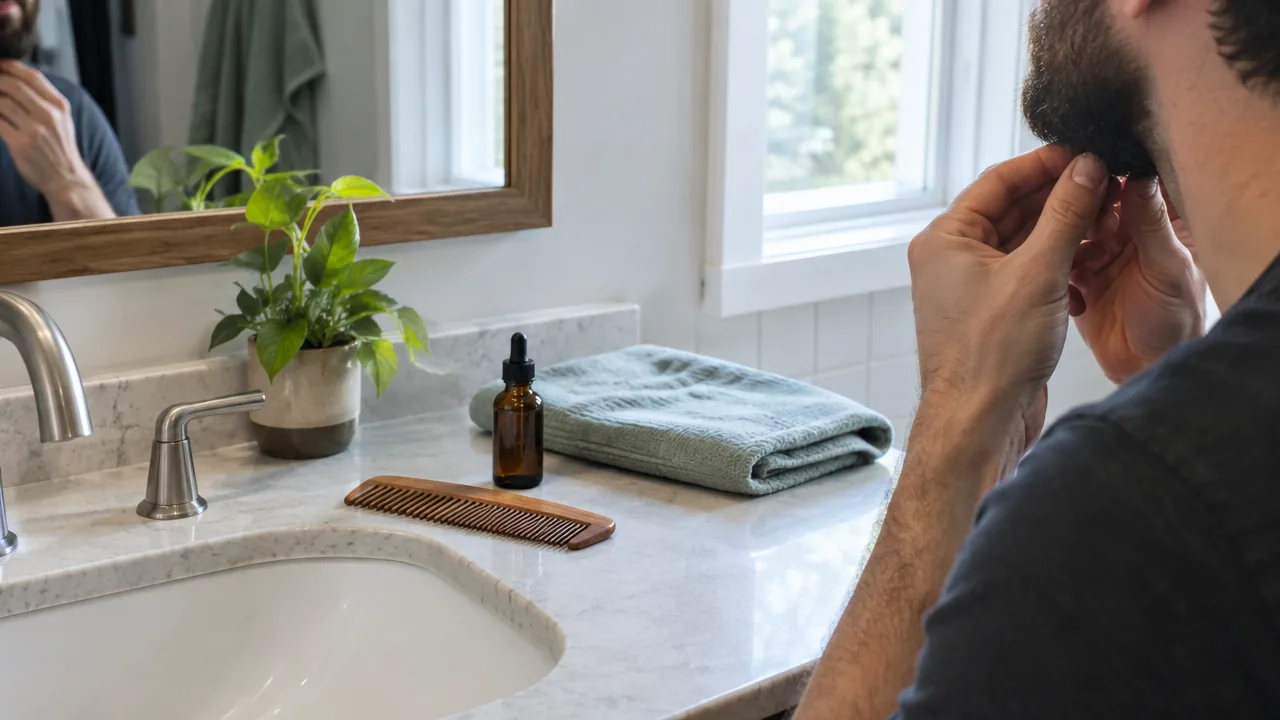
To use a beard straightener, start with a clean, fully combed beard, pick the lowest heat setting that works for your texture, and glide the plates through small sections from root to tip. Keep the hot plates away from your skin and don't hold them in one spot. Good results come down to three things: prep, the right temperature, and slow, even passes.
This guide covers heat settings by beard length, a step-by-step routine, a comparison of heated brushes and flat irons, how to choose a tool, and the mistakes that leave a beard dry or frizzy.
How a beard straightener works
Beard hair is coarser and often curlier than scalp hair, and it grows in different directions across the cheeks, chin and neck. A heated tool relaxes the bend in each strand so the hair lies in one direction. The shape holds until moisture, sweat or the next wash lets the hair curl back.
That is why technique matters more than the tool. Heat applied to dirty, tangled or product-heavy hair can leave residue on the plates and uneven results. Heat held on the same section for too long can leave hair dry and brittle.
Two types of tool are common: flat-iron style straighteners with two plates, and heated brushes with bristles. Both rely on heat and combing action, and we compare them later in this guide.
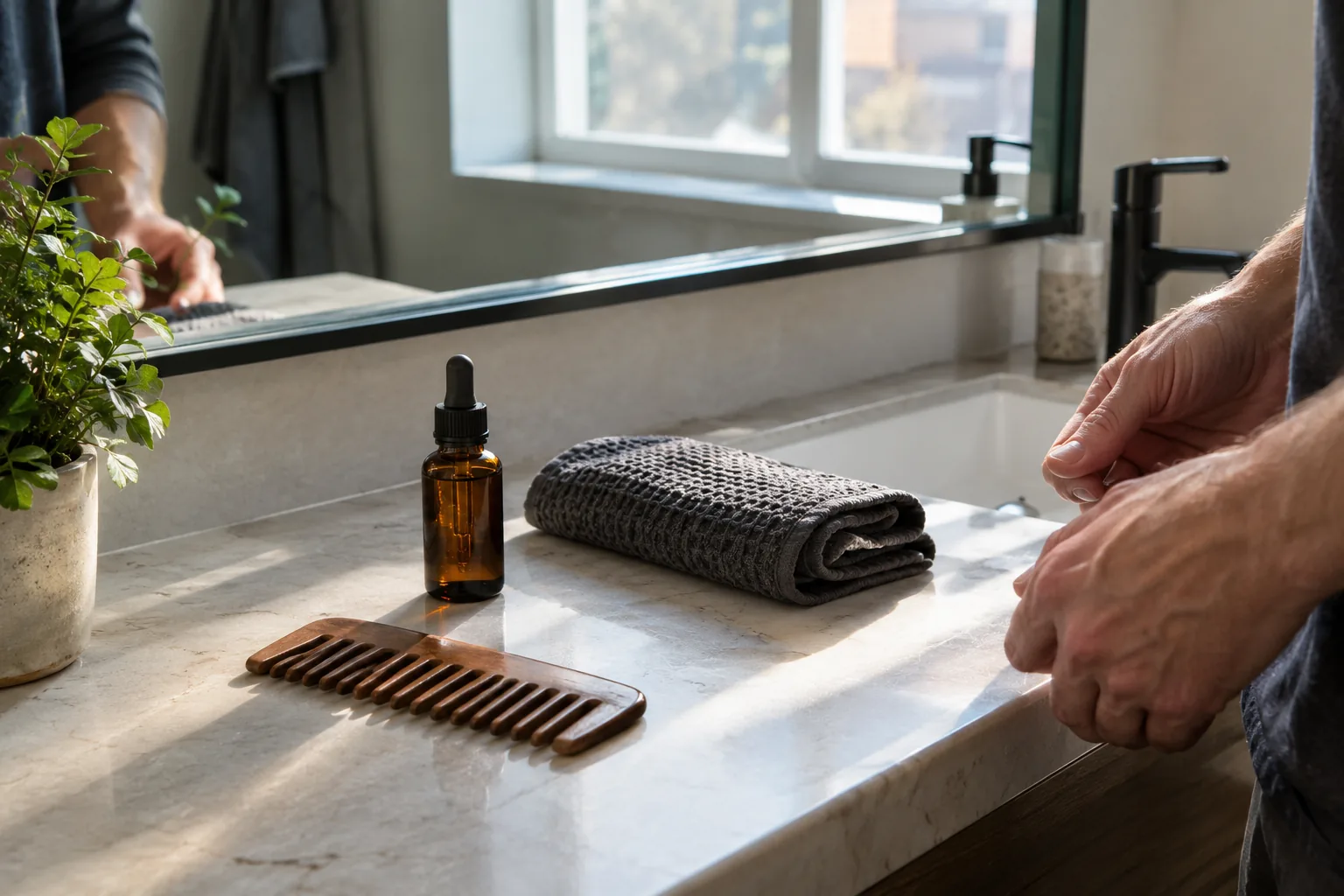
Prep checklist before you heat anything
Prep makes a visible difference, so work through this list first.
- Wash with a gentle beard wash so oil, sweat and old product are gone.
- Towel-dry until damp or dry. Dripping wet hair should not meet a hot tool. Check your manual for whether your device suits damp hair.
- Detangle fully. Use a wide-tooth comb or boar-bristle brush, starting at the tips and working toward the skin.
- Apply a heat-protecting product if its label says it is meant for use with heated styling tools. Keep the amount light.
- Section the beard. Use clips or comb the hair into zones: cheeks, jawline, chin and mustache area.
- Check the cord and surface. Place the tool on a stable, dry, heat-tolerant surface when you set it down.
A beard straightening cream or balm can help hair stay smooth after styling, but read the label. Heavy, greasy products can build up on plates, so keep your hands and the tool clean.
Heat settings by beard length
Short, fine hair needs less heat than long, thick or tightly coiled hair. When in doubt, start low and make another pass instead of raising the temperature. The table below uses a three-setting range of 120°C to 210°C (about 248°F to 410°F) as a reference, so adapt it to your own device and its manual.
| Beard type | Starting heat | Technique |
|---|---|---|
| Stubble | Lowest setting, if you use a plate tool at all | Stubble may be too short for plates. A comb with a little balm may be enough. If you do use a tool, keep a clear gap from the skin with the guard toward the face |
| Short, fine to medium texture | Lowest or middle setting | Very small sections, comb ahead of the plates, one or two passes, clear gap from the skin |
| Medium length, wavy | Middle setting | Thin sections, root to tip, keep the tool moving |
| Long, thick or coarse | Middle, then higher only if needed | Work in layers from the underside up, using clips |
| Tightly coiled or very coarse | Lowest effective setting, raised only if needed | Smallest sections, extra detangling first, pause between passes |
For tightly coiled beards, add moisture with a conditioner or oil before any heat, work in the smallest sections, use the lowest heat that works, and schedule fewer heat days so the hair is not styled hot every day.
If hair feels hot, looks shiny in a glassy way or smells scorched, stop and lower the temperature. Turn the tool off and let it cool before trying again.
Step-by-step: how to straighten your beard
- Choose the setting. Use the table above and begin on the low side.
- Let the plates reach temperature. Wait until the device signals or for the time the manual states.
- Start at the cheeks. Take a small section, about as wide as the plates, and comb it straight.
- Glide, don't clamp and hold. Move from root to tip in one smooth motion. Keep the guard side facing your skin.
- Move to the jawline and neck. These areas curl a lot and sit close to skin, so slow down and keep your hand steady.
- Do the chin last. Chin hair is often the thickest and grows downward or forward, so comb it into its final shape as you go.
- Check for missed spots. Look from the front and both sides in the mirror.
- Finish with a light oil. A small amount smooths flyaways. Then switch off the straightener and let it cool before storing.
Making a short beard lay flat
For a short beard, the direction of growth matters as much as heat. Brush the hair against the grain first, then with the grain while you glide the tool through. Use the lowest setting, keep sections thin, and finish with a pea-sized amount of balm or oil rubbed between your palms.
The waiting rule for new beards
The common advice is to let a new beard grow out for a good while before you judge or shape it. Early growth is patchy and grows at different rates, so it often looks uneven until it fills in. Hold off on heavy styling until then, and use the time to learn your growth direction.
Field note
Do a trial pass on a small patch under the jaw first. If the hair feels dry or rough afterward, drop to a lower setting or add a heat-protecting product before the next session.
Heated brush vs flat-iron straightener
Both tools are common. The right one depends on your beard length and how much control you want near the skin.
| Feature | Heated brush | Flat-iron style straightener |
|---|---|---|
| How it works | Bristles comb while heating | Two plates press and glide along sections |
| Suits | Short to medium beards, light waves | Medium to long beards, thicker or more textured hair |
| Control near skin | Bristle tips sit closer to the skin, so check the manual and keep the brush moving | Depends on a guard and steady hands |
| Detangling | Some, while styling | None, so you must comb first |
| Stubborn texture | May need several passes | Plates press each section, which suits coarse hair |
If your beard is short and soft, a brush may be enough. If it is thick, coarse or long, a plate style gives you a more deliberate, section-by-section approach.
How to choose a beard straightener
If you are comparing electric beard straighteners, check these points in order:
- Plate or brush. Plates suit thicker or longer beards. Brushes suit short, softer ones.
- Number of heat settings. Several settings let you match fine, medium and coarse hair instead of using one fixed temperature.
- A guard near the plates. It helps keep hot plates away from the skin, though careful handling is still your job.
- Cord and grip. A swivel cord and a non-slip handle make steady strokes easier around the jawline.
- Damp or dry use. Check whether the manual allows use on a damp beard.
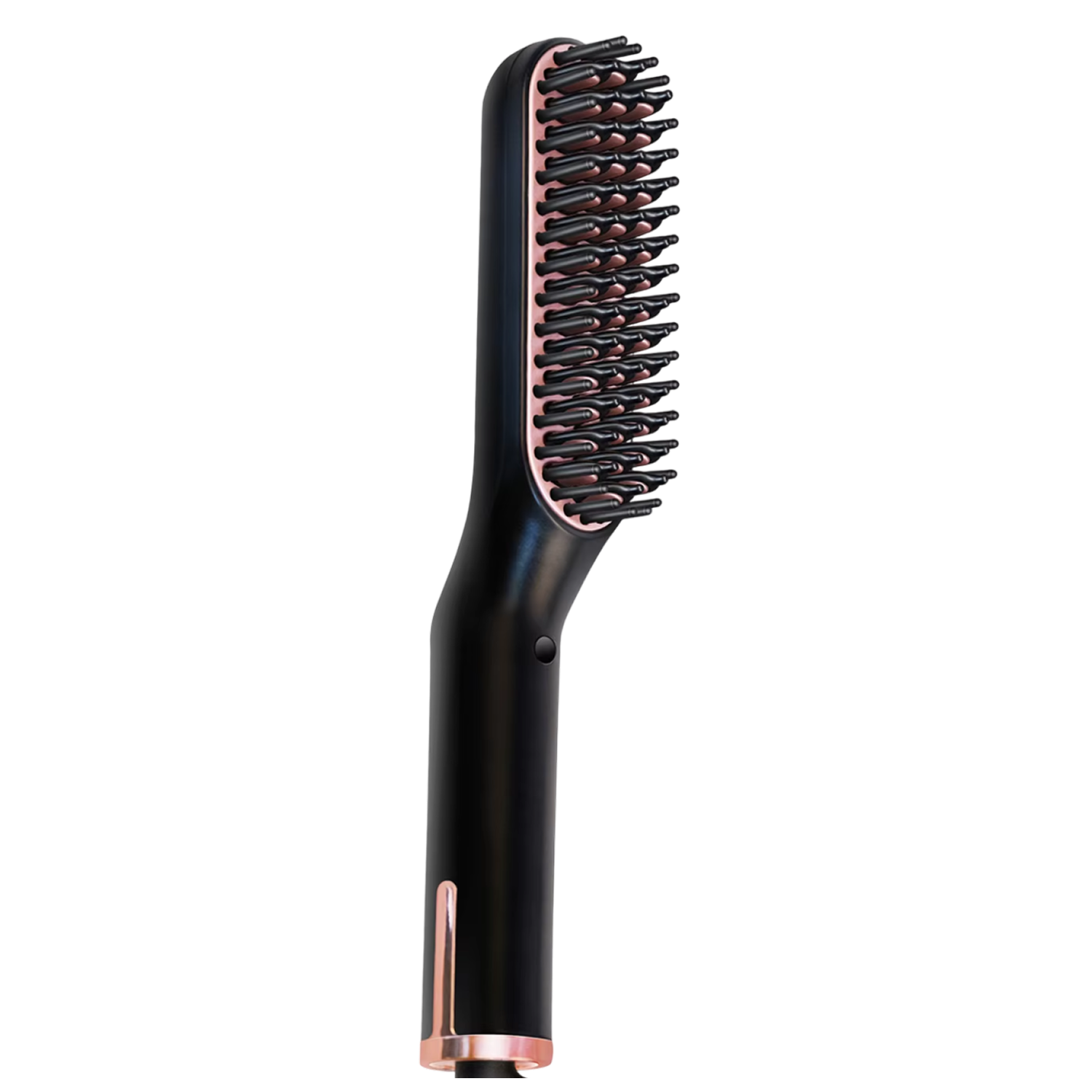
A plate-style option: SleekMane
SleekMane is a beard straightener with tourmaline ceramic plates and three temperature settings from 120°C to 210°C (about 248°F to 410°F). Lower settings suit fine or short beards, and higher settings are used for thicker, coarser texture.
An anti-scald guard sits on the body close to the plates, to help keep the hot plates away from your skin near the face. The handle has a non-slip grip, and the 360° swivel cord turns with your hand around the jawline and other tight spots.
You can use it on a damp or dry beard as part of a daily grooming routine. The box includes a storage box, a Quick-Start Styling Guide and an FAQ card. For other options, browse the Dryers, Irons & Light-Based Hair Devices collection.
 In this guideSleekMane$99.99View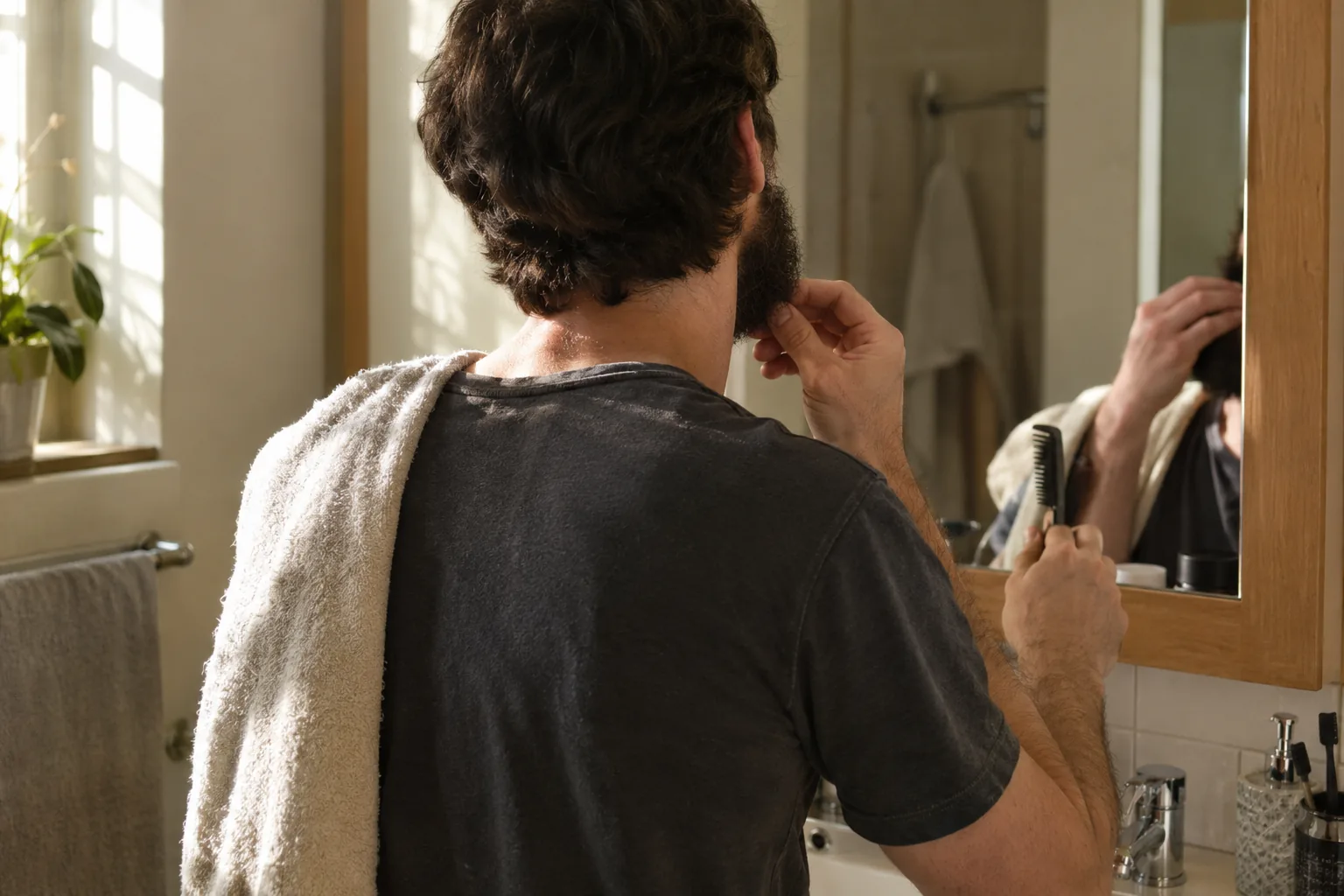
Common mistakes and care routine
- Starting on the highest setting. Begin low and raise heat only if hair still springs back.
- Using wide sections. Thick bundles heat unevenly, so you end up repeating passes.
- Holding the plates still. Keep the tool moving at all times.
- Skipping the comb. Tangles snag and pull as the plates glide.
- Styling soaking-wet hair. Towel-dry first and follow your manual.
- Straightening every day without conditioning. Use a beard oil or balm regularly and skip heat on some days if the hair feels rough.
- Working too close to skin. Keep a clear gap and the guard toward the face. Don't style while distracted.
Heated tools can cause burns. Follow the manufacturer's instructions, keep the tool away from children and water, and ask a healthcare provider if you have a skin concern in the beard area.
Care and storage
- Switch off and unplug when you finish, then let the tool cool fully.
- Wipe the plates with a soft, slightly damp cloth once they are cool and unplugged. Remove oil or product residue.
- Check the cord for kinks or wear every so often. Stop using the tool if you see damage.
- Store in a dry place, ideally in its box, away from the sink.
- Condition the beard weekly with a wash, a conditioner or a balm to keep hair supple between heat sessions.
With a regular routine, straightening becomes a short, repeatable step in your grooming schedule.
Frequently asked questions
Keep reading
 Shavers & Precision TrimmersChoosing a Good Electric Shaver for Women: Foil, Rotary or Trimmer7 min read
 Fitness & Vital Sign TrackersHow Do Body Composition Scales Work? Bioimpedance Explained8 min read
 Cooling & Heated BeddingHow to Use a Cervical Pillow: Orientation, Height and Sleep Position8 min read