
How to Use a Cervical Pillow: Orientation, Height and Sleep Position
Put the raised bolster under the curve of your neck and let your head rest in the hollow. Then match the height to your sleep position and change one thing at a time.
The Calvedon Team
October 15, 2026 · 8 min read

Knowing how to use a cervical pillow comes down to two placements: the raised bolster goes under the curve of your neck, and your head rests in the hollowed center. Then choose a height that keeps your head level with your spine for your sleep position, and change one thing at a time while you get used to the shape.
This guide covers which side faces up, how to pick a height for back, side and stomach sleeping, and how to handle the first nights. It is about setup and routine, not health outcomes. If you have a neck condition, ask a healthcare professional before changing your sleep setup.
What is a cervical pillow?
A cervical pillow is a contoured pillow that supports the curve of the neck instead of lying flat under the head. Most have a raised ridge or bolster along one edge and a lower dip in the middle for the head. You may also see it called a cervical neck pillow, a neck support pillow or a contour pillow; these labels usually describe the same idea.
A flat rectangular pillow leaves the shape to you. You fold it, bunch it or stack it. A cervical pillow builds the shape in, which is why placement matters more than it does with a standard pillow.
The parts to recognize
- Neck bolster: the raised ridge that sits under the curve of your neck.
- Head hollow: the lower center where the back of your head rests.
- Loft: how tall the pillow sits once your head is on it.
How to use a cervical pillow: the setup steps
These steps apply to most contoured designs. Check your product's guide for the details of its own shape. The basic idea is the same everywhere: the ridge supports the neck and the dip holds the head.
- Place it at the head of the bed. Put the pillow where you would normally put one, centered on the mattress, with the bolster edge toward your body.
- Identify the bolster. The higher, rounder ridge is the neck side. The lower, hollowed area is for your head.
- Sit at the pillow, then lie back. Position your shoulders at the bottom edge of the pillow, so it supports the neck and head, not the upper back.
- Seat your neck on the bolster. Slide until the ridge fills the gap between the back of your neck and the mattress.
- Let your head settle into the hollow. Your head should rest without being pushed forward or tipped back.
- Check your line. Your chin should sit roughly level, not pressed toward your chest or lifted toward the ceiling.
If the pillow lifts your head noticeably forward, the loft is probably too high. If your head drops back into the hollow with your neck unsupported, the loft may be too low or the pillow may be sitting too far up the bed.

Which side faces up and which faces you
The most common mistake is flipping the pillow so the bolster sits under the head. The bolster belongs under your neck, and the hollow belongs under your head.
Lying on your back
Place the bolster under the neck and rest your head in the hollow. The ridge fills the gap behind your neck.
Lying on your side
On your side, the job changes: the pillow's loft has to fill the space between your ear and your shoulder, keeping your head in line with your spine. If your head tilts down toward the mattress or up toward the ceiling, adjust the height before changing anything else.
Switching during the night
If you roll between positions, test the pillow both ways before you decide it does not suit you. A pillow that works on your back can feel too tall on your side, which is a height question, not an orientation one.
Choose height by sleep position
Height, or loft, is the main variable. The goal is a neutral line, often described as spinal alignment: your head level with the rest of your spine, not tilted up or down. Shoulder width matters most for side sleepers, because the pillow has to fill the distance from shoulder to ear. Body types differ, so a wider frame usually needs more loft than a narrow one.
| Sleep position | What the pillow needs to do | Loft direction | Check |
|---|---|---|---|
| Back | Support the curve of the neck without pushing the head forward | Lower to moderate | Chin level, not tucked |
| Side | Fill the gap between ear and shoulder | Moderate to higher, more with wider shoulders | Nose in line with the middle of your chest |
| Stomach | Keep the head from being raised or twisted | Lowest option, or consider a flatter pillow | Neck not bent back |
| Combination | Work on your back and on your side | Start in the middle and adjust | Test both positions |
Stomach sleepers
Stomach sleeping is the hardest position for a contoured pillow, because it holds the neck turned and extended. If you sleep that way, use the lowest setting and ask a healthcare professional if you are unsure.
Combination sleepers
If you shift between back and side, pick a middle loft first and note which position you wake in most often. Then adjust the loft toward that position.
Pillow materials and what they change in use
The filling affects how a cervical pillow holds its shape and how it feels, which in turn affects how you set it up. The table below is general, so check the product description for what a specific pillow uses.
| Core material | Feel | Setup note |
|---|---|---|
| Memory foam | Contours slowly to head and neck | Holds a molded shape, so position it once and check your line |
| Shredded memory foam | Loose, can be moved around | Fill can be shifted to adjust loft |
| Latex | Springy and responsive | May feel firm on first lie-down |
| Cotton or other fabric covers | Surface feel and breathability | Look for breathable materials if you sleep warm |
Outside the bedroom, the same idea applies: keep your head stacked over your shoulders when you sit or stand, so the pillow is not the only part of your day that involves neck position.
Example: setting up CerviLux
The CerviLux is a cervical support pillow with raised neck bolsters and a hollowed center under the head. It has two loft heights: flip the pillow 180 degrees for a higher loft, or pull out the removable insert for a lower profile. That makes it a handy example of the height adjustment described above.
- Place it on your bed and rest your neck on the raised bolsters and your head over the hollowed center.
- Pick the loft to suit your shoulder width, then change it whenever you like.
- The core is high-density memory foam, and the woven cover is breathable, removable and machine washable.
It has no electronics and no setup beyond placing it on the bed, so you use it as you would any other pillow. Back, side and combination sleepers can each use it. The box includes the pillow, the removable cover and a quick-start user guide.
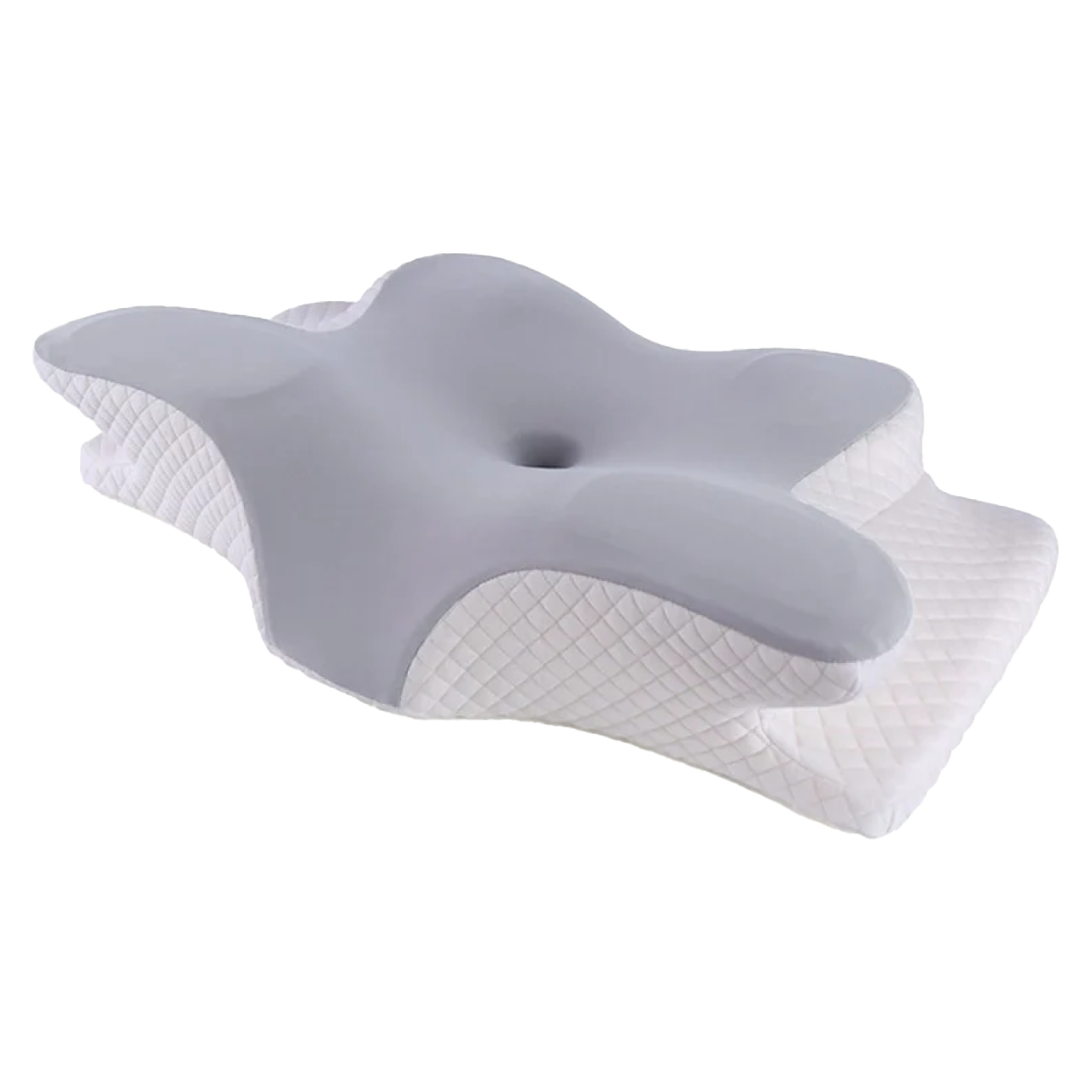 In this guideCerviLux$119.99View
Plan for the adjustment period
A contoured pillow feels different from a flat one, and you are used to your old setup. Expect it to feel unfamiliar at first. That feeling is normal and is not, by itself, a sign that the pillow is wrong or right.
A simple approach
- Change one variable at a time. Adjust either the loft or the position, then wait before changing again so you can tell what made the difference.
- Start with the lower profile if unsure. It is easier to add height than to get used to too much of it.
- Keep notes. Jot down the loft, your position and how the setup felt in the morning.
- Keep your usual bedtime routine. Changing pillow, mattress and room setup together makes it hard to know what made a difference.
If anything feels wrong or keeps bothering you, stop using the pillow and talk to a healthcare professional. A pillow is a sleep accessory, and this guide does not claim it will change how your body feels.
Field note
Take a photo from the side while lying down, or ask someone to. Your ears should line up roughly over your shoulders and your chin should look level, not tucked or lifted.

Common mistakes and how to fix them
| Mistake | What it looks like | Fix |
|---|---|---|
| Bolster under the head | Head perched high, neck unsupported | Slide down so the ridge sits under the neck |
| Shoulders on the pillow | Pillow pushes the head forward | Keep shoulders on the mattress |
| Loft too high for back sleeping | Chin pressed toward chest | Use the lower setting |
| Loft too low for side sleeping | Head tilts toward the mattress | Use the higher setting |
| Stacking a second pillow | Unstable, uneven height | Adjust built-in loft instead |
| Changing everything at once | You cannot tell which change mattered | Change one variable at a time |
When to stop and ask a professional
If anything feels wrong or keeps bothering you, stop using the pillow and talk to a healthcare professional. Do not use a pillow as a substitute for their advice about your neck.
Care and the rest of your sleep setup
A pillow only fits well if the rest of the bed works with it. Pair it with a mattress and bedding that suit you, and keep the room comfortable. If heat bothers you at night, browse our Cooling & Heated Bedding collection. If light disturbs you, see how to choose a sleep mask. If noise is the issue, compare options in white noise machine sounds.
Care routine
- Wash the removable cover as the care label directs.
- Let the foam core air out and dry fully before putting a cover back on.
- Do not wash the foam core in a machine unless the manual says you can.
- Change between loft settings only when you mean to, and note which one you are on.
For the exact cleaning steps, follow the product guide. For anything involving your neck or spine, a healthcare professional is the right person to ask.
Frequently asked questions
Keep reading
 White Noise & Sleep EarbudsWhite Noise Machine Sounds: White, Pink, Brown, Fan and Rain7 min read
 Sleep Masks, Snoring & Apnea AidsHow to Choose a Sleep Mask: Fit, Material and Light Blocking7 min read
 Dryers, Irons & Light-Based Hair DevicesHow to Use a Beard Straightener Without Frying Your Beard7 min read