
How to Choose a Sleep Mask: Fit, Material and Light Blocking
Choose a sleep mask in four steps: strap fit, eye-cup shape, fabric, and how you sleep. This guide gives the checks that matter and the mistakes to skip.
The Calvedon Team
October 13, 2026 · 7 min read · Updated October 14, 2026

The right mask sleep setup comes down to four checks: a strap that holds without pressing, eye cups or a shape that clear your eyelids, a fabric you can keep clean, and a profile that suits how you lie down. Start with strap fit and sleeping position, because those decide whether you keep the mask on all night. Light blocking then depends mostly on how well the mask closes the gaps around the nose and cheeks.
This guide walks through each decision in order, with comparison tables, a fit checklist, a CPAP note and a short care routine.
Mask sleep basics: what a sleep mask does
A sleep mask is an eye mask worn over the eyes to block out light from windows, street lamps, hallways and screens. That is its whole job. It does not change noise, room temperature or your bedding, so those need their own fixes. If sound is the bigger problem, see our guide to white noise machine sounds.
For buying purposes, what matters is simple: a mask only helps if it is comfortable enough that you leave it on.
| If you mostly... | Look for |
|---|---|
| Sleep on your back | Any shape that stays put; a flat mask can work |
| Sleep on your side | Structured shell with deep cups and a low-profile strap |
| Move around a lot | Adjustable strap with a secure closure |
| Travel or nap in daylight | Snug nose section and a pouch for carrying |
| Wear CPAP | Low-profile mask with a soft strap |
Step 1: Get the strap fit right
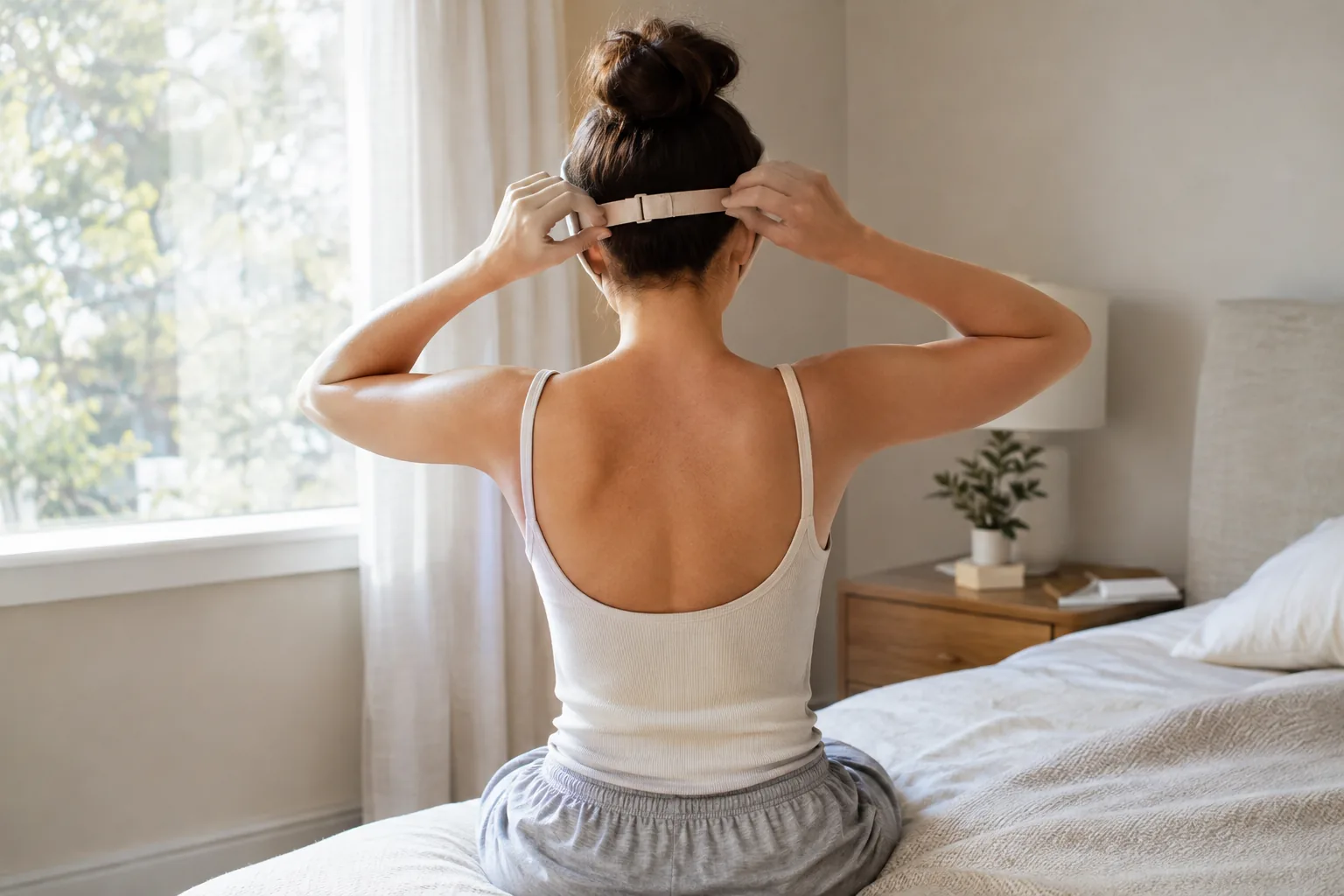
The strap decides whether the mask stays in place. Too loose and the mask slides toward your forehead; too tight and it presses on the eye area and leaves marks on your skin. The goal is a snug hold that stays put when you turn your head, with no pulling at the temples.
How tight should a sleep mask be?
Tight enough that the mask does not shift when you roll over, loose enough that you can slide a finger under the strap at the back of your head. If you notice pressure on your eyelids or a squeeze at the temples, loosen it. A mask that needs to be cranked down to stay in place usually has a shape problem, not a strap problem.
Strap types and head sizes
Check the adjustment range before you buy. Head sizes vary, and so does hair worn up, down or in a braid, so a strap with a wide range is more useful than one fixed length.
- Elastic band: simple and stretchy, but it can loosen with use and may tug on hair.
- Hook-and-loop closure: adjusts in small steps, though the fastener can catch on hair or a pillowcase.
- Sliding buckle: lets you set the length once and make small changes later, and it tends to sit flat at the back of the head.
Step 2: Match the eye-cup shape to your face
Mask shape matters as much as fabric. Flat masks lie directly on the eyelids, which some people find heavy and which can shift when you blink. Contoured masks use molded cups that arch over the eye socket and leave open space in front of the eyes, so lashes and lids stay free.
Where light gets in
Most leaks happen in the same places: beside the nose, along the lower edge of the cheeks, and at the brow when the mask rides up. A contoured nose bridge that follows your face closes the first gap. A wraparound frame that runs around the eyes helps with the others.
Weighted and adjustable-cup masks
Some masks add a weighted filling that rests with gentle pressure over the eyes. Others offer adjustable eye cups you can move to suit your face. Both are options to weigh against comfort: weight is not for everyone, and adjustable parts add seams and pieces to check.
A quick check at home
Put the mask on in a bright room, close your eyes, and look toward a window. Turn your head slowly. If you see bright slivers at the nose or cheeks, the shape does not match your face, and tightening the strap will not fix it.
| Shape | Sits on | Watch for |
|---|---|---|
| Flat, single layer | Eyelids | Gaps at the nose, slipping upward |
| Padded flat | Eyelids and brow | Weight on the lids, warmth |
| Contoured with deep cups | Around the eye socket | Needs a fit that matches face width |
Step 3: Choose the material for your habits
No single material suits every sleeper, because the choice depends on skin feel, laundering and how warm you sleep. Compare the outer fabric and the filling separately.
| Material | Feel | Care note |
|---|---|---|
| Silk | Smooth against skin and hair | Check the label for wash instructions |
| Cotton | Soft, breathable, matte | Usually simple to launder |
| Satin (synthetic) | Slick, smooth | Can feel warmer than natural fibers |
| Memory foam filling | Holds its molded form | Keep it covered; follow the care label |
A smooth outer layer tends to glide on a pillowcase instead of grabbing it. Mulberry silk is a common silk type used in masks, so look for it on the label if you want silk. A foam filling gives the mask structure, which is what lets cups keep their shape.
If you have sensitive skin or allergies, read the fabric details before buying, and wash a new mask before first use. A mask that is soft against the skin but cannot go in the washing machine will need hand care, so decide which you prefer.
Field note
Wash and dry a new mask according to its care label before the first night. This removes handling and packaging residue and shows you how the mask holds its shape.
Step 4: Plan for side sleeping
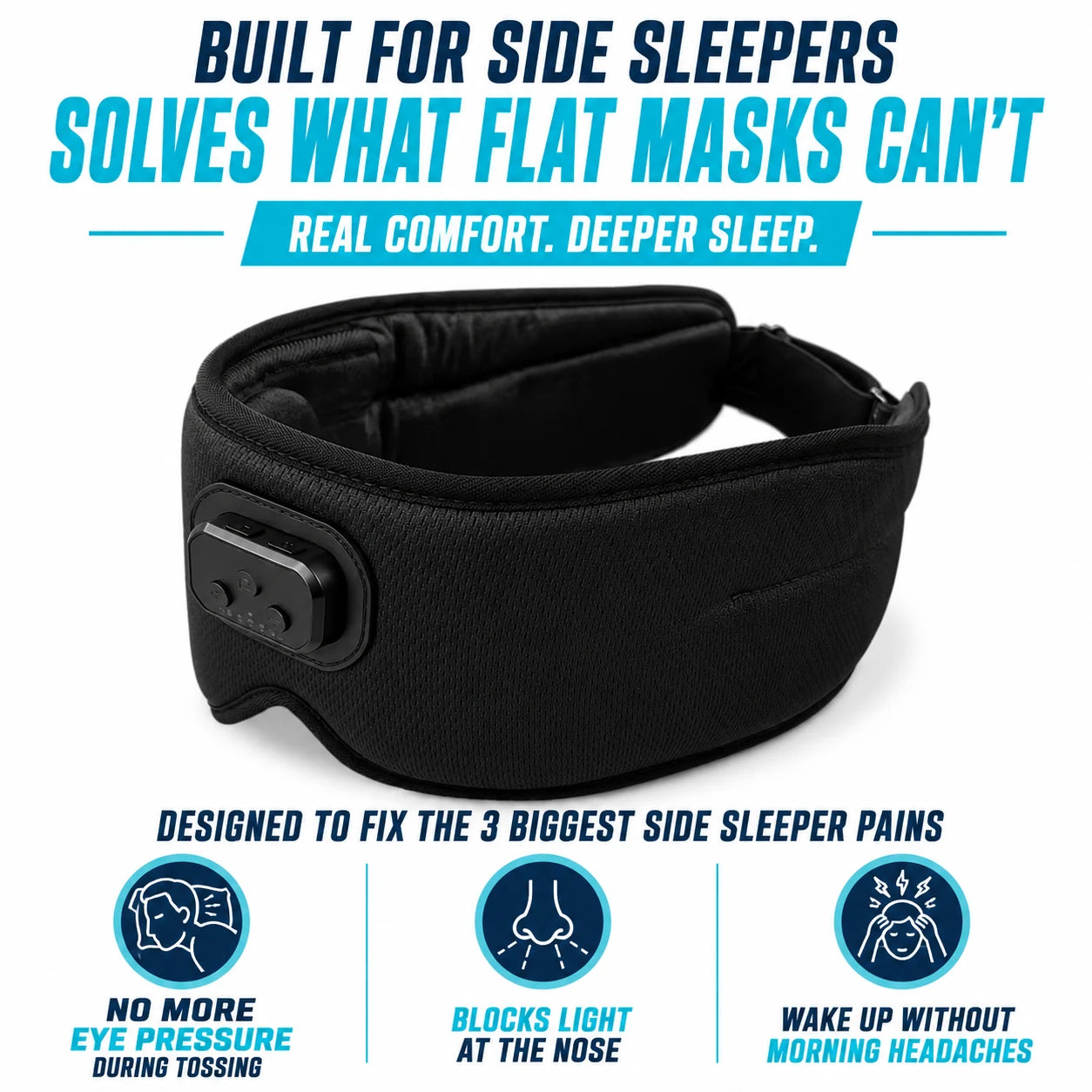
Side sleepers press one side of the mask into the pillow. A flat, thin mask can fold, ride up, or push on the eyelid. A mask with a structured shell resists that pressure and keeps the fabric away from the eye.
Look for deep cups that rest around the eye socket, a low-profile strap at the back so it does not dig into the pillow, and a nose section that stays put when your cheek is compressed. If you switch between sides, a mask that keeps its form when you rest against a pillow is easier to live with than one that needs readjusting.
A contoured option: DreamLayer
If side sleeping and light gaps are your main concerns, DreamLayer is built around those points. It is a contoured sleep mask with a silk exterior over memory foam eye cups. The molded cups are deep, so they rest around the eye socket and leave open space over the eyelids, and the nose bridge section follows the shape of the face to close the gap beside the nose.
The adjustable strap uses a sliding buckle, so you can set the fit and then fine-tune it. Slim speaker modules come out before washing, and the mask itself is machine-washable. A travel pouch is included in the box.
 In this guideDreamLayer$79.99View
Can you wear a sleep mask with CPAP?
You can try one, but the combination needs care. A CPAP mask seals on the nose or face, and a second mask or strap can press on the same areas or shift the seal. Choose a low-profile eye mask with a soft strap, and position the straps so they do not overlap or tug on the CPAP headgear.
If you notice leaks, pressure marks, or discomfort, remove the eye mask and talk with your sleep clinician or equipment provider about what suits your setup. Follow your device manual for any changes to how you wear it. You can also browse our sleep masks, snoring and apnea aids collection to compare styles.

Common mistakes when buying a sleep mask
- Overtightening the strap to fix a shape problem. Change the mask instead.
- Ignoring head size. Check that the strap has enough adjustment range for your head and for hair worn up or down.
- Choosing by color alone. Fit and shape decide comfort.
- Skipping the light check. Test the mask in a bright room before relying on it in a dark one.
- Forgetting the room. A mask handles small leaks, but gaps at the curtain edges are easier to fix at the window.
Fit checklist and care routine
| Check | What good looks like |
|---|---|
| Strap | Snug, one finger fits under the back |
| Eyelids | No weight or pressure on them |
| Nose area | No bright slivers when you look toward a window |
| Side position | Stays in place with cheek on the pillow |
| Fabric | Comfortable on skin; care label is clear |
Care schedule
- Each morning: let the mask air out and store it in a pouch or on a clean surface.
- Weekly: wash it following the care label. With a mask that has removable parts, take them out first.
- Monthly: check the strap stretch, seams and foam shape. Replace the mask if the cups have flattened or the strap no longer holds.
Skin products, sweat and oils build up on any mask, so regular washing keeps it comfortable. If your skin gets irritated, stop using the mask and ask a healthcare provider.
Frequently asked questions
Keep reading
 Cooling & Heated BeddingHow to Use a Cervical Pillow: Orientation, Height and Sleep Position8 min read
 White Noise & Sleep EarbudsWhite Noise Machine Sounds: White, Pink, Brown, Fan and Rain7 min read
 Dryers, Irons & Light-Based Hair DevicesHow to Use a Beard Straightener Without Frying Your Beard7 min read