
How Do Body Composition Scales Work? Bioimpedance Explained
Body composition scales send a weak electrical signal through your body and estimate fat and muscle from how much it is resisted. Here is how that works and how to get steady readings.
The Calvedon Team
October 16, 2026 · 8 min read
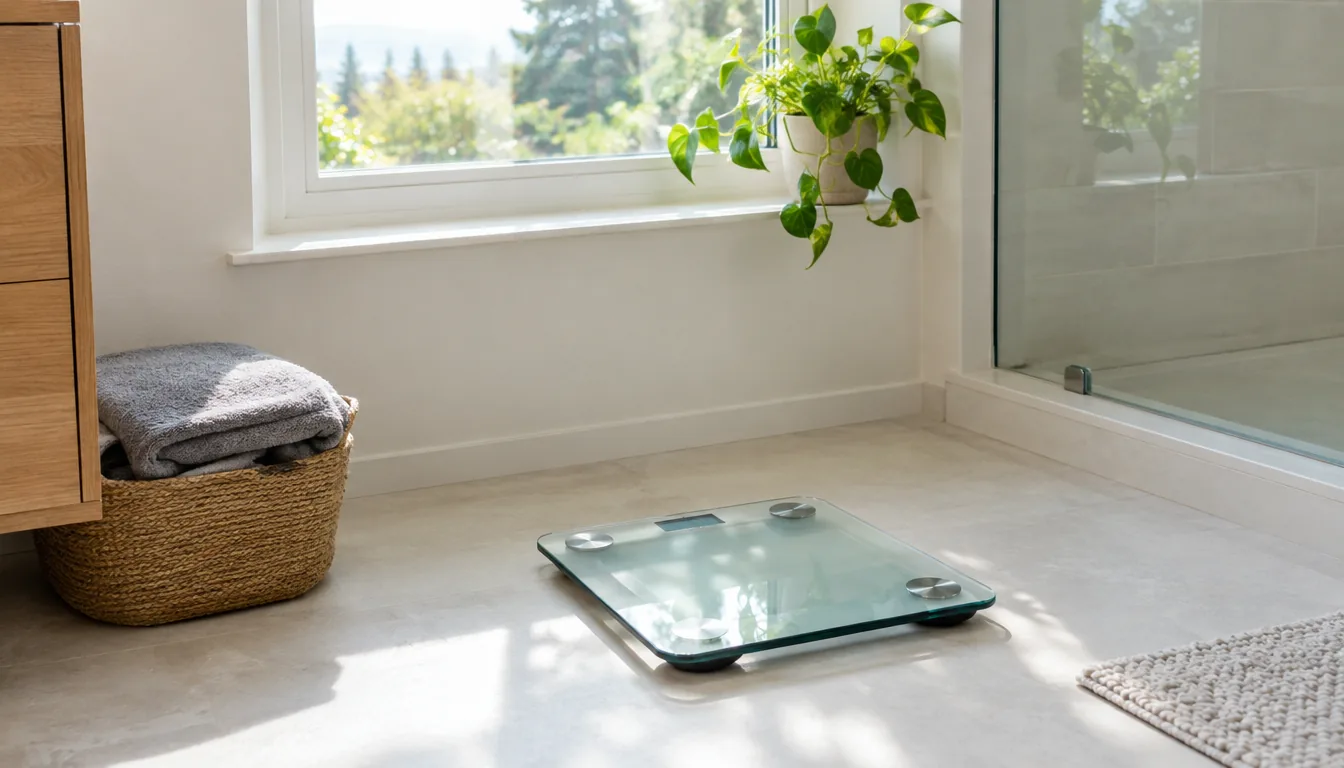
How do body composition scales work? They use bioelectrical impedance analysis: the scale sends a very weak electrical current through your body and measures how much the tissue resists it. Software then converts that resistance, plus your height, age, sex and body weight, into estimates of body fat, muscle mass and water.
The numbers are estimates from a formula, not direct measurements. That is why the trend over weeks is more useful than any single reading, and why this guide ends with a routine for keeping your weigh-ins consistent.
How do body composition scales work? The bioimpedance basics
Body water, which contains dissolved electrolytes, carries electrical current well. Tissue that holds a lot of water, such as muscle, lets the signal pass more easily. Fat holds less water and resists the signal more. The scale measures that resistance (impedance analysis) and uses it to model what your body is made of.
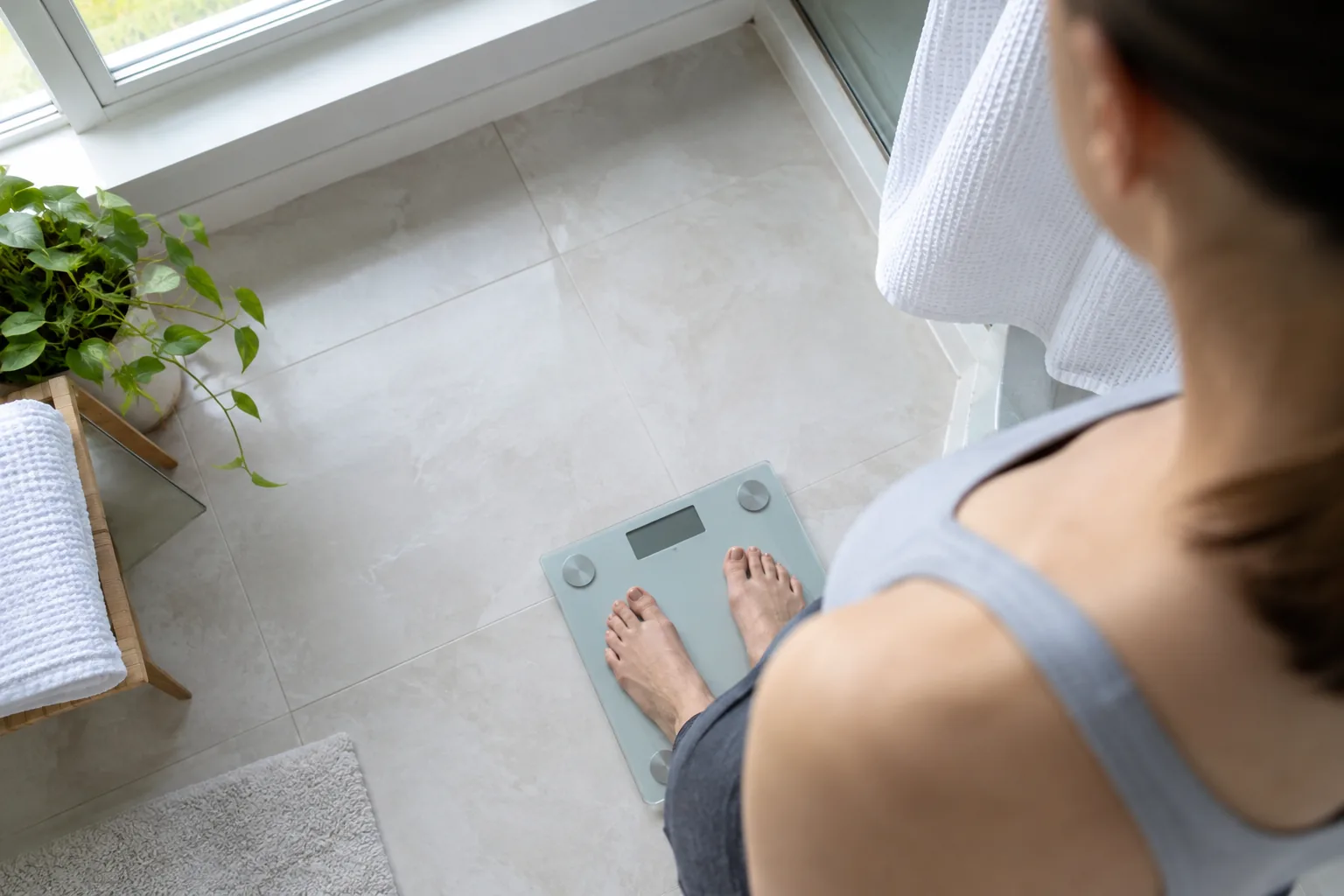
The current is very weak and is not meant to be felt. It travels through the metal electrodes on the platform, and on some models through hand grips as well. Your bare skin has to touch the electrodes for the circuit to close, which is why these scales ask you to stand barefoot.
What goes into the estimate
- Impedance: the raw resistance measured between electrodes.
- Body weight: measured by load sensors in the platform.
- Profile data: height, age and sex that you enter in the app or on the device.
- The manufacturer's formula: a model that turns those inputs into body fat, muscle and other figures. Different brands use different models, so two scales can disagree with each other.
How body fat and lean mass are calculated
The scale first estimates how much of your body is water-rich tissue, often called lean body mass. Body fat is then what is left after the model subtracts that estimate from your total weight. Body fat mass divided by weight gives the body fat percentage shown on screen. Because the lean figure is itself modeled, every fat number inherits that uncertainty.
Foot-to-foot vs. hand-to-foot measurement
The electrode layout changes what the signal travels through. Basic body fat scales can have electrodes only under the feet, so the current mostly crosses the legs and lower torso. Scales with hand grips send the signal along a longer path.
| Type | Signal path | What to know |
|---|---|---|
| Foot-to-foot | Up one leg, across the pelvis, down the other | Compact, with no grips to hold; the reading is weighted toward the lower body |
| Hand-to-foot | Between hand grips and foot electrodes | Covers the path from hands to feet; needs you to hold the grips during the reading |
| Segmental (multi-electrode) | Several paths between multiple electrodes | Uses more electrodes to estimate arms, legs and trunk separately |
Smart scale or body composition monitor?
A plain digital scale reports weight only. A smart scale adds electrodes and connects to an app to log history. A body composition monitor is the same idea with more body metrics, often a built-in screen, and sometimes hand grips. The sensing principle is the same across all three, so the practical difference is how many figures you get and how you read them.
What skews the readings
Because body fat scales read resistance, anything that changes how your body holds or distributes water, or how well your skin contacts the electrodes, moves the result. Your actual fat mass may not have changed at all.
Hydration
Drinking a lot of water, being dehydrated, or a salty meal can all shift the reading. Alcohol and heavy caffeine intake can also change your fluid balance. A dehydrated body generally reads as having more fat, because less water means more resistance.
Time of day and meals
Your body holds different amounts of fluid in the morning than in the evening. Eating and drinking add weight and shift water between tissues. Weighing at different times each day adds noise to the trend.
Exercise and heat
Sweating after a workout, a sauna or a hot shower changes hydration and skin condition. A workout also raises skin temperature, which can alter the signal. Weigh before activity, not after.
Feet, hands and skin contact
- Very dry or calloused skin conducts poorly. Slightly damp feet can read differently from dry ones.
- Socks block the circuit on most models.
- Heels and forefeet should sit on the electrodes the same way each time.
- Grip pressure on hand-to-foot models should be firm and consistent, with arms hanging naturally.
Surface and position
A scale on carpet can shift its load sensors and change the weight reading. Place it on a hard, flat floor in the same spot each time. Stand still and avoid talking or moving during the measurement.
Do body composition scales work?
They work for what they are designed to do: give a repeatable estimate you can track at home. Because they estimate composition from a formula, their figures can differ from lab methods and from other scales. Published research on the accuracy of smart scales on weight and body composition looks at exactly this gap between home scales and reference methods. Use the figures as personal reference points, not lab results.
If you are looking for the most accurate body composition scales, keep in mind that closeness to a reference method and repeatability from day to day are different things. For tracking, repeatability is what you can control.
Here is a practical way to think about each metric:
- Weight: measured directly, so it is the most dependable number on the screen.
- Body fat and muscle mass: estimated. Watch the direction over several weeks rather than daily changes.
- Water: highly sensitive to your hydration that day.
- Visceral fat: an index calculated by the manufacturer's model. Each manufacturer calculates it differently, so there is no universal "good" number. If you want to know what a visceral fat figure means for you, ask a healthcare provider.
- Body age and bone mass figures: model outputs. Use them as loose reference points, not conclusions.
Body fat vs. BMI and other methods
BMI uses only height and weight, so it cannot separate fat from muscle. A scale adds an estimate of that split, so you can look at both. A university exercise science lab page on body composition describes other ways to assess it, including skinfold calipers, waist measurements, DEXA scans and underwater weighing, and each works differently. Hand grips, extra electrodes and more metrics on a home scale do not change its basic limitation: the figures come from resistance plus a formula.
A weigh-in routine for consistent trends
Once you understand how body composition scales work, the routine is short: make every reading happen under the same conditions, so changes in the chart reflect your body and not your morning. Consistency matters more than any feature.
- Pick one time. First thing in the morning, after using the bathroom and before eating or drinking, is a good anchor.
- Use the same spot: a hard, flat floor, with the scale in the same place.
- Go barefoot with clean, dry feet. Wipe them first if they are damp.
- Keep your routine steady the day before, with similar fluid intake and no hard workout right before the weigh-in.
- Stand the same way, with the same foot position, weight evenly spread, arms relaxed and no movement.
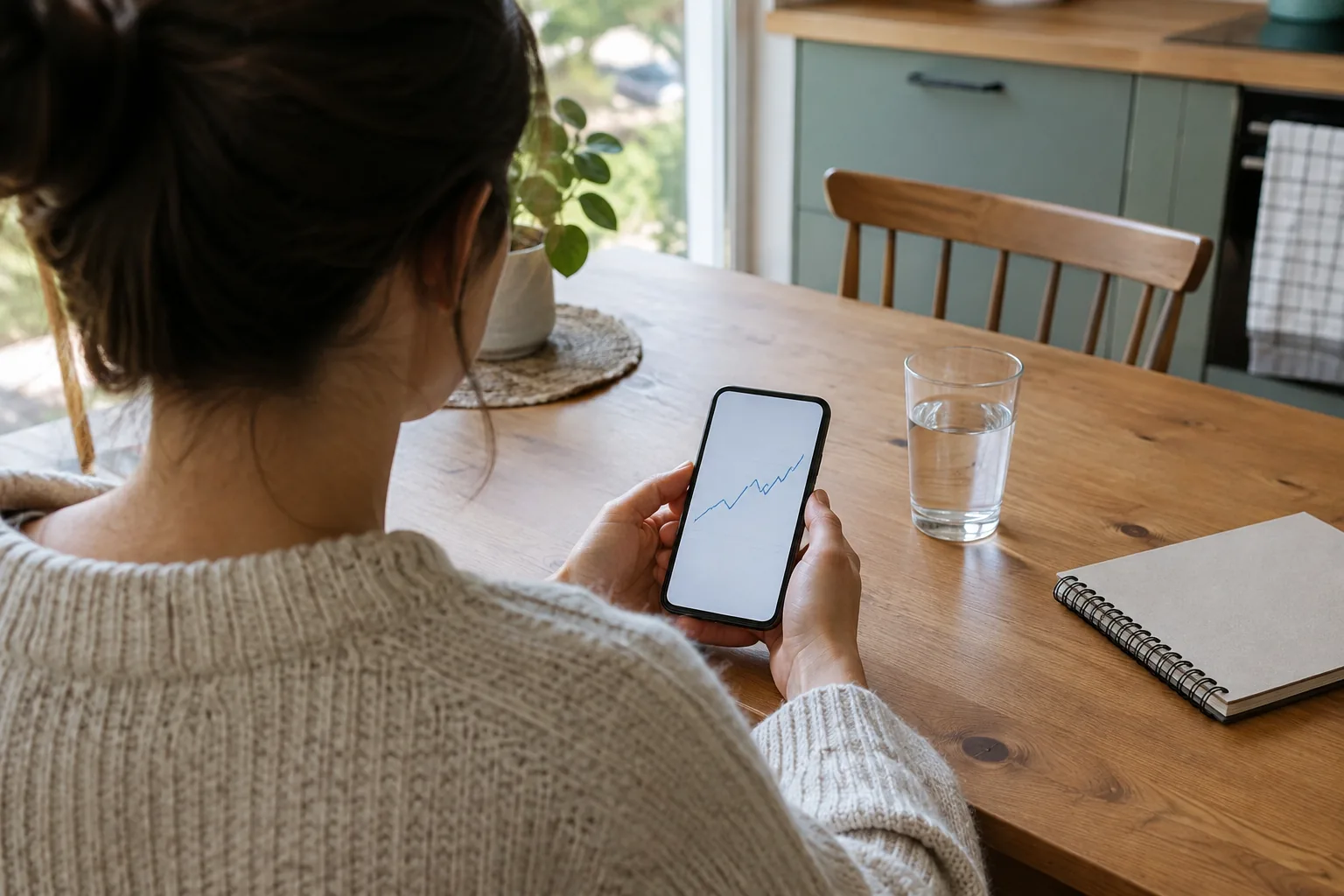
- Weigh a few times per week and compare weekly averages rather than single days.
- If a number looks odd, check what changed (water, salt, a late workout) before reading anything into it.
Field note
Write down any day that was unusual (a long run, a salty dinner, little water). When a reading jumps, the note often explains it.
A hand-to-foot option: BodyMetrix Pro
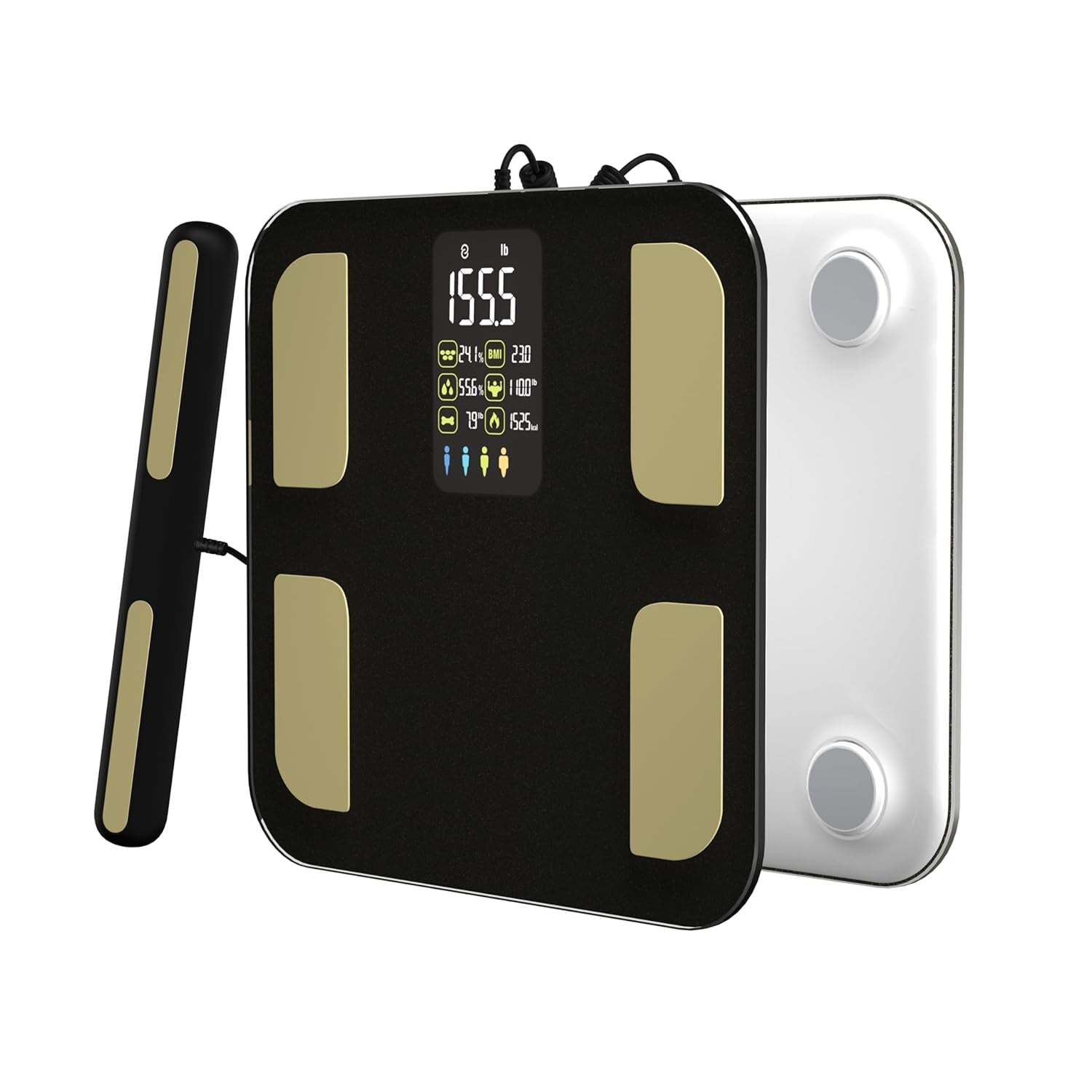
If you want the signal to cover more than the lower body, a hand-to-foot design is the type to look at. The BodyMetrix Pro is a body composition scale with a tempered glass platform and a corded pair of hand grips. It has eight electrodes for hand-to-foot measurement, so the signal passes between the grips and the foot electrodes.
You stand barefoot on the base, hold the grips so your skin touches the electrodes, and read 8 core metrics on the color screen with no phone needed. Syncing with the companion app adds the full set of 20 metrics, including visceral fat, skeletal muscle, protein mass, body age and bone density, plus trend charts.
The app supports unlimited user profiles, so each person in a household keeps a separate history. The platform is tempered glass with anti-slip silicone, which gives you a steady place to stand during each weigh-in. The box includes the scale, a 1.5 m spiral grip cable with hand electrodes, a protective packaging box and a multilingual user manual.
 In this guideBodyMetrix Pro$229.99View
How to choose among body fat composition scales
Chasing a "most precise" label is less useful than matching features to how you will actually use the scale. Use this checklist.
| Question | Why it matters |
|---|---|
| Foot-only or hand grips? | Sets the signal path. Grips cover hands to feet; foot-only has no grips to hold. |
| Does it show numbers on the device? | A built-in screen lets you read core metrics without a phone. |
| Does the app keep separate profiles? | Shared homes need separate histories so one person's data does not mix with another's. |
| Can you view trend charts? | Trends are what you will use. Single readings are noisy. |
| Is the platform stable and non-slip? | Standing the same way each time depends on a steady surface. |
| Do you need the extra metrics? | More figures are more model outputs. Only pick what you will look at. |
Browse more devices in our Fitness & Vital Sign Trackers collection. If you also track activity, our guide to choosing a good fitness tracker covers what to look for in a wearable.
Common mistakes and who should skip these scales
Mistakes to avoid
- Comparing across scales. Each uses its own formula, so stick with one scale for a trend.
- Reading too much into daily changes. Water shifts alone can move the numbers.
- Weighing after a workout or shower. Sweat, heat and damp skin change the signal.
- Wearing socks or standing on carpet. Both interfere with contact or weight sensing.
- Taking a figure as a final answer about your health. A scale is a tracking tool, so talk to a healthcare provider about health questions.
Who should skip bioimpedance scales
The current is very small, but some manuals advise that people with implanted electronic devices, and people who are pregnant, should not use these scales. Always read the user manual for your model, and ask a healthcare provider if you are unsure whether it is appropriate for you.
For another example of how a sensor-based estimate can drift with fit and conditions, see our explainer on how wrist sensors measure heart rate and where they slip.
Frequently asked questions
Keep reading
 Fitness & Vital Sign TrackersHow to Choose a Good Fitness Tracker: Features, Fit and Budget9 min read
 Fitness & Vital Sign TrackersFitness Tracker Heart Rate: How Wrist Sensors Measure and Where They Slip8 min read
 Dryers, Irons & Light-Based Hair DevicesHow to Use a Beard Straightener Without Frying Your Beard7 min read