
How to Clean Hair Brushes, Including Heated and Thermal Brushes
Remove the hair, wash plastic bristles in warm soapy water, wipe natural and electric brushes, and air dry bristles down. Here is the method for each brush type.
The Calvedon Team
October 25, 2026 · 7 min read
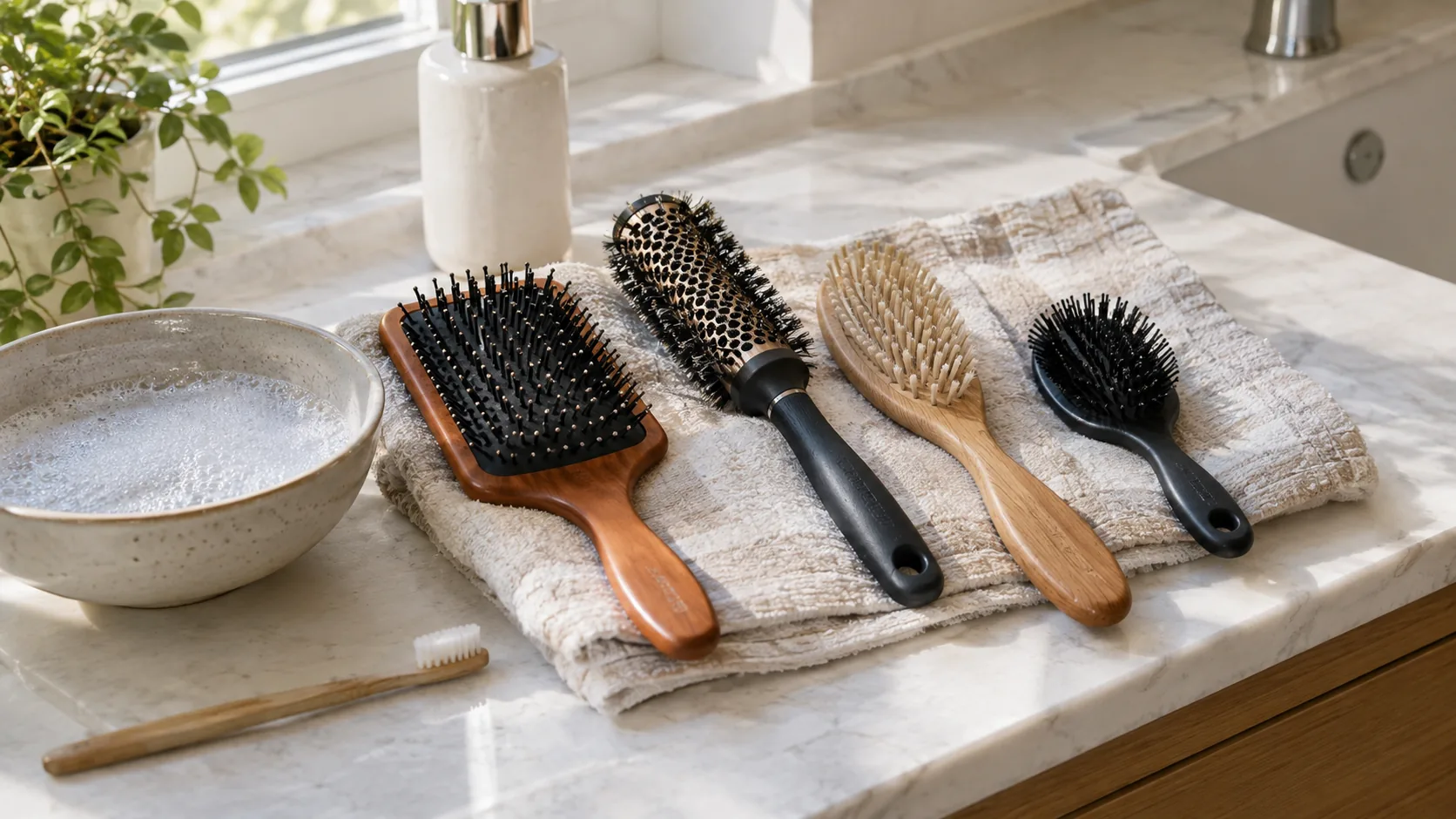
How to clean hair brushes comes down to three steps: pull out the trapped hair, wash the bristles and base in warm, soapy water (or wipe them, if the brush is electric), and let the brush air dry with the bristles facing down. Heated and thermal brushes follow the same logic with one change: unplug them, let them cool, and keep water away from the electronics.
Below you will find a method for each brush type, a deep-clean option with baking soda or vinegar, a schedule, and the mistakes that shorten a brush's life.
What a dirty hairbrush holds and when to clean it
A used brush collects loose hair, lint, dust, skin flakes and product residue from sprays, serums and oils. That film builds up at the base of the bristles and gets moved back onto clean hair at the next brushing. If your brush looks gray, feels tacky or leaves a smell, it is overdue.
Pull visible hair out after each use. Wash the brush on a regular basis; the table gives a starting point you can adjust to how much product you use.
| Situation | Hair removal | Wash or wipe |
|---|---|---|
| Little or no styling product | After each use | Every few weeks |
| Daily sprays, serums, dry shampoo | After each use | Weekly |
| Heated or thermal brush | After each use, once cool | Wipe as the manual lists |
| Shared brush or after a scalp issue | Every time | Wash before the next person uses it |
How to clean hair brushes: the basic method
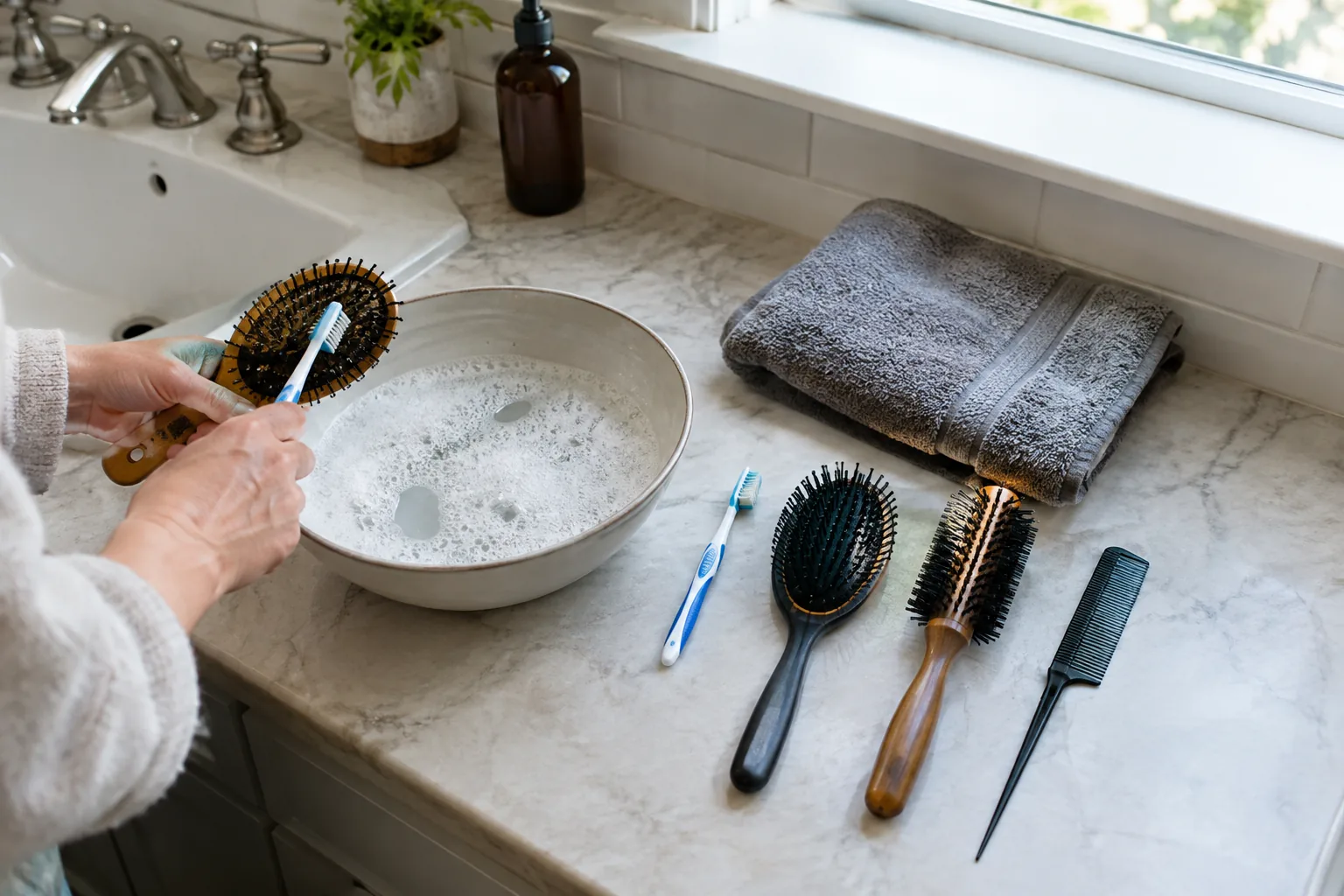
This works for most plastic, nylon and cushioned brushes. If you want to clean your hair brush with only a few items at hand, start here.
- Remove the hair. Slide the tail of a comb or a pen through the bristles and lift the strands out. Cut stubborn tangles at the base with small scissors.
- Loosen the lint. Run the comb tail along the rows of bristles to lift dust and fuzz from between them.
- Mix the wash. Fill a bowl with warm water and add a few drops of shampoo or mild dish soap. Dish soap is fine for plastic and nylon bristles, but rinse it fully.
- Dip and shake. Hold the brush bristle-side down and swish it in the water. Keep the back of a cushioned brush above the surface so water does not soak the pad.
- Scrub. Use an old toothbrush on the base of the bristles and along the rim of the brush head.
- Rinse. Dip in clean water or hold under a gentle tap, bristles pointing down.
- Dry. Shake off water, press the brush on a towel, then leave it bristle-side down on a dry towel until fully dry.
Cleaning by brush type
Bristle material and brush construction decide how much water the brush can take. Use this table, then read the notes below.
| Brush type | Water | Tool | Drying |
|---|---|---|---|
| Paddle or cushion | Light dip, avoid soaking the pad | Comb tail, toothbrush | Bristles down on a towel |
| Round (plastic or nylon) | Full dip is fine | Comb tail, toothbrush | Lay on its side or stand on the handle |
| Boar bristle | Minimal, damp only | Dry comb, damp cloth | Bristles down, away from heat |
| Wooden brush | Damp cloth only | Cloth, toothbrush | Air dry, bristles down |
| Heated or thermal | No dipping | Dry toothbrush, barely damp cloth | Air dry fully before use |
Paddle and cushion brushes
The rubber cushion can trap water behind the bristles. Wipe the pad with a damp cloth, clean between the bristles with a toothbrush dipped in soapy water, and rinse by dabbing with a wet cloth instead of running water over the whole head.
Round brushes
If you are asking how to clean a round comb or round brush, the barrel traps hair around the base of each row. Cut along the barrel with scissors or lift the hair with a comb tail, then dip and scrub with a toothbrush. Turn the brush as you scrub so each row gets covered.
Boar bristle and wooden brushes
Natural bristles and wood can swell or loosen when soaked. Remove hair first, then dip only the bristle tips in soapy water, or use a toothbrush with a little shampoo. Wipe the wooden handle with a barely damp cloth and dry it at once with a towel.
Flexible detangling brushes
These brushes with flexible bristles on a cushion often hold water inside the base. Remove hair, wash with soapy water, and shake firmly. Stand the brush with bristles down on a towel so water can drain out the vent holes if the brush has them.
How to clean heated and thermal brushes
A heated brush has a heating system, controls and a power connection, so it is not a dip-and-scrub item. Water should reach the bristle area and barrel surface only as the user manual allows, and not the display, switches or openings.
- Unplug the brush and let it cool completely.
- Read the cleaning notes in the user manual for your model.
- Pull hair from the bristle area with a comb tail or your fingers.
- Loosen fine fuzz and dust with a dry toothbrush, brushing from the base outward.
- Wipe the barrel and bristle area with a soft cloth wrung out until barely damp, with a drop of mild soap if the manual allows it. Wipe again with a cloth dampened with plain water.
- Dry with a clean towel and leave it to air dry fully before you plug it in again.
Styling product bakes onto a hot surface, so wipe the barrel after each session once it has cooled, before the residue hardens. Apply product to your hair away from the brush so spray does not land on the display.
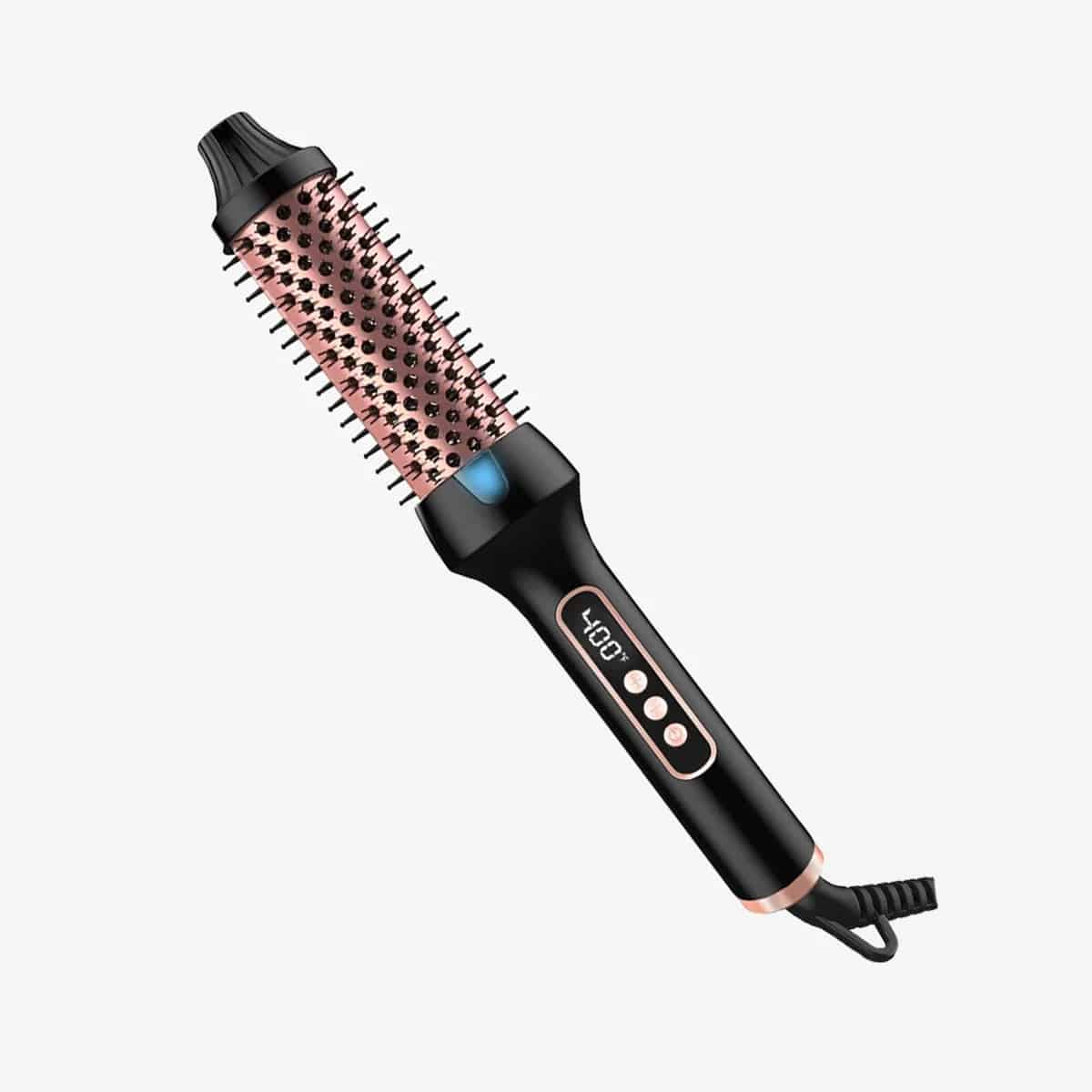
The AuroMane is a thermal styling brush with a dual PTC heating system, a ceramic coating with negative ion technology, and nine heat settings on a digital display. The coating and bristle area are the parts that touch your hair, so those are the surfaces to wipe. It also has an automatic shutoff, but unplug it before cleaning anyway, and check the included manual for what cleaning method it lists. A protective carrying case comes in the box for storage once the brush is dry.
 In this guideAuroMane$162.99View
Field note
Clean a thermal brush only when it is unplugged and cool. If the manual does not mention a cleaning method, stay with a dry toothbrush and a barely damp cloth, and keep moisture away from the display.
Deep cleaning: baking soda, vinegar, no-water and lint
Baking soda soak
For a brush with heavy buildup, stir about a tablespoon of baking soda into a bowl of warm water with a little shampoo. Dip plastic or nylon bristles, scrub with a toothbrush, rinse and dry. Do not soak wooden, boar or electric brushes.
Vinegar rinse
Mix equal parts warm water and white vinegar for a plastic brush with a sticky film. Dip the bristles for a short time, scrub, then rinse with plain water so the smell does not linger.
Cleaning without water
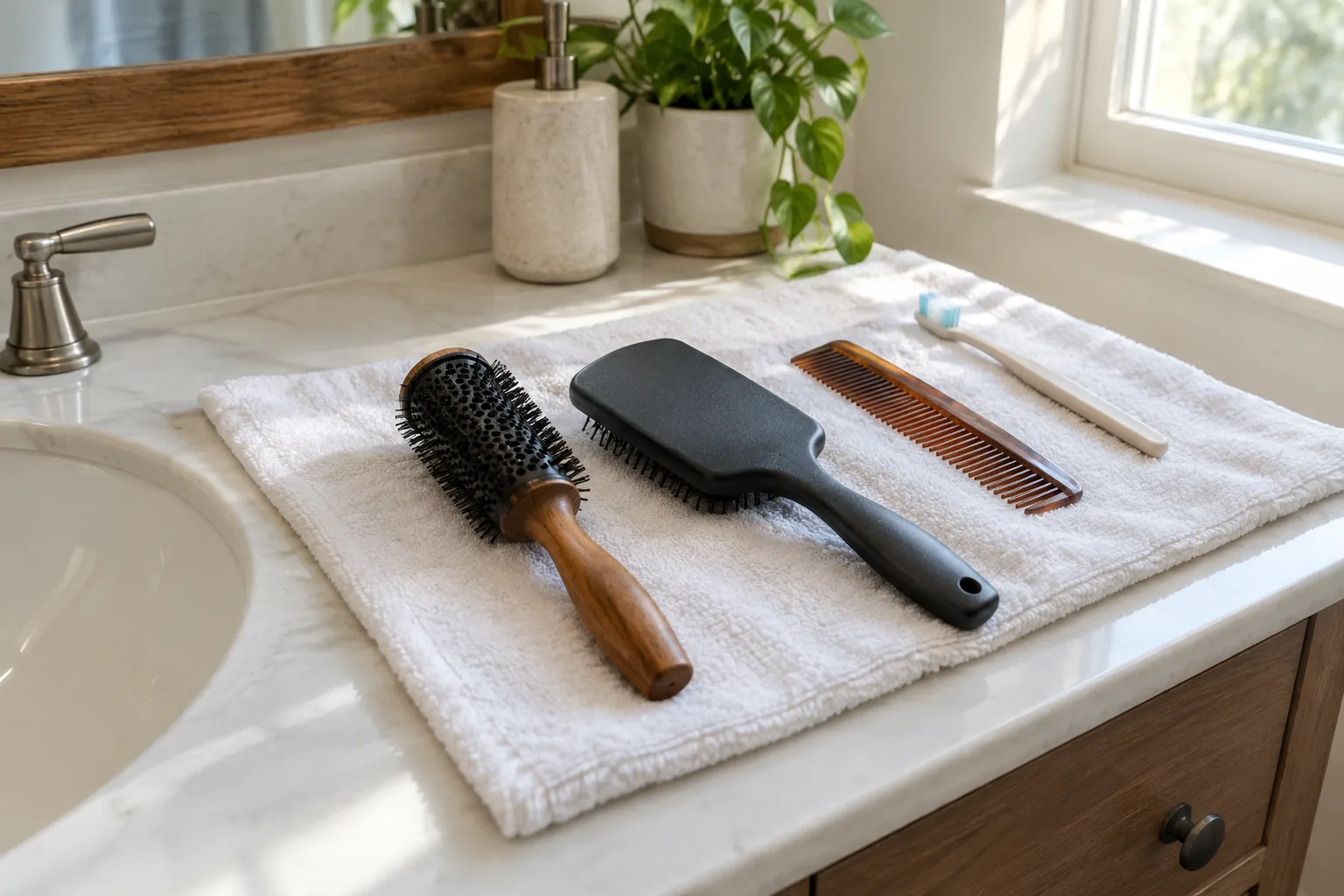
For wood, boar and electric brushes, use a dry comb tail to lift hair, a dry toothbrush to loosen lint, and a cloth with a touch of rubbing alcohol on the handle and base if the manual allows. This is the route for a wooden brush, where soaking can swell the wood.
Fuzz and lint
To get fuzz out of a brush, work a comb tail along each row, then brush the bristles with a toothbrush in the direction of the rows. A strip of tape pressed on the bristles lifts the fine fibers left over.
Brushes and combs used with lice
Follow the instructions on your lice product and ask a pharmacist or healthcare provider how to clean shared brushes and combs. Do not share brushes while the problem lasts.
Common mistakes to skip
- Soaking a cushioned, wooden or electric brush, which lets water get into places that stay damp.
- Drying the brush bristle-side up, which keeps moisture at the base.
- Cleaning a heated brush while it is plugged in or still hot.
- Using harsh cleaners on a coated barrel. Check the manual first.
- Leaving hair in the bristles until the next wash day.
If your drying routine also involves a hair dryer or iron, our dryers, irons and light-based hair devices collection lists the options we stock. For a pre-bed routine, see going to sleep with wet hair, and for how ion and ceramic features work, read what an ionic hair dryer is.
Checklist
- Remove hair after every use.
- Match the method to the bristles: dip for plastic, damp for natural, wipe for electric.
- Unplug and cool any heated brush first.
- Dry bristles down on a towel.
- Wash on a schedule that matches how much product you use.
Frequently asked questions
Keep reading
 Dryers, Irons & Light-Based Hair DevicesGoing to Sleep With Wet Hair: A Timed Pre-Bed Drying Routine6 min read
 Dryers, Irons & Light-Based Hair DevicesWhat Is an Ionic Hair Dryer? Ionic vs Ceramic Explained7 min read
 Dryers, Irons & Light-Based Hair DevicesTitanium Plate Flat Iron vs Ceramic: Which Suits Your Hair Type8 min read