How to Use a Scalp Massager: Wet or Dry, Timing and Cleaning
Use a handheld brush on damp or dry hair with light pressure and slow circles, then clean it. Here is the routine, the timing and a cleaning schedule.
The Calvedon Team
November 23, 2026 · 6 min read
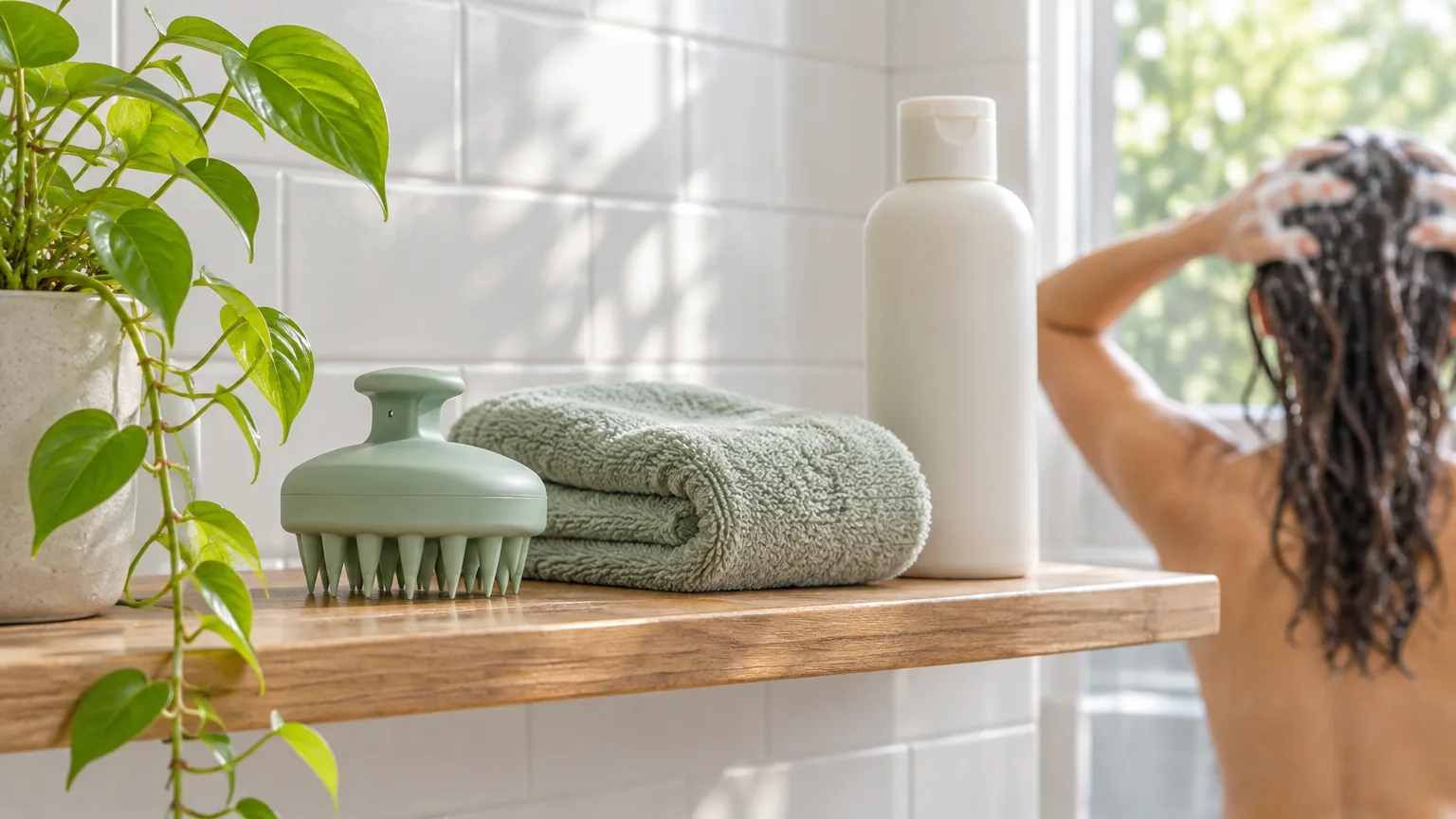
Knowing how to use scalp massager tools comes down to four choices: damp or dry hair, light pressure, slow circular strokes, and a clean tool afterward. Use a handheld brush with soft tips on damp hair in the shower, or on dry hair before you wash. A worn head massager follows its own manual instead.
This guide covers the routine, not results. We make no hair-growth claims, and the steps below are about technique, timing and cleaning.
Wet or dry: when to use a scalp massager
Both can fit, and the choice depends on the tool and your routine. A flexible silicone brush is made for the shower, where shampoo lets the tips glide through damp hair. A comb-style or wooden massager can be used on dry hair, where it moves slowly over the scalp before you wash.
Check the tool's manual before getting it wet. Some handheld tools are plain silicone or wood, while electric and worn devices have parts that should stay away from water unless the manual says otherwise.
| Tool type | Common use | Wet or dry |
|---|---|---|
| Silicone shampoo brush | Spreading shampoo, slow circles | Wet, in the shower |
| Spider-style hand massager | Light strokes with fine tips | Dry or damp, per the manual |
| Wooden or comb-style massager | Slow passes before washing | Dry |
| Worn head massager | Seated or reclined session | Dry, follow the manual |
How to use scalp massager tools step by step
This routine fits a handheld brush. Adjust it to your tool's manual.
- Detangle your hair with a regular brush so the tips do not catch.
- Decide on dry or damp hair. If you are in the shower, wet your hair first.
- Part your hair into a few sections so the tips reach the scalp rather than sitting on top of the strands.
- Place the tips flat against the scalp. Use light pressure and move in small circles.
- Work from the front hairline toward the crown, then the sides and the back of the head.
- Keep the tool moving. Do not drag it across the scalp or press hard in one spot.
- Keep the session short, then stop and rinse if you are in the shower.
- Clean the tool before you put it away.
If you notice anything unusual on your scalp, stop using the tool and ask a licensed professional.
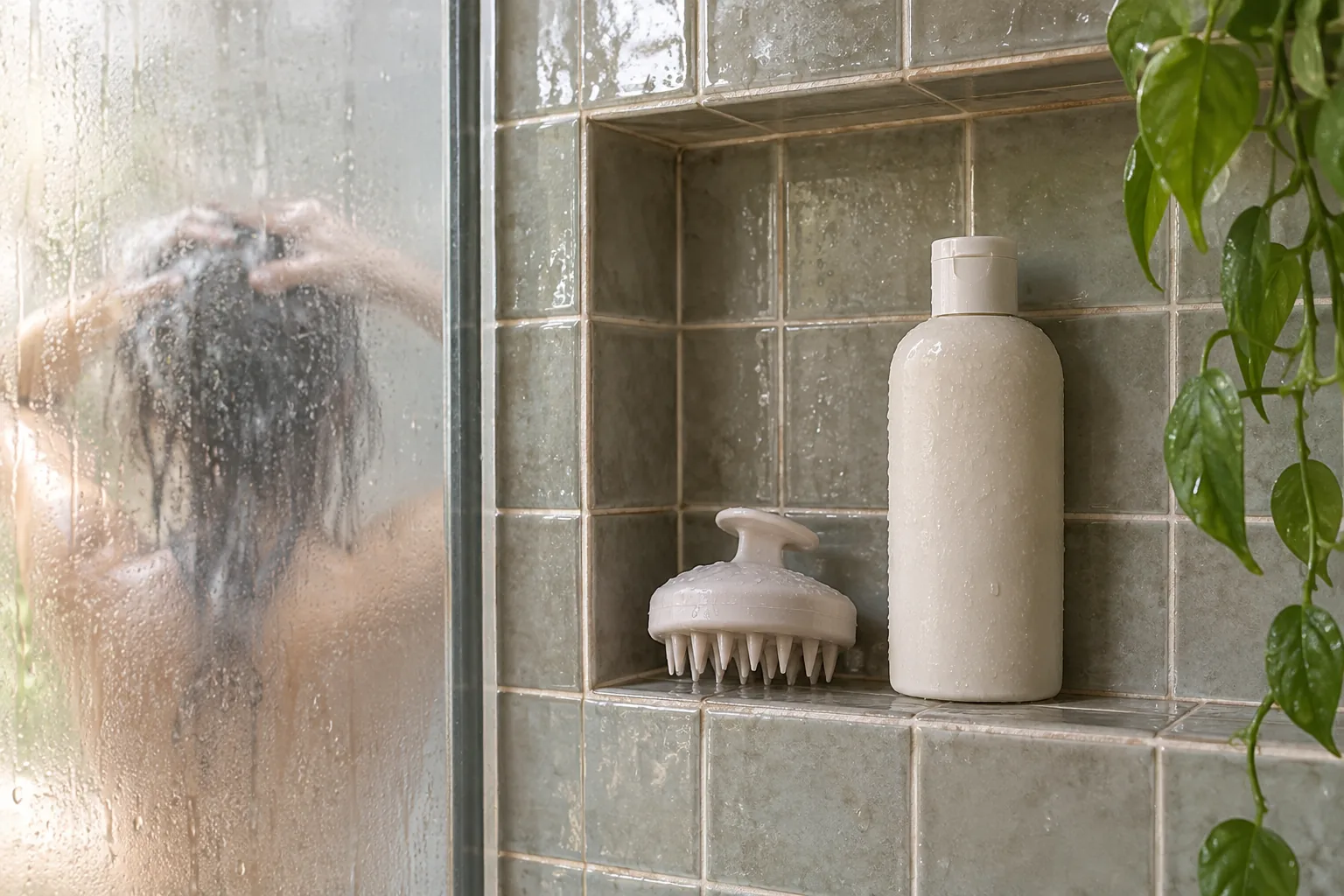
Before or after shampoo?
You can do either, and each has a different job. Before shampoo, on dry hair, you move the tool across the scalp and then wash as usual. During shampoo, on wet hair, the brush spreads lather through the sections.
If you use a conditioner or a rinse-out mask, keep the tool on the scalp only for the shampoo step. Apply conditioner to the lengths by hand, because the tips are for the scalp area.
Using a scalp massager with oil
If you use a hair or scalp oil, apply it as its label directs and use the tool on dry hair with slow strokes. Wash the oil out with shampoo afterward, then wash the tool itself, since oil collects between the tips.
Using a spider-style massager on dry hair
A spider-style head massager has thin, flexible wires that fan out from a handle or a ring. On dry hair, rest the wire tips on the scalp near the crown and make slow strokes outward toward the sides. Lift the tool and place it again rather than dragging it through tangles.
Keep the motion light and let the wires do the moving. If the wires snag, detangle your hair first and check the manual for how the tool is meant to be held.
Pressure and session length
Treat light pressure as the starting point. The tips should rest on the scalp and move with your hand, not dig in. If the tool bends flat against your head, ease off.
For session length, begin with a short session and use the tool a few times a week as your routine allows. Follow the manual if your tool lists a limit. Stop if anything about the session seems off, and ask a licensed professional about scalp concerns.
| Step | What to do |
|---|---|
| Pressure | Light, tips resting on the scalp |
| Motion | Small, slow circles |
| Sections | Front to crown, then sides and back |
| Session | Begin short, follow the manual |
| After | Rinse hair, wash the tool |
Using a worn head massager
A worn device is a different routine from a handheld brush. You sit or recline, wear it, and set it from a controller. The ScalpNimbus is a head massager worn with an adjustable hook-and-loop band. It combines air compression in six zones with a graphene heating element.
To use it, place the headband on your head and close the hook-and-loop strap until it sits snugly. Use the handheld controller to choose one of the four massage modes and one of the three heat levels. Sit or recline and let the session run, adjusting the settings whenever you like.
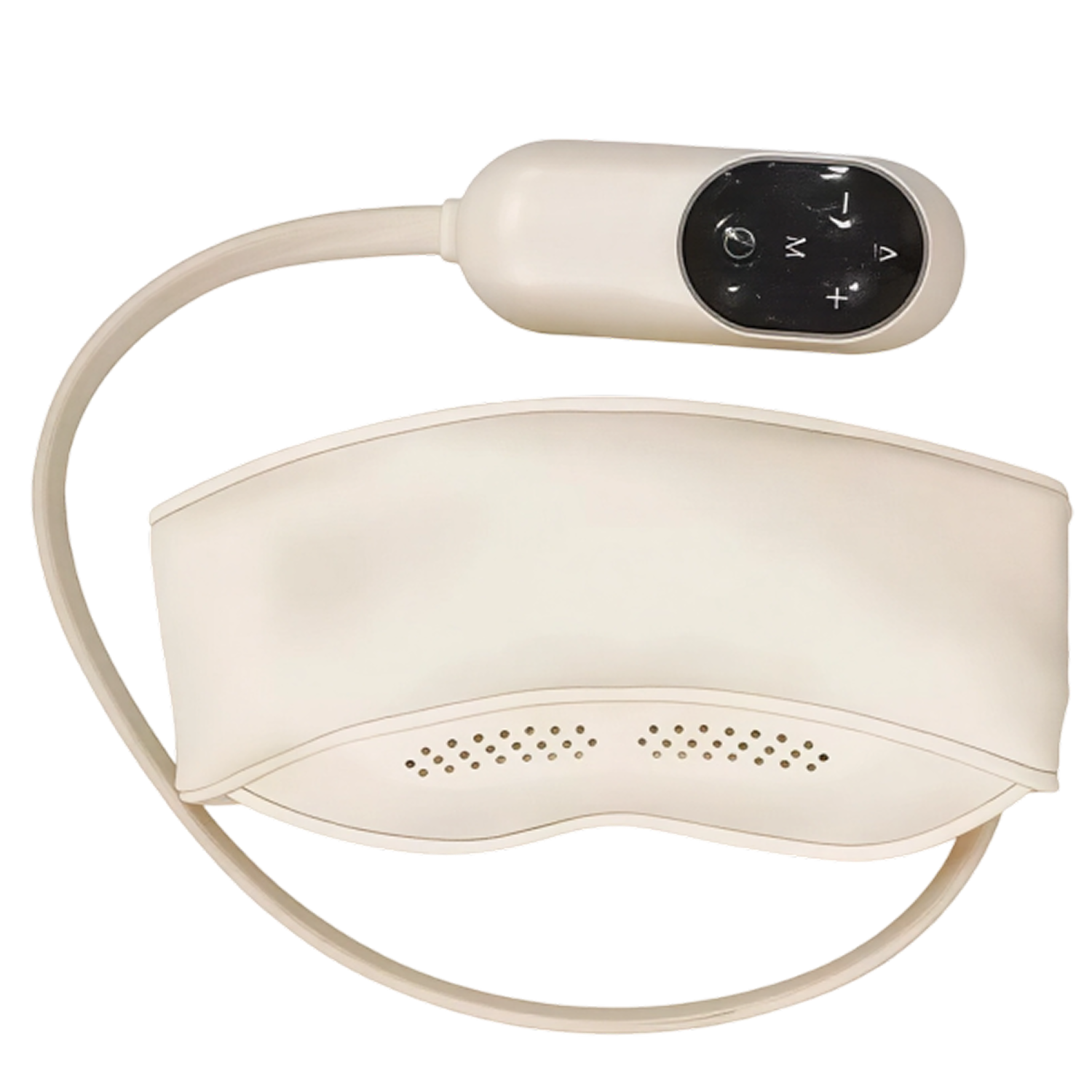 In this guideScalpNimbus$119.99View
The removable coral fleece cover detaches from the unit, so you can wash the part that touches your hair. The unit also comes apart to fit in a bag for trips. The box holds a USB charging cable and a user manual; read the manual before the first session. Browse other options in Hand, Leg & Head Massagers.
How to clean a scalp massager
A tool that touches your scalp, shampoo and oils needs regular cleaning. Unplug any electric device first and follow its manual.
- Rinse a silicone or plastic brush under warm water right after use to remove shampoo and loose hair.
- Pull hair from between the tips by hand or with a comb.
- Wash with a little mild soap and rinse again.
- Stand it tip-down or lay it flat to air dry before storing.
| Part | Cleaning |
|---|---|
| Silicone brush | Rinse after each use, wash with soap weekly |
| Wooden massager | Wipe with a damp cloth, dry right away |
| Fleece cover | Detach and wash as the manual lists |
| Electric unit | Unplug, wipe the surface, keep it away from water |
The same rinse, dry and store habit applies to other personal-care items; see how to sanitize a toothbrush for a similar routine.
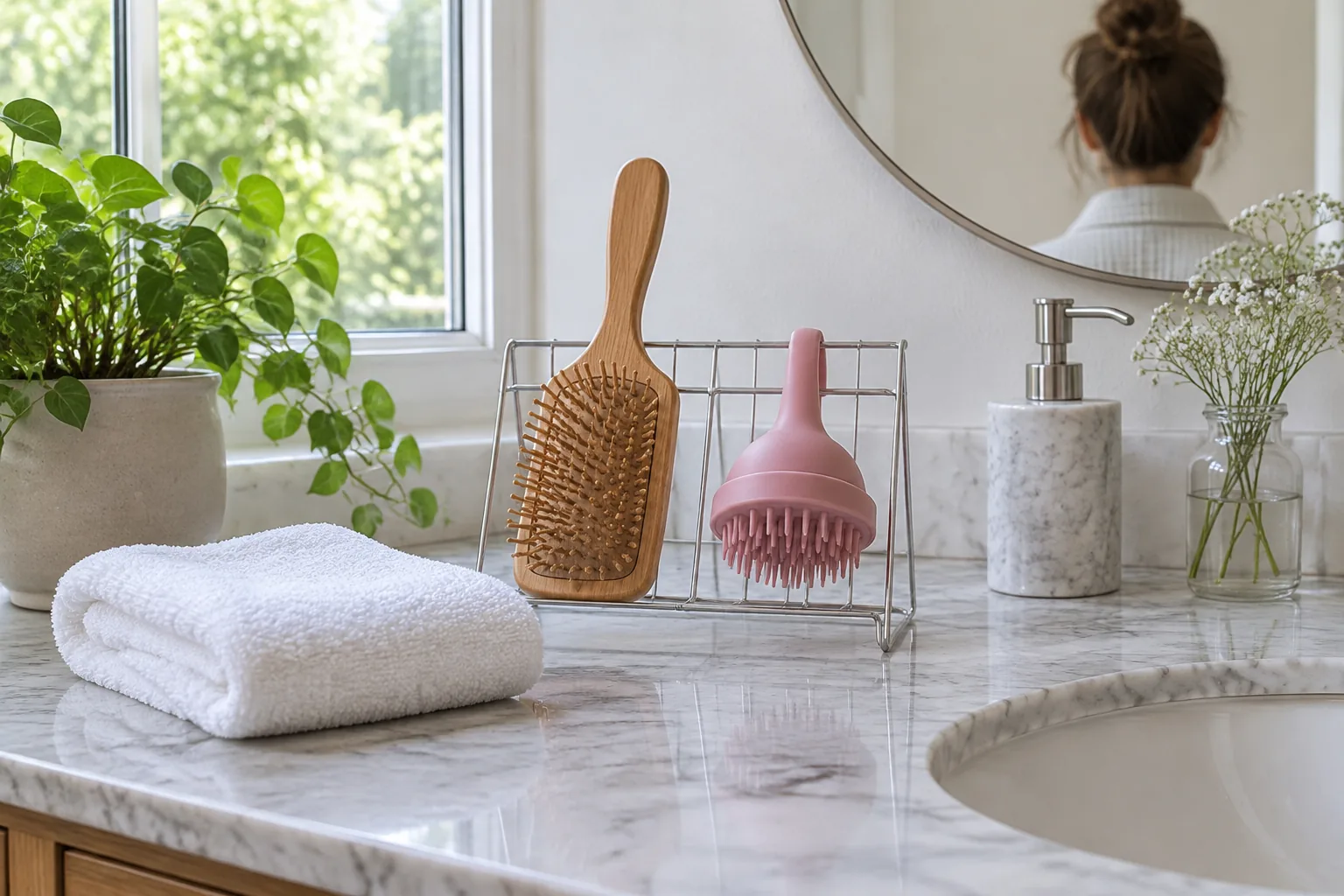
Common mistakes to avoid
When you practice how to use scalp massager tools, these habits are worth dropping.
- Pressing hard or scrubbing with the tips.
- Pressing in with long fingernails behind the tool, which can scrape the scalp.
- Skipping the detangle step, so the tool snags hair.
- Putting the tool away wet or with hair still in it.
- Sharing the tool without washing it between users.
Hair growth and massage gun questions
A scalp massager is a grooming tool, and we do not make hair-growth claims for it. If you have concerns about your hair or scalp, ask a licensed professional.
A percussion massage gun is built for other areas of the body, so do not put one on your head unless its manual says the device is meant for that. A head massager made for the scalp, with its own manual, is the match for this routine.
For hand techniques you can use without any tool, how to massage a back covers general hand strokes for the back, and the stroke basics there carry over as ideas for slow, even movement.