Women's Compression Stockings: Length, Pressure Level and Sizing
Choose women's compression stockings by length, the mmHg range on the label, tape-measured size, opacity and how easily they go on. Includes a women's versus men's cut table.
The Calvedon Team
November 15, 2026 · 6 min read
Women's compression stockings are chosen on four checks: length, the pressure level printed in mmHg, your measurements, and how the fabric looks and goes on. Start with a knee-high length in a mild pressure range for desk, standing or travel days, then confirm size with a tape measure rather than a shoe size. Higher pressure levels are a conversation for a licensed healthcare provider.
This guide walks through each check in order, explains how women's and men's cuts differ, and ends with a wear-and-care routine you can follow.
How to choose women's compression stockings: the decision checklist
Work through these five questions before you compare any listing. Each one narrows the field, and together they point to a single garment instead of a long list of near-identical options.
- Where do you want the pressure to end: ankle, calf, knee, thigh or waist?
- Which mmHg range is printed on the label?
- What are your ankle, calf and (for longer styles) thigh measurements?
- Do you need a sheer, skin-tone look or is an opaque, sock-like look fine?
- Can you put the garment on by yourself each morning?
A graduated design means the pressure is highest at the ankle and lessens as the garment moves up the leg. Check that the product page says graduated, because a plain tight sock does not follow that pattern.
Step 1: Pick the length
Length decides where the garment ends and how much of the leg it covers. The right choice follows your day, not a trend.
| Length | Where it ends | Fits when |
|---|---|---|
| Ankle or crew | Just above the ankle bone | You want light foot and ankle coverage |
| Knee-high | Just below the knee crease | You sit, stand or travel for long days |
| Thigh-high | Upper thigh, often with a grip band | Your provider specifically suggests it |
| Pantyhose or waist-high | Waist | You want one garment under dresses or skirts |
Knee-high is the usual starting point because it is visible only at the ankle under trousers. Thigh-high and waist-high styles add a band or waistband, so measure the thigh and hip as well.
Step 2: Read the mmHg label
The number on the package is a pressure range in millimeters of mercury. A label such as 8-15 mmHg describes a mild range, and a higher pair of numbers describes a firmer garment. The 8-15 mmHg compression socks meaning is simply that: the stated pressure at the ankle falls between those two numbers.
Brands label ranges differently, so compare the printed numbers, not words like "light" or "firm." If a listing shows no mmHg range at all, see that as missing information and look for one that does.
Support hose versus compression hose
Compression support hose is a loose term. Some listings use it for sheer hosiery with mild pressure, others for sock-style garments with a printed range. The printed mmHg figure is the clearest way to tell them apart.
If your question is which level suits a specific health situation, ask a licensed healthcare provider. They can name a range and tell you whether a fitted or prescribed garment makes sense.
Field note
Photograph or save the mmHg range of any pair you buy. When you reorder, matching the printed numbers helps you keep the same fit.
Step 3: Measure for size
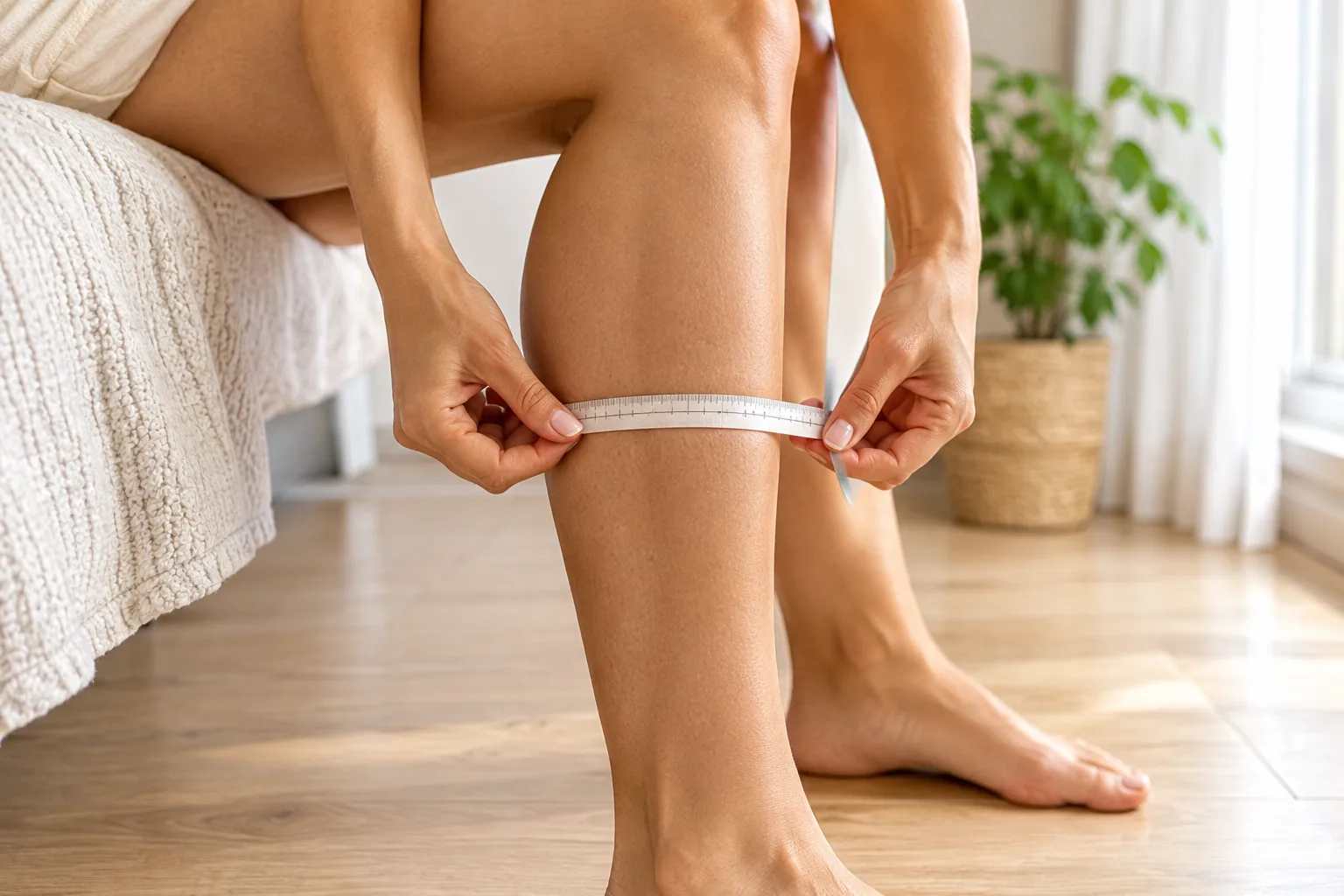
Sizing charts rely on body measurements, so a tape measure matters more than your usual clothing size. Measure in the morning, sitting with your feet flat on the floor, and keep the tape snug but flat.
- Ankle: the narrowest point above the ankle bone.
- Calf: the widest part of the lower leg.
- Thigh: the widest part, for thigh-high styles.
- Leg length: floor to the back of the knee, for knee-high styles.
Write the numbers down and match each one to the chart. If your ankle and calf fall in different sizes, check whether the brand offers a wider calf option, or pick the size that fits the calf and confirm the ankle reading with the chart notes.
Plus-size and wider calf fit
Plus-size women can wear compression stockings, and the process is the same: measure the calf and, for longer styles, the thigh, then compare against a chart that lists those ranges. Look for a wide-calf or extended-size label and a chart that covers your measurement. Pass on a pair if your number sits outside the chart, because an undersized pair can bunch or roll at the top band.
Women's and men's cuts: what differs
Women compression stockings and men's compression stockings often share the same pressure ranges. The differences are in the pattern, not the purpose.
| Feature | Women's cut | Men's cut |
|---|---|---|
| Calf shape | Narrower ankle, shaped calf panel | Wider overall, straighter calf |
| Foot size range | Matched to women's shoe sizes | Matched to men's shoe sizes |
| Looks | Sheer, solid or patterned options | Often darker, ribbed, sock-style |
| Top band | Often narrower | Often wider |
Use the table as a starting point and go by the chart. A woman with a larger calf may fit a men's cut, and a man with a slim leg may fit a women's cut, so let the measurements decide. For a comparison of sleeves and full stockings, read Leg Sleeve Compression: Sleeves vs Stockings, Sizing and Daily Wear.
Step 4: Check opacity, fabric and how to put them on
Opacity describes how much skin shows through. Sheer fabrics suit dresses and work wear, semi-opaque suits most trousers, and fully opaque looks like a regular sock. The fabric is worth a look too: cotton blends, nylon and bamboo fiber are all sold, and the label lists the fiber content.
Donning is the step that decides whether a pair gets worn. Roll the garment down to the heel, slide your foot in, then ease the fabric up the calf in small sections. Dry skin and clean hands help, and rubber gloves can add grip on the fabric.
One option in our range is CalfHarbor, a pair of graduated compression stockings with pressure zones from the ankle to the calf. They use bamboo fiber fabric and a stretch-engineered, seamless glide design for slipping them on. A sizing guide comes in the box, along with a care guide and a travel pouch.
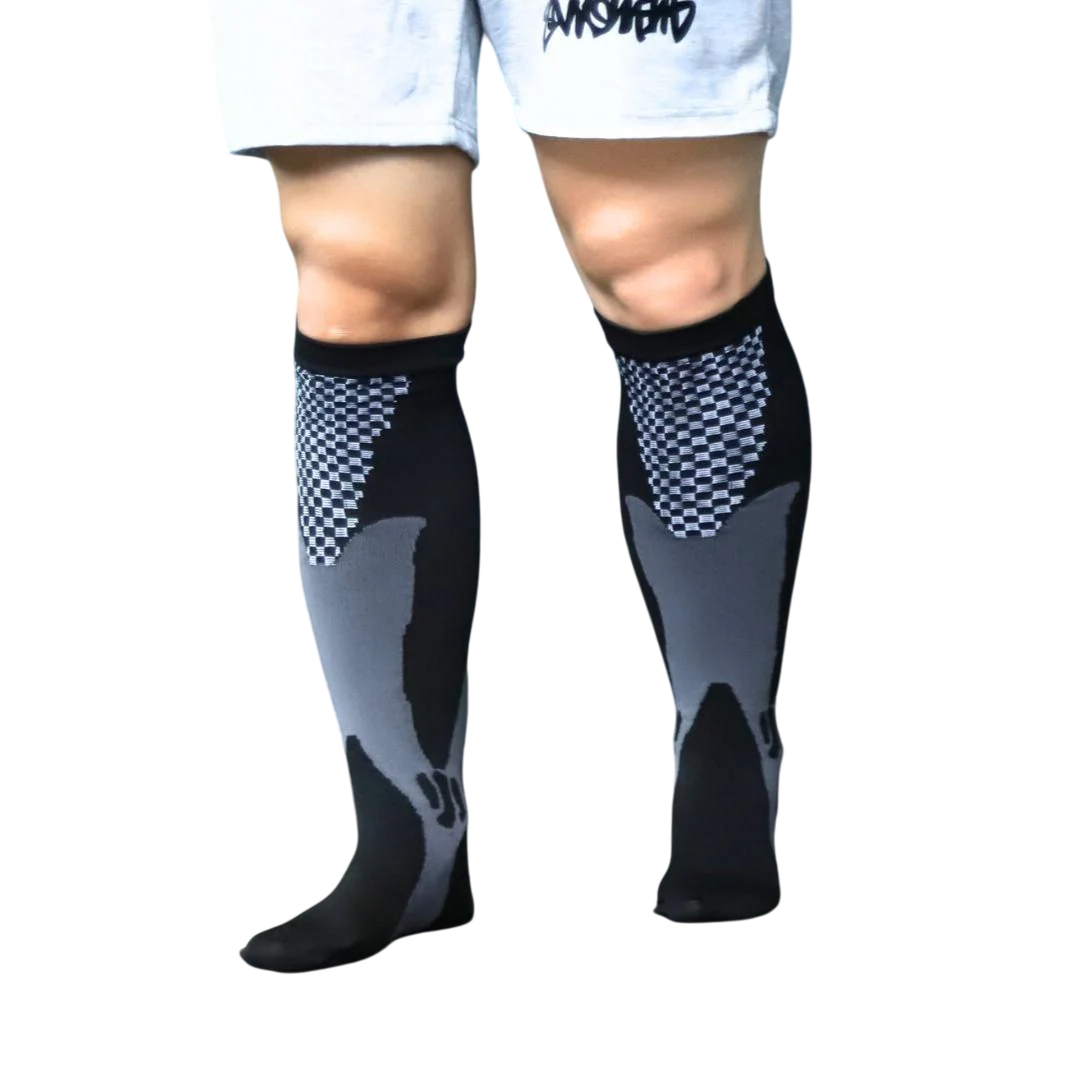 In this guideCalfHarbor$49.99View

Who should check first, and common buying mistakes
Ask a licensed healthcare provider before wearing compression garments if you have a health question about your legs or skin, or if you are unsure which mmHg range applies. Follow the label, and if a pair does not sit as the manual describes, take it off and ask a provider.
These slips cause fit problems:
- Choosing by shoe size instead of calf and ankle measurements.
- Buying a higher mmHg range than the label on the old pair, without advice.
- Folding the top band down, which makes a tight ring.
- Wearing a pair that has lost its stretch.
Browse the Compression & Support collection to compare lengths and sizing guides side by side.
Wear and care routine
Put the stockings on in the morning. Pull the fabric flat along the leg so it lies even, and check that the top band sits below the knee crease on knee-high styles.
For care, follow the label or the care guide that comes with the pair. A common routine is hand washing or a delicate cycle in a mesh bag, mild detergent, no fabric softener, and air drying away from direct heat. Keep a second pair so one can dry while you wear the other.
Replace a pair when the fabric looks thin, the band loosens or the garment no longer holds its shape. Check the size again if your measurements change.