How Do Acupressure Mats Work? Spikes, Session Length and Setup
An acupressure mat spreads your body weight across many small raised points. This guide covers spike density, surface types, a starter session plan and layering, with no health promises.
The Calvedon Team
November 17, 2026 · 6 min read
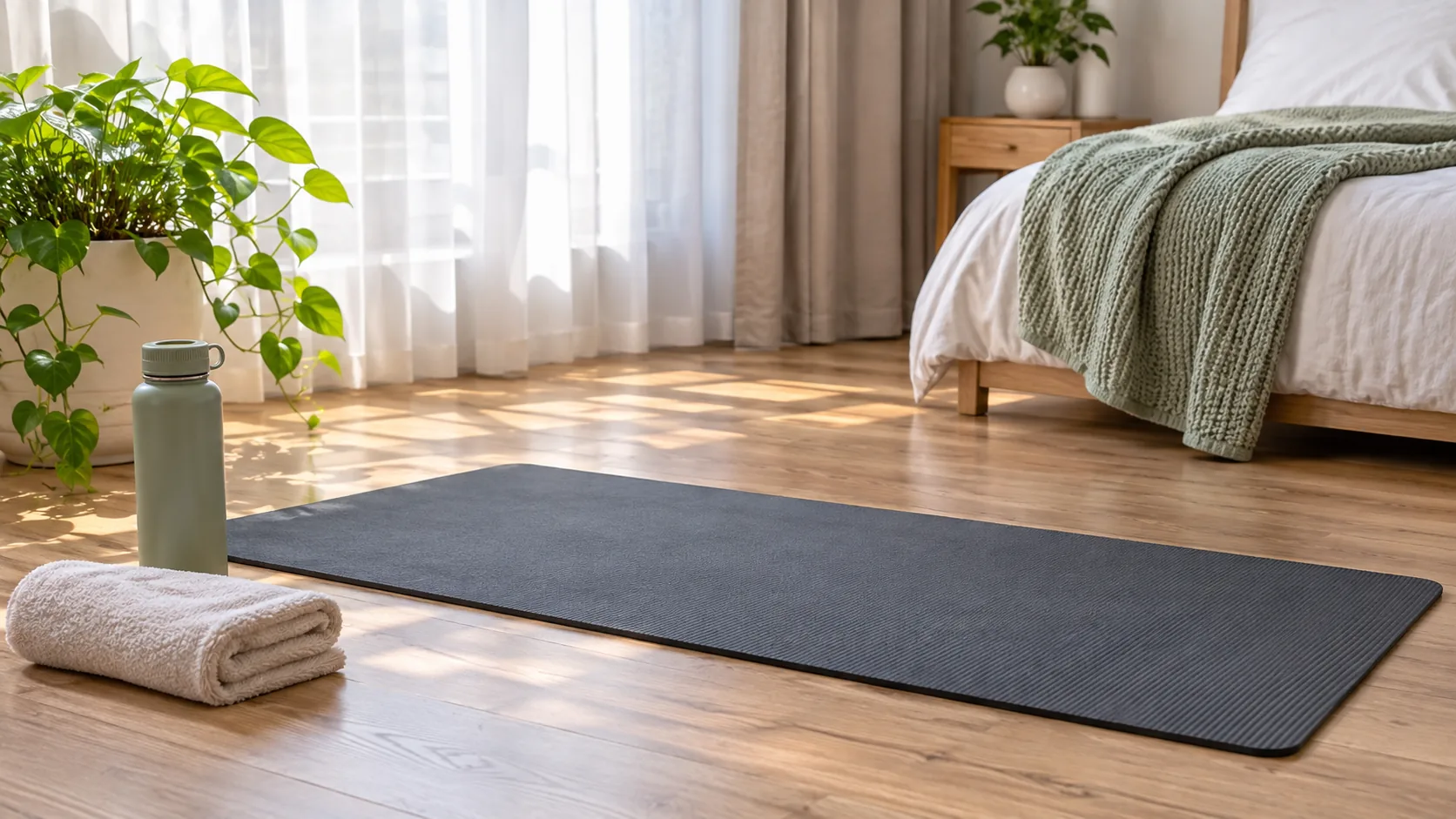
How do acupressure mats work? A mat is covered with rows of small raised points, and when you lie or stand on it, your body weight presses those points against the skin. The result is a firm, prickly sensation across the whole contact area, delivered without a partner or a hand-held tool.
That is the mechanism, and this guide sticks to it. Below you will find what spike density changes, how surface types differ, a starter session plan, layering tips and a care routine. It makes no health promises, because what a mat does for you is a question for a healthcare provider, not a product page.
How do acupressure mats work, step by step?
The idea comes from acupressure, a practice of applying pressure to specific points on the body. A mat adapts that idea: instead of one fingertip on one spot, hundreds or thousands of small points press at once.
- You lay the mat on a firm surface, such as a floor or bed.
- You lie back, or stand, so your weight rests on the points.
- The load spreads over every point touching you, so each point carries a small share.
- The sensation is strongest at first contact and changes as you stay still and breathe.
Because the same weight is shared among more points, a mat with many points feels different from one with a few widely spaced points. That single idea explains most of the differences between mats.
Acupressure mat vs acupuncture
Acupuncture uses fine needles placed by a trained practitioner. An acupressure mat does not pierce the skin: its points are blunt, and you control how much weight goes onto them. The two are separate practices, so a mat is not a substitute for a practitioner's care.
Do acupressure mats work? What to expect
A mat does one thing: it applies surface pressure to the areas touching it. Whether that leads to any change in how you feel varies from person to person, and this guide does not promise one.
What are the benefits of acupressure mats in practical terms? You get a hands-free routine, a set time to lie still, and one tool that reaches the back, neck, shoulders and legs as you shift position. You can pair a mat session with an evening wind-down, which is a habit rather than a care plan.
Spike density and surface types
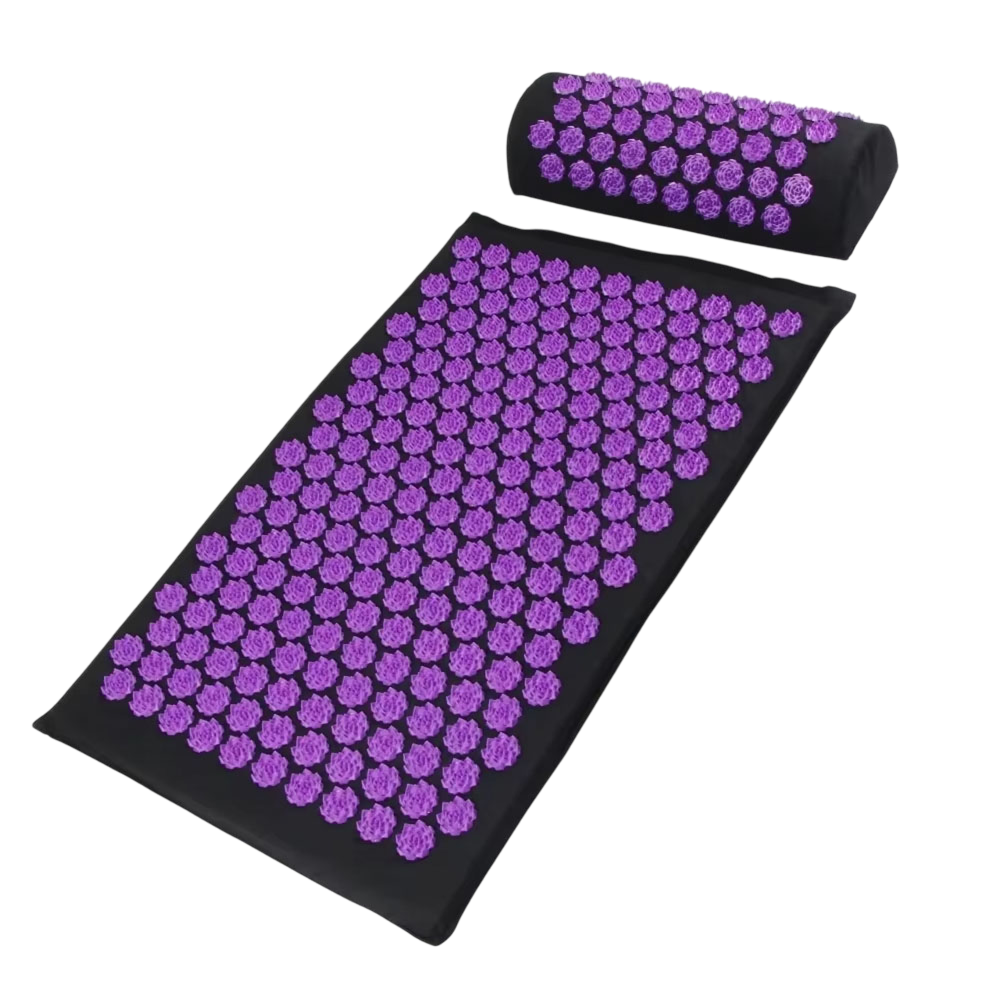
Three details shape how a mat feels: how many points it has, how they are spaced, and what sits under them. Points are commonly molded plastic on a fabric-covered foam base, though you should check the product page for a specific mat.
| Feature | What it changes | What to check |
|---|---|---|
| Many small points, close together | Weight is shared among more points, so each one presses lightly | Suits a first session on a thin shirt |
| Fewer, wider-spaced points | Each point carries more of your weight | Feels sharp on bare skin, so go slowly |
| Foam base under the points | Adds give under your weight | Place on a firm surface so the mat stays flat |
| Wipe-clean surface | Lets you remove surface residue between uses | Look for care instructions you will follow |
| Folding design with a case | Lets you store or carry it | Check the folded size against your bag or closet |
If you want a mat that is simple to use, SerenPoint is covered with thousands of small pressure points. You lay it flat, lie back and rest. It folds into its carrying case, and the box includes the mat and the travel case.
 In this guideSerenPoint$89.99View
A starter session plan
How long should you stand on an acupressure mat, or lie on one? There is no single rule, so build up in steps and let your comfort set the pace. The plan below is a conservative starting point, not a fixed routine.
| Session | Position | What you do |
|---|---|---|
| First | Lying on your back, thin shirt on | Lie back for a short session, then roll to the side to get off the mat |
| Next few sessions | Lying on your back | Repeat the same length until the sensation feels familiar |
| After that | Lying on your back | Add a little time only if you want a longer session |
| Optional | Standing with a wall or chair for balance | Stand for 1 minute, then step off and reassess |
| Optional | Neck or legs resting on the mat | Shift position every few minutes |
Can you overdo an acupressure mat? A longer or firmer session is not the goal. If the sensation becomes more than you want, step off, wear more layers next time or shorten the session. Do not use the mat on broken or irritated skin, and step off if something feels wrong.
Common mistakes
- Starting on bare skin with a long first session.
- Using the mat on a soft surface where it sinks and bunches.
- Rushing onto and off the mat instead of lowering yourself slowly.
- Holding your breath instead of breathing slowly.
- Skipping a check with a healthcare provider when you have a health question.
Field note
Lower yourself onto the mat slowly, with your hands on the floor beside it, and get off by rolling to one side. Moving gradually lets you control how much weight the points take.
Layering tips for setup
Layers are the main control you have over intensity. The more fabric between you and the points, the softer the sensation.
- Start with a thin shirt, as the SerenPoint instructions suggest for a softer feel, then move to less fabric only if you choose to.
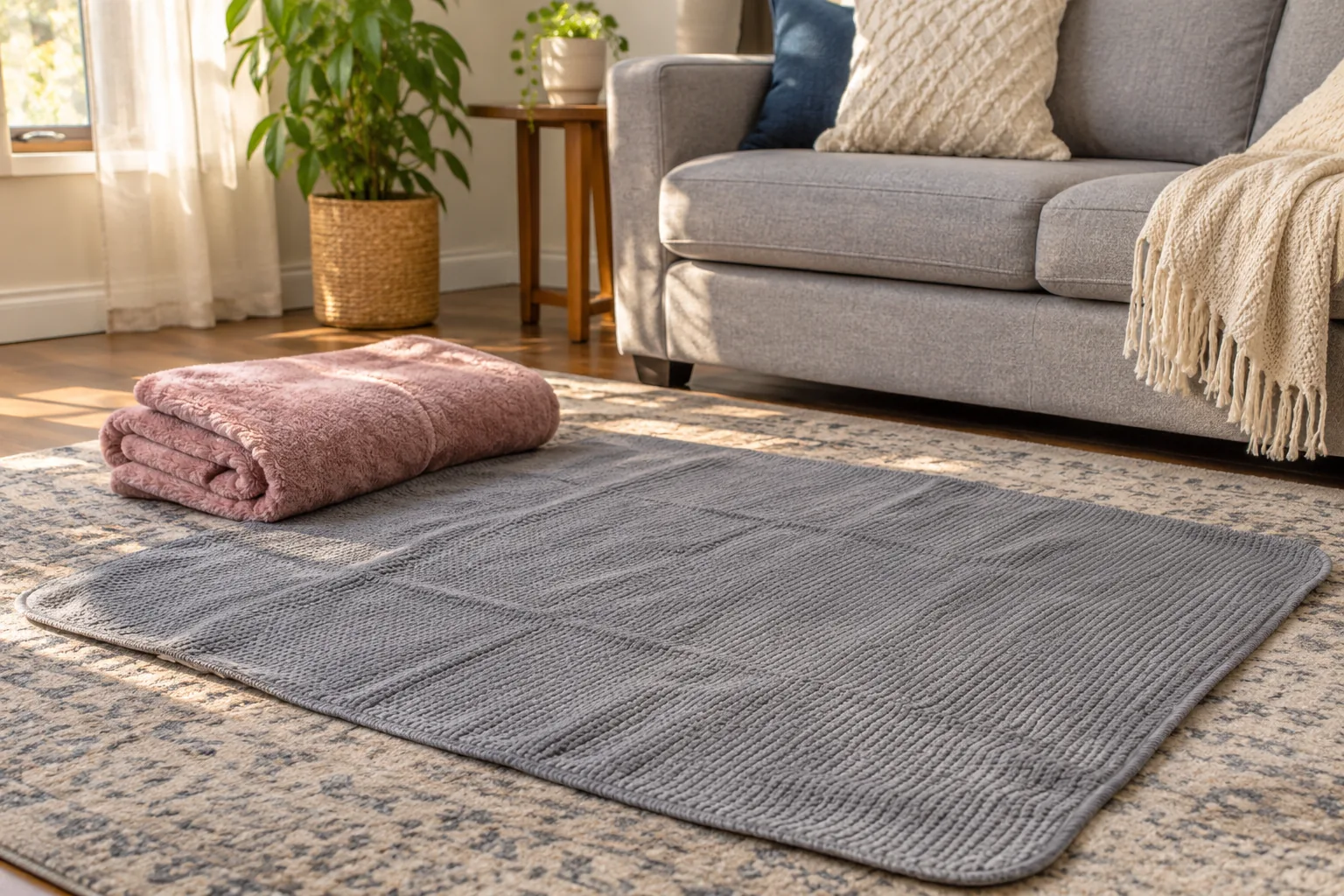
- Place a towel over the mat for a lighter first session.
- Lay the mat on a firm surface such as a floor or bed, and smooth out any creases first.
- Put a small folded towel under your neck if you want your head supported.
- Keep the room warm and the lighting low if the session is part of a wind-down routine.

Who should check first
Can you use an acupressure mat while pregnant? That is a question for your healthcare provider, and the same goes for any health condition, skin concern or medication question. Ask before you start, and follow the instructions that come with your mat.
Children and anyone who cannot easily get on and off the mat should not use it without adult help. Keep the mat away from pets and small children when it is not in use.
Care and storage
A mat you lie on needs regular care. Wipe the surface with a damp cloth and mild soap, then leave it to air dry before folding. SerenPoint folds into its own carrying case, so it can go to a desk, a hotel room or a friend's house.
Store the mat flat or folded as the manual lists, away from damp. If you are building a wider wind-down routine, our sleep hygiene checklist covers light, noise and temperature, and the foot spa setup guide adds a soak routine. For other tools, browse massagers for neck, back and feet.
Quick decision checklist
- Pick a firm, flat surface and clear the space around the mat.
- Wear a thin shirt for the first session.
- Keep the first session short and add time only when you want to.
- Step off if the sensation is more than you want.
- Wipe the surface, let it dry and fold it away after each use.