Sleep Hygiene Tips: A Bedroom Light, Noise and Temperature Checklist
Sleep hygiene tips you can set up tonight: a room-by-room checklist for darkness, sound masking, temperature and a steady wind-down routine.
The Calvedon Team
November 11, 2026 · 6 min read

The most useful sleep hygiene tips are habits and bedroom conditions you can set up tonight: keep the room dark, mask unwanted noise, keep it cool, and follow the same wind-down steps every evening. This guide turns those ideas into a room-by-room checklist you can work through in order.
Each section names one thing to fix, how to check it, and a common mistake to skip. Use the table below as a one-page reference, then read on for the details.
Sleep hygiene tips checklist at a glance
| Area | What to check | Fix |
|---|---|---|
| Light | Glow from chargers, streetlights, gaps in curtains | Cover or move sources, add a sleep mask |
| Sound | Traffic, a partner's snoring, a noisy hallway | Steady masking sound at low volume |
| Temperature | Waking warm, kicking off covers | Cooler room, breathable layers |
| Evening routine | Bright screens, late caffeine, heavy meals | Fixed wind-down, dim lights |
| Schedule | Bedtime and wake time vary by day | Keep both consistent, including weekends |
Copy this table into a note or print it as your own sleep hygiene PDF and tick each row once the change is made.
What is sleep hygiene?
What is sleep hygiene, in plain terms? It is the set of daily habits and bedroom conditions that support regular sleep. It covers your schedule, what you eat and drink late in the day, how you spend the hour before bed, and the light, sound and temperature of the room.
It is a routine, not a device or a single trick. Public guidance, such as a public healthy sleep guide in PDF form, lists the same core habits: a steady schedule, less caffeine late in the day, and a bedroom set up for sleep. The sections below cover the bedroom first because it is the part you can change in one evening.
Step 1: Make the bedroom dark
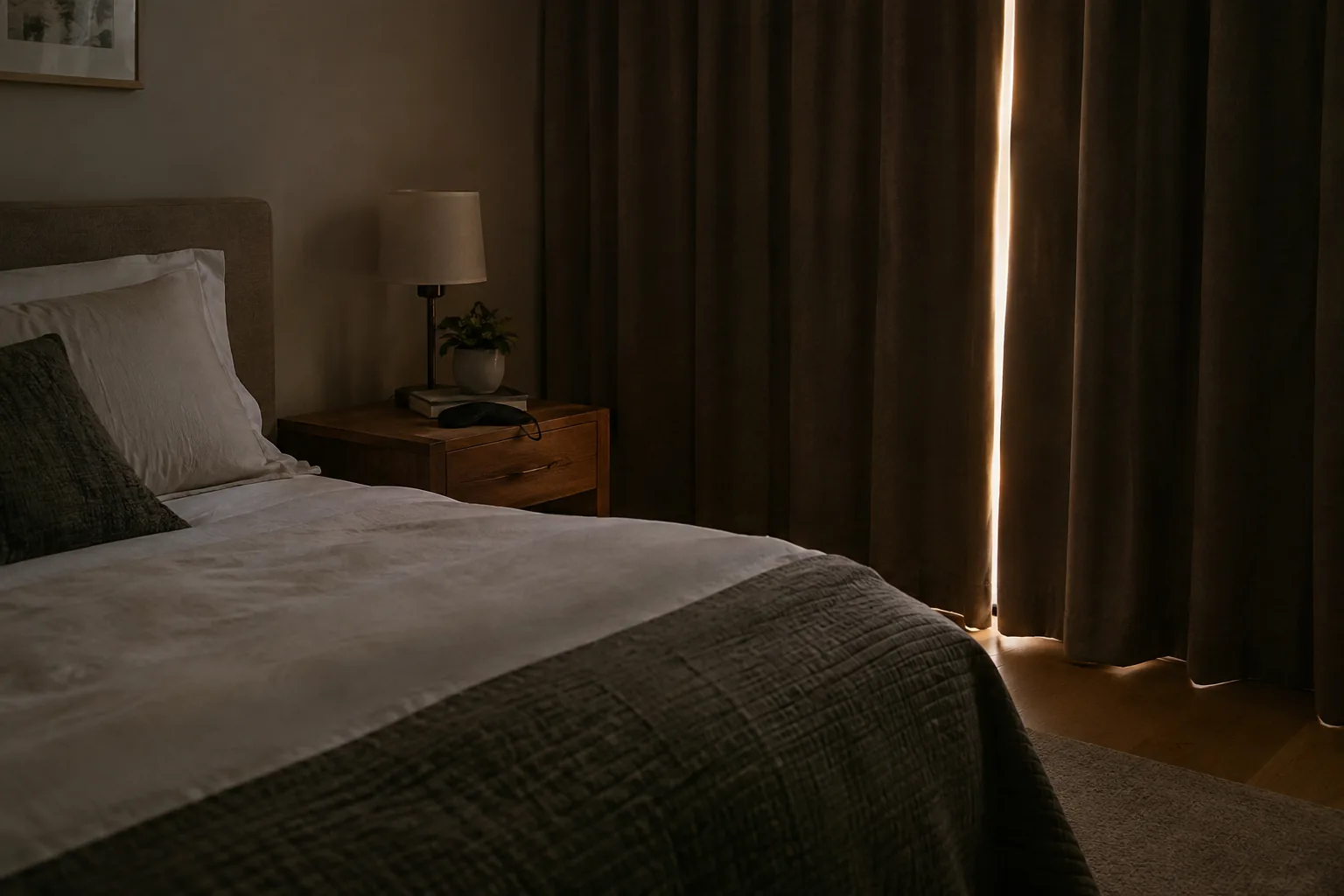
Stand by the bed with the lights off and look for light. Check the charger LEDs, the gap under the door, the edges of the curtains and any window that faces a streetlight. Move or cover small lights with tape, and close gaps with a door draft strip or overlapping curtains.
If light still gets in, a sleep mask covers what the room cannot. Our guide on how to choose a sleep mask covers fit, material and light blocking in detail.
Choosing a mask for side sleeping
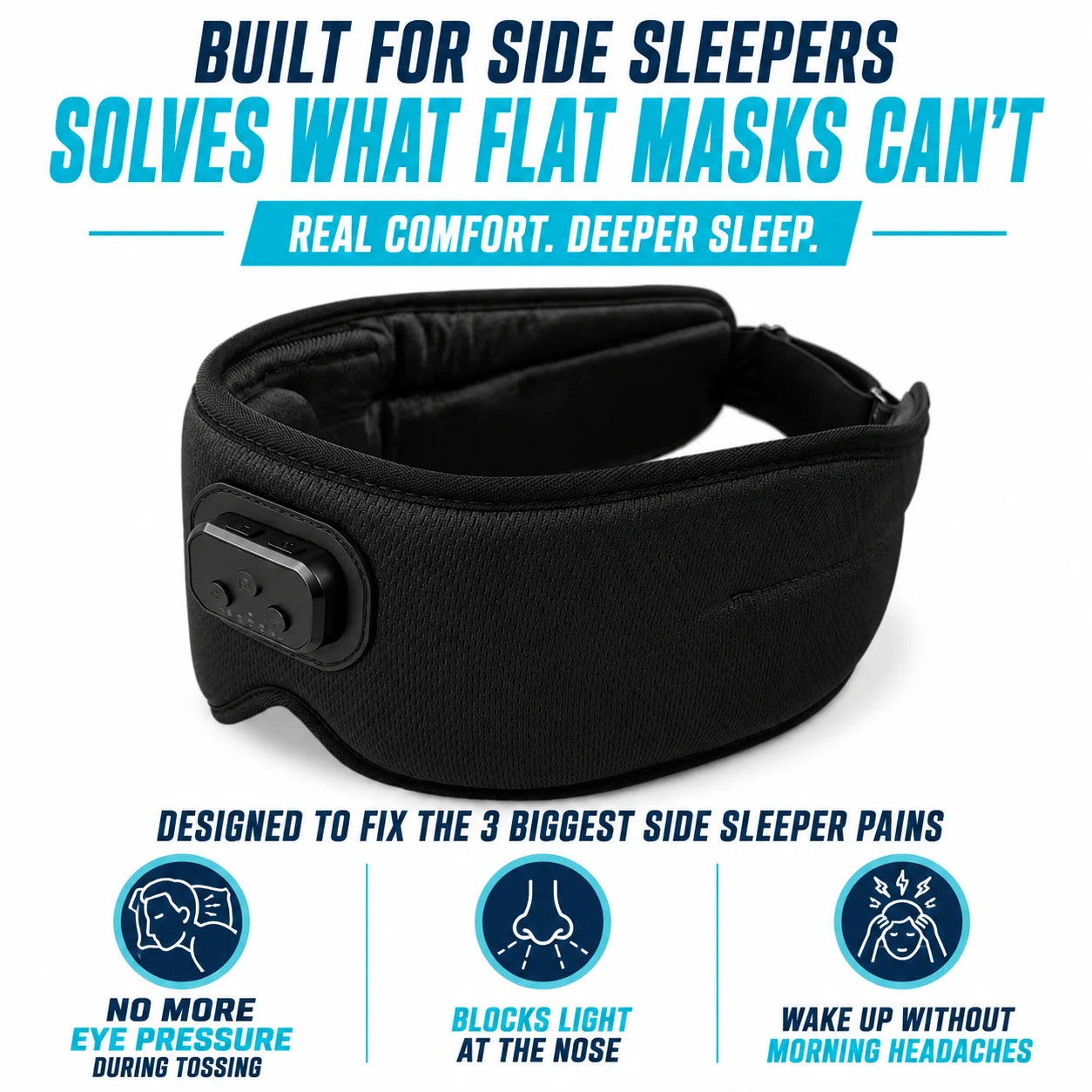
A flat mask can let light in beside the nose and press on the eyelids. DreamLayer is a contoured sleep mask with deep molded eye cups of memory foam under a silk exterior. The cups rest around the eye socket and leave open space over the eyelids, a shape that suits side sleepers, and the contoured nose bridge is shaped to close the gap beside the nose.
It has an adjustable strap with a sliding buckle and a travel pouch. The slim speaker modules come out before washing, and the mask is machine-washable. More options are in the Sleep Masks & Sleep Aids collection.
 In this guideDreamLayer$79.99View
Step 2: Control noise with sound masking
Sudden sounds tend to wake you, so the goal is a constant background that blurs them. Start by reducing what you can: close the window facing the road, move the clock out of earshot, and set phone alerts to silence overnight.
For the rest, use a steady masking sound at a low volume. White, pink, brown, fan and rain each sound different, and our comparison of white noise machine sounds helps you pick one. If you prefer something in the ear, see what to check before buying noise-canceling earbuds for sleep.
A speaker that stays under the pillow
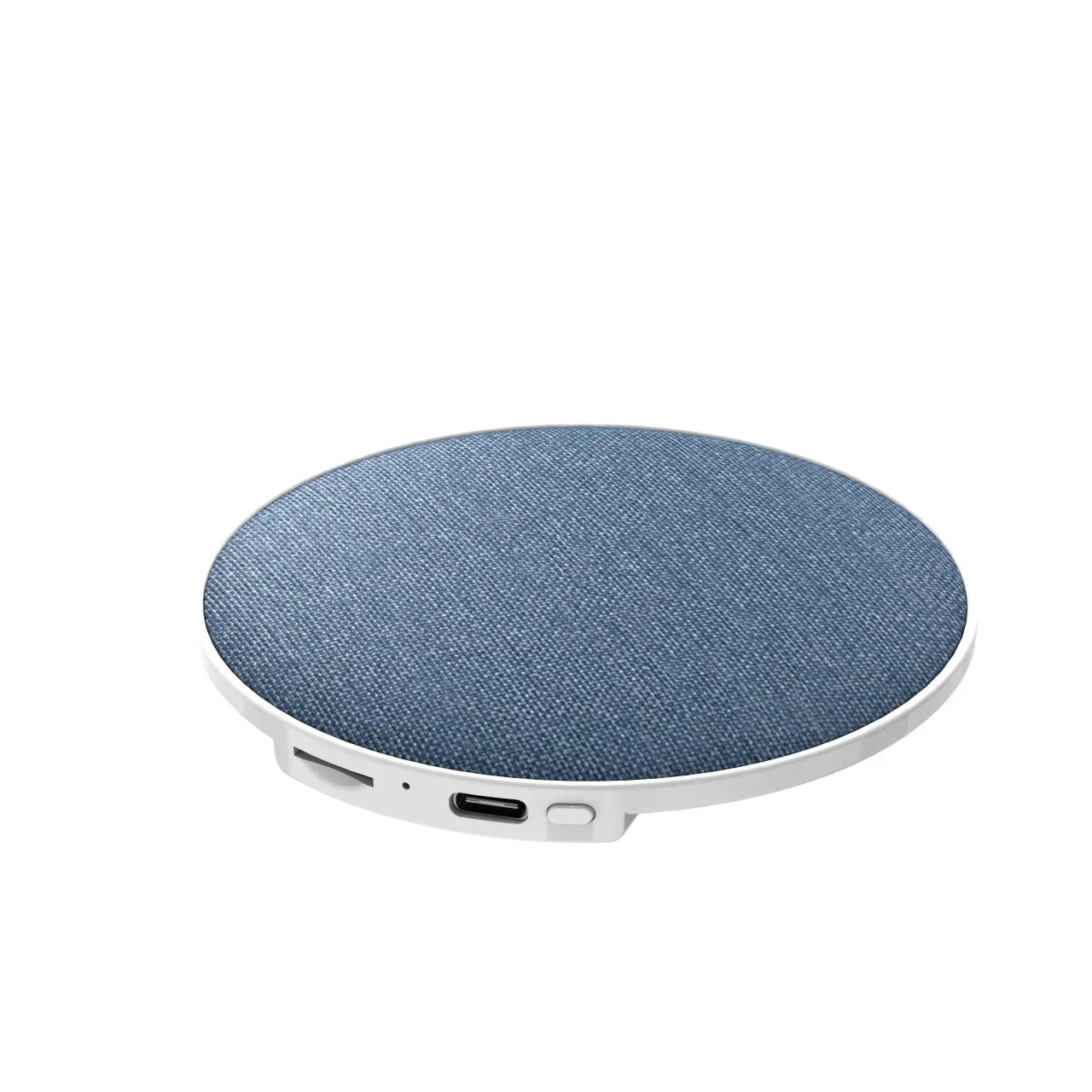
SlumberTune is a flat pillow speaker that slides under your pillow, near your ear, so you can skip headphones. It has built-in white noise and a selection of tones, and it plays your own audio from a phone over Bluetooth 5.4 or from a TF card. The sound passes through the pillow fabric, which suits quiet listening while someone else sleeps in the room.
Set the auto-off timer before you lie down, and charge it with the USB-C cable. You can also browse the White Noise & Sleep Earbuds collection.
 In this guideSlumberTune$69.99View
Field note
Keep masking sound at a low, steady volume. If you can hear it clearly from across the room, turn it down.
Step 3: Set the bedroom temperature
A cool room suits sleep, while a warm one often leads to kicking off covers and waking. Lower the thermostat before bed, open a window if the weather allows, and avoid stacking heavy layers that trap warmth.
Check your bedding as well. Swap flannel or a thick comforter for lighter layers in warm months, and wash pillows and covers on a regular schedule; our guide on how to wash pillows lists foam, wedge and fiber types. If you share a bed with someone who runs warmer or colder, the Scandinavian sleep method gives each person their own duvet.
A cooling layer for warm sleepers
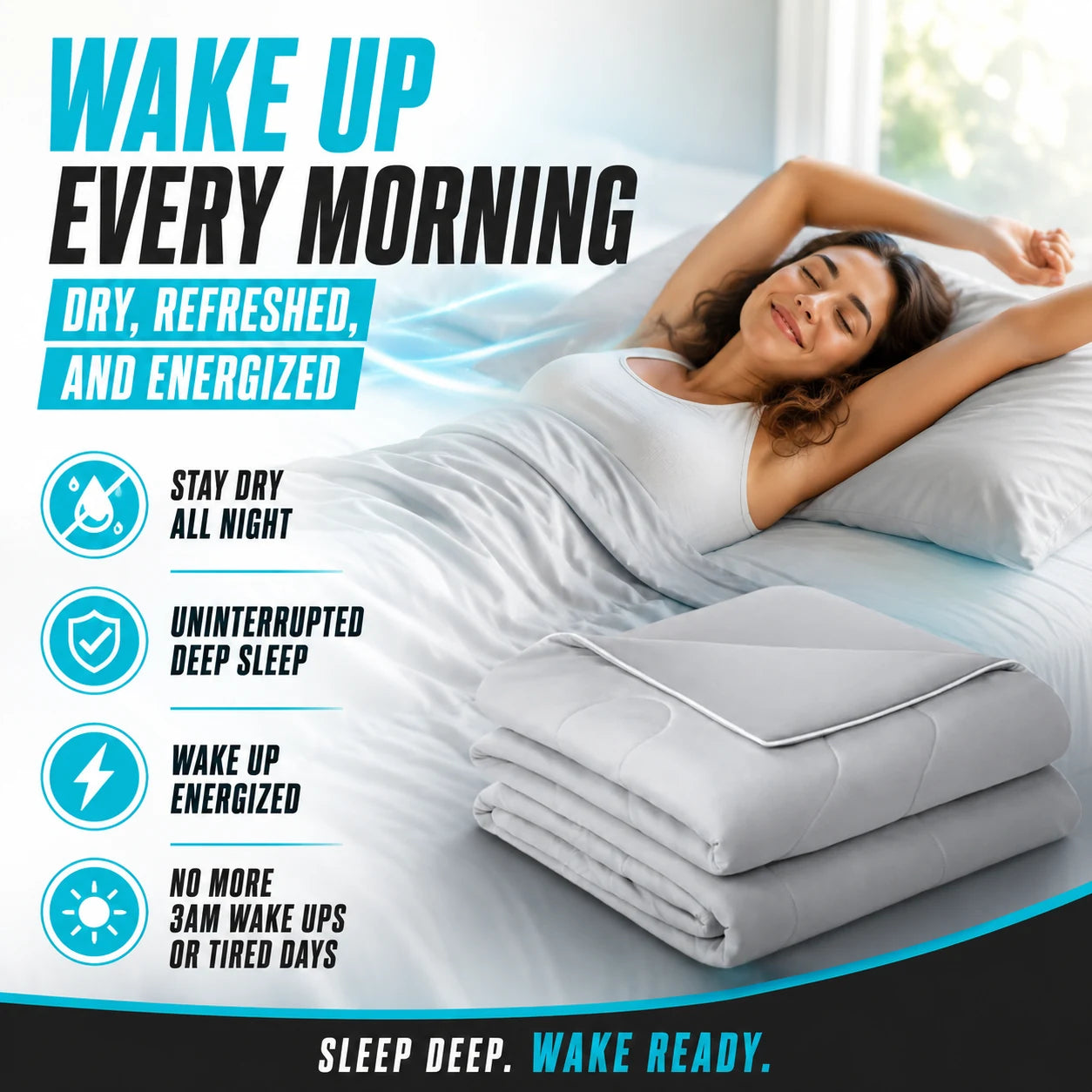
CryoVeil is a cooling blanket made with double-sided Q-Max fabric, a measure of how a fabric draws heat from the skin on contact. The cooling fibers are woven into the fabric rather than applied as a coating. Spread it so one side rests against your skin, use it alone in warm weather, or put a duvet on top.
To clean it, place it in the protective bag, wash on a cold cycle without bleach, and air-dry it. More options are in the Cooling & Heated Bedding collection.
 In this guideCryoVeil$119.99View

Step 4: Build a wind-down routine
The room helps only if your evening points toward sleep. Pick a few steps and repeat them in the same order each night.
- Keep your bedtime and wake time the same, weekends included.
- Stop caffeine several hours before bed, and avoid large meals and alcohol close to bedtime.
- Finish exercise earlier in the day if late workouts keep you alert.
- Dim the lights in the evening and put bright screens away well before lights out.
- Do something low-key: read, stretch lightly, or write tomorrow's to-do list.
- Use the bed for sleep, not for work.
For a light cue in the morning, see our guide to an alarm clock with sunrise simulation.
Common mistakes to skip
- Napping late in the afternoon; keep naps short and early.
- Lying in bed awake for a long time. If you cannot fall asleep, get up, do something calm in dim light, and return when drowsy.
- Checking the phone after waking at night, which adds light and activity.
- Changing everything at once. Make one change per week so you can see what helps.
- Raising masking volume to cover noise instead of fixing the source.
Habits take time to settle, so give each change a full week or two before judging it.
When to talk to a health care provider
Room and routine changes do not replace advice from a health care provider. If you have difficulty sleeping for weeks, feel very sleepy in the daytime, or a partner notices loud snoring or pauses in breathing, ask a health care provider. Bring a short log of your bedtime, wake time and what you changed.