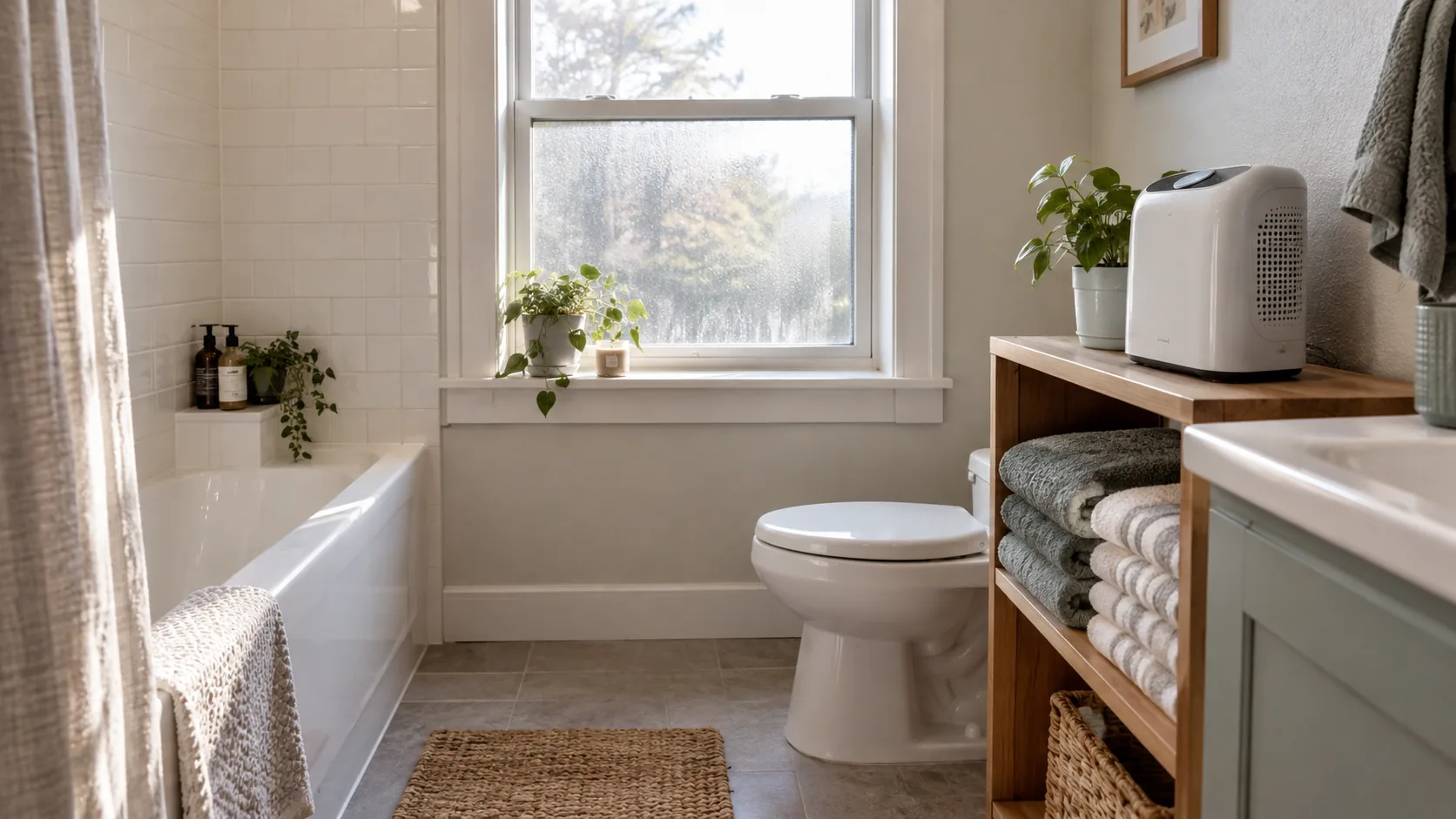
How Does a Dehumidifier Work? Compressor vs Desiccant Explained
A dehumidifier pulls humid air past a cold surface or a drying material, collects the water and releases drier air. Here is how each type does it, where to place it and how to empty it.
The Calvedon Team
November 23, 2026 · 6 min read
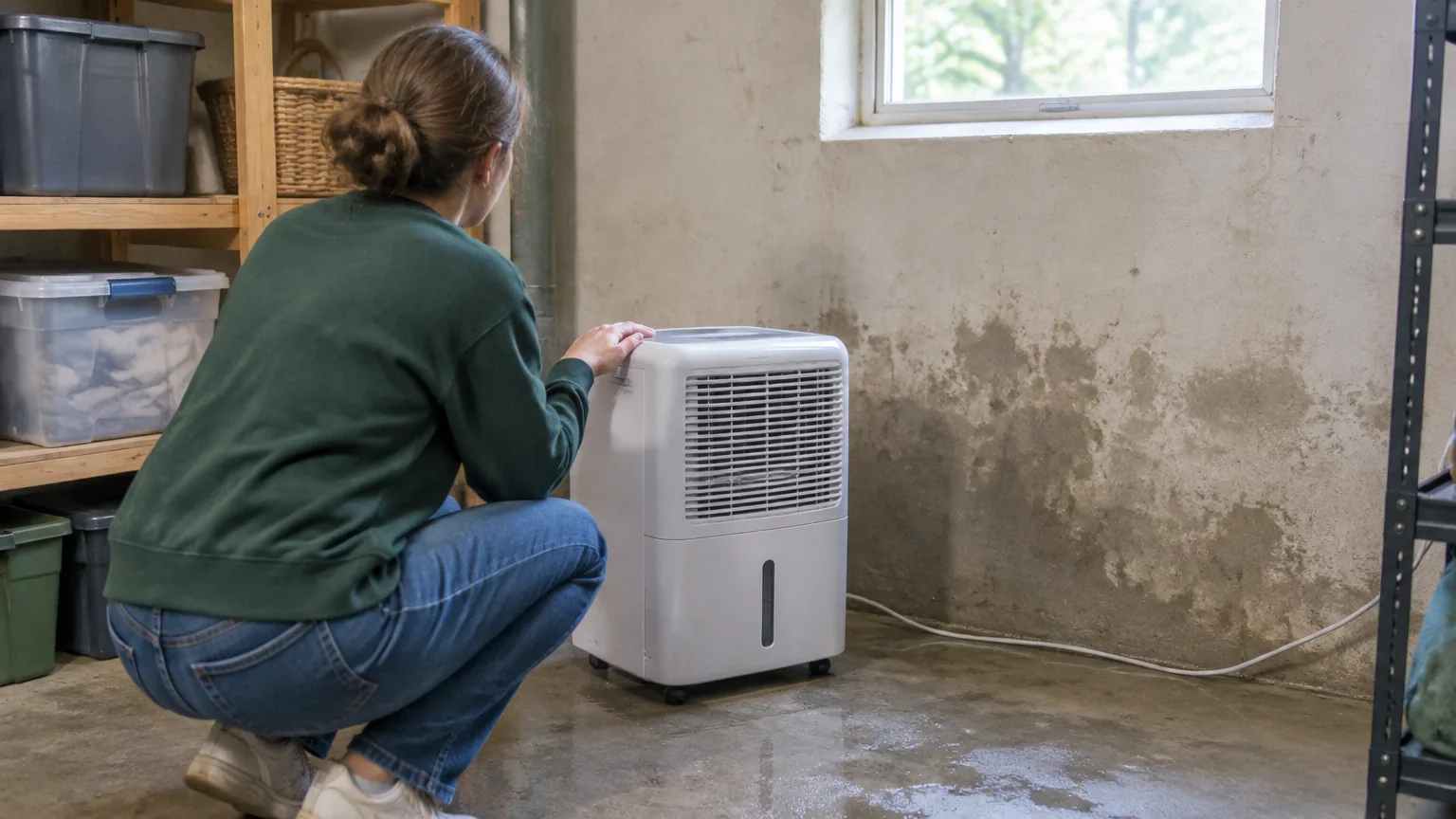
A dehumidifier draws in humid room air, removes the water vapor from it and sends drier air back out. The water ends up in a tank or a drain line, so you do not pour any water in. Compressor, desiccant and semiconductor models each remove the moisture in a different way.
This guide walks through the cycle step by step, compares the three types in a table, and covers placement, emptying and the mistakes to avoid.
How does a dehumidifier work?
Air always carries some invisible water vapor. When that air meets a surface colder than its dew point, the vapor turns into liquid droplets. This is condensation, the same thing you see on a cold glass in summer. A dehumidifier does this on purpose, inside a housing, and collects the drops.
The compressor cycle, step by step
- A fan pulls room air in through the intake.
- The air passes over a cold coil filled with refrigerant.
- Water vapor condenses on the coil and drips down into a tank or a drain.
- The now-drier air passes over a warm part of the system and is released back into the room.
The cycle repeats while the unit runs. A built-in humidity sensor, on models that have one, lets the unit stop when the room reaches the level you set. A separate hygrometer is a low-cost way to read the humidity level yourself.
The desiccant cycle
A desiccant unit uses a drying material instead of a cold coil. Humid air passes through the material, which holds the moisture. A heated airflow then drives that moisture out of the material, and it is condensed and collected as liquid. Because it does not rely on a cold coil, this type is often chosen for cool spaces such as garages. Check the manual for the operating range of any model.
Compressor vs desiccant vs semiconductor: comparison
The semiconductor type, sometimes called Peltier, has a small electronic cooling plate with no compressor and no refrigerant loop. It is the type used in compact units.
| Type | How it removes moisture | Typical spot | Things to check |
|---|---|---|---|
| Compressor | Fan pulls air over a refrigerant-cooled coil; vapor condenses | Basements, living areas, larger rooms | Has a compressor and fan, so expect motor sound; check the manual for temperature range |
| Desiccant | Drying material holds moisture, heated air releases it to be collected | Cool garages, utility rooms | Has a heating element; read the manual for ventilation needs |
| Semiconductor (Peltier) | Cold plate collects moisture, which drips into a tank | Bathrooms, closets, small cabins | Compact tank; empty it often and check the stated room size |
A simple rule: choose by the size of the space and the room temperature. Large or very damp areas call for a larger unit, while a closet or small bathroom suits a compact one. For sizing details in a bathroom, read Small Dehumidifier for Bathrooms: Sizing, Placement and Types.
A compact semiconductor option for damp small spaces
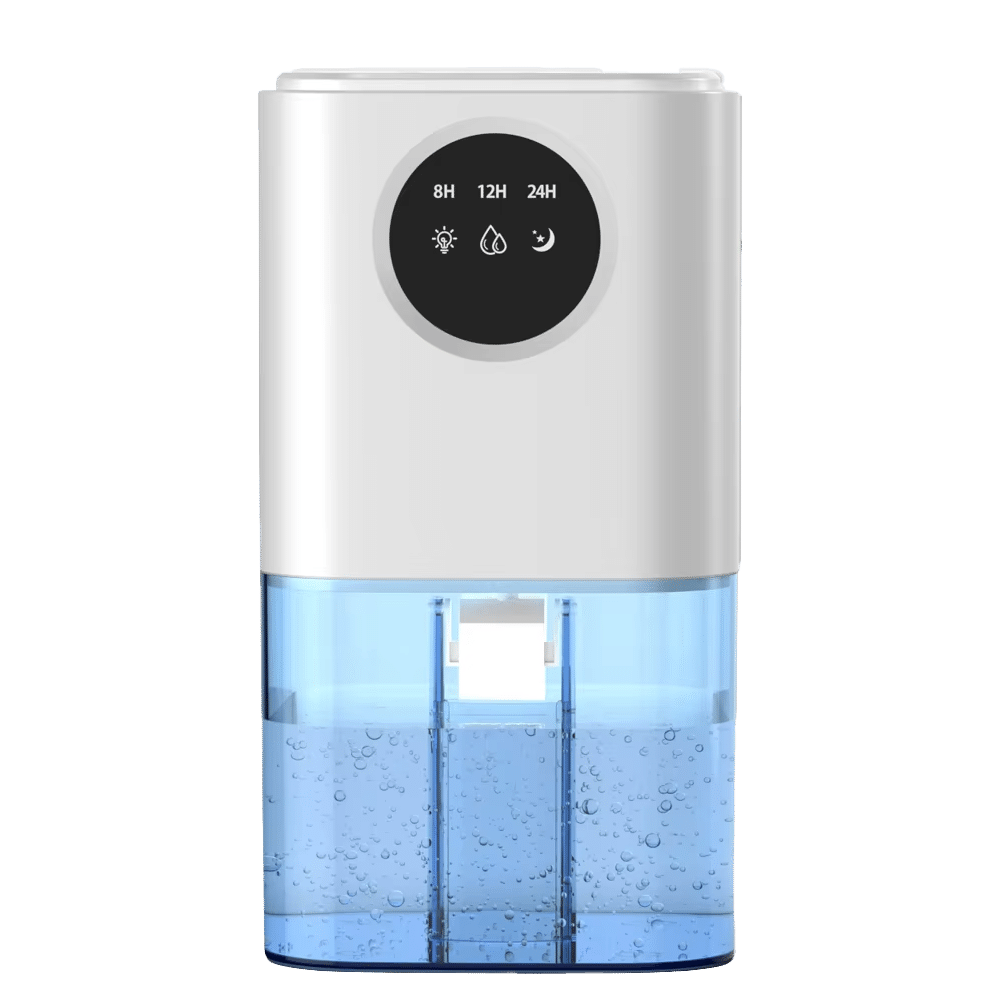
VaporLuxe is a small dehumidifier that uses semiconductor condensation instead of a compressor. A cold surface collects moisture from the air and drips it into a 1.7L tank (about 57 fl oz). It weighs 1.4kg (about 3.1 lb), so you can carry it between a bathroom, a closet or an RV cabin.
The tank is split into parts so you can rinse it, and a clear water window shows the level. An indicator signals when the tank is full. The timer has three auto shutoff settings; you pick one with a single tap and the unit switches itself off when that setting ends. The box includes a USB charging cable and a user manual.
 In this guideVaporLuxe$139.99View
What is the point of a dehumidifier, and does it help with mold?
The point is to lower indoor humidity in rooms that stay damp. Common reasons include window condensation, a musty smell in a closet, damp-feeling towels and stored belongings in a basement.
Mold needs moisture to grow, so keeping humid air in check removes one of the things it depends on. A dehumidifier does not clean existing mold, though. If you see growth, clean it following proper guidance or ask a licensed professional, and fix the source of the water, such as a leak.
Where should you place a dehumidifier?
Put the unit where air can move freely around it, and keep doors and windows closed in that room so the unit is not pulling in outdoor air. Keep the intake and outlet clear of curtains, towels and walls, and follow the clearance distance in the manual.
| Room | Placement tip |
|---|---|
| Basement | Central spot on a hard, level floor, away from the wall |
| Bathroom | On a dry shelf or counter away from the tub, shower and sink splash; follow the manual |
| Closet | Inside or at the door of the closet, with the door closed while it runs |
| Bedroom | On a stable surface with space on all sides; check how loud the unit is |
| RV cabin | On a flat, stable surface where it cannot tip while parked |
Keep the cord out of walkways and never place the unit where water could reach the plug. Unplug it before moving or cleaning it.
Do you have to put water in a dehumidifier?
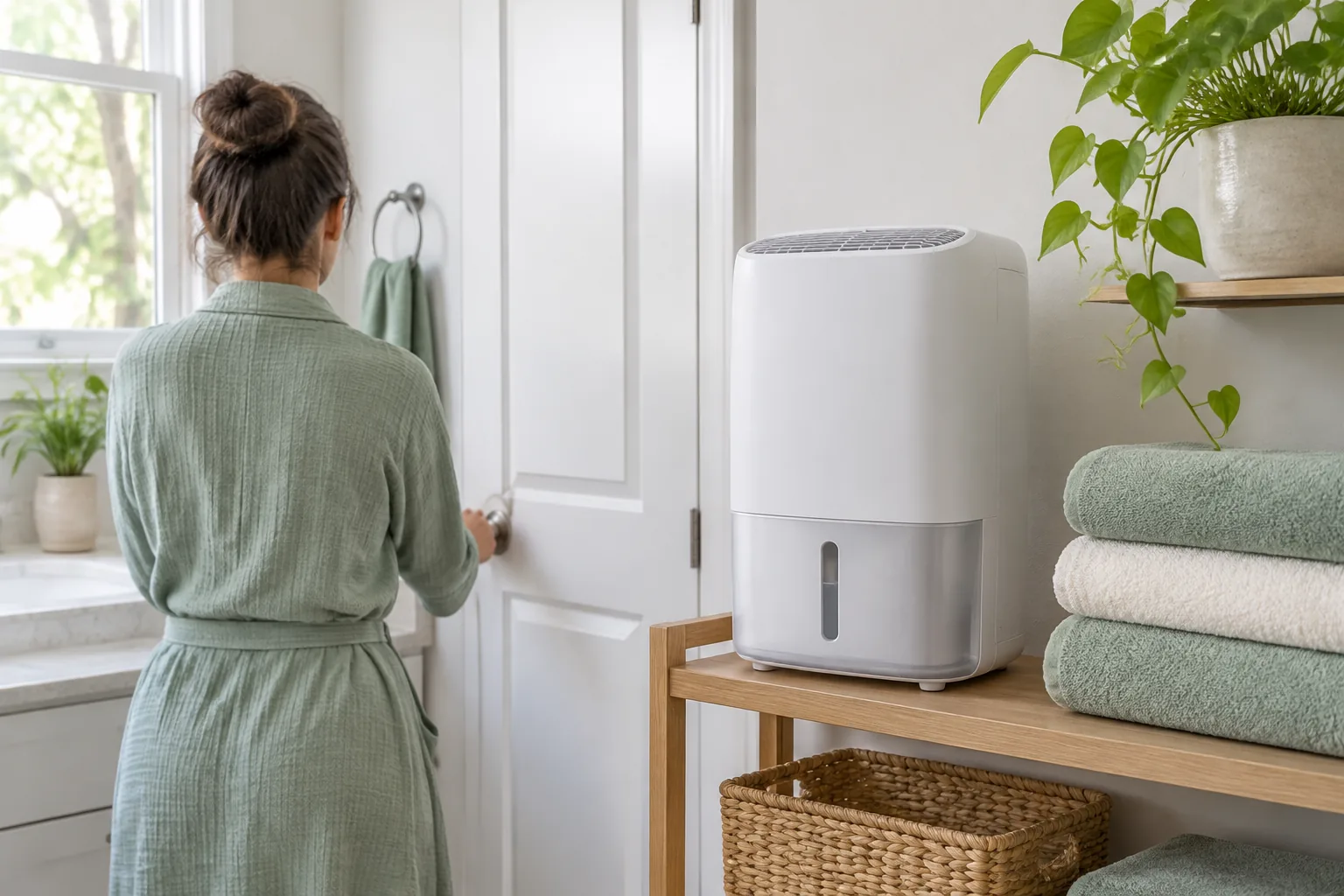
No. A dehumidifier collects water, it does not use any you add. The tank starts empty and fills as the unit runs.
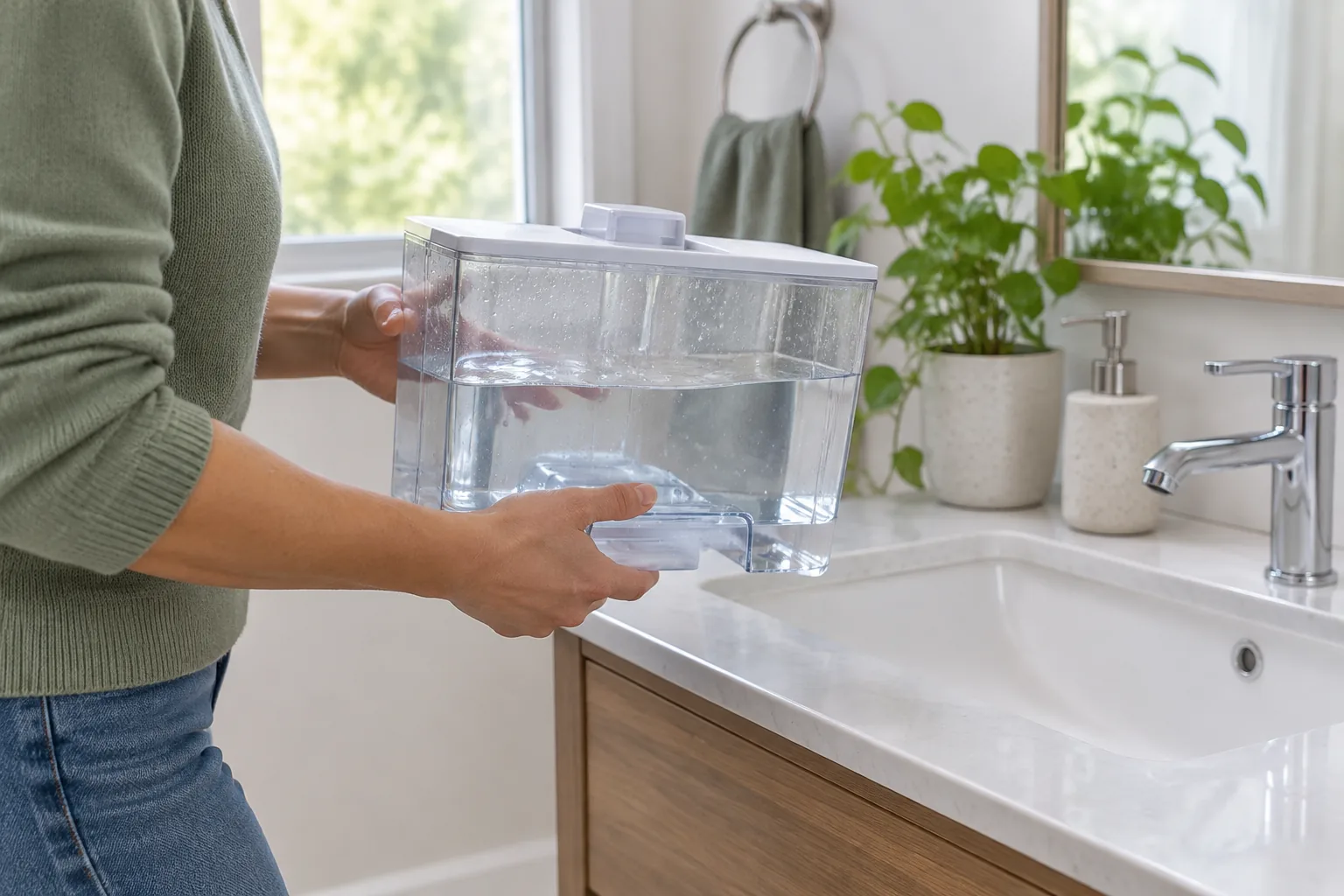
Emptying tips
- Empty the tank when the full indicator signals, or before the unit runs again if you use a timer.
- Unplug the unit before you lift the tank out.
- Carry the tank level so water does not spill on the floor.
- Rinse the tank and let it dry. On a split tank, rinse each part as the manual describes.
- Do not drink the collected water or use it on plants unless the manual says so.
Larger compressor units may offer a drain hose connection for continuous draining. Check the manual to see whether yours does.
Setup checklist and common mistakes
- Read the manual and check the stated room size.
- Set the unit on a flat, stable surface with clear space around it.
- Close the doors and windows of the room.
- Choose a timer setting or humidity setting, if your model has one.
- Check the water window or indicator, and empty the tank when it is full.
- Rinse the tank and wipe the outside as the manual describes.
Common mistakes include running a compact unit in a space far too large for it, blocking the intake with towels, and leaving the tank full. Another is forgetting to place a hygrometer nearby, so you cannot tell whether the room is drying.
If you are asking how does a dehumidifier work in your own home, start with the room that feels damp and match the type to that space. More ideas for the bedroom are in our Bedroom Air & Lighting collection.
Field note
Place a hygrometer in the same room, away from the unit's outlet, and check it before and after a few days of running. That tells you whether the room needs a larger unit or a different spot.