
Small Dehumidifier for Bathrooms: Sizing, Placement and Types
Pick a small dehumidifier for bathrooms by room size, moisture level and type: Peltier units suit tiny, damp spaces, compressor units suit larger ones. Placement matters as much as size.
The Calvedon Team
October 18, 2026 · 7 min read
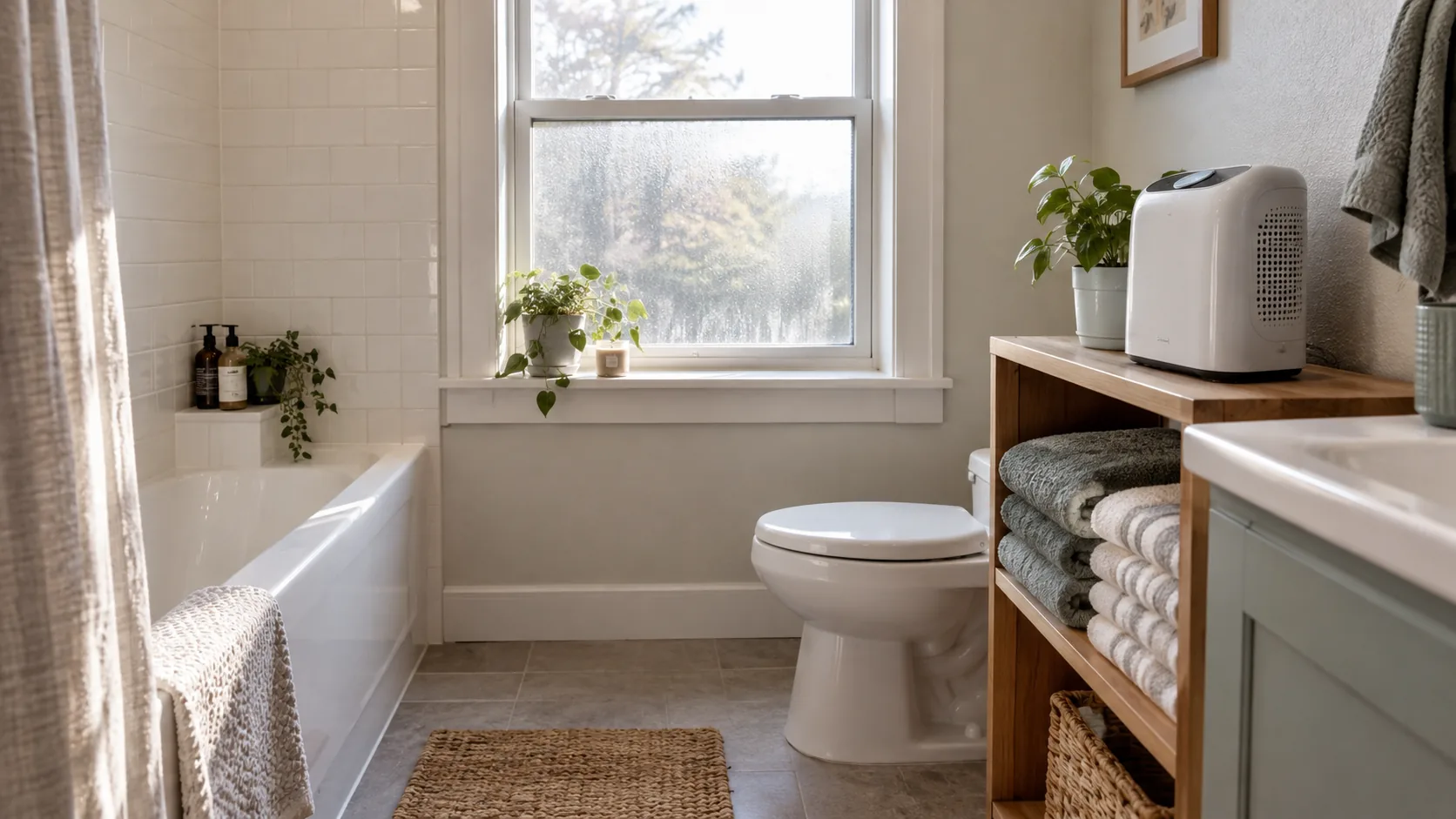
A small dehumidifier for bathrooms should match the size of the room, the amount of moisture and the spot where you can place it away from splashes. For a small bathroom, closet or similar compact space, a Peltier (semiconductor) unit with a small tank is a reasonable fit. For a larger or constantly damp room, a compressor unit is the type built for that job.
This guide walks you through sizing, the two main types, placement near water and a simple routine for running the unit.
Is a dehumidifier worth adding to a bathroom?
Bathrooms collect moisture from showers, baths and wet towels. When that moisture lingers, you may see fogged mirrors, damp walls, a musty smell or dark spots on grout and caulk.
A dehumidifier collects water from the air, so it can be one part of the answer. It works alongside an exhaust fan, an open window or a door left ajar, not in place of them. If the fan is weak or missing, address that first and use the dehumidifier as an addition.
A dehumidifier also cannot fix a leak. If you see water marks that return, a dripping pipe or a soft patch of wall, find the source or ask a plumber.
How to size a small dehumidifier for bathrooms
Sizing begins with two questions: how big is the room, and how damp does it get? A narrow half bath that dries out after a shower has different needs than a windowless bathroom with a daily steam session.
Compressor units are labeled by pints of water removed per day. Compact Peltier units are often described by tank size instead. Compare the room and moisture level with the table below, then check the capacity on the product page.
| Situation | What to look for |
|---|---|
| Powder room or half bath, light moisture | Compact Peltier unit with a small tank |
| Small full bath with a fan, daily showers | Compact unit run after showers, with the fan on |
| Windowless bathroom, visible condensation | Larger capacity; consider a compressor unit |
| Basement bathroom, damp walls | Compressor unit, ideally with a drain hose option |
| Closet, RV cabin or similar compact space | Compact Peltier unit |
Judging the moisture level
Look at what the room shows you. Light moisture means the mirror fogs during the shower and clears once the door is open. Heavier moisture shows up as water beads on tile, a damp towel that remains wet from one day to the next, or dark spots returning on caulk.
Write down the floor area and the ceiling height, and note whether the room has a window or a fan. A small hygrometer, a handheld humidity gauge, gives you a reading to watch from week to week instead of relying on feel.
Signs the unit is too small
- The tank fills and the room still feels damp after a long run.
- Mirrors and tile remain fogged well after the shower ends.
- The musty smell returns each day.
If you see these signs, move up in capacity or improve ventilation.
Peltier vs compressor: which type suits a bathroom
The two types remove moisture differently, and that shapes where each one fits.
A Peltier unit uses semiconductor condensation. A cold surface draws moisture from the air and the water drips into a tank. There is no compressor, so the design is compact and light. The tradeoff is a small tank and a modest reach, which suits small rooms.
A compressor unit uses a refrigeration cycle, a coil and a fan. These are larger and heavier, and they come in higher capacities. Some have a drain hose connection for continuous draining, which suits a basement bathroom. Check the label for capacity and drain options before you buy.
| Feature | Peltier (semiconductor) | Compressor |
|---|---|---|
| Size and weight | Compact and light | Larger and heavier |
| Room size | Small rooms, closets | Medium to large rooms |
| Water handling | Small tank you empty | Bigger bucket, sometimes a drain hose port |
| Moving between rooms | Carry it by hand | Some have handles or wheels |
| Fit for a damp basement | Small rooms only | Built for larger spaces |
A compact option for small damp spaces
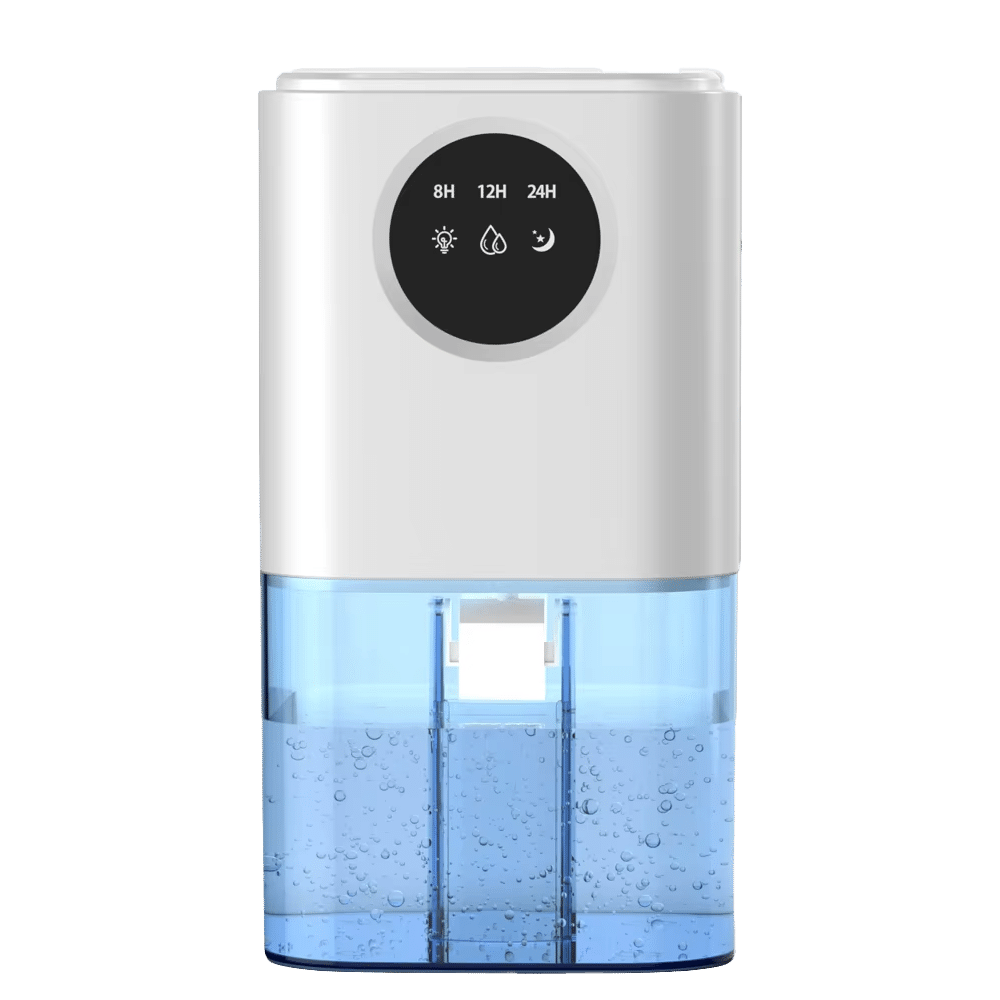
If your bathroom is small and you want a unit you can move around, VaporLuxe is a small dehumidifier that uses semiconductor condensation instead of a compressor. A cold surface collects moisture from the air and drips it into a 1.7L (about 57 oz) tank.
It weighs 1.4kg (about 3.1 lb), so you can carry it between a bathroom, a closet or an RV cabin. The timer has three auto shutoff settings, so the unit switches itself off when the chosen setting ends. The indicator light can cycle through colors, hold one color or be switched off with a tap, which matters if you run it in a bedroom.
The tank is split into parts so you can rinse it, a clear water window shows the level, and an indicator signals when it is full. The box includes the unit, a USB charging cable and a user manual.
 In this guideVaporLuxe$139.00View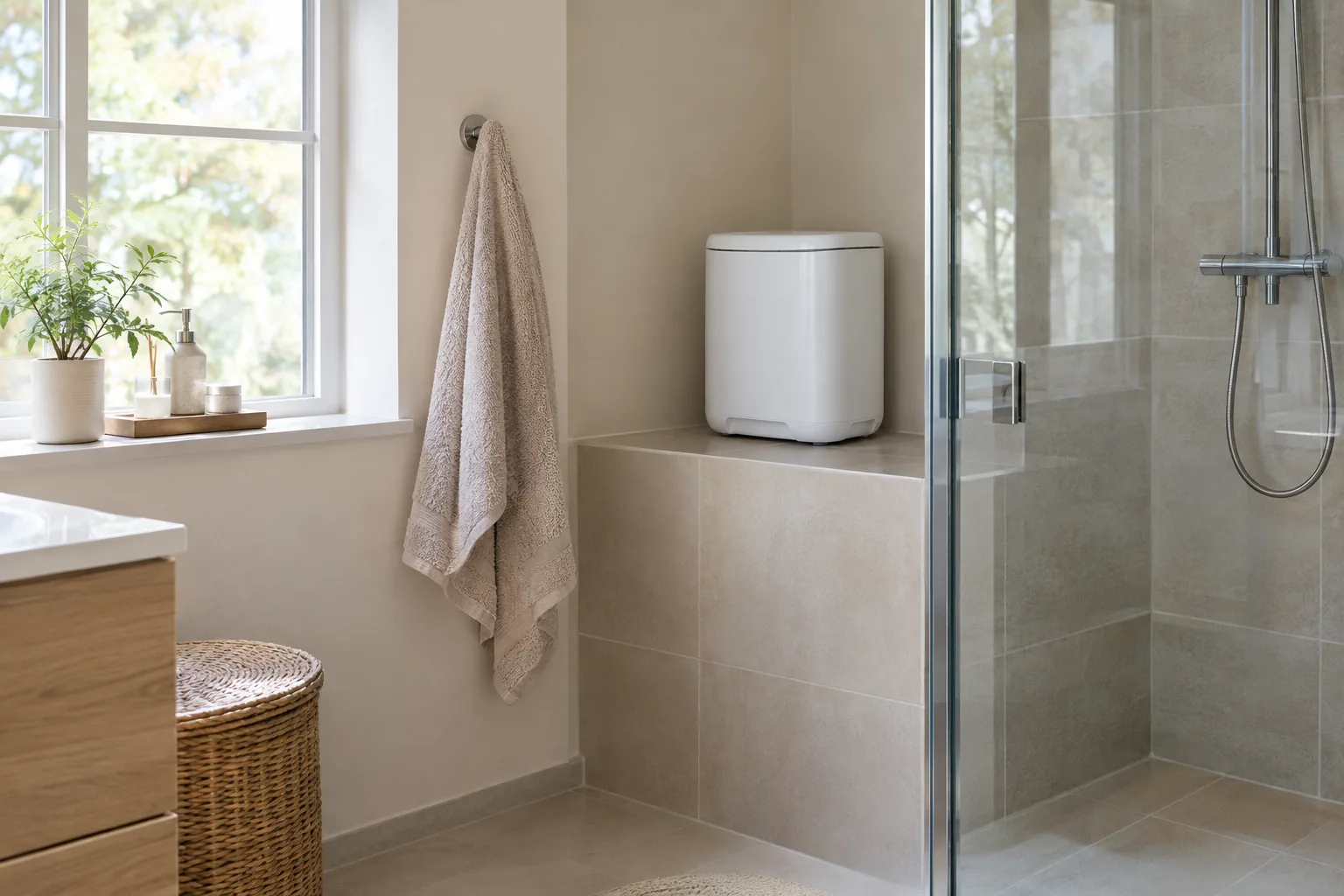
Placement and electrical safety near water
Water and electricity need distance. Follow the manual for your unit and use these placement rules as a baseline.
- Set the unit on a flat, dry, steady surface such as a shelf or the top of a cabinet, not the edge of the tub or sink.
- Keep it out of the splash zone around the shower, bath and sink.
- Keep cords away from pooled water, and do not run a cord across a wet floor.
- Leave open space around the unit so air can move across it.
- Keep the unit out of reach of children and pets.
- Unplug it before emptying or rinsing the tank, and dry your hands first.
Check the outlet, too. Bathroom outlets are often on a ground-fault circuit. If the outlet has no ground-fault protection, or if it is loose or damaged, ask a licensed electrician before plugging anything in. Do not use an extension cord in a wet room.
Countertop and small-room placement
A counter or shelf near the outlet keeps the cord short and off the floor. Choose a spot a few feet from the sink, with space on every side, rather than a corner packed with towels or bottles. In a very small room, set the unit near the door so you can reach it without walking into the wet zone.
Field note
Run the exhaust fan during the shower and keep the door open afterward. Turn on the dehumidifier once the steam settles, and place it where air can reach it, not behind a towel pile.
A routine for running it day to day
A short routine keeps a compact unit in use and the tank clean.
- After a shower, wipe the walls and glass, hang towels to dry and turn on the fan.
- Place the dehumidifier and choose a timer setting that fits how long the room takes to dry.
- When the full indicator signals, unplug the unit, empty the tank and set it running again.
- Rinse the split tank on a regular schedule, and let the parts dry before refitting them.
- Check the room for a musty smell or dark spots on caulk once a week.
Look at the water window each time you walk in. How often you empty the tank depends on how damp the room is, so a daily glance shows you the pattern for your bathroom.
Housing guidance on caring for your room also covers airing out damp spaces and keeping surfaces dry.
Common mistakes
- Placing the unit right beside the shower where it gets splashed.
- Leaving the tank full, which can leave pooled water and odor.
- Closing the bathroom door with a wet towel inside and no fan on.
- Expecting a compact unit to dry a whole basement.
Using the same idea in a bedroom
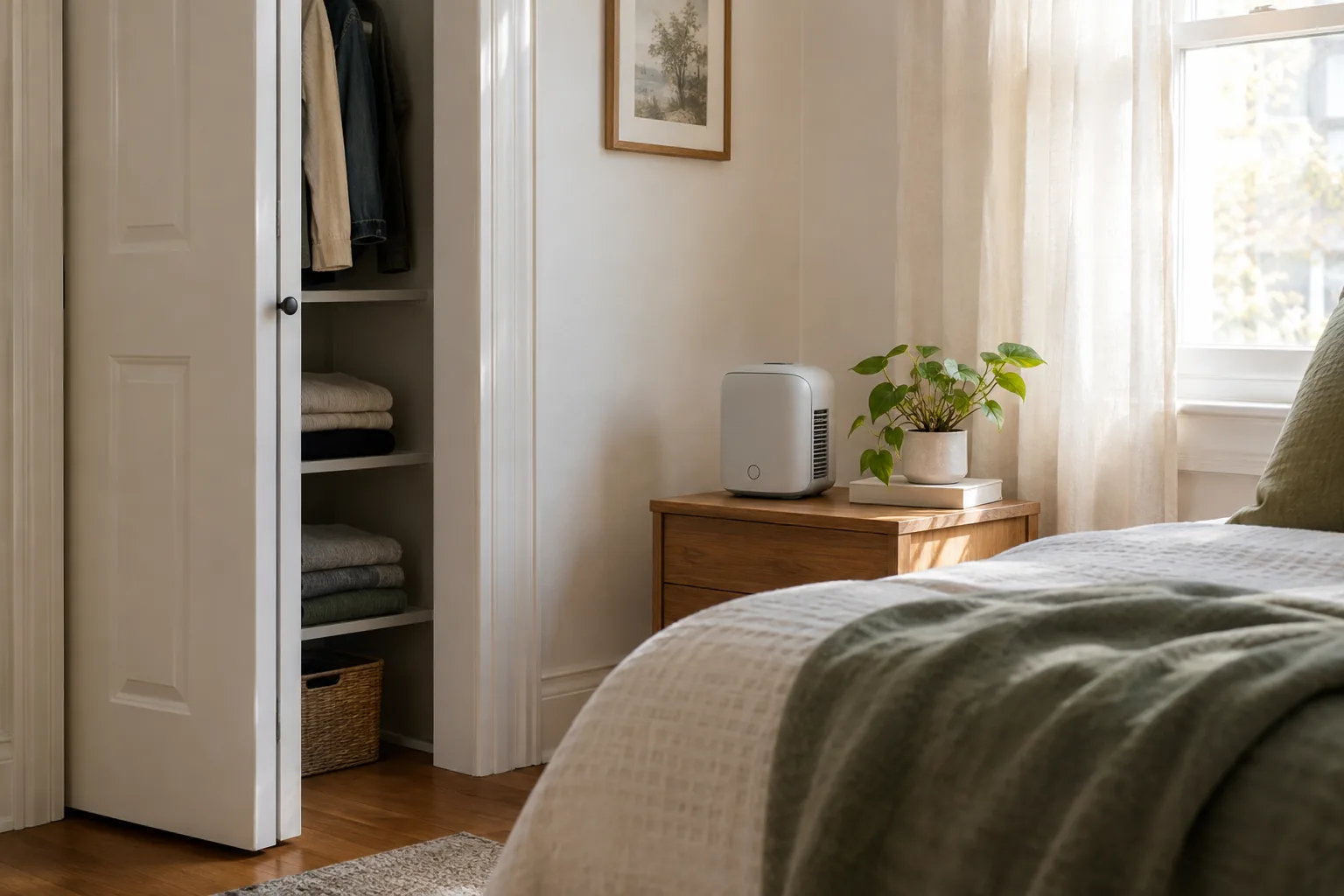
A small dehumidifier for bedrooms follows the same sizing logic: check the room size, then the moisture level. Closets, rooms with poor airflow and rooms that dry laundry are typical damp spots. A timer with auto shutoff and a light you can switch off suit a room where you sleep.
If you are building a calmer sleep space, browse our bedroom air collection. For sound, see our white noise machine comparison to learn how fan and rain sounds differ.
Quick checklist before you buy
- Measure the bathroom and note whether it has a window or fan.
- Decide how damp it gets: light steam, constant condensation or damp walls.
- Choose Peltier for small, light-duty spaces and compressor for larger or damper ones.
- Check tank size and whether you want a drain hose option.
- Confirm you have a dry shelf and a suitable outlet away from splashes.
- Look for an auto shutoff, a full-tank indicator and a tank you can rinse.
With those answers in hand, a small dehumidifier for bathrooms becomes a short list instead of a guess.
Frequently asked questions
Keep reading
 Sleep Masks, Snoring & Apnea AidsAlarm Clock With Sunrise Simulation: How It Works and Setup Tips6 min read
 Cooling & Heated BeddingHow to Use a Cervical Pillow: Orientation, Height and Sleep Position8 min read
 White Noise & Sleep EarbudsWhite Noise Machine Sounds: White, Pink, Brown, Fan and Rain7 min read