Scandinavian Sleep Method: How to Set Up Two Duvets in One Bed
The Scandinavian sleep method gives each sleeper a separate duvet on one shared bed. Use this checklist for sizing, layering and per-side cooling or heated layers.
The Calvedon Team
November 2, 2026 · 6 min read
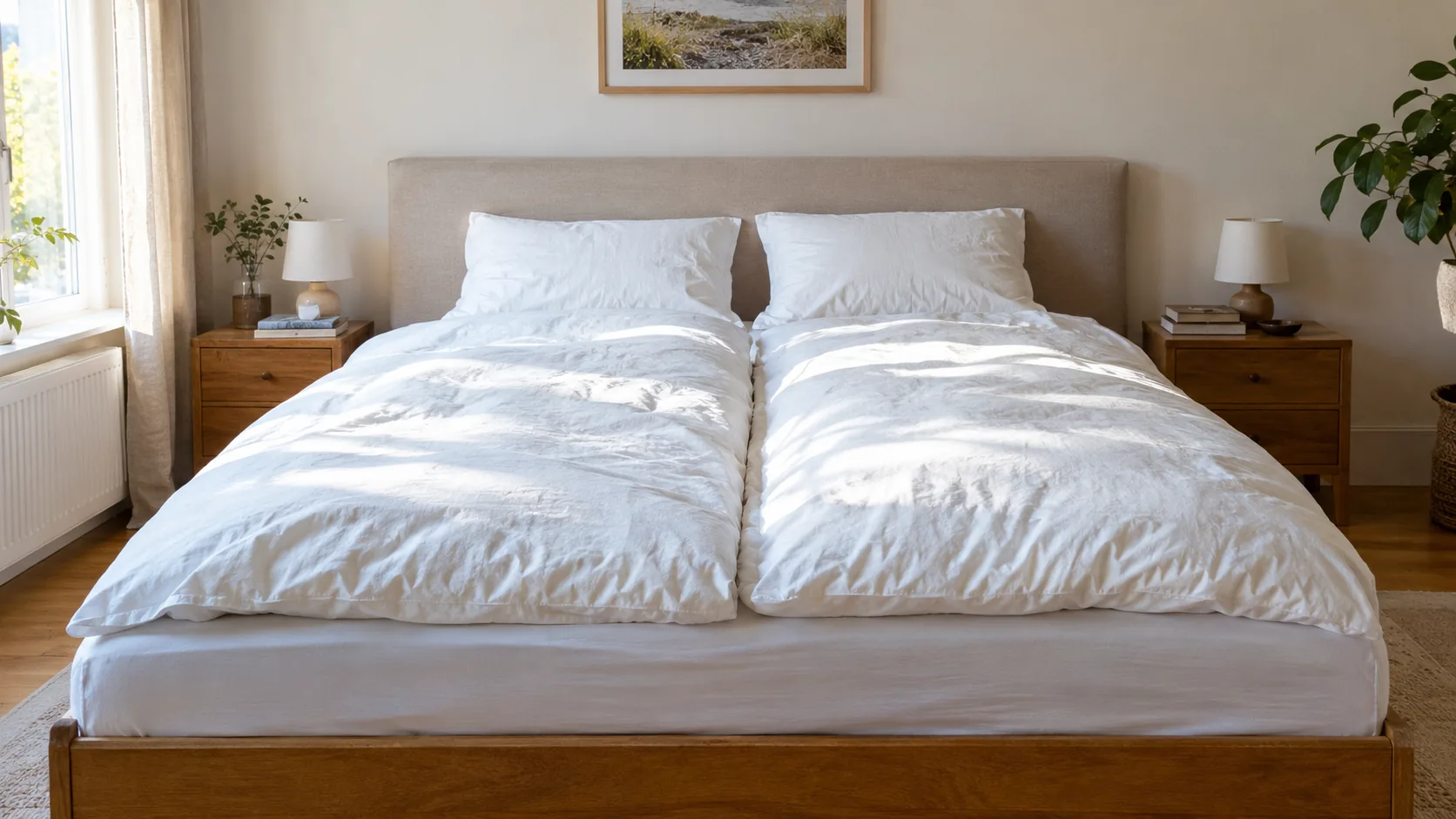
The Scandinavian sleep method gives each person in a shared bed their own duvet, so each sleeper sets their own warmth and nobody pulls the covers away. To set it up, pick one duvet per person that fits your half of the mattress, make a shared base, then add a cooling or heated layer on the side that needs it.
This guide is a setup checklist: sizing for queen and king beds, layering order, per-side temperature control and the mistakes that leave the bed uneven.
What the Scandinavian sleep method is and why Scandinavians use separate duvets
The method is a bedding arrangement, not a relaxation routine. Two sleepers share one mattress and one fitted sheet, but each has an individual duvet, often with its own duvet cover. One person can sleep under a heavier fill while the other uses a lighter one, and a turn in bed does not drag the other person's cover along.
It also explains why some sleepers are dropping the top sheet. The duvet cover is the layer that touches you, and you wash it in place of a top sheet. That leaves one fewer loose layer to tuck, twist and re-make each morning.
Pros and cons before you commit
Separate covers suit some couples and not others. Weigh both sides first.
| Point | What to expect |
|---|---|
| Personal temperature | Each side can have its own fill weight and its own added layers. |
| Fewer cover tugs | Movement on one side does not pull the other duvet. |
| Bed making | Each duvet is straightened on its own, but there are two to fold and wash. |
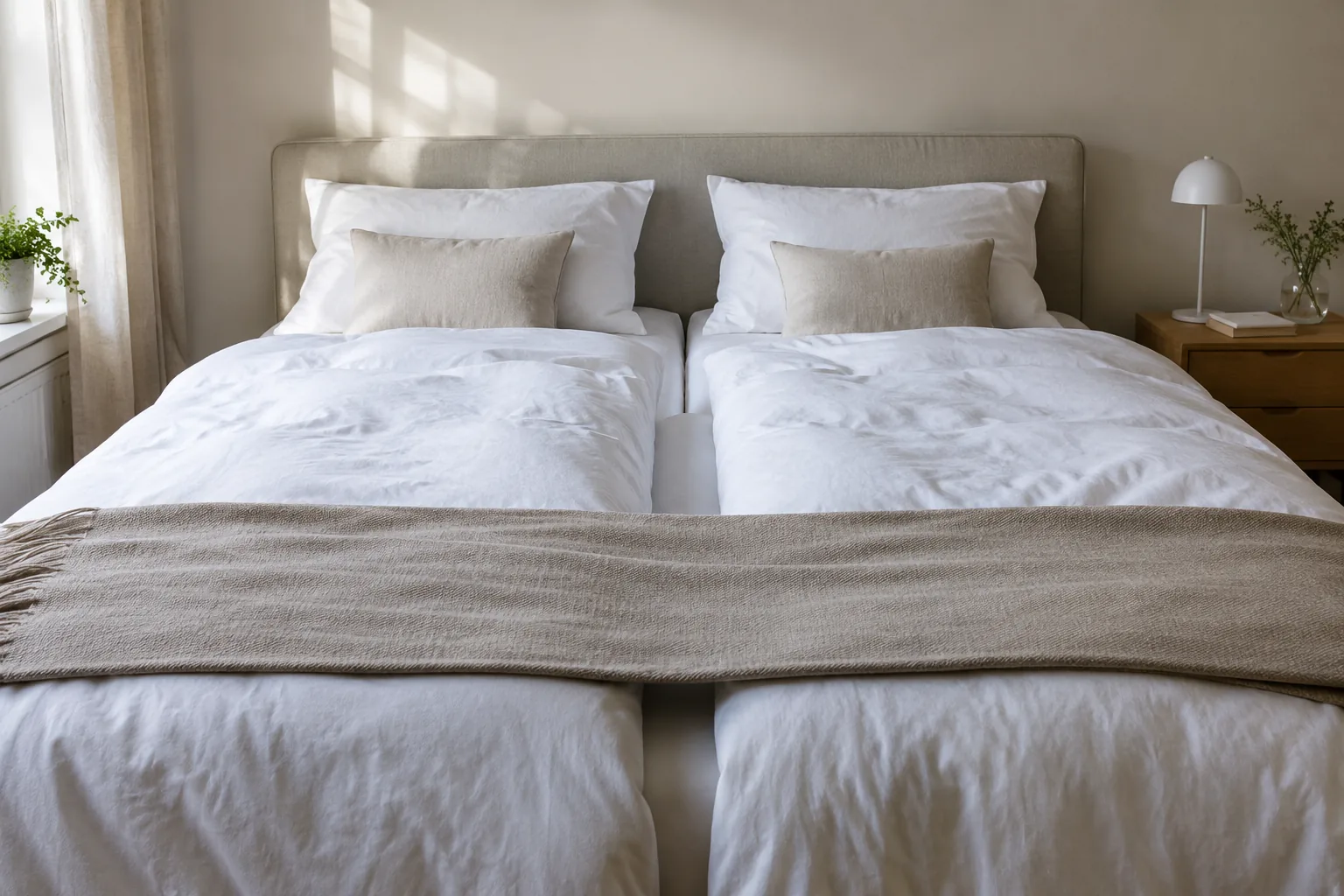
| Appearance | The center seam shows unless you add a throw or a long folded blanket across the foot. |
| Cuddling | A gap can open in the middle, so some couples shift to one shared cover on cold nights. |
| Cost and storage | You buy and store two duvets, two covers and spare covers for the wash. |
Step 1: Size the duvets for a queen or king bed
Sizing needs care. Fill, cover and mattress width all matter, and sizes differ by maker, so read the labeled dimensions on each duvet rather than the size name.
A queen mattress is about 60 inches wide, so each person has roughly 30 inches. A king is about 76 inches wide, so each person has roughly 38 inches. Each duvet should cover its half plus an overhang on the outer edge.
| Mattress | Width per person | Duvet per person | Check |
|---|---|---|---|
| Queen | About 30 in | Twin or twin XL duvet | Duvets may overlap slightly at the center. |
| King | About 38 in | Twin XL, full or queen duvet | Pick a width that reaches past the outer edge of the mattress. |
| California king | About 36 in | Twin XL or full duvet | Check the length against the longer mattress. |
For a king bed, a duvet wide enough to reach the mattress edge on its own side matters more than matching the bed's name. Buy covers to match each insert's size.
Step 2: Build the shared base
- Put a mattress protector or pad on the bare mattress.
- Add one fitted sheet across the full bed. Cotton percale is one fabric option for a crisp surface; pick the fabric you already sleep in.
- Place pillows at the head, one set per person.
- Lay each duvet in its cover, aligned with its own side, with the seams meeting at the center.
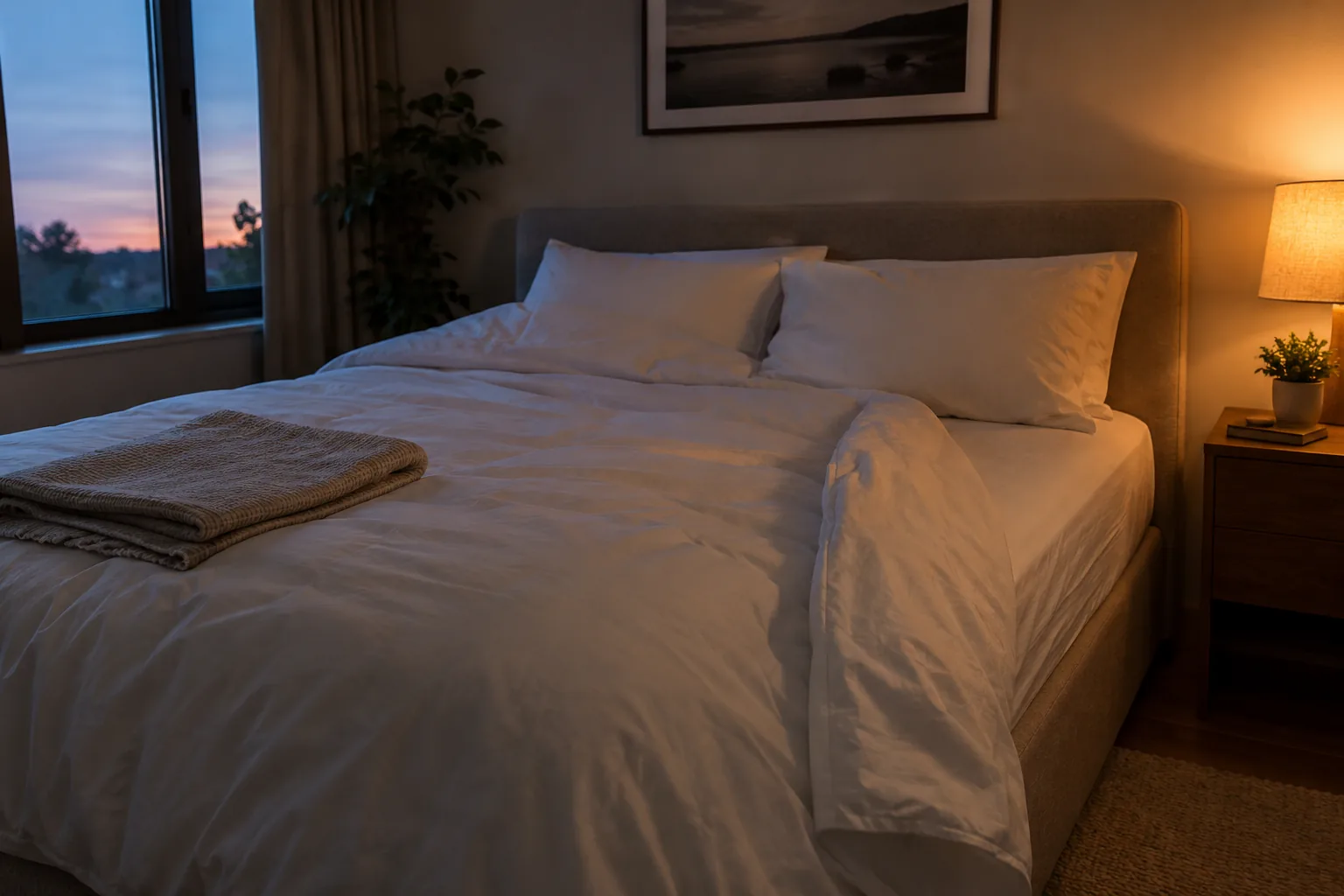
- Fold a throw or blanket across the foot if you want the center seam covered.
Wash each duvet cover on its own schedule, and keep a spare cover for each side. If you use a down insert, the guide to washing a down comforter without clumps or damage covers the drying steps.
Step 3: Add temperature control for each side
The main advantage of the Scandinavian sleep method is that each side can be different. Think of the duvet as the middle layer, with a layer beneath or above it that you can change without touching your partner's side.
For the side that sleeps warm
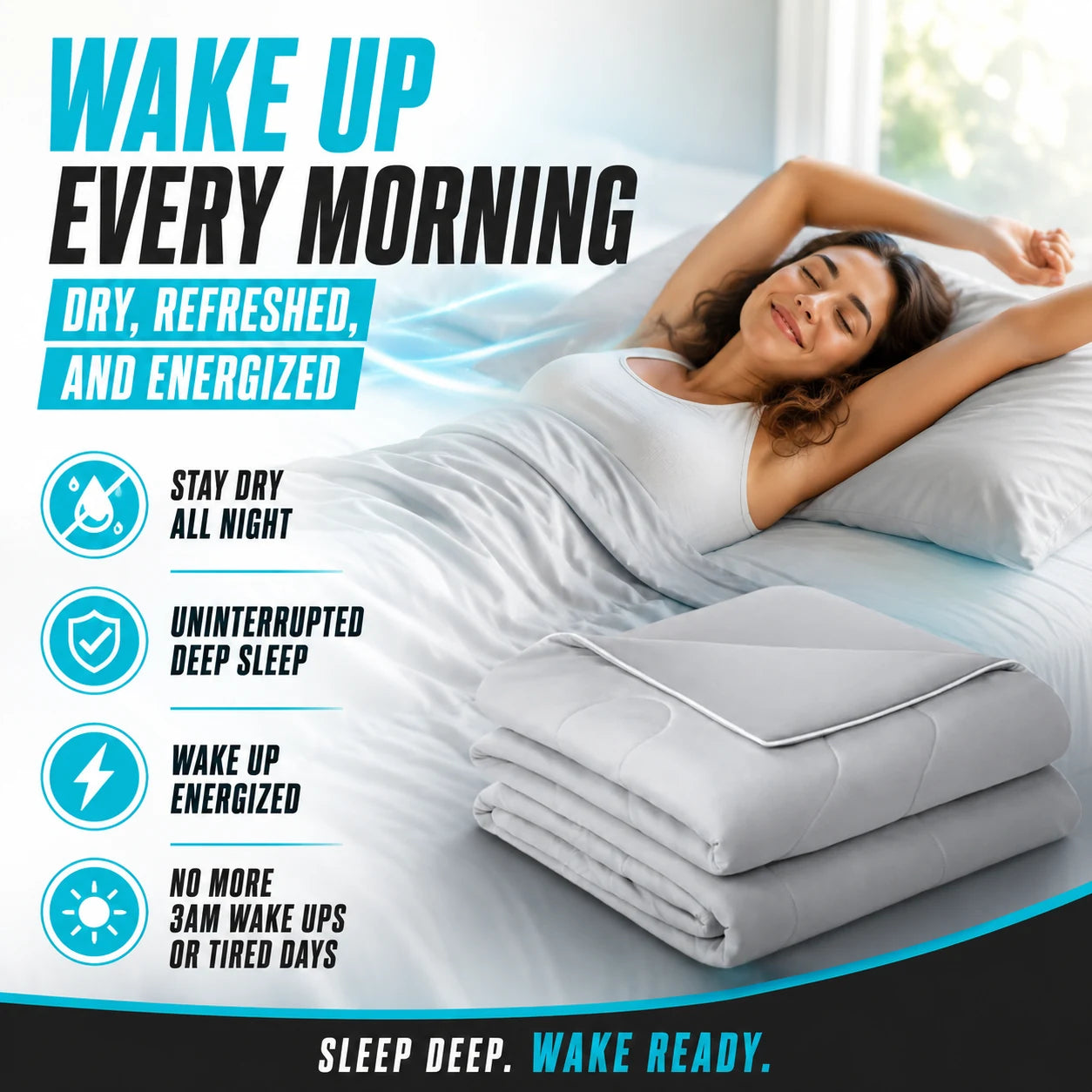
A cooling blanket sits closest to the skin, under the duvet. CryoVeil is made with double-sided Q-Max fabric, a measure of how a fabric draws heat from the skin on contact. The cooling fibers are woven into the fabric rather than applied as a coating, and you spread it over you so one side rests against your skin. You can use it alone in warm weather or place a duvet or comforter on top.
 In this guideCryoVeil$119.99View
Care follows the care guide: place it in the protective bag, wash on a cold cycle without bleach, and air-dry it.
For the side that sleeps cold
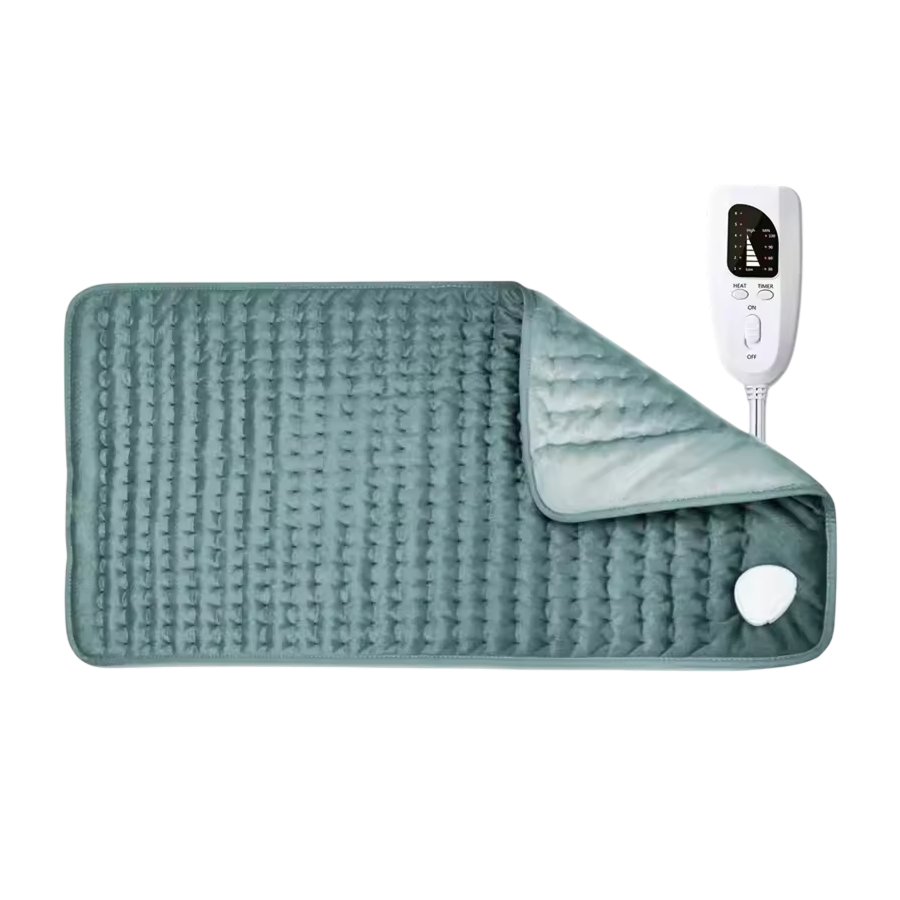
A heated mattress pad goes under the sheet, not on top of the duvet. Warmora has heating wires woven across the pad and six heat settings. You lay it over the mattress, plug it in, choose a level, and cover it with your sheets and comforter. It has an automatic shutoff once the chosen warmth is reached, and the cover detaches for washing.
Check the product page for pad sizes before buying, and compare the pad's size to your mattress and to how you want the heat shared across the bed. For other warm-up options near the feet, see electric foot warmers and heated pads compared.
 In this guideWarmora$99.99View
Field note
Follow the manual for any electric bedding: check the cord and controller before each season, keep the pad flat with no folds, and ask an electrician if an outlet or cord looks worn.
Cooling versus heated layers at a glance
| Need | Layer | Where it goes |
|---|---|---|
| Warm sleeper | Cooling blanket | Against the skin, under that person's duvet |
| Warm sleeper, light bed | Lighter fill duvet | Swap the insert, keep the cover |
| Cold sleeper | Heated mattress pad | Over the mattress, under the sheet |
| Cold sleeper, no power | Heavier fill duvet | Replace the insert on that side |
You can browse more options in the Cooling & Heated Bedding collection.
Common mistakes to avoid
- Choosing duvets too narrow for your half, which leaves the outer shoulder uncovered.
- Putting a cooling blanket on top of a thick duvet, where it does not touch the skin.
- Layering a heated pad under a bed with heavy folds or tucked-in cords.
- Mixing two cover colors with different fabric weights, which can leave the seam uneven.
- Skipping a spare cover, so one duvet waits on laundry day.
If the seam still bothers you after these fixes, a long folded blanket across the foot hides it, and you can still switch to one shared cover on cold nights.
Sleep divorce and the military sleep method
A sleep divorce means partners sleep in separate beds or rooms, for example because of schedules, snoring or temperature. The Scandinavian sleep method is a middle step: the same bed, with separate covers. If it is not enough, you can add layers per side before moving rooms.
The military trick is a different idea. It is a bedtime relaxation routine, not a bedding setup: you relax the face, drop the shoulders, let the arms and legs go loose, and clear your mind. It does not depend on your bedding, so you can use it alongside two duvets.