How to Wash a Down Comforter Without Clumps or Damage
Use a roomy washer, a gentle cycle, mild detergent and an extra rinse, then dry on low heat with dryer balls. Includes a settings table and a drying checklist.
The Calvedon Team
October 27, 2026 · 6 min read

To wash a down comforter, check the care label, use a front-load or agitator-free washer with room for the comforter to move, run a gentle cycle with a small amount of mild or down-specific detergent, and add a second rinse. Then dry it on low heat with dryer balls until no damp spots remain. This guide covers how to wash a down comforter step by step, plus washer capacity, settings, drying and what changes for synthetic and cooling comforters.
Clumps come from two things: too little space in the drum and fill that stays damp. Get those two right and the rest is routine.
Before you wash: label, fit and prep
Start with the care label. If it says machine washable, you can go ahead. If it says dry clean only, the maker is telling you how the shell and stitching were built to be handled, so follow it or ask a cleaner who handles bedding.
Next, look at the comforter itself. Check seams, corners and the shell for small tears, because a wash cycle can pull fill through an open seam. Close any gaps with a few hand stitches first, and remove any duvet cover.
Spot-clean stains before the main wash. Dab a little mild detergent diluted in water onto the mark with a clean cloth, then blot. Do not scrub, since rubbing can wear the shell fabric.
- Label read and followed
- Seams and corners checked, gaps stitched
- Duvet cover removed
- Stains spot-cleaned
- Washer and dryer drums empty and clean
Will your washer fit the comforter?
A comforter needs room to move so water and detergent reach all of the fill. If you have to push it in with force, the drum is too small and the load will rinse poorly and clump.
A 4.5 cu ft washer is a large-capacity drum, and a king down comforter can fit in some machines of that size when it is the only item in the load. Check the comforter's weight and the washer manual's bedding guidance. If the wet comforter fills the drum to the door with no gap, use a larger machine at a laundromat instead.
| Washer type | Works for a comforter? | What to check |
|---|---|---|
| Front-load, large capacity | Yes, if it fits loosely | Comforter loosely fills the drum; bedding or bulky cycle available |
| Top-load without agitator | Yes, if it fits | Fold loosely; push it under water so it does not float on top |
| Top-load with center agitator | Not advised | The agitator can twist the comforter and strain seams; use a laundromat machine |
| Small or compact washer | Check the manual | Use a large machine; a twin size may fit if the manual allows |
For a top-load washer, set the water level to the highest option so the comforter can float and rinse. Press it down once the drum fills.

How to wash a down comforter step by step
- Check the label and repair any loose seams.
- Load the comforter alone, folded loosely, into the drum.
- Add a small amount of mild or down-specific liquid detergent. Skip fabric softener and bleach.
- Select the gentle, delicate or bedding cycle with warm or cool water, as the label directs.
- Add an extra rinse so no detergent stays in the fill.
- Run an extra spin if the washer offers one, to remove as much water as it can.
- Lift the comforter out with both arms, supporting the wet weight, and move it straight to the dryer.
A wet comforter is heavy. Lift from underneath rather than pulling on one corner, which can tear the stitched walls inside.
Choosing detergent and handling a dry clean only label
A small amount of mild liquid detergent is enough. Powders can leave residue in thick fill, and extra suds make the rinse harder. Some detergents are made for down and feathers; if you use one, follow the measuring directions on its bottle.
A dry clean only label is the maker's instruction. If you want a different route, ask a cleaner who handles bedding whether they can wash it, or spot-clean marks and air the comforter outdoors on a dry day.
Settings table
| Setting | Down | Synthetic fill |
|---|---|---|
| Cycle | Gentle, delicate or bedding | Gentle or normal, per label |
| Water temperature | Cool or warm, per label | Per label |
| Detergent | Small amount of mild or down-specific | Small amount of mild |
| Fabric softener | Skip | Skip |
| Extra rinse | Yes | Yes |
| Spin | Low to medium, extra spin if allowed | Medium |
| Dryer heat | Low | Low to medium, per label |
If the label and this table disagree, the label wins.
Field note
Put two or three clean wool dryer balls or tennis balls in a clean sock in the dryer. They tumble against the comforter and help break up wet clumps of fill.
Drying checklist
Drying is where clumping is decided, so allow plenty of time. Down holds water deep in the stitched sections, and fill that stays damp can smell musty. Set the dryer to low heat and plan to check the load more than once.
- Use a large-capacity dryer with room for the comforter to tumble.
- Set low heat; high heat can scorch the shell or damage seams.
- Add dryer balls to the load.
- Pause the cycle regularly, pull the comforter out and shake it to break up clumps by hand.
- Press along the seams and corners to check for cool, damp spots.
- Keep drying until the fill feels light and fully dry throughout.
- Finish by hanging or laying it flat over a rack in an airy room for a few hours.
A comforter that looks dry on the outside can still be wet at the center. Follow the dryer manual, and do not leave a running dryer unattended.

If your comforter is synthetic or cooling
Synthetic and cooling comforters follow the same pattern: roomy drum, gentle cycle, extra rinse, low-to-medium heat. The differences come from the shell and the fill. A bamboo viscose shell has its own care instructions, so read the tag before choosing water temperature or heat.
The BorealNest cooling comforter is machine-washable and uses FreezeCore fabric with a bamboo viscose shell. It comes with a care and storage guide, so use that guide for its exact wash and dry settings.
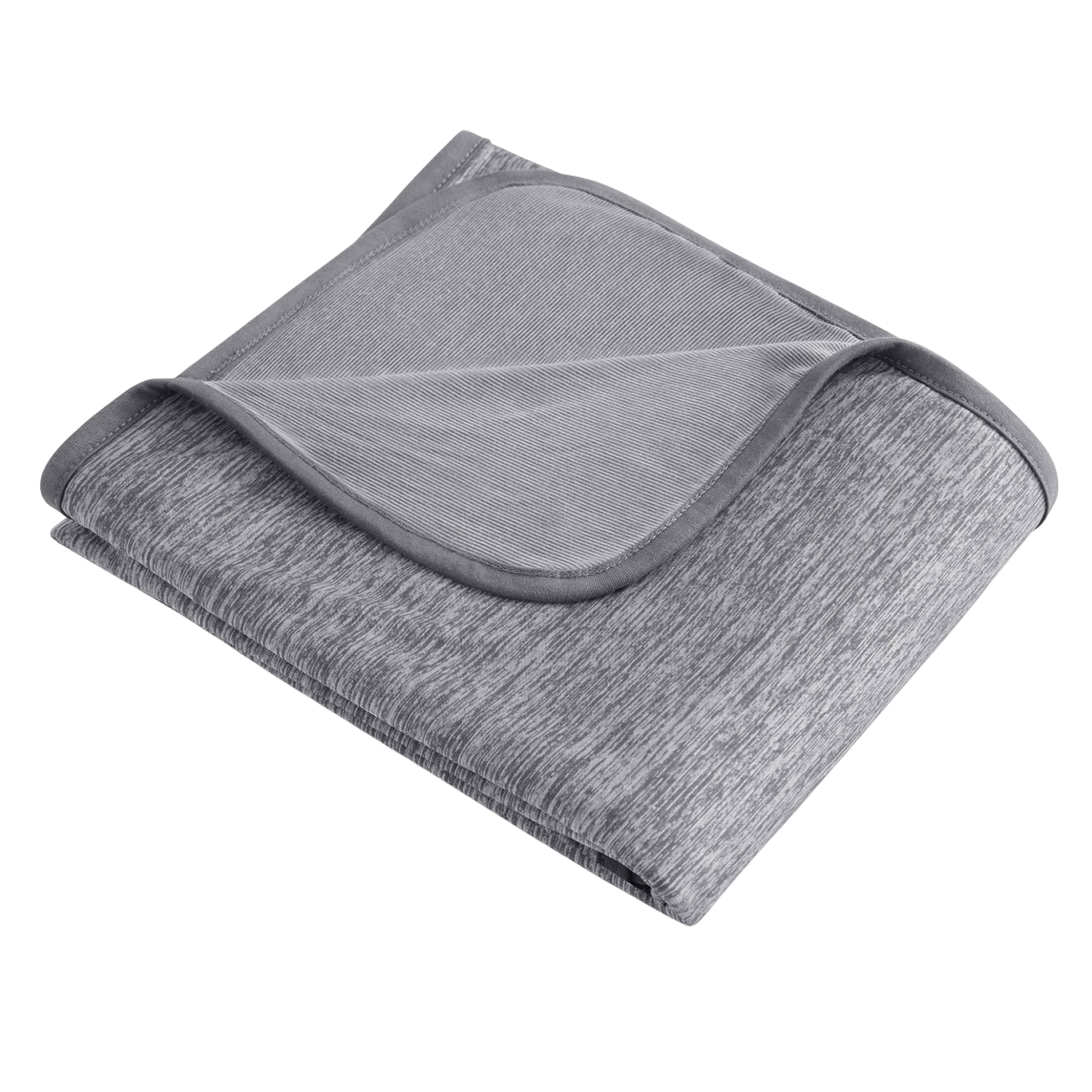 In this guideBorealNest$79.99View
If you want a spare layer while the main comforter dries, browse the Cooling & Heated Bedding collection.
How often to wash, and other options
How often should you wash a comforter?
Use a duvet cover and wash the cover on your regular bedding schedule. The comforter itself needs washing when it looks dingy, smells, or has a spill you cannot spot-clean. Between washes, air it outdoors on a dry day and fluff it.
How to wash a duvet insert
A duvet insert is washed the same way as a comforter. Remove it from the cover, check the label, load it loosely and follow the steps above. Wash the cover separately.
Washing a down comforter without a machine
If the machine is too small or the label says dry clean only, spot-clean marks, air the comforter, or take it to a cleaner who handles bedding. For pillows, see how to wash pillows.
Common mistakes
- Overfilling the drum, which leads to poor rinsing and heavy clumps.
- Using too much detergent, which can leave residue in the fill.
- Using fabric softener or bleach.
- Drying on high heat to shorten the cycle.
- Putting the comforter away while still slightly damp.
- Washing in a machine with a center agitator.
Once fully dry, store the comforter in a breathable cotton bag rather than sealed plastic, so air can move around the fill.