
Air Purifiers for Small Rooms: Sizing by CADR, Noise and Filters
Size air purifiers for small rooms by CADR: room volume × 4 to 5 air changes ÷ 60. For a 120 sq. ft. room, that is about 64 to 80 cfm. Then check noise and filter cost.
The Calvedon Team
October 23, 2026 · 6 min read
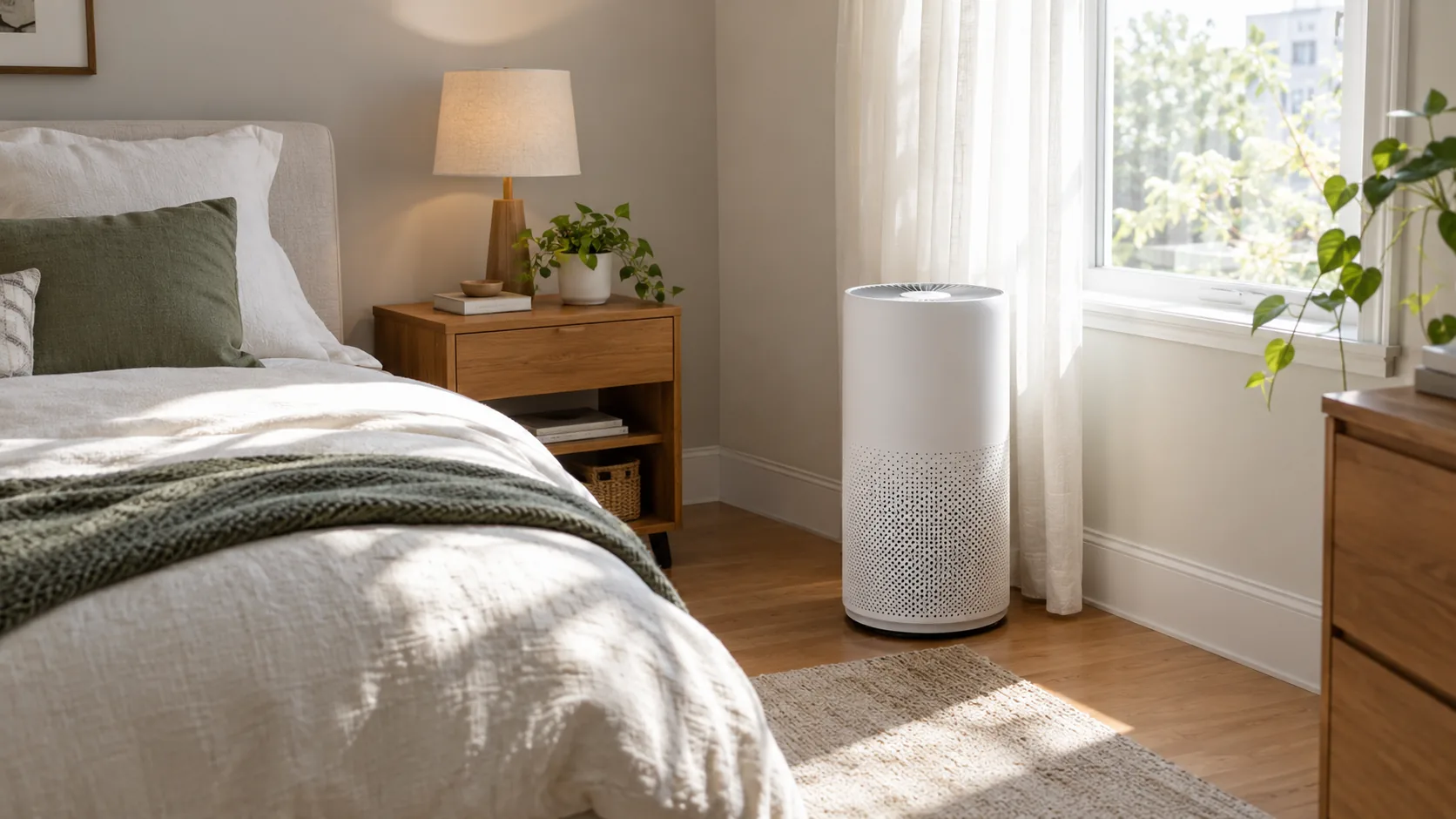
The right size for air purifiers for small rooms comes from one calculation: pick a unit whose CADR (clean air delivery rate) cleans your room's air about four to five times an hour. For a 120 sq. ft. room with 8-ft ceilings, that means a smoke CADR of roughly 64 to 80 cubic feet per minute (cfm). Then check noise on the lowest fan speed and the yearly cost of replacement filters.
This guide walks through the sizing math, a noise checklist for the bedroom, and a filter-cost worksheet, so you can compare any model on its own numbers.
Step 1: Measure the room and find your target CADR
Multiply length by width to get square feet, then multiply by ceiling height to get cubic feet. Measure your ceiling instead of assuming; the figures below use 8 ft. CADR is listed in cfm, and the number you want is the one for smoke, which is the smallest particle size on the label.
The formula is: CADR needed = room volume in cubic feet × air changes per hour (ACH) ÷ 60. Four ACH is a reasonable floor for a bedroom or office. Five ACH suits a room with pet dander, smoke or dust that you want to keep down.
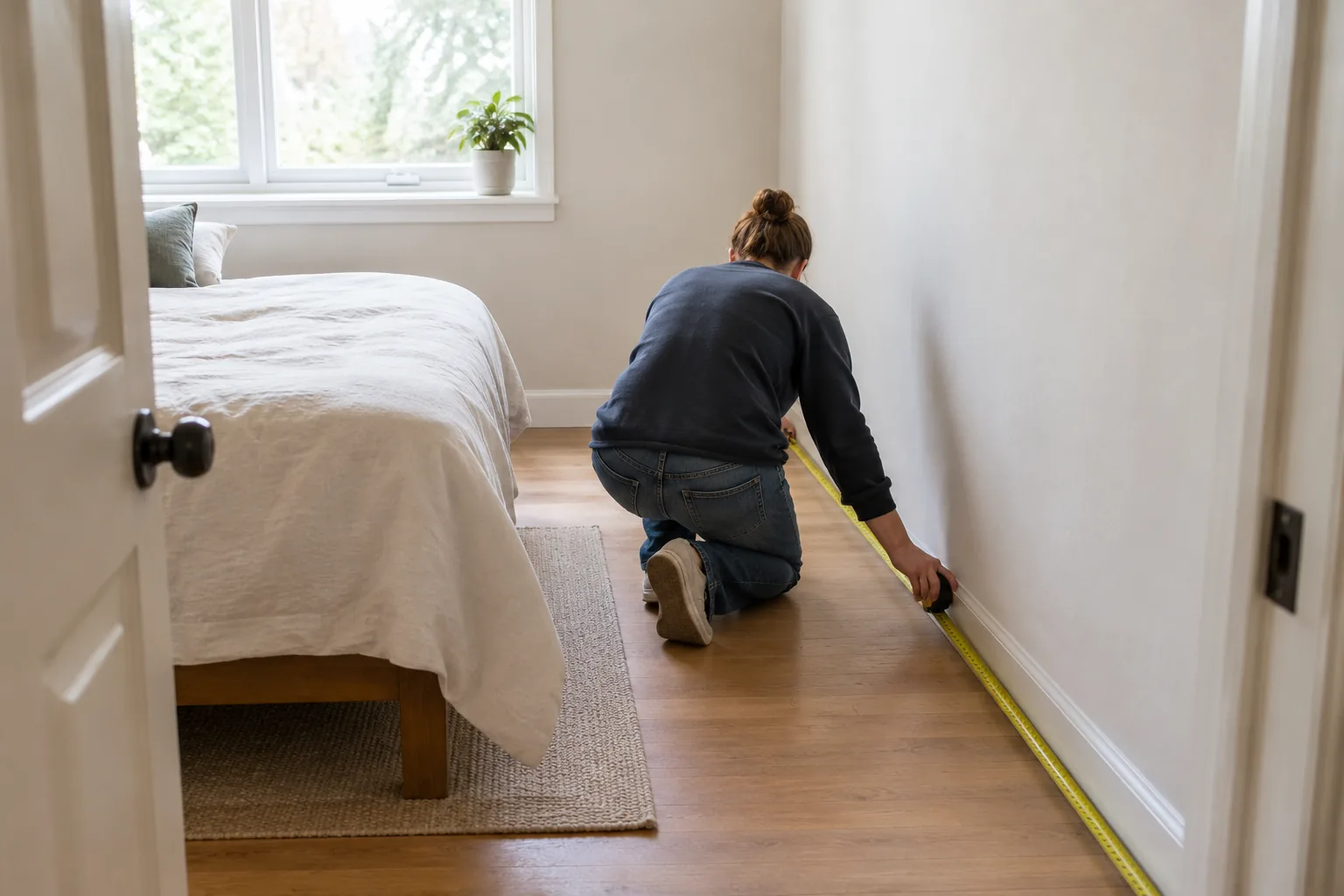
CADR targets for common small rooms
The table assumes an 8-ft ceiling. Round to the next larger unit size, so the purifier can run on a middle speed instead of flat out.
| Room size | Volume | CADR at 4 ACH | CADR at 5 ACH |
|---|---|---|---|
| 80 sq. ft. (small office, nursery) | 640 cu. ft. | 43 cfm | 53 cfm |
| 120 sq. ft. (small bedroom) | 960 cu. ft. | 64 cfm | 80 cfm |
| 150 sq. ft. (average bedroom) | 1,200 cu. ft. | 80 cfm | 100 cfm |
| 200 sq. ft. (large bedroom, den) | 1,600 cu. ft. | 107 cfm | 133 cfm |
A shortcut that lands in the same place: the smoke CADR should be at least two-thirds of the floor area in square feet. For 120 sq. ft., that is 80 cfm.
Step 2: Read the label for what it really says
Coverage claims on boxes are often written for a different standard than the one above. Look for the CADR figure itself, not a square-foot number alone. If only a coverage figure is shown, work backward with the formula or move on to a model that lists CADR.
- Check that the filter is described as True HEPA, not "HEPA-type" or "HEPA-style."
- Look for an activated carbon layer if smoke, cooking smells or other odors are your concern. A HEPA layer handles particles, while carbon handles odor molecules and gases.
- Confirm the unit has a washable or replaceable pre-filter for larger dust and pet hair.
- Skip models whose main method is an ionizer or plasma if you want filtration only.
Step 3: Check noise for sleeping
A purifier sized by the table may need a middle fan speed in a closed bedroom. That makes the sound level at low and medium speed more useful than the figure at maximum. Use this checklist before you buy:
- Find the decibel (dB) level at the lowest and middle speeds, not only the top one.
- Look for a sleep or night mode that dims or switches off the display lights.
- Check whether the lowest speed still gives enough CADR for your room. If it does not, you will run a higher speed all night.
- Plan the distance. The unit sits close to the bed in a small room, so check the sound level at that distance.
- Read the manual for how often the pre-filter needs cleaning, since a clogged filter makes the fan work harder.
If you are building a sleep setup, our guide to noise-canceling earbuds for sleep covers what to check on that side.
Field note
Run the purifier on your target speed for one evening before deciding where it lives. If the hum bothers you at that speed, look for a model with a higher CADR that reaches your target on a lower fan setting.
Step 4: Work out the real cost of replacement filters
The purchase price is only part of the cost. Compare the unit price and the yearly filter cost together when you shop for air purifiers for small rooms. Use this worksheet:
- Find the replacement interval in the manual.
- Find the price of one replacement filter from the maker's own page.
- Divide the filter price by the interval in months, then multiply by 12 for the yearly cost.
- Add the pre-filter cost if it is not washable.
- Confirm the filter is still sold for that model before you buy.
A washable pre-filter catches larger dust, but it does not replace the main filter. The main HEPA and carbon layers still wear out on the schedule in the manual.
Placement for air purifiers for small rooms
Air has to reach the purifier's intake. Leave the clearance the manual lists on every side, and keep the unit out of a floor corner behind a bed or sofa. A spot a few feet from the bed, with the outlet side facing open space, is a good starting point.
Keep doors and windows closed while it runs, since an open door turns a 120 sq. ft. room into a much larger volume. In an open-concept space or a living room that flows into the kitchen, size the unit for the whole connected area, not just the corner it sits in.
Dust, smoke, pet dander and mold
A True HEPA filter is the stage for airborne particles such as dust, pollen, pet dander and smoke particles. Carbon is what you look for with kitchen smells and smoke odor. For a kitchen-adjacent room, aim for the higher end of the ACH range and add a carbon layer.
Mold is a moisture problem first. A filter can capture airborne particles, but it does not dry out a damp wall. Find and fix the source of moisture, and see our guide to a small dehumidifier for bathrooms for sizing and placement. For visible mold, follow the guidance of a qualified professional.
Common mistakes when buying
- Choosing by a square-foot claim without checking the CADR number.
- Sizing for the room's floor area but ignoring a tall ceiling or an open doorway.
- Judging noise at the top speed only.
- Skipping the filter cost until the first replacement is due.
- Blocking the intake with a curtain, wall or furniture.
If you are setting up the whole bedroom for sleep, the Bedroom Air & Lighting collection groups related devices in one place.
A small room that moves: your car
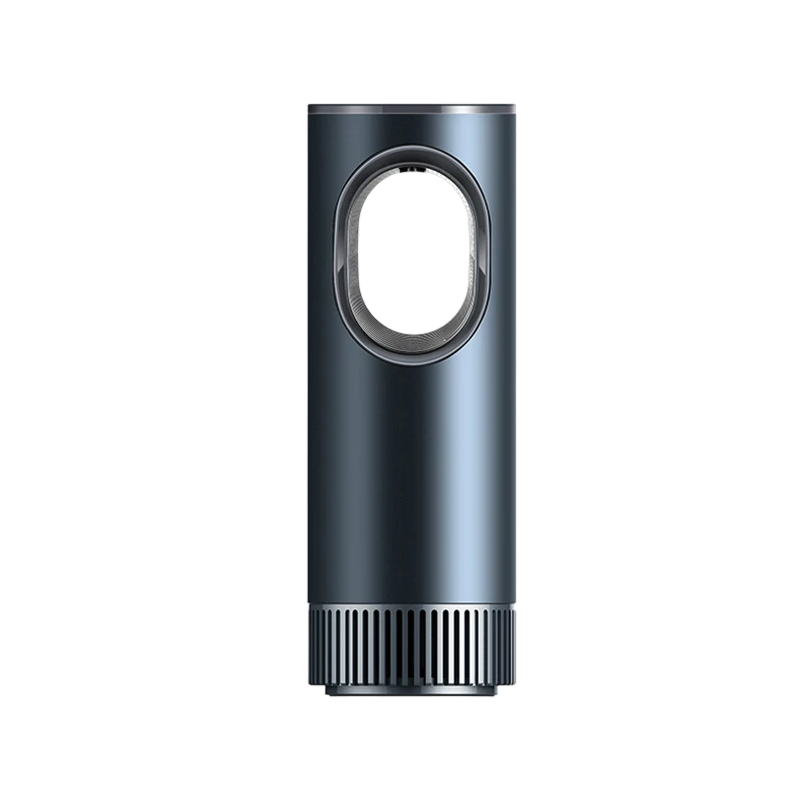
A vehicle cabin is smaller than any bedroom, and a room purifier does not travel with you. The IonVeil is an auto air purifier that plugs into a vehicle's 12V outlet. A fan draws cabin air through a True HEPA layer and then an activated carbon bed, and with recirculate mode on, the same cabin air passes through the unit again as you drive.
It uses mechanical filtration rather than ionizer plates or plasma, and it syncs with the ignition and starts running when you drive. The box includes the purifier, a USB charging cable and a user manual. It is for vehicles, not for the room sizing above.
 In this guideIonVeil$99.99View
Decision checklist
| Step | What to check | Pass condition |
|---|---|---|
| 1 | Room volume in cubic feet | Length × width × ceiling height |
| 2 | Smoke CADR | Volume × 4 to 5 ÷ 60 |
| 3 | Filter type | True HEPA, plus carbon for odors |
| 4 | Noise | dB listed at low and middle speeds, night mode |
| 5 | Filter cost | Yearly cost worked out from the manual's interval |
| 6 | Placement | Clearance on all sides, door closed |
Work through these six rows for each model you compare, and air purifiers for small rooms become a matter of numbers rather than box claims. Follow the manual for setup, and unplug the unit before you clean it or change filters.
Frequently asked questions
Keep reading
 White Noise & Sleep EarbudsNoise-Canceling Earbuds for Sleep: What to Check Before Buying7 min read
 Bedroom Air & Light TherapySmall Dehumidifier for Bathrooms: Sizing, Placement and Types7 min read
 Sleep Masks, Snoring & Apnea AidsAlarm Clock With Sunrise Simulation: How It Works and Setup Tips6 min read