
Cosmetic and Makeup Organizer: How to Pick Storage That Fits
Choose a cosmetic and makeup organizer by collection size, where you use it, compartment layout and brush hygiene, then check measurements before you buy.
The Calvedon Team
November 15, 2026 · 6 min read
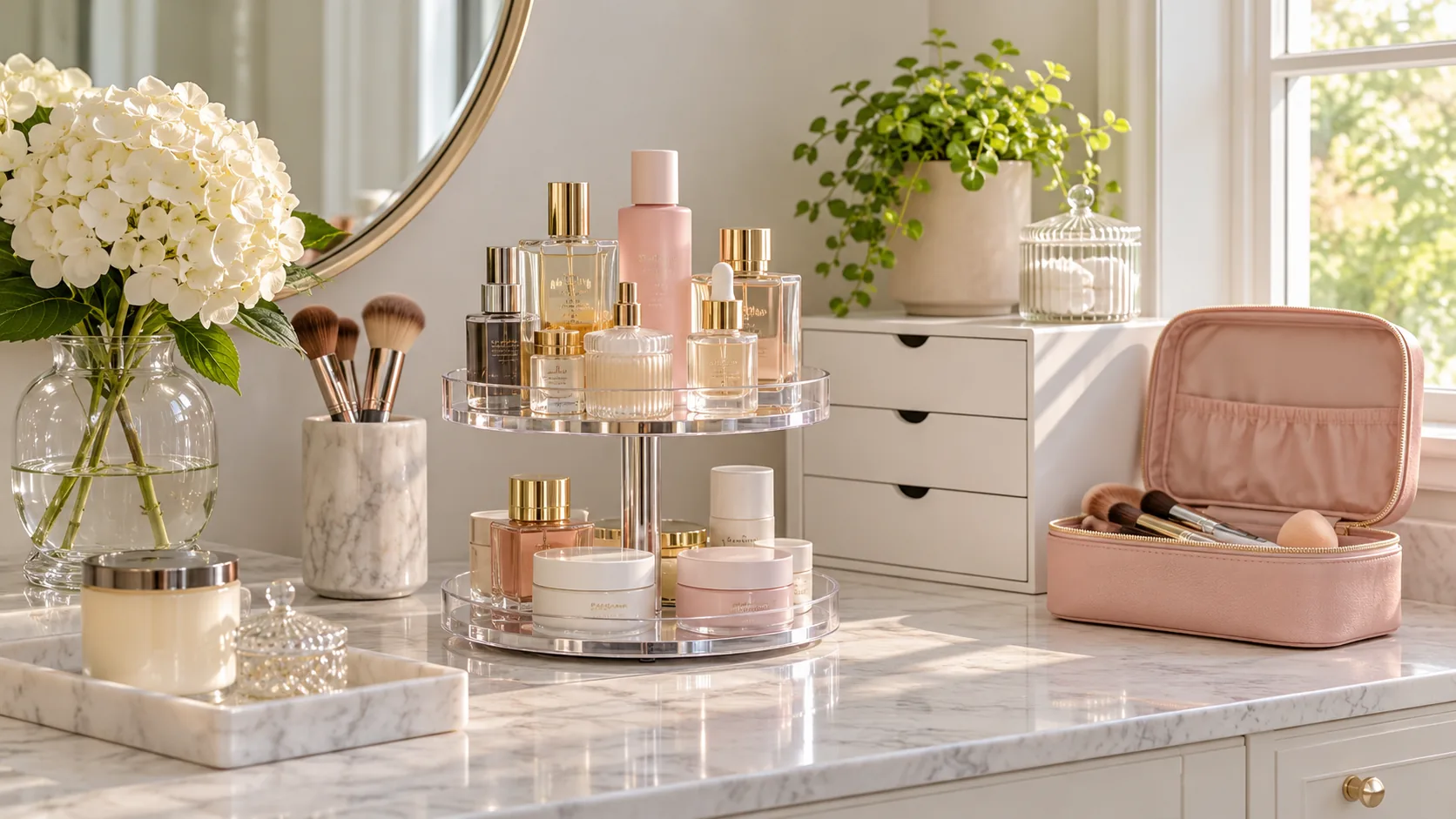
A cosmetic and makeup organizer fits when its size matches your collection, its type matches where you use it (counter, drawer or travel), and its compartments match the shapes you own. Count your products first, then choose the layout, then add a brush routine. This guide walks through each step in that order.
Product grids show you shapes. They do not tell you which shape suits a palette-heavy kit, a bottle-heavy kit or a bag you carry. The steps below do.
Step 1: Count and sort your collection
Empty every bag, drawer and shelf onto a table. Group items into palettes and compacts, bottles and tubes, lipsticks and pencils, brushes and tools, and skin care. Set aside anything you no longer use before you buy storage.
Measure the tallest bottle and the widest palette. These two numbers decide the minimum depth and width of any compartment you buy. Write them down and take them with you when you shop.
| Collection size | What to look for |
|---|---|
| Small: a daily handful of items | A single tray, a small case or one drawer insert |
| Medium: several palettes plus skin care | Drawer organizers or a countertop piece with open and closed sections |
| Large: display-sized kit | A multi-drawer unit, a rotating carousel or a cabinet with adjustable shelves |
Leave a little empty space in whatever you choose. A collection grows, and a full organizer on day one has no room for the next palette.
Step 2: Decide where the organizer will live
Countertop and vanity
A countertop organizer keeps daily items within easy reach. Clear acrylic or glass shows what is inside, while a rotating carousel (a lazy susan style base) brings items on the far side to the front. Measure your vanity depth so the piece does not crowd the mirror.
Drawers and cabinets
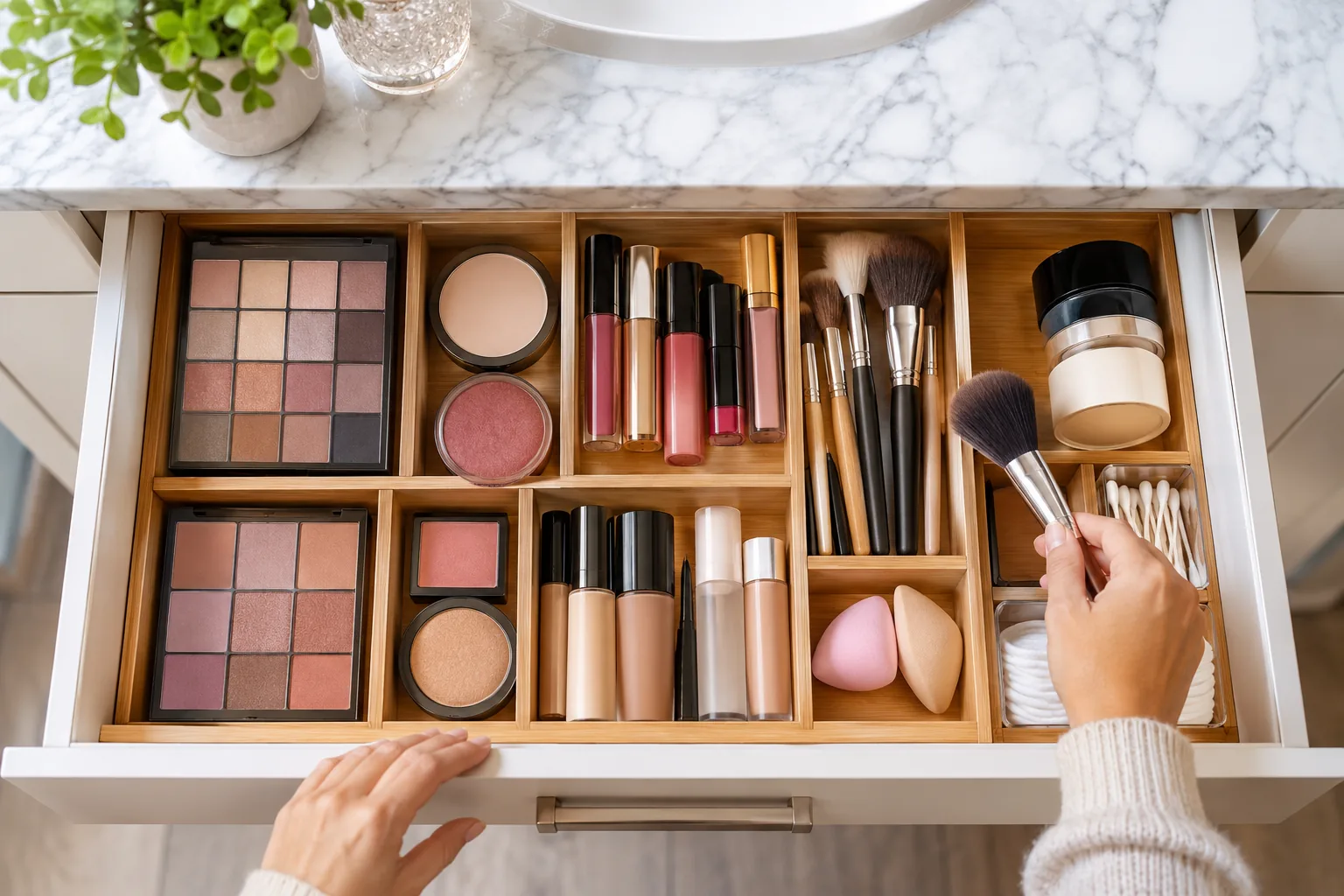
Drawer organizers keep products flat and out of view, which suits a bathroom where steam and splashes reach open shelves. Measure the inside height of the drawer so the tallest bottle lies down or stands with the drawer closed. For a cabinet, choose stackable bins so you can reach the back row.
Travel and on-the-go
A travel makeup organizer needs a firm shell and compartments that hold items in place. Look for a case that closes flat and fits your bag. If you apply makeup away from home, a built-in mirror and light matter as much as the compartments.
Step 3: Match layout and material to your products
Compartment layout
Fixed compartments work when your products rarely change. Adjustable dividers work when you buy palettes and bottles in mixed sizes. Use the table to match shape to layout.
| Product type | Layout that fits |
|---|---|
| Palettes and compacts | Shallow, wide trays or dividers set to palette width |
| Foundation and serum bottles | Deep compartments, or a lazy susan so labels face you |
| Lipsticks and pencils | Small slots or tiered stands |
| Brushes | An upright holder with the heads up |
| Skin care jars | A tiered or turntable tray within easy reach |
Place daily items at the front and occasional items at the back or in a lower drawer. Keep one zone per product group so you always know where an item returns.
Material
Material decides how the organizer looks on a counter and how you clean it. A bathroom with steam asks for surfaces you can wipe, while a bedroom vanity can take open bamboo or fabric.
| Material | What to know |
|---|---|
| Clear acrylic | Sides show the contents; wipe with a damp cloth and dry |
| Glass | Clear display look; heavier, so check the shelf or counter that holds it |
| Bamboo | Natural look; check that the finish is sealed before using it in a bathroom |
| Plastic | Light and stackable; suits drawer inserts and bins |
| Fabric | Soft liners and pouches; wash according to the label |
A vanity case for makeup you carry
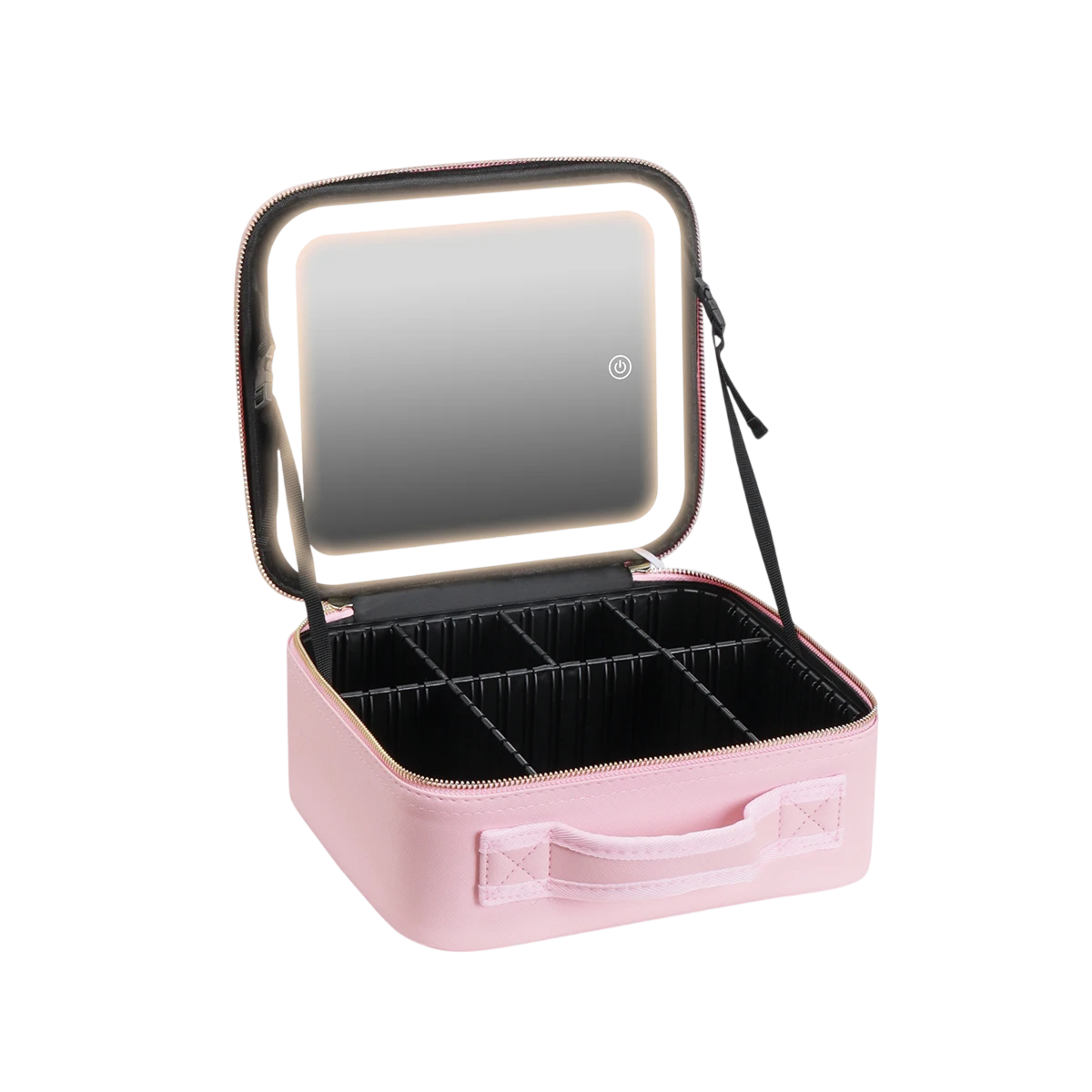
If you want a vanity makeup case that doubles as storage, Glambeau is a makeup vanity case with an illuminated full-screen LED mirror that flips up and adjustable dividers inside. You can rearrange the dividers to set compartment sizes around your palettes and bottles so each one has its own place. The case has a rugged outer shell around the mirror and compartments.
The mirror offers cold, warm or natural light, and a built-in 2000mAh battery powers it, so you can use the case away from wall outlets. You can recharge it from a power bank, a laptop or a wall outlet.
 In this guideGlambeau$99.99View
Step 4: Plan for brush hygiene
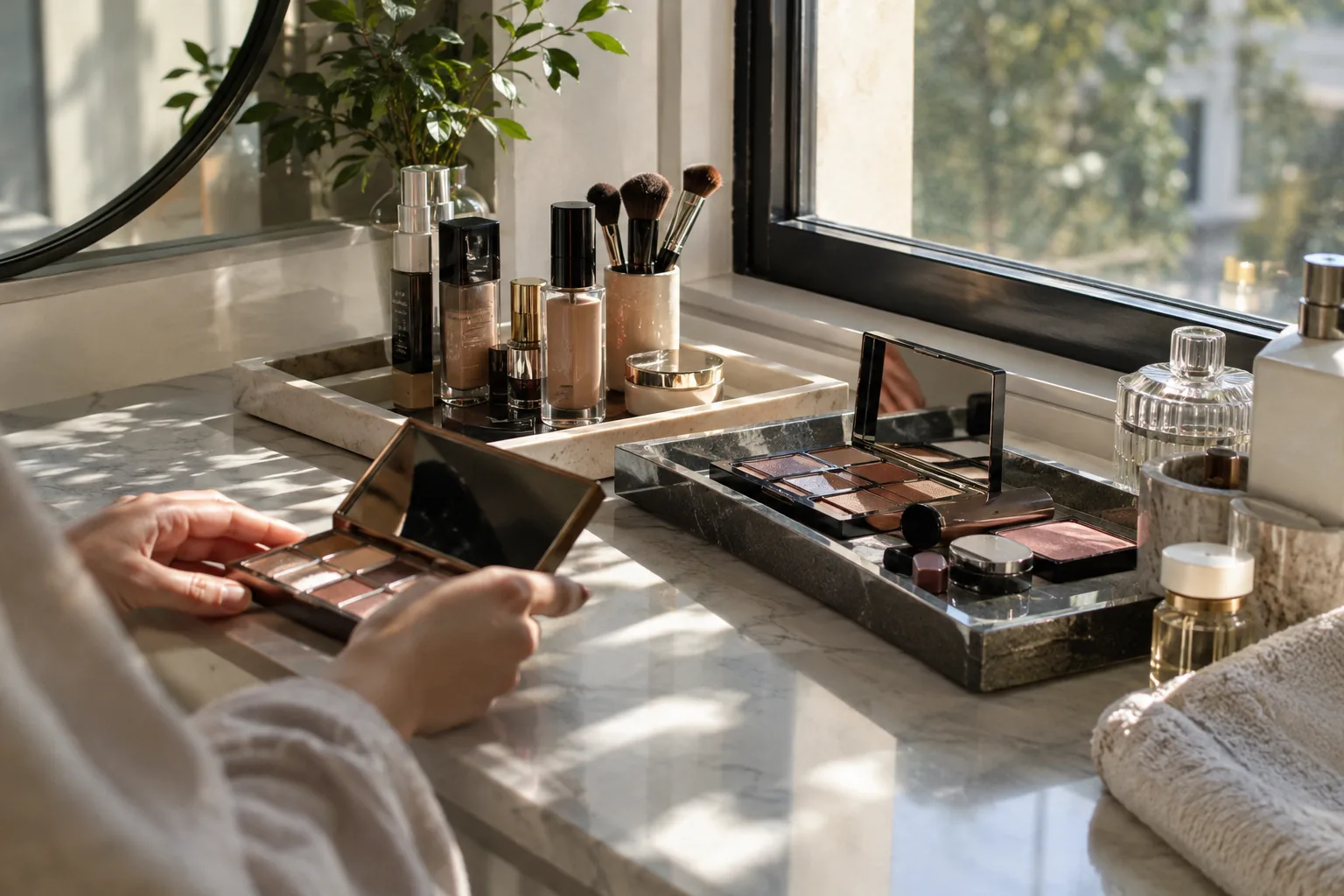
Storage that holds dirty brushes only moves the mess around. Let brushes dry fully before they go into a case or holder, and store them with the heads up or lying flat. For a full washing routine, see How to Clean Makeup Brushes With Brush Cleaner, Step by Step.
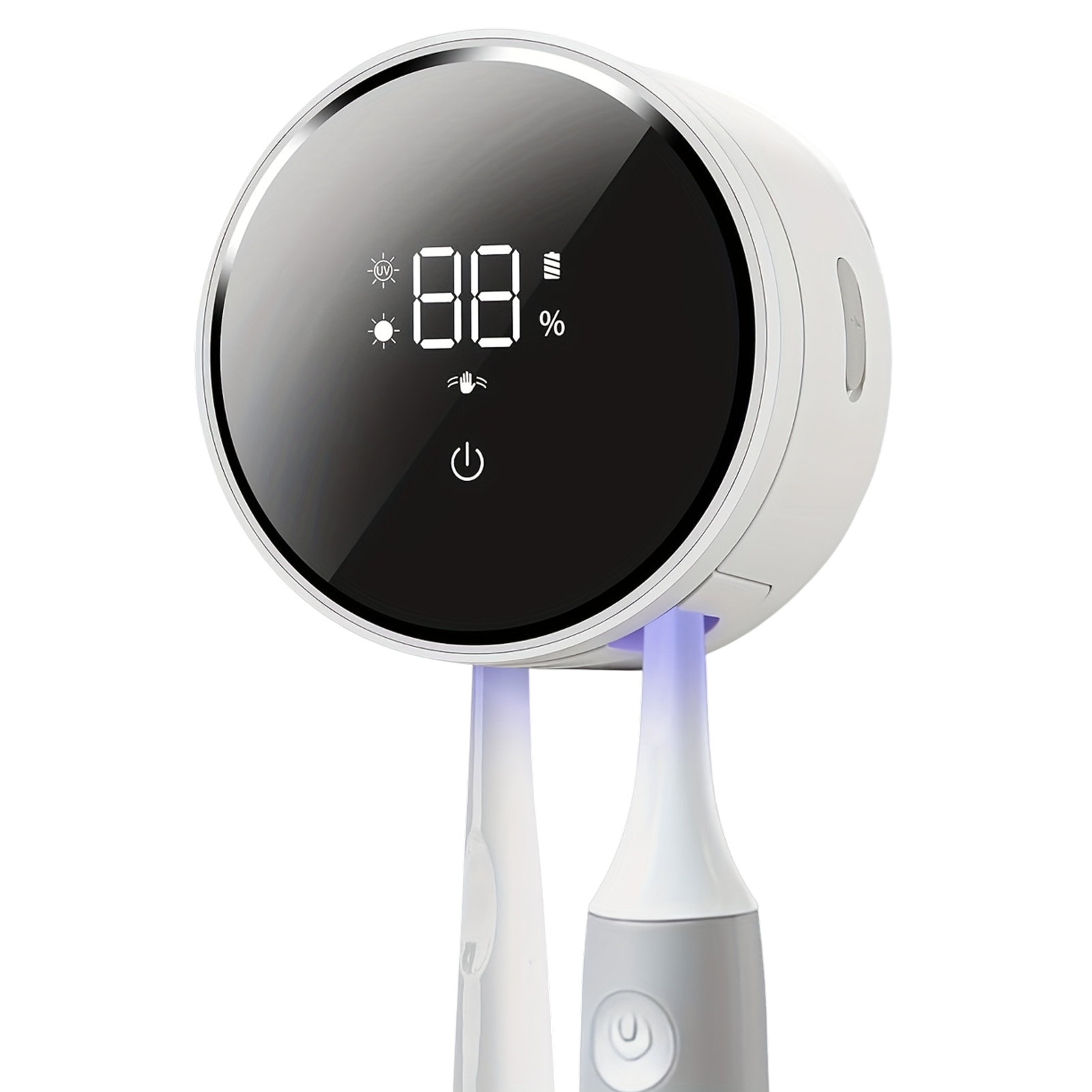
If you want a dedicated case for a toothbrush head in the same bathroom, VioletGuard is a small UV-C case that takes electric or manual heads. You press a button to start the cycle, and it recharges through USB-C. It is made for toothbrush heads, so do not use it for makeup brushes.
 In this guideVioletGuard$79.99View
Field note
Wipe organizer trays and drawer inserts on a regular schedule, and dry them before you put products back. Clear acrylic and glass wipe clean, while fabric liners need washing according to their label.
Step 5: Check fit, then set up and care for it
Checklist before you buy
- Measured depth and height match your tallest bottle and widest palette.
- Drawers open fully, with room to reach the back.
- The material wipes clean: acrylic, glass, plastic or bamboo with a sealed finish.
- Clear sides let you see what you have before you reach for it.
- Lids or doors close if the room is humid.
- Travel pieces have a closure that holds when the bag is packed.
Set up and care schedule
Once it arrives, wipe every tray first, then place the tallest items at the back and the daily items at the front. Open each drawer or lid with everything inside before you call it done.
| When | What to do |
|---|---|
| After each use | Close lids and return items to their zone |
| Weekly | Wipe trays, shelves and the brush holder, then dry them |
| Monthly | Empty one section at a time, clean it and set aside what you no longer use |
Common mistakes when choosing a cosmetic and makeup organizer
- Buying before you declutter, then sizing for items you do not use.
- Choosing fixed slots for a collection that changes often.
- Putting open storage in a steamy bathroom.
- Stacking heavy items on top of palettes.
- Skipping the measurement of drawer height.
If you keep creams or serums cold, a separate appliance may suit them instead of a drawer. Read Mini Fridge for Makeup and Skincare: What It Is and How to Choose for how to choose one.
Quick decision path
- Count and sort what you own.
- Pick the location: counter, drawer, cabinet or travel.
- Choose fixed or adjustable compartments.
- Pick a material that suits the room.
- Add a brush holder and a cleaning routine.
- Check measurements, access and fit.
You can browse more options in our Makeup Tools & Storage collection.
Frequently asked questions
Keep reading
 Facial Care DevicesMicrodermabrasion Facial Machines: Professional vs At-Home Specs6 min read
 Body Contouring, Foot Care & Beauty ExtrasWomen's Shapewear Bodysuit: How to Choose Fabric, Firmness and Size7 min read
 Body Contouring, Foot Care & Beauty ExtrasHow to Fix a Broken Nail: Trim, File or Patch Step by Step6 min read