Women's Shapewear Bodysuit: How to Choose Fabric, Firmness and Size
Pick a women's shapewear bodysuit by deciding firmness, fabric, closure and size in that order, then confirm the fit with a short check at home.
The Calvedon Team
November 19, 2026 · 7 min read
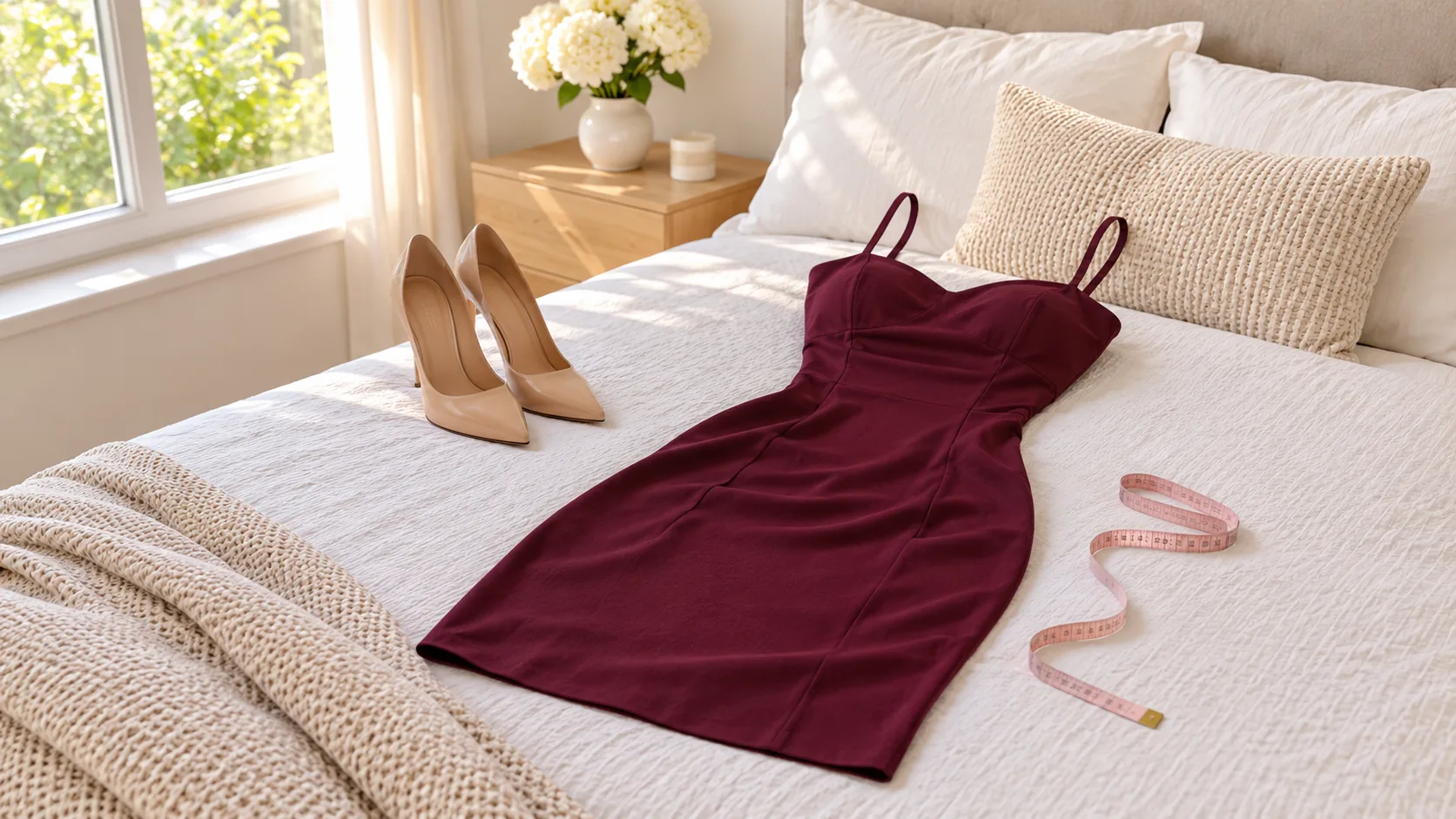
A women's shapewear bodysuit works well when you match four things to the outfit: the firmness level, the fabric, the closure and the size. Decide what the garment has to do under your clothes, then use the steps below to narrow the choice. A fit check at home confirms it before you wear it out.
This guide skips ranked lists. It gives you a decision order, comparison tables and a checklist you can use with any bodysuit shapewear you consider, whether you want tummy control, waist smoothing or a clean line under a dress.
Step 1: Decide what the bodysuit has to do
Start with the outfit, not the garment. A fitted dress, a knit top and tailored trousers each ask something different from the layer underneath.
- Smooth the waistline under a fitted top.
- Keep a clean line beneath a dress.
- Stay hidden under work clothes through a long day.
- Work with a specific neckline, such as a low back, a wide neck or a strapless top.
Write down the one or two outfits you will wear it with most. That short outfit list drives every choice that follows, from strap style to fabric weight.
Step 2: Choose a firmness level
Firmness describes how strongly the garment holds the area it covers. Labels such as light, medium and firm are not standardized between makers, so read the product page for how the panels are built rather than trusting the word alone.
| Level | Where it fits | What to check |
|---|---|---|
| Light | Thin knits, desk days, warm weather | Seams that lie flat under fabric |
| Medium | Dresses, fitted tops, work clothes | Panel placement at the midsection |
| Firm | Short wear under structured outfits | Whether you can sit, bend and reach in it |
A firm garment is not the right choice for every outfit. If you cannot sit or bend in it, it does not suit a full day, so match the level to how long you plan to wear it.
Panels matter more than the label
Look at where the extra layers sit. A double-layer midsection concentrates the hold at the waist and tummy area, while the rest of the garment can stay light. Rear paneling is worth a look too: some designs press the back flat, while shaped paneling follows the curve of the body.
Step 3: Compare fabric, trim and closure
Fabric decides whether the bodysuit disappears under clothes. Lightweight, stretchy knits layer under thin dresses, while thicker blends can show at the edges of fitted tops.
| Feature | Good fit for | Watch for |
|---|---|---|
| Lightweight knit | Work clothes, evening outfits | Check the product page for the fiber blend |
| Thicker blend | Structured jackets, heavier fabrics | Visible edges under fitted tops |
| Lace trim | V-necks and wrap tops where the neckline may show | Lace edges under clingy knits |
| Bonded or flat edges | Leg openings and necklines under thin fabric | Thick elastic that can show as a line |
Check the care label for washing steps before you buy. A lightweight fabric suits a long day better than a heavy garment, and the trim matters most when the neckline may be visible. Dark outfits hide most colors; light or sheer fabrics call for a shade close to your skin tone, so look at the color range on the product page.
Pick a closure that suits how you dress
The closure decides how you get in and out, and how much you can adjust once it is on. Pull-on styles stretch over the head or from the legs and can be hard to manage alone.
| Closure | How it works | Good to know |
|---|---|---|
| Pull-on | Stretches over the body | No fastenings to show; the fabric sets the fit |
| Hook-and-eye | Rows of small hooks at the front or crotch | Lets you choose the row you fasten |
| Zipper | Runs down the front | Lets you step in, then close |
| Zipper plus hooks | Both on one garment | Close the zipper, then fasten the hooks to set the fit |
If you dress alone or want to adjust the fit during the day, a front opening is worth weighing against a pull-on style.
Straps and necklines
Detachable straps let one garment work with different necklines. Remove them for off-the-shoulder or strapless looks, or attach and adjust them for dresses and tops with straps. If you want a long-sleeve or built-in bra style, check the product page for those features, since not every bodysuit includes them.
One option: a lace-trimmed bodysuit with a dual closure
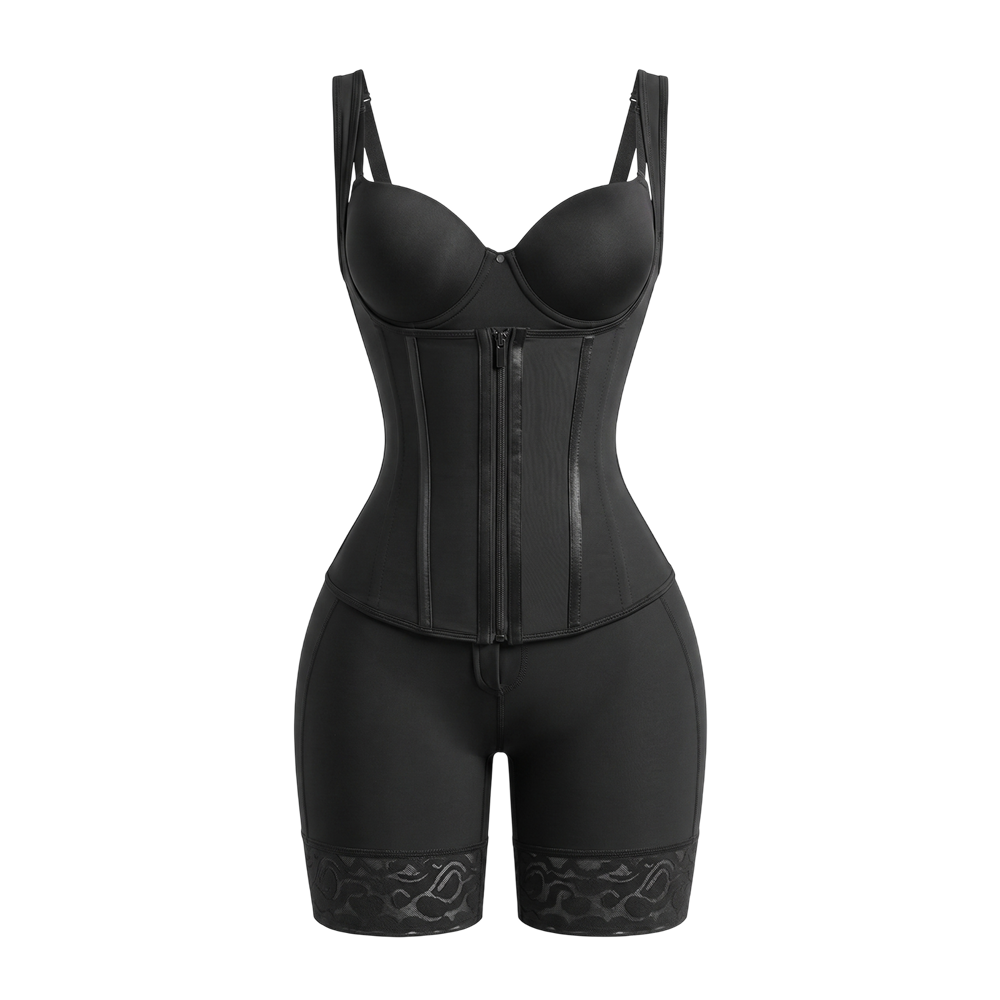
Cintorra is a lace-trimmed shapewear bodysuit with a front zipper, hook-and-eye closures and a double-layer midsection panel. You step into it and pull it up, close the front zipper, then fasten the layered hook-and-eye closures to set the fit you prefer.
Its shaped rear paneling follows the body's curve instead of pressing the back flat, and the adjustable, detachable shoulder straps let you adapt to different necklines. The fabric is lightweight with a lace trim, so it can go under work clothes or evening outfits. The box includes the bodysuit, the straps and gift-ready packaging.
 In this guideCintorra$79.99View

Step 4: Size the bodysuit
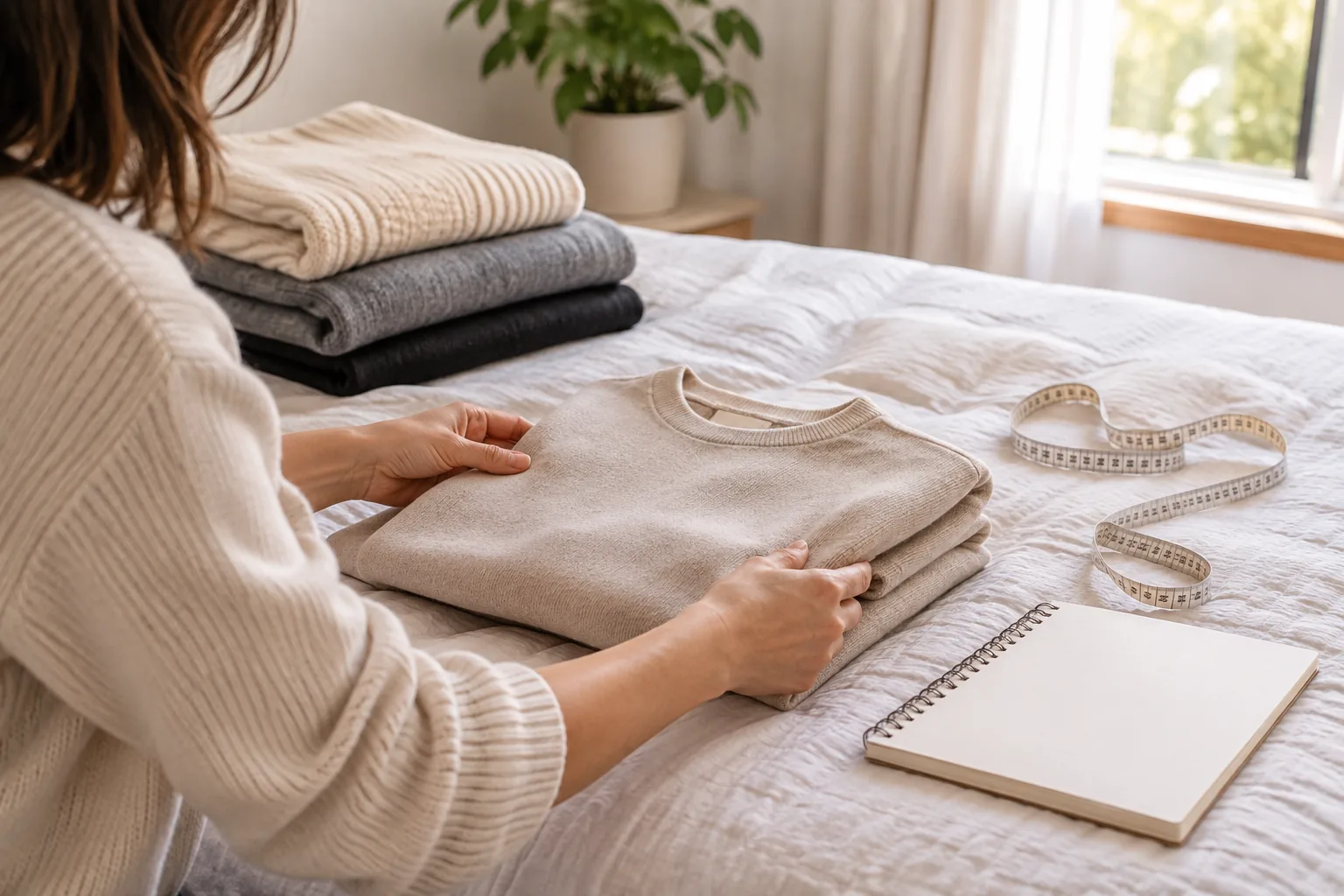
Sizing is where many choices go wrong. Measure instead of guessing from your usual clothing size, because a bodysuit also depends on torso length.
- Measure your bust, waist and hips with a soft tape, over thin clothes or underwear.
- Measure torso length: start at the top of one shoulder, run the tape down through the crotch and back to the same shoulder. A bodysuit that is too short pulls on the straps.
- Write the numbers down and compare each one with the size chart on the product page.
- If you fall between sizes, read the page for how the garment is meant to fit, and choose by the area you want held.
Sizing larger to avoid tightness can leave gaps and loose fabric that show under clothes. If the chart is unclear, contact the store before ordering.
| Measurement | How to take it | Why it matters |
|---|---|---|
| Bust | Around the fullest part, tape level | Cup and neckline fit |
| Waist | Around the narrowest part of the torso | Midsection panel placement |
| Hips | Around the fullest part of the hips | Leg openings and seat fit |
| Torso length | Shoulder, through the crotch, back to the shoulder | Strap and crotch position |
How to check the fit of a women's shapewear bodysuit at home
Try it on with the clothes you plan to wear over it, in good light and in front of a mirror. Follow the manual or care label for putting it on, and open the closures fully before you pull.
- Seams and edges lie flat and do not roll at the legs, bust or neckline.
- No fabric bunches at the waist or hips.
- You can sit, bend and reach.
- The straps stay in place and the closures do not strain.
- The outline looks smooth under your fitted top or dress, from the front and the side.
Wear it around the house for a while before a big event, so you can test the fit while you move, sit and climb stairs. If something rolls or shifts, check the size chart again or try the next size.
Field note
Try the bodysuit on with the exact outfit you bought it for. A garment that looks smooth alone can show seams or lace edges under a clingy knit.
Match the bodysuit to the outfit
Once you know the four choices, apply them to the outfits on your list.
- Fitted dress: a medium level with a double-layer midsection and flat edges.
- Work clothes: a lightweight fabric and a closure you can manage alone.
- Low back or wide neck: detachable straps you can remove.
- Thin knit top: flat edges and no visible trim.
The same women's bodysuit shapewear can serve several of these if the straps and closure allow it. A detachable strap design covers more necklines than a fixed one.
Care schedule and common mistakes
Care schedule
Stretch fabrics wear down when they are washed against the care label. Use the label as your schedule.
- After each wear, air the garment and check the closures for bent hooks.
- Wash as the care label directs, with a mild detergent.
- Fasten hooks and close zippers before washing so they do not snag lace.
- Dry flat or as the label directs, away from direct heat.
- Store it folded or hung without crushing the panels.
If a hook bends or a seam splits, stop wearing it and check the fit again before you rely on it.
Common mistakes to avoid
- Choosing the firmest level for every outfit.
- Checking only waist size and ignoring torso length.
- Skipping the closure: a style you cannot put on alone may stay in the drawer.
- Wearing visible lace or thick seams under thin fabric.
- Washing against the care label.
Fit varies from garment to garment, so a shapewear women bodysuit in one size chart may not match another. When you want a layer for tummy control and waist smoothing, look at the panel layout on the product page, not only the label. You can also browse the body contouring and beauty extras collection for related items, or read how to contour your face for a step-by-step routine in good light.