Floss or Brush First? How to Order Your Daily Oral Care Routine
Floss or brush first? Either order works if you keep it consistent. Here is a clear daily sequence for string floss, water flossers, electric flossers and mouthwash.
The Calvedon Team
October 26, 2026 · 6 min read
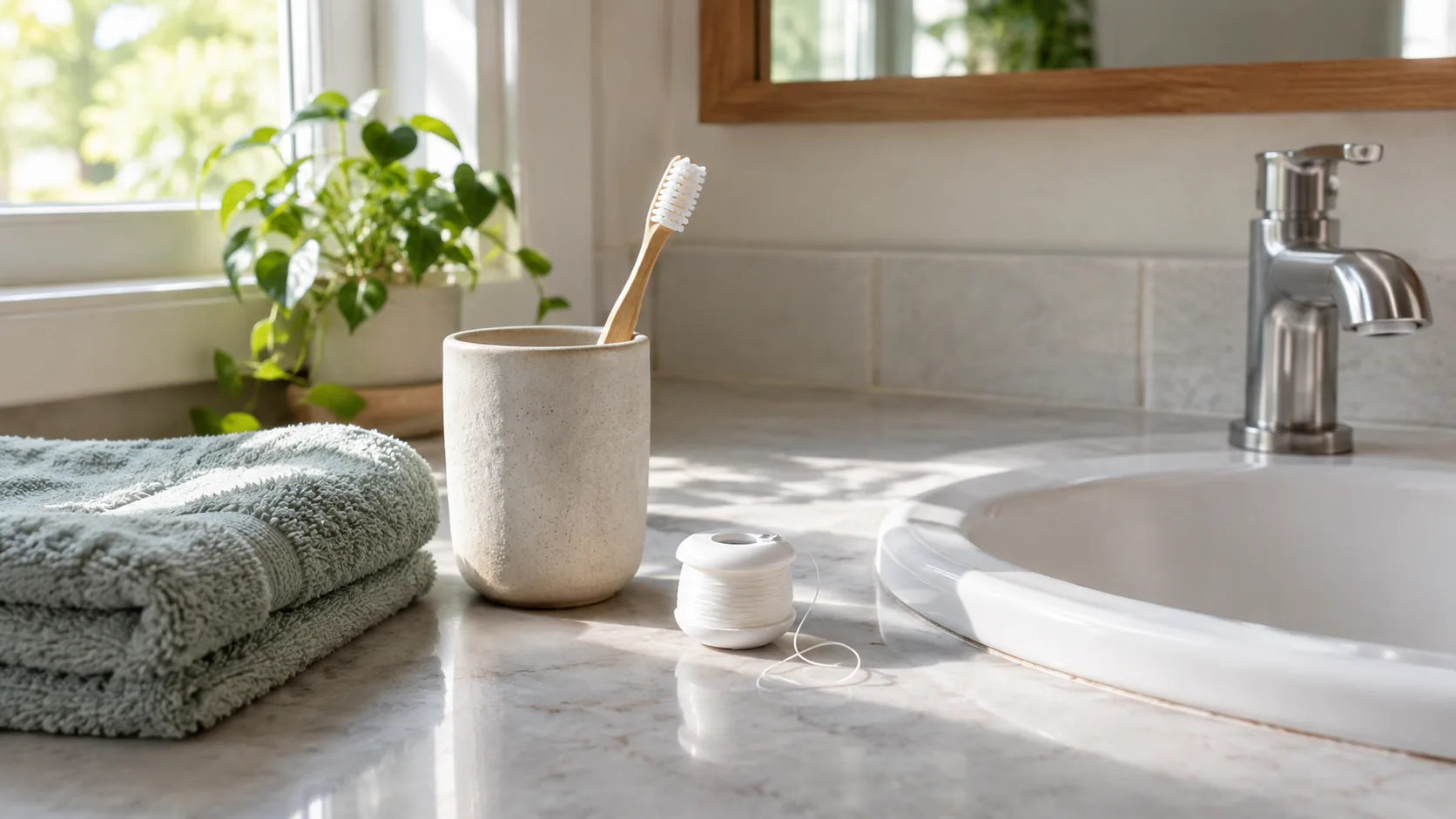
Whether you floss or brush first matters less than doing both every day, so choose one order and keep it. Flossing first loosens food particles before the brush and toothpaste reach the spaces between teeth. If your dentist gives you a different order, follow that.
This guide gives you a clear sequence for string floss, a water flosser and mouthwash, shows where an electric flosser fits, and ends with a checklist you can run every day.
Floss or Brush First: How to Decide
Both orders have a reason behind them. Pick the one you will repeat, because a routine you skip is not part of your oral hygiene at all.
The case for flossing first
Flossing before brushing dislodges food particles and plaque from between teeth. The brush and toothpaste then move through a mouth that is already cleared, and any fluoride toothpaste you use can reach those spaces as you brush.
The case for brushing first
Some prefer to brush first and floss to finish. This works if it means you actually floss. If you tend to skip flossing when you are tired, putting it first removes the chance to skip it.
A simple way to choose
- Floss first if you want the toothpaste to reach between teeth while you brush.
- Brush first if you floss more reliably as the last step.
- Ask your dentist at your next visit if you have braces, bridges, implants or other dental work.
The Daily Order, Step by Step
The table shows the order for each setup. Every row follows the same logic: clean between teeth, brush, then rinse if you use mouthwash.
| Your setup | Step 1 | Step 2 | Step 3 |
|---|---|---|---|
| String floss and brush | Floss | Brush | Mouthwash, following the label, if used |
| Water flosser and brush | Water flosser over the sink | Brush | Mouthwash, following the label, if used |
| String floss, water flosser and brush | Floss | Water flosser | Brush, then mouthwash if used |
| Any setup with mouthwash | Clean between teeth | Brush | Mouthwash, following the label |
Checklist for one session
- Wash your hands and gather your tools.
- Clean between teeth with string floss, a water flosser or both.
- Brush all surfaces of your teeth with a soft toothbrush, manual or electric, following the time and technique your dentist gave you.
- Spit out the extra toothpaste.
- Use mouthwash if it is part of your routine, following its label.
- Rinse your tools and let them dry.
Using string floss
Wind the floss around your fingers and slide it between two teeth with a gentle back-and-forth motion. Curve it into a C shape against one tooth and move it along the side, just under the gumline. Use a clean section for each gap.
Where a Water Flosser Fits
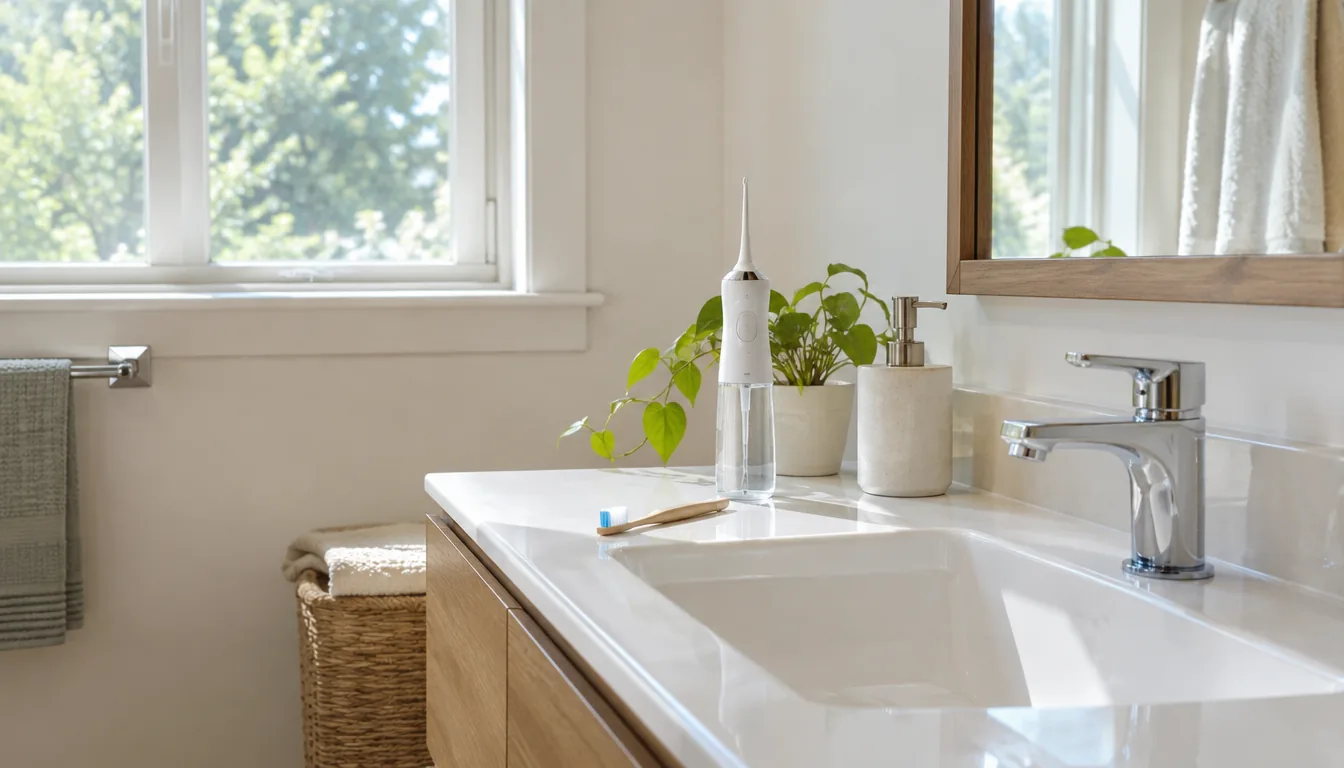
A water flosser sends a stream of water between teeth and along the gumline. You can use it before brushing, after brushing, or in place of string floss if your dentist agrees. Pick one slot and keep it.
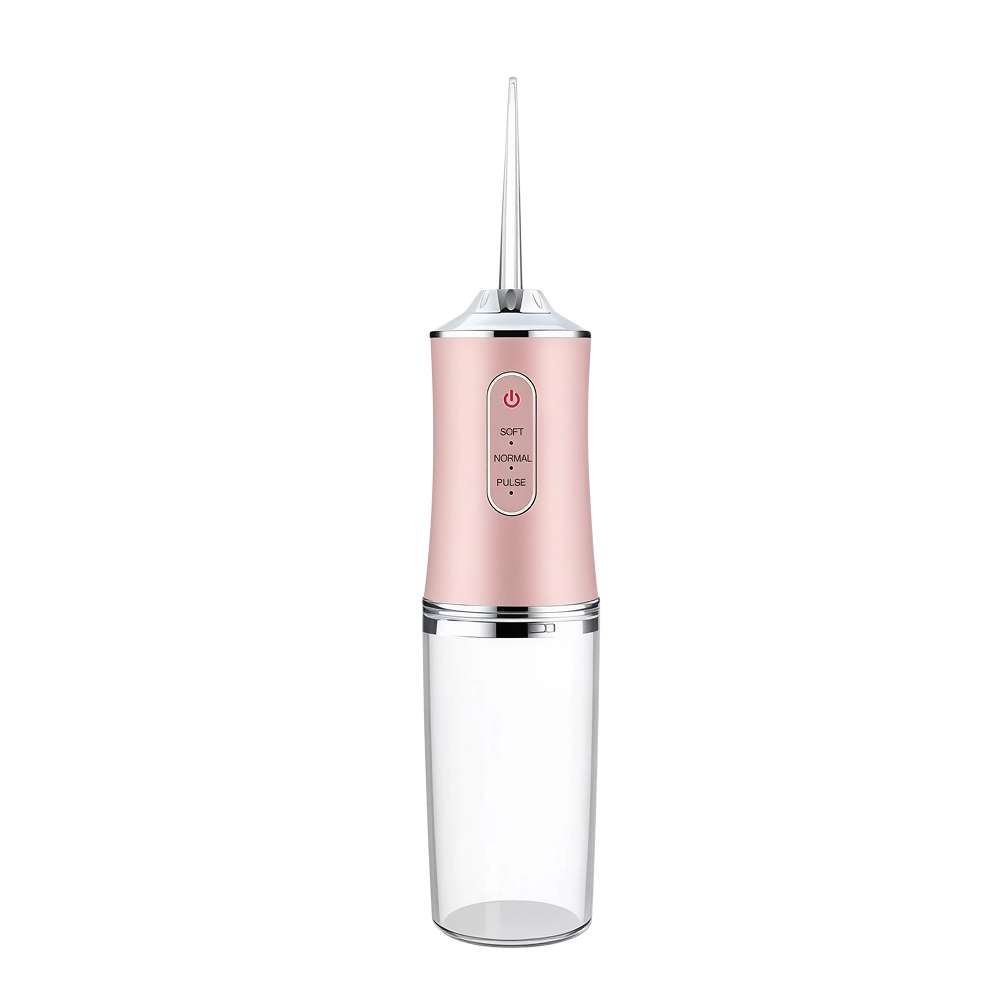
The HydroFlare is a rechargeable water flosser with a 200ml tank and four pressure modes: Soft, Normal, Strong and Pulse. Soft is a common starting mode for first-time users. It comes with four replacement nozzle tips, including orthodontic and standard types, and each tip is color-coded so people in a household can have their own.
 In this guideHydroFlare$59.99View
Water flosser steps in the routine
- Add water to the tank and click your nozzle tip into place.
- Choose a pressure mode.
- Lean over the sink and hold the tip just above the gumline at a right angle.
- Move from tooth to tooth, letting the stream run over each area.
- Drain the tank, wipe the outside dry and set the unit back on its USB charger.
- Brush, then continue with the rest of your routine.
For technique and settings in more depth, read How to Use a Water Flosser: Step-by-Step Technique and Settings.
Field note
Keep the order the same on every device. If you floss before brushing with string, do the same with your water flosser so the habit stays one routine, not two.
Where an Electric Flosser Fits
An electric flosser, such as a cordless electric water flosser, takes the same slot as any water flosser: before or after brushing, over the sink. The order rule does not change with the device.
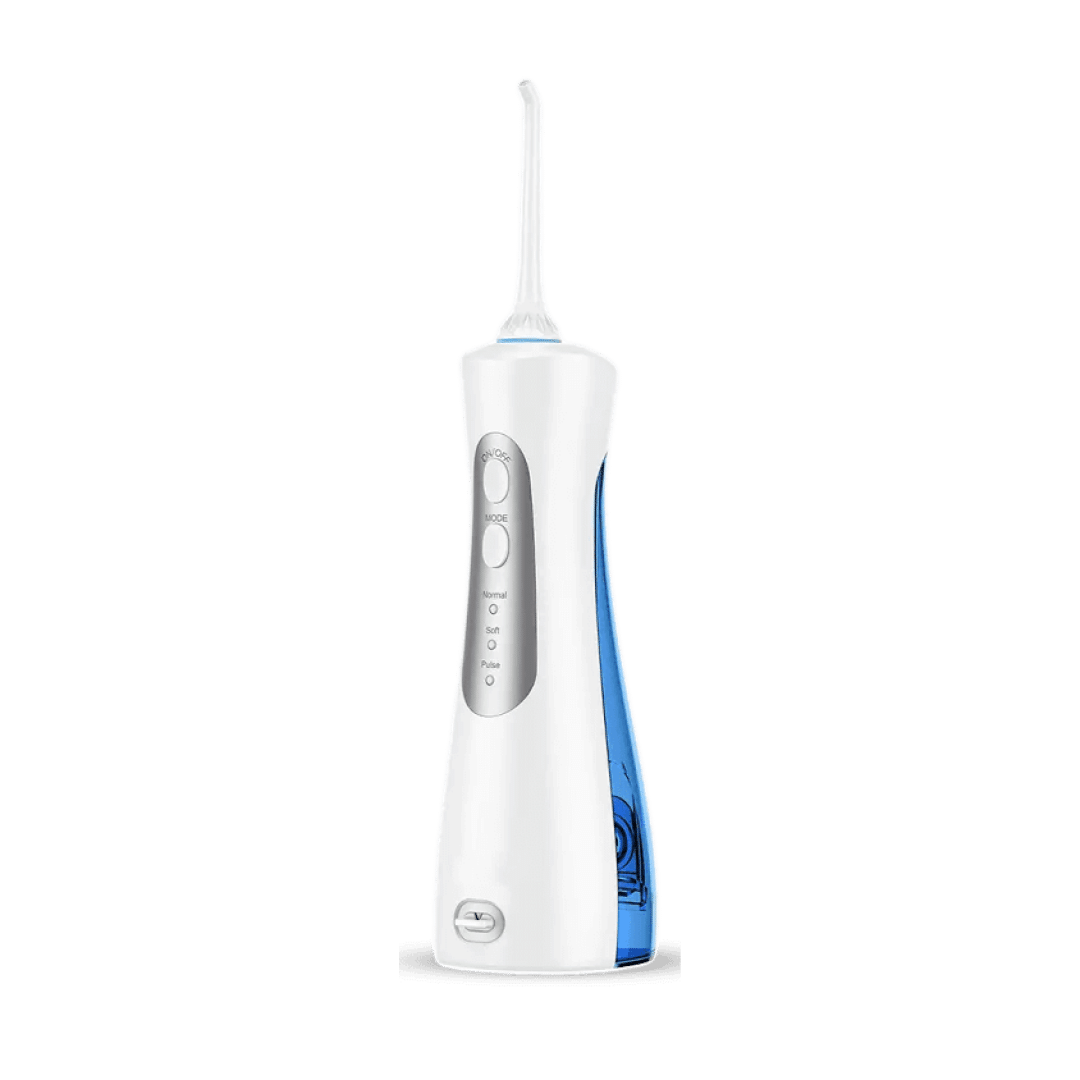
The HydroPulse is a cordless electric water flosser with an extra-large water tank. It charges with the included USB cable and has settings from gentle to pulse mode. Gentle mode is the setting to begin with, giving a lighter flow while you get used to the tip along your gumline.
It can be guided around brackets, wires and other dental hardware. Pause briefly at each spot, move slowly and follow the quick-start guide for positioning. If you wear braces, ask your orthodontist how to fit it into your routine.
 In this guideHydroPulse$108.99View
When to Use Mouthwash
Mouthwash goes after cleaning between teeth and brushing. Check the label for how long to swish and whether to wait before eating or drinking.
If you brush with a fluoride toothpaste, some labels and dentists advise using mouthwash at a different time than brushing, such as after lunch. Ask your dentist which approach fits the products you use. Do not swallow mouthwash, and keep it away from young children.
Morning, Night and How Often
Brushing is a twice-a-day habit, once in the morning and once before bed. Flossing is generally a once-a-day habit, and you can choose the time that you will keep. Night is a fit if you want to clear the day's food before sleep, but morning works if that is when you will do it.
If you floss at night, you do not have to repeat it in the morning unless you want to or your dentist asks you to. The same goes for a water flosser. Add it to the session where you already clean between teeth.
| Step | Morning | Night |
|---|---|---|
| Clean between teeth | Once a day, at the time you choose | Once a day, at the time you choose |
| Brush | Yes | Yes |
| Mouthwash | If part of your routine | If part of your routine |
Common Mistakes
- Changing the order every day, which makes the habit harder to repeat.
- Skipping the gumline, where plaque collects along the edge of each tooth.
- Rinsing with water right after brushing when your dentist has asked you to leave toothpaste on.
- Leaving water in the flosser tank. Drain it after each session.
- Using one nozzle tip for several people. Use color-coded tips so each person has their own.
- Pressing hard with floss. Use a gentle motion against the tooth.
Persistent bad breath, bleeding or any change in your mouth is a reason to book a dental visit, not to adjust your routine alone.
Build a Habit That Lasts
Keep tools where you can see them, and attach the routine to something you already do, like turning off the bedroom light. If you want a water flosser or electric flosser, browse our Dental & Oral Care Devices collection and compare tank size, modes and nozzle tips against how you plan to use them.