Good Posture Correctors: Types, Fit and Sizing Explained
Good posture correctors have adjustable straps, a slim build and breathable fabric. Compare strap, vest and brace styles, then size and fit-check one before you wear it.
The Calvedon Team
November 3, 2026 · 8 min read

Good posture correctors share a few traits: an adjustable fit, a slim build that sits flat under clothing, breathable fabric, and a design meant for short wear periods. The right style depends on where you slouch, what you wear over it and how well the straps match your frame. This guide compares strap, vest and brace styles, then walks through sizing, fit checks and a simple wear routine.
A posture corrector is a cue, not a substitute for movement. It can make you notice when your shoulders drift forward, and that awareness is the useful part. If you have a health concern about your back or neck, ask a clinician before you buy one.
Good posture correctors: strap, vest and brace types compared
Most designs fall into a few families. The names vary by seller, so judge a product by how it is built and where it sits on your body, not by the label on the box.
| Style | Where it sits | Fit points to check | Wear situation |
|---|---|---|---|
| Cross-back strap | Looped around both shoulders, crossing between the shoulder blades | Strap length, how it sits at the armpit, whether it slides | Desk work, driving, phone use |
| Bar-reinforced brace | Across the upper back and shoulders, with bars along the back | Strap adjustment, how flat the bars lie, fabric at the ribs | Desk work under shirts and jackets |
| Contoured back brace | Shaped to follow the curve of the back, with dual straps | Strap tension, how the back panel rests along the spine | Work, chores, errands under clothing |
| Longline or vest style | Covers more of the torso, often closes at the front | Torso length, closure position, how it moves when you sit | Standing tasks; check that it does not bunch when seated |
| Electronic cue device | Small unit on the upper back that signals when you slouch | Attachment method, charging, how it sits under a shirt | Awareness training; follow the manual |
Straps are the lightest option, but they depend on a precise length to stay in place. Vest and longline designs cover more of the torso, which means more fabric against your skin. Bar-reinforced and contoured braces sit between the two.
What the cue looks like in practice
A good posture corrector gives a light prompt when your shoulders round forward. It should not lock you upright. If you cannot move your arms through a normal range or you find yourself holding your breath, the fit is wrong or the style is too restrictive.

How to size a posture corrector
Sizing is where purchases go wrong. A corrector that is too loose slides, and one that is too tight digs in at the underarms. Use the size chart on the product page, and take your measurements the same way each time.
- Stand relaxed and upright, without stiffening, and have someone hold a soft tape measure.
- Measure around the fullest part of your chest, under the arms and across the shoulder blades.
- Measure your torso length from the base of the neck down to the bottom of the ribs if the style is longline.
- Note the measurements and compare them against the chart, not against your usual clothing size.
- If you fall between sizes, look at how much strap adjustment the design offers. Adjustable straps give you some range.
If you have measured for other support wear before, the leg sleeve compression guide covers the same habits of measuring at consistent points and choosing for daily wear.
Fit checks once it is on
| Check | What good looks like | If not |
|---|---|---|
| Flat against the back | No bunching or twisting between the shoulder blades | Loosen one strap, then re-seat the brace |
| Armpit area | Straps sit clear without digging in | Lengthen the straps or try another size |
| Arm movement | You can reach forward and overhead | Loosen the straps; the cue should be light |
| Breathing | Your chest expands normally | Take it off and refit with less tension |
| Under clothing | No visible outline under a fitted shirt | Choose a slimmer profile |
| Staying put | It does not slide when you sit, stand or drive | Shorten the straps evenly |
Check the fit again after you have moved around for a while. Straps often settle and need a small adjustment.
Putting it on and taking it off
Loosen the straps fully before you start, so you are not forcing your arms through tight loops. Slip it on, center the back panel between your shoulder blades, then tighten each strap a little at a time until it lies flat. To remove it, loosen both straps and lift it off one shoulder at a time. Follow the manual for your model if the steps differ.
Features that matter for daily wear
A corrector you leave in a drawer does not help. These details decide whether you actually put it on.
- Slim profile: a thin build sits close to the body so it can go under shirts, blouses and jackets.
- Breathable or perforated fabric lets air reach your skin, which matters if you wear it through a workday.
- Adjustable straps let you set the fit to your frame rather than relying on a fixed size.
- A contoured back panel or reinforced bars give the cue a defined place to act.
- Soft edges and flat seams matter where the fabric rests against your ribs and underarms.
For men's posture correctors and women's alike, the main differences are in cut and torso length rather than function. Choose by your measurements and by how the straps run across your chest.
Care and cleaning
Check the care label or manual before you wash anything. Let the fabric dry fully before you wear it again, and store it flat or loosely folded so the bars and straps keep their shape. Inspect the straps and seams now and then, and stop using the corrector if a part looks worn or damaged.
Two options we stock
Both of these are adjustable, slim braces worn during desk work, chores and similar tasks. They differ in construction, so the fit checks above apply to each.
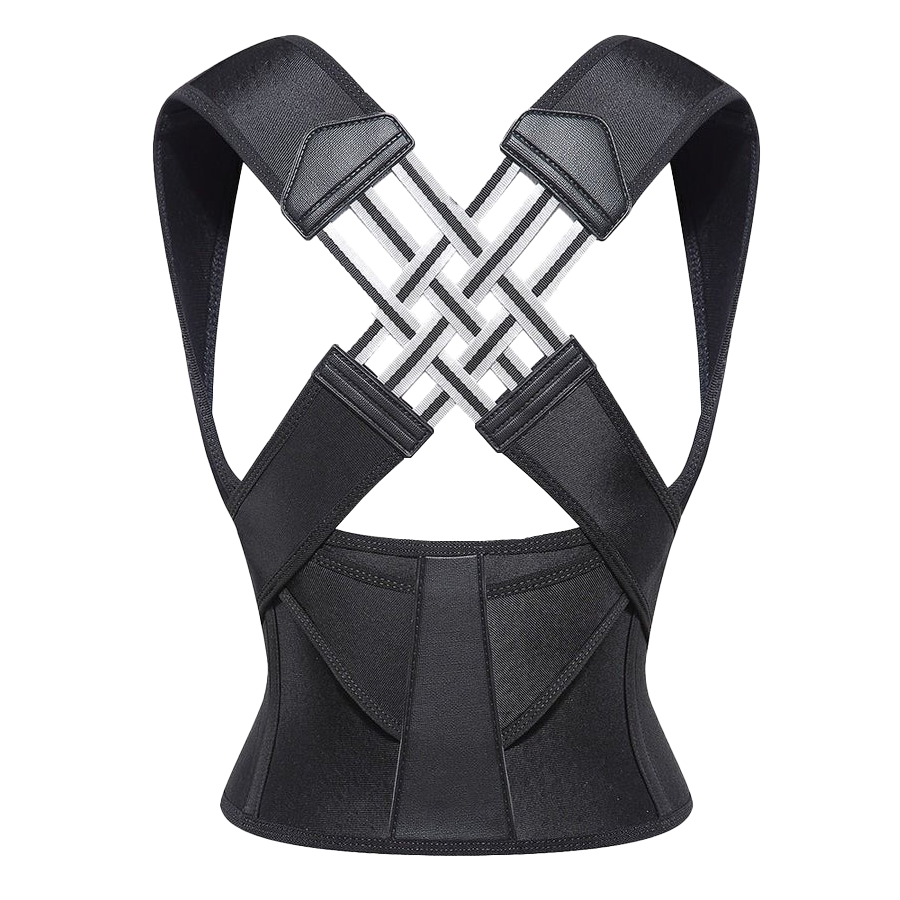
PostureCrest has two reinforced bars and two adjustable straps. Its perforated three-layer fabric lets air reach your skin, and the slim, lightweight build is made to sit close to the body under shirts, blouses and jackets. The bars give a cue when your shoulders round forward, rather than a rigid lock. The box includes the corrector and a user guide.
 In this guidePostureCrest$59.99View
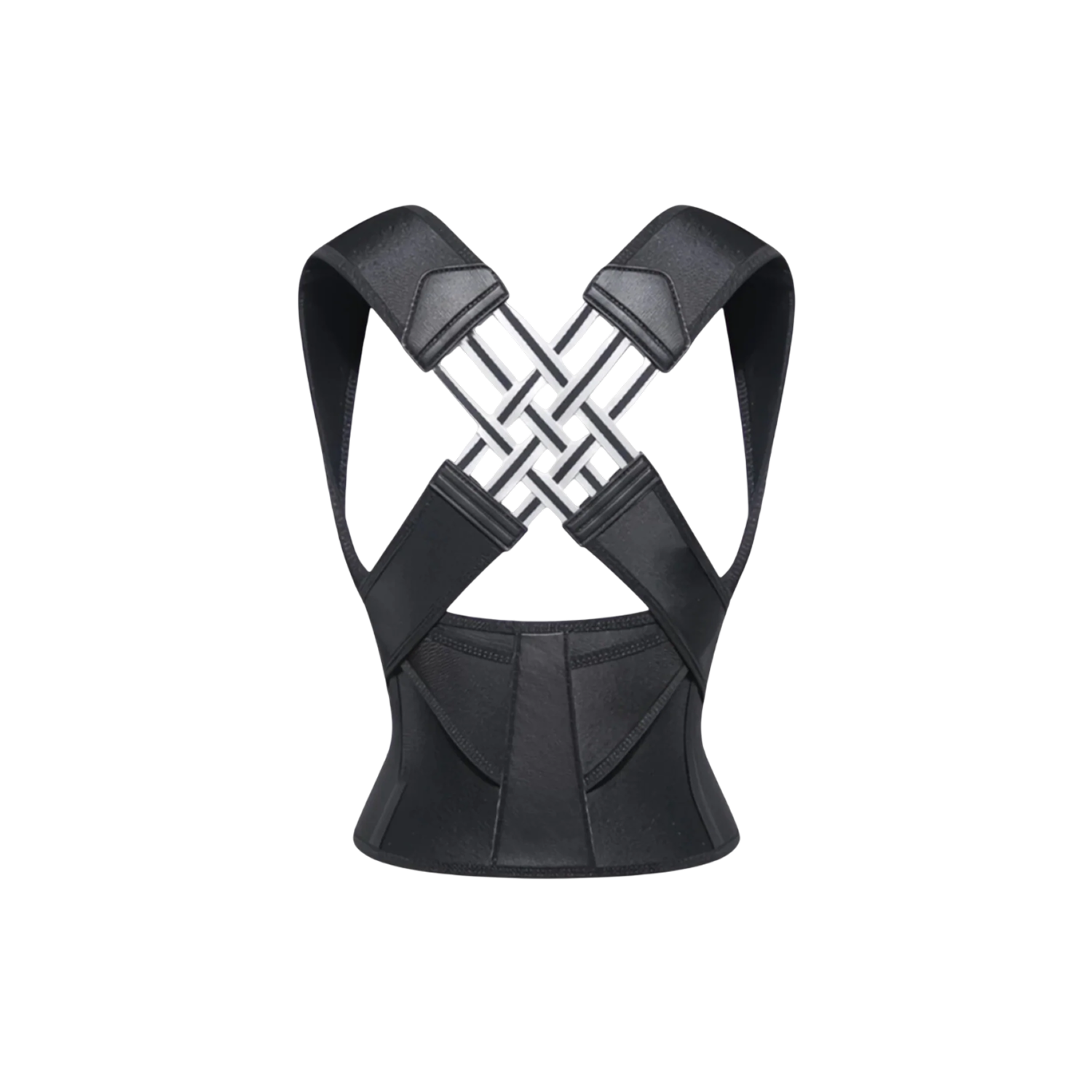
StanceLuxe is worn across the shoulders and upper back with dual adjustable straps. It is contoured to match the natural curve of the spine and made of breathable fabric. You can wear it over a shirt or directly on skin, and its slim profile fits beneath shirts and dresses. Start with short periods, as the product page describes.
 In this guideStanceLuxe$59.99View
You can browse related items in our Compression & Support collection.
How to use a posture corrector, and for how long
Use the corrector for a short, deliberate session. Put it on for a task where you tend to slouch, such as desk work, driving or phone use, and take it off afterward. Follow the manual that comes with your model for any time guidance.
There is no single number of hours that suits everyone, so start with short periods and build up only if the fit stays comfortable and flat. If you wonder how many hours a day to wear a back brace for posture, follow the manual and ask a clinician if you want a personal plan.
A simple routine
- Put it on and adjust the straps until it sits flat without pinching or sliding.
- Wear it during one slouch-prone task, and notice the gentle pull when your shoulders round forward.
- Take it off at the end of the task, or sooner if the fit changes.
- Follow with a few minutes of simple shoulder exercises, such as slow shoulder rolls and gentle shoulder blade squeezes.
- Repeat on days you sit for long stretches, and stand up and move between sessions.

Field note
Check yourself in a mirror from the side before and after a session. If your ears sit well ahead of your shoulders, use that as a reminder to reset; the corrector is a cue, not a fix by itself.
Signs of poor posture and when to ask a clinician
If you are not sure whether a corrector is relevant, look for these four signs of poor posture:
- Rounded shoulders that sit forward of your chest when you stand relaxed.
- Forward head posture, where your head sits ahead of your shoulders, often seen at a screen.
- A back that curves outward in the upper area or flattens when you sit.
- Shoulders or upper back that look uneven in a mirror, or frequently slumping down in your chair as the day goes on.
A corrector is not suited to everyone. Skip it and ask a clinician first if you have an existing back or neck condition, have had a recent operation, or have any health concern. Stop wearing it and contact a clinician if you notice numbness or tingling in your arms or hands.
Holding your hands behind your back can open the chest for a moment and act as a reminder, but it is a brief stretch, not a way to hold posture through the day.
Common mistakes to avoid
- Choosing by size label rather than measurements.
- Over-tightening the straps, which restricts movement and breathing.
- Wearing it through the whole day instead of starting with short periods and following the manual.
- Skipping movement: pair the corrector with regular breaks and simple exercises rather than relying on the brace alone.
- Ignoring a poor fit that slides, twists or digs in at the underarms.
- Expecting a brace to fix an unsuited desk setup. Adjust your chair, screen height and keyboard position as well.
A good routine pairs the corrector with postural awareness, regular breaks and exercise that works the muscles of your upper back and core.