How Do Air Purifiers Work? HEPA, Carbon and Ionizers Explained
A fan pulls air through filters that trap particles and odors. This guide compares HEPA, carbon and ionizers, lists running costs and shows how to size a unit.
The Calvedon Team
October 28, 2026 · 7 min read
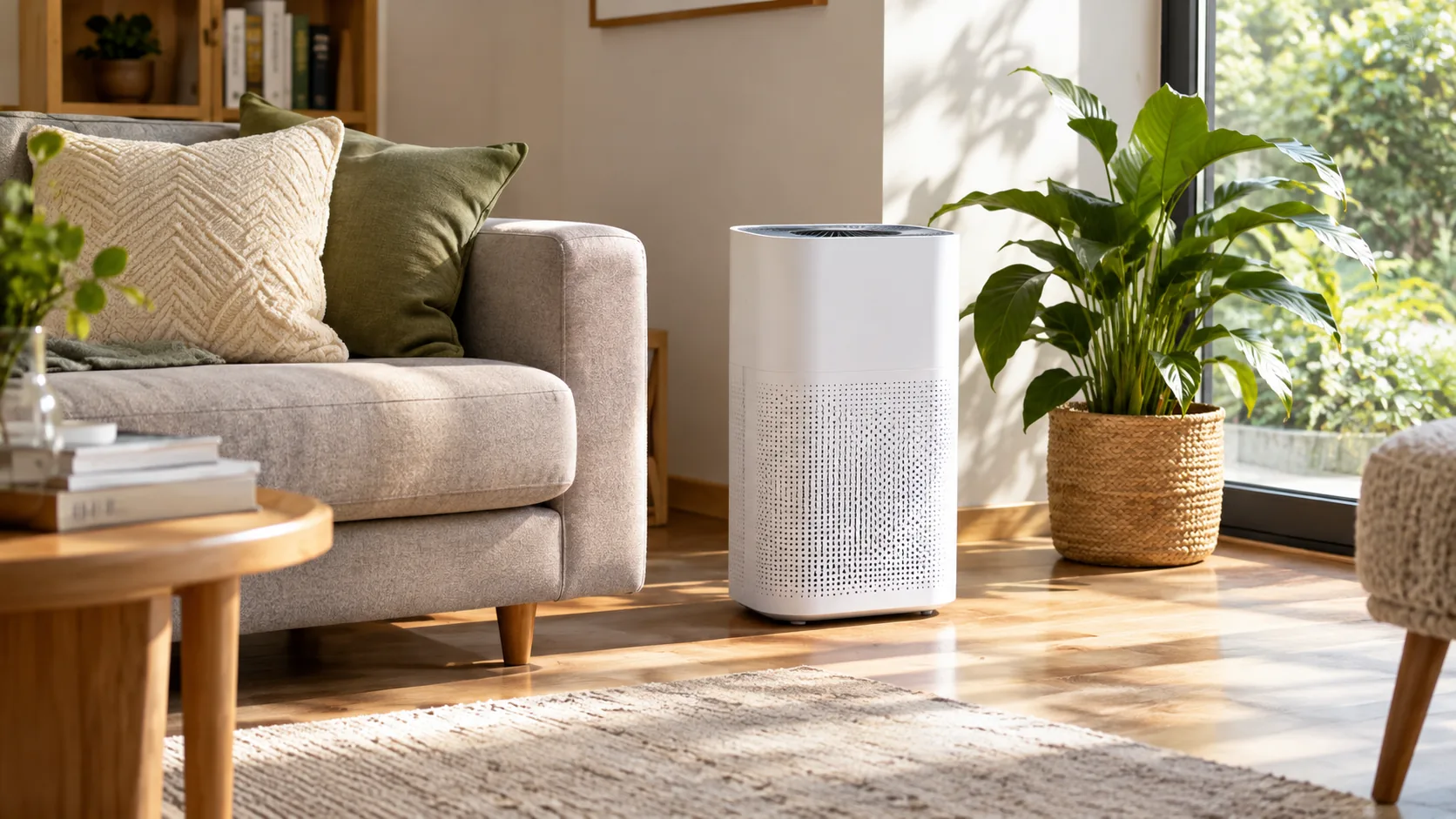
So, how do air purifiers work? A fan draws room air into the unit and pushes it through one or more filter layers, then returns the air to the room. A HEPA layer traps airborne particles, activated carbon captures odors and gases, and ionizers charge particles instead of filtering them.
Which parts a unit has decides what it can and cannot clean. The sections below break down each technology, what it misses, what it costs to run and how to size one.
How do air purifiers work? Step by step
Purifiers follow a similar path from intake to outlet. Knowing it helps you read the specs on a box.
- The fan pulls in room air through an intake grille.
- A coarse pre-filter catches larger debris such as hair and lint, if the unit has one.
- A HEPA layer traps fine particles as the air passes through its fibers.
- An activated carbon layer, if present, captures odor molecules and gases.
- The cleaned air leaves through an outlet and mixes back into the room.
The unit only cleans air that reaches it. That is why the fan, the room size and the number of times the air passes through all matter alongside the filter itself.
HEPA, carbon and ionizers compared
This table sets out what each technology does, what it captures, what it misses and what it adds to your running costs. Use it alongside the steps above when you want to know how each type of part works.
| Technology | How it works | Captures | Misses | Running cost |
|---|---|---|---|---|
| True HEPA filter | Dense mat of fine fibers traps particles as air passes through | Pollen, dust, pet dander, mold spores, smoke particles | Odors, gases, VOCs | Replacement filters, fan power |
| Activated carbon | Porous carbon adsorbs molecules onto its surface | Odors, exhaust gases, many VOCs | Particles such as pollen and dander | Replacement carbon bed or filter, fan power |
| Ionizer | Electrically charges particles so they cling to surfaces or plates | Some fine particles, which may settle on walls and furniture | Gases and odors; particles can remain in the room | Plates need cleaning; fan power |
| UV-C lamp | Shines ultraviolet light on air passing the lamp | Acts on microorganisms exposed to the light | Dust, pollen, odors and gases | Lamp replacement per the manual, fan power |
| Photocatalytic (PCO) | Light and a coated surface drive chemical reactions with gases | Some gases and odor molecules | Particles; may leave reaction by-products | Replacement of the coated element per the manual, fan power |
| Pre-filter | Mesh screen catches large debris | Hair, lint, large dust | Fine particles, gases | Washing or replacing |
What is a HEPA filter?
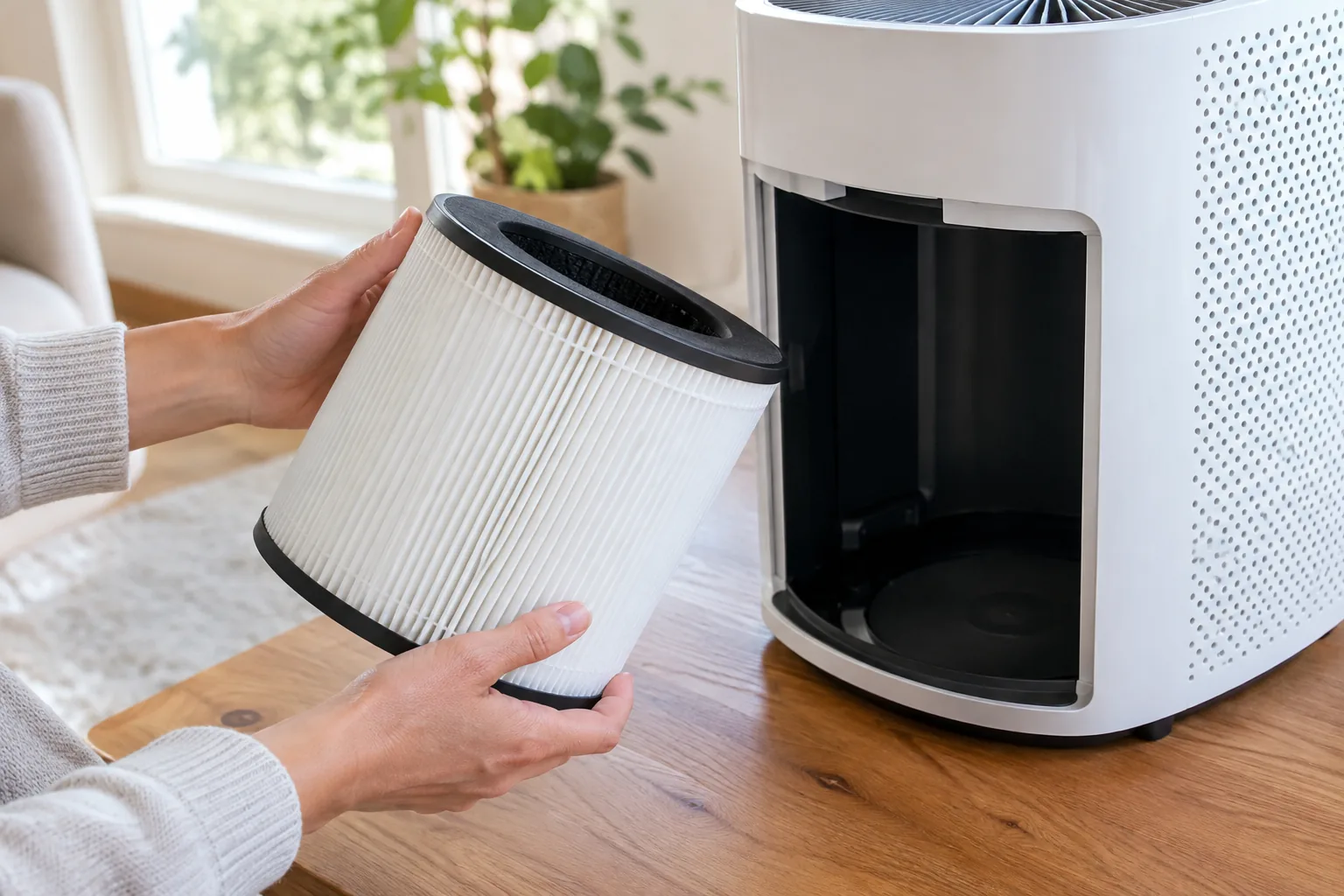
HEPA stands for high-efficiency particulate air. A HEPA filter is a pleated mat of fine, densely packed fibers. Particles get caught as air squeezes through: some hit a fiber and stick, and very small ones drift into a fiber as they wander through the airflow.
This is the stage for pollen, dust particles, pet dander, mold spores and smoke particles. Look for the words True HEPA rather than HEPA-type, since the second term is a looser label.
A HEPA layer does nothing for smells. Cooking odors, paint fumes and exhaust are gases or tiny molecules that pass through the fibers, which is where carbon comes in.
Activated carbon: the odor and gas stage
Carbon does not trap in the same way. It adsorbs, which means odor molecules and gases attach to the surface of the carbon as air moves past. Activated carbon is full of tiny pores, so it has a large surface area for that attachment.
A thin carbon sheet has little material to work with. A thicker activated carbon bed holds more, so check whether a unit lists a bed or only a lightly dusted mesh. Once the surface is full, the carbon no longer captures and needs replacing.
Ionizers: charging instead of filtering
An ionizer releases charged ions. Those ions attach to airborne particles, and the charged particles then stick to nearby surfaces or to a collector plate. The particles leave the air, but not always the room.
Some ionizers and ozone-generating devices can produce ozone as a by-product. If you consider one, read the manual, ask the maker what it emits and ventilate the room. A purely filter-based unit relies on mechanical filtration and does not emit ions; check the spec sheet to see whether an ionizer is included and whether it can be switched off.
UV-C lamps and photocatalytic units
Some purifiers add a UV-C lamp or a photocatalytic element after the filters. A UV-C lamp only acts on what passes close to the light, and it does not capture particles or gases. A photocatalytic element relies on light and a coated surface to change gas molecules, and it may leave by-products in the air.
Neither replaces a filter. Follow the manual and unplug the unit before opening it.
Air purifier in a car: a filter-based example
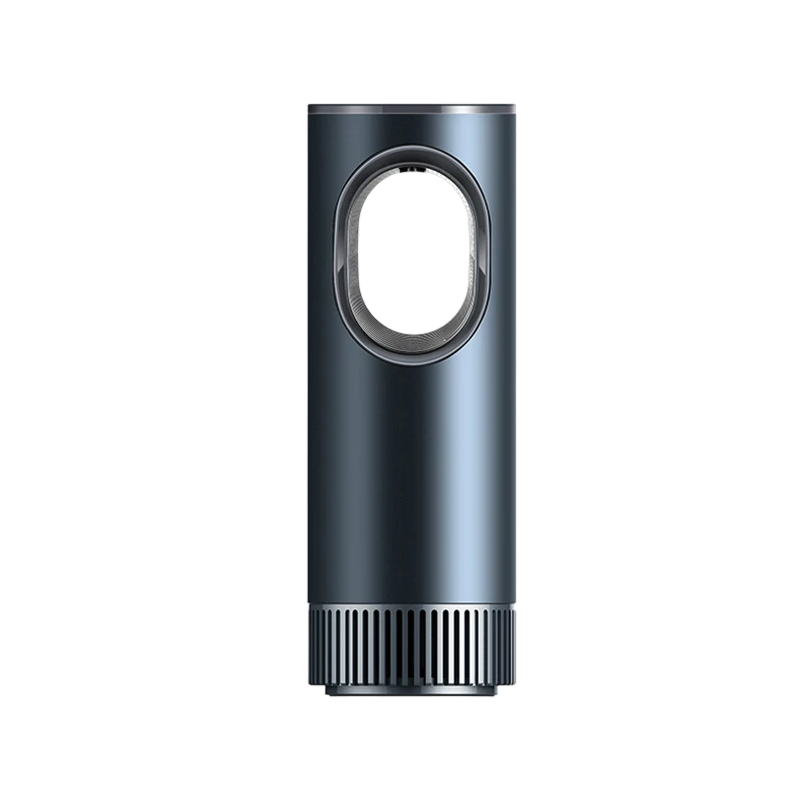
Vehicle cabins are an enclosed space, and some purifiers are built for them. IonVeil is an auto air purifier that plugs into a vehicle's 12V outlet. A fan draws cabin air through a True HEPA layer for pollen, PM2.5, pet dander and smoke particles, then through an activated carbon bed for odors, exhaust gases and plastic VOCs.
It uses mechanical filtration instead of ionizer plates or plasma, so the air path is intake, HEPA layer, carbon bed, then back into the cabin. It syncs with the ignition and starts running when you drive. Turn on recirculate mode so the same cabin air passes through the unit again during your trip. The box includes the purifier, a USB charging cable and a user manual.
 In this guideIonVeil$99.99View
Running costs: filters and power
Two things add to the cost of owning a purifier: replacement filters and electricity. You can work out both from the manual and your utility bill.
| Cost | What drives it | How to work it out |
|---|---|---|
| HEPA filter changes | Hours of use, dust and smoke load in your air | Check the replacement interval in the manual and the filter price on the product page |
| Carbon filter changes | Odor and gas load, thickness of the carbon bed | Replace when odors return or when the manual says to |
| Pre-filter care | Hair, lint, pet activity | Wash or wipe on the schedule in the manual |
| UV-C lamp or coated element | Hours of use | Check the replacement interval in the manual |
| Electricity | Fan speed and hours of use per day | Convert watts to kilowatts, multiply by hours run, then by your rate per kilowatt-hour |
Do air purifiers use a lot of electricity?
The draw comes mostly from the fan, so the wattage listed for each speed setting is the figure to use. Apply the steps in the table to the wattage at the speed you run. A unit on a low setting draws different power than one on its highest setting, so work out each speed you use.
Sizing: the two-thirds rule
Sizing starts with CADR, the clean air delivery rate, which describes how much filtered air a unit delivers. The two-thirds rule is a rule of thumb: pick a unit whose CADR is at least two-thirds of the room's floor area in square feet. For a 150-square-foot room, that points to a CADR of about 100 or more.
CADR also tells you how often the room's air passes through the fan. Multiply CADR by 60, then divide by the room volume in cubic feet to get air changes per hour. With an 8-foot ceiling, a 150-square-foot room holds 1,200 cubic feet, so a CADR of 100 works out to 5 air changes per hour.
The rule assumes a standard ceiling height. Taller ceilings, open floor plans and heavy smoke or pet loads call for more airflow. For room sizing, noise and filter checks, see Air Purifiers for Small Rooms: Sizing by CADR, Noise and Filters. If you are setting up a sleeping space, the Bedroom Air & Lighting collection in our store lists related devices.
Field note
Replace the filter on the interval given in the manual. Write the install date on the unit or in your calendar when you fit a new one.
Downsides, common mistakes and choosing a technology
Is there a downside to using an air purifier?
Yes, a few. Filters need replacing, the fan makes some noise, and the unit draws power while it runs. Ionizers and ozone-generating devices can add ozone, so read the manual and ventilate. A purifier also cleans only the air that reaches it, so it does not replace dusting, vacuuming or fixing the source of a smell.
Mistakes to avoid
- Choosing a unit with HEPA but no carbon when odors are the problem, or the reverse.
- Buying for the wrong room size and running a unit that is too small on its highest speed.
- Blocking the intake or outlet with furniture or curtains.
- Skipping filter changes until the airflow drops.
- Using an ionizer in place of a filter, even though it may leave particles in the room.
Unplug the unit before you open it or handle the filter, and follow the manual for each step.
Matching technology to the problem
Once you know how air purifiers work, the choice follows the problem. For pollen, dust and pet dander, look for a True HEPA layer. For cooking smells, exhaust and plastic odors, add an activated carbon bed. For both, pick a unit that has the two layers in series, and size it by CADR for the room it will sit in.