
Sleep Score Explained: How Trackers Calculate and Report It
A sleep score blends sleep time, interruptions, stages, heart rate and movement into one number. Here is what feeds it, where it drifts, and how to wear a tracker for steady readings.
The Calvedon Team
November 8, 2026 · 6 min read
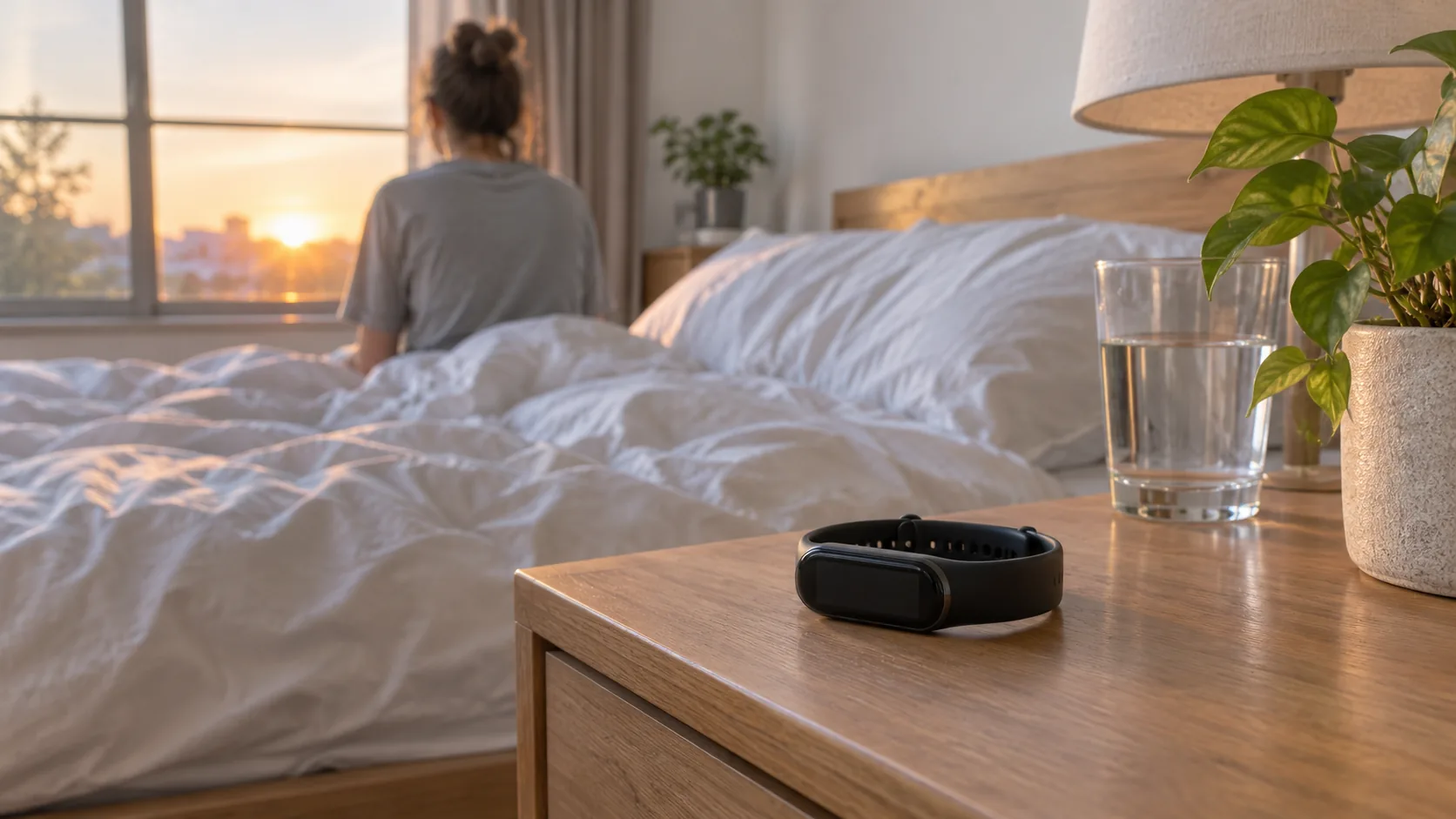
A sleep score is a single number, often on a 0 to 100 scale, that a tracker builds from how long you slept, how much of that time was restful, how often you woke, and what your heart rate and movement did overnight. Each maker weights those inputs differently, so the number only means something against your own past nights on the same device. This guide breaks down the inputs, shows where they drift, and gives you a wear-and-setup checklist for steadier readings.
What goes into a sleep score
Trackers combine several inputs into one number. The names change from device to device, but the ingredients are close to the same. The table below lists them with the sensor behind each one and the usual weak spot.
| Input | Sensor behind it | What it reports | Where it drifts |
|---|---|---|---|
| Duration | Accelerometer, heart rate | Total time asleep | Lying still awake can count as sleep |
| Sleep stages | Heart rate, heart rate variability, movement | Light, deep and REM estimates | Stages are estimates, not brain-wave readings |
| Interruptions | Accelerometer, heart rate | Wake episodes, restlessness | Short wake-ups can be missed |
| Sleep efficiency | Derived | Time asleep divided by time in bed | Depends on the bed and wake times detected |
| Regularity | Clock and history | How steady your bed and wake times are | Needs several nights of data |
| Heart rate trend | Optical sensor on the wrist | Overnight lows and variability | Loose fit adds noise |
Some trackers also use time to fall asleep and a temperature or breathing estimate. If your device shows a breakdown, open it. The sub-scores tell you why the total moved, which the headline number does not.
How the sensors decide you are asleep
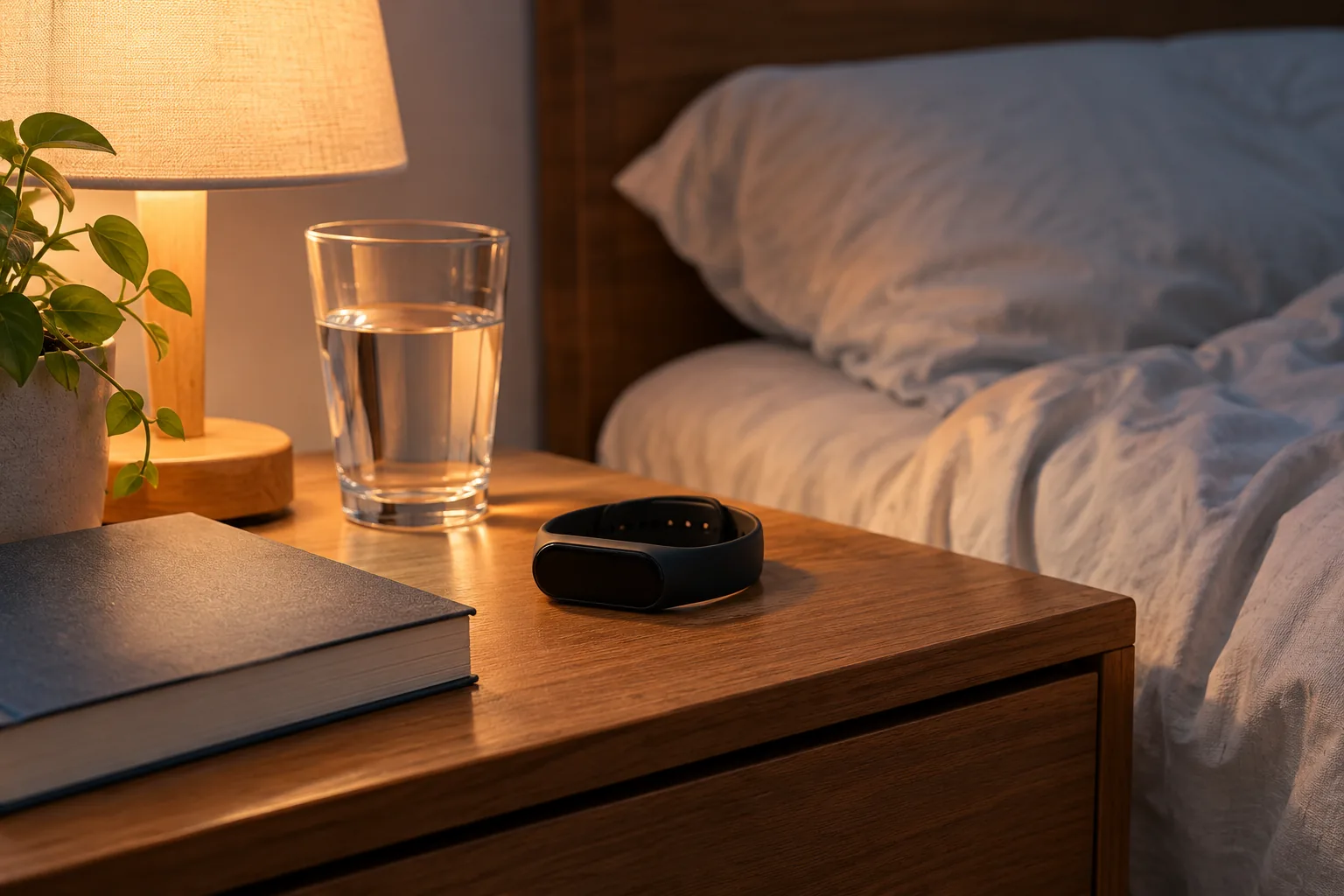
The first layer is a multi-axis accelerometer. It reads wrist movement, and a long stretch with almost no movement is read as sleep. This is the oldest method, and it is why a night spent reading in bed can look like sleep.
The second layer is the optical sensor that reads pulse from the wrist. Heart rate tends to fall as you drift off, and the beat-to-beat spacing, called heart rate variability, shifts between sleep stages. Trackers use that pattern to guess at light, deep and REM sleep. For how the optical sensor works and where it slips, see Fitness Tracker Heart Rate: How Wrist Sensors Measure and Where They Slip.
The scoring formula then turns those estimates into points. A short night loses duration points, a fragmented night loses points for interruptions, and a late bedtime can lose points for regularity. The weights are the maker's choice and are not the same across devices.
Movement sensing on its own: what an accelerometer tracker shows
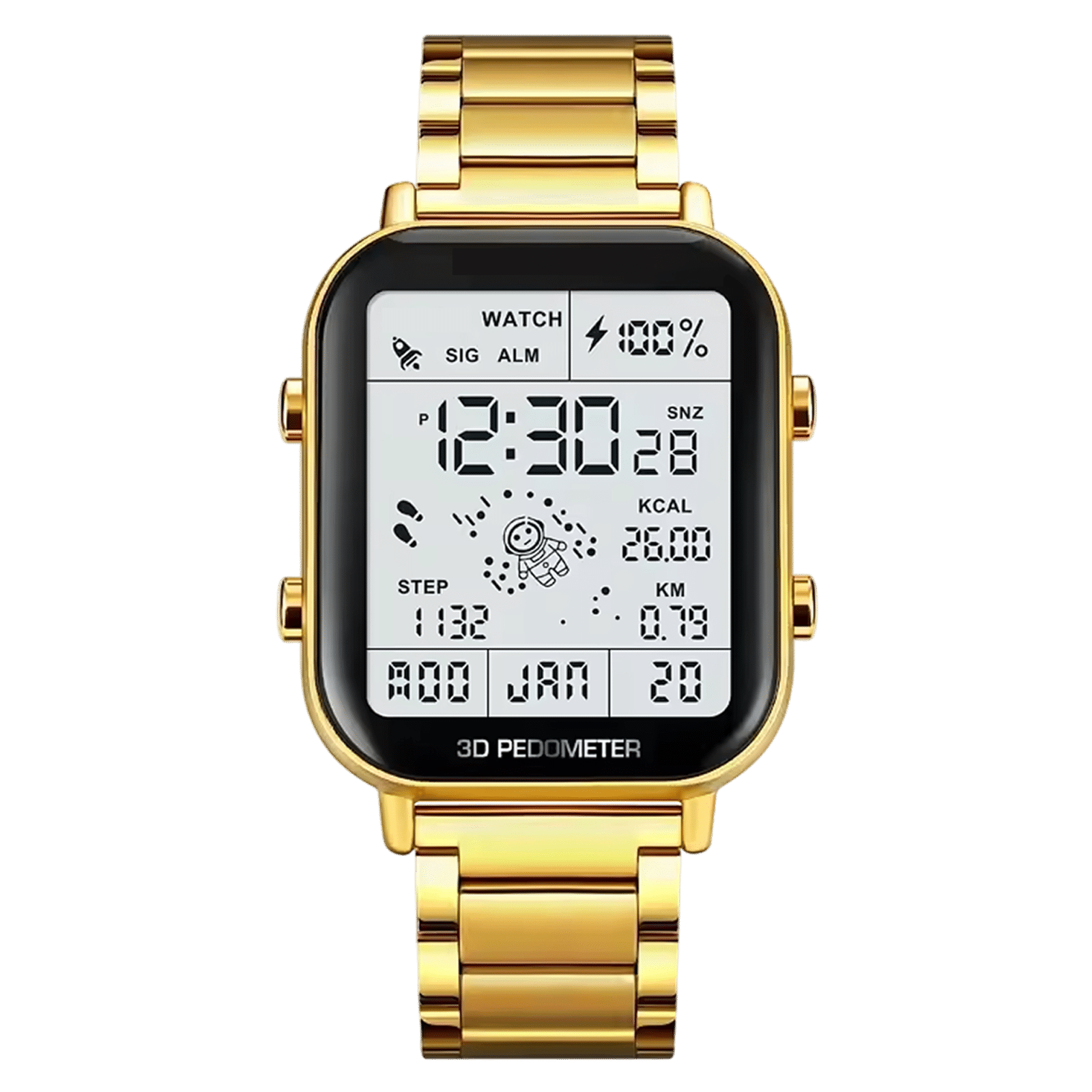
If you are deciding whether you need a sleep-capable device, it helps to see what a movement-only tracker does. MotionPulse uses a multi-axis accelerometer to read wrist movement and shows steps, calories and distance on its own display. Setup happens on the device, with no app or account.
Its listed functions do not include a sleep score, so view it as a way to learn how wrist movement sensing works rather than as a sleep tool. If a nightly score matters to you, check the feature list of any tracker before buying; How to Choose a Good Fitness Tracker walks through that list.
 In this guideMotionPulse$79.99View
Where a sleep score drifts
Drift means the number changes for reasons that have nothing to do with how you slept. Knowing the common causes lets you discount a strange night.
Fit and placement
A loose band slides, and the optical sensor loses contact with skin. That adds noise to heart rate and can break a night into false wake-ups. A band worn too far down the hand also picks up extra movement.
Quiet wakefulness
Lying awake without moving looks a lot like sleep to an accelerometer. Your score may read high after a restless night spent still, and low after a night of shifting around in real sleep.
Habits that shift heart rate
Late meals, alcohol, a warm room, illness and hard evening exercise can all move overnight heart rate. The tracker reports the change but cannot say why it happened.
Software updates and settings
A firmware or app update can change the formula, so a jump in your numbers may be a new calculation. Check the release notes when your baseline suddenly shifts.
Wear and setup checklist for consistent readings
- Enter your correct age, height and weight in the device settings if it asks for them.
- Set your usual bedtime and wake time if the device offers sleep schedules.
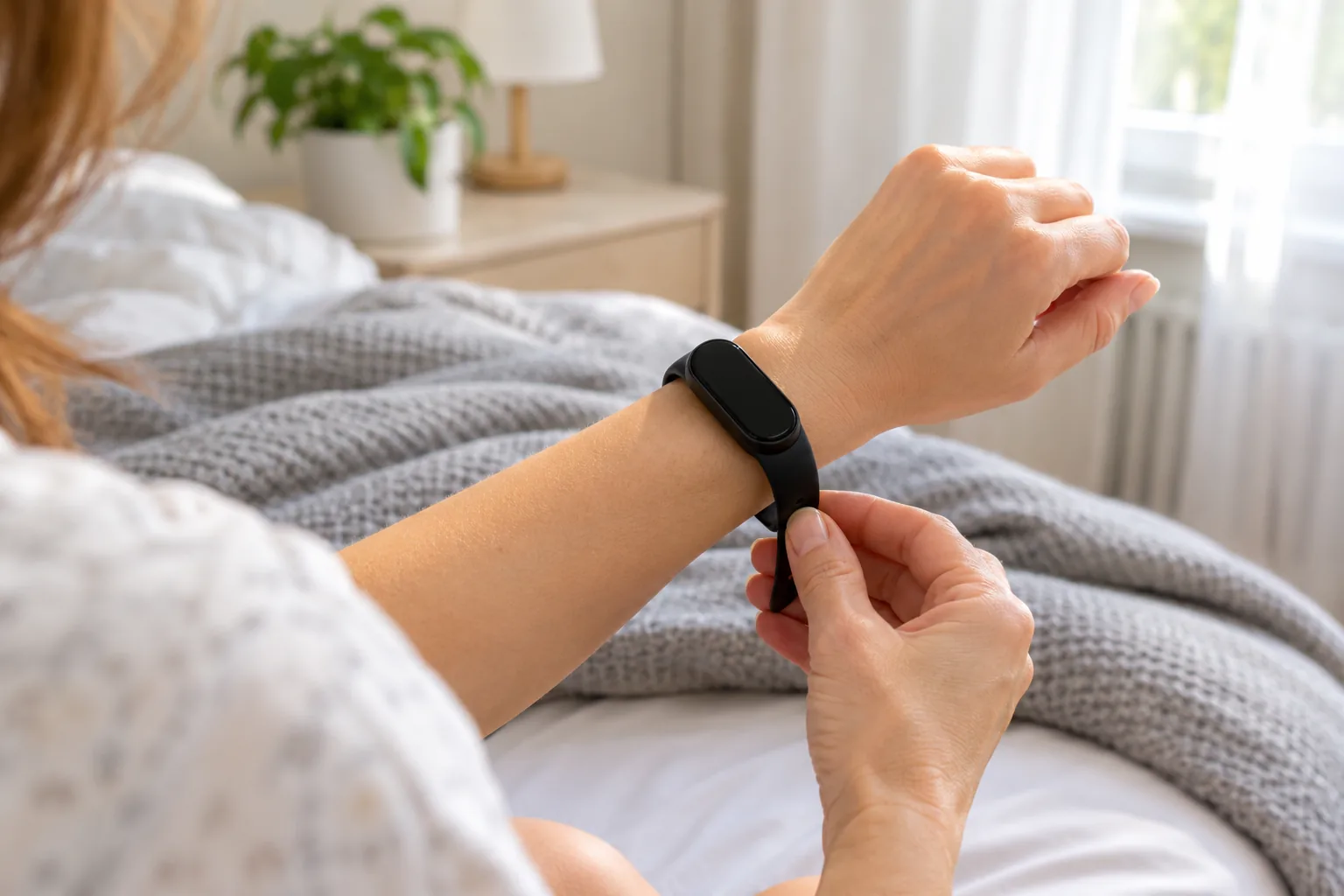
- Wear the band snug enough that it does not slide, with the sensor flat against bare skin and the strap loose enough to leave no deep marks.
- Put it on the same wrist every night.
- Charge it during a fixed daytime slot so the battery does not run out overnight.
- Keep skin and sensor clean and dry, and wipe the back of the band as the manual describes.
- Give it at least a week of nights before you judge a trend.
Field note
Keep one tracker, one wrist and one routine for a few weeks. A steady setup makes the trend meaningful even when single nights are noisy.
Reading the number: ranges, highest score and enough sleep
Some trackers label bands such as poor, fair, good and excellent, but the cutoffs differ by device. Check the legend in your own app instead of borrowing a chart from another brand. A score from one tracker cannot be converted into another's, and a sleep score by age chart only helps if your device publishes one.
What is the highest sleep score?
On many trackers the ceiling is 100, but a top-score night is rare by design and the maker may cap what your data can earn. Chasing 100 is not the goal. Note the steady range you recognize and watch the weekly trend.
Is 9:30 to 4:30 enough sleep?
That window is the time in bed, and time asleep is shorter once you subtract the time it took to fall asleep and any waking. Sleep needs differ from person to person, and a tracker cannot decide yours. Ask a healthcare provider if you are unsure.
Is seven hours of sleep enough?
It depends on the person. A tracker score weighs duration alongside interruptions and stages, so a night of that length can score differently from night to night. Ask a healthcare provider about your own needs.
What about a sleep study score?
A clinic sleep study measures more signals than a wrist band and is read by a clinician, who reports specific measures rather than a single consumer-style score. A tracker's number is not a substitute. If you have concerns about your sleep, ask a healthcare provider.
Common mistakes when reading a sleep score
- Comparing your number with a friend's on a different device.
- Reading one low night as a pattern instead of waiting for the weekly trend.
- Reading stage estimates such as deep sleep as exact minutes.
- Ignoring the sub-scores and only looking at the total.
- Changing the strap fit, wrist or settings and then blaming your sleep for the change.
- Checking the score first thing and letting it set your mood before you have noticed how you feel.
If you want to browse wrist devices that track daily activity, see the Fitness & Vital Sign Trackers collection and compare the listed functions with what you need.
Frequently asked questions
Keep reading
 Fitness & Vital Sign TrackersHow to Choose a Good Fitness Tracker: Features, Fit and Budget9 min read
 Fitness & Vital Sign TrackersFitness Tracker Heart Rate: How Wrist Sensors Measure and Where They Slip8 min read
 Fitness & Vital Sign TrackersMost Accurate Smart Scales: How to Judge Accuracy Before You Buy8 min read