Most Accurate Smart Scales: How to Judge Accuracy Before You Buy
The most accurate smart scales pair a true weight reading with steady repeat readings. Compare sensors, resolution and repeatability, then run the home check in this guide.
The Calvedon Team
November 22, 2026 · 8 min read
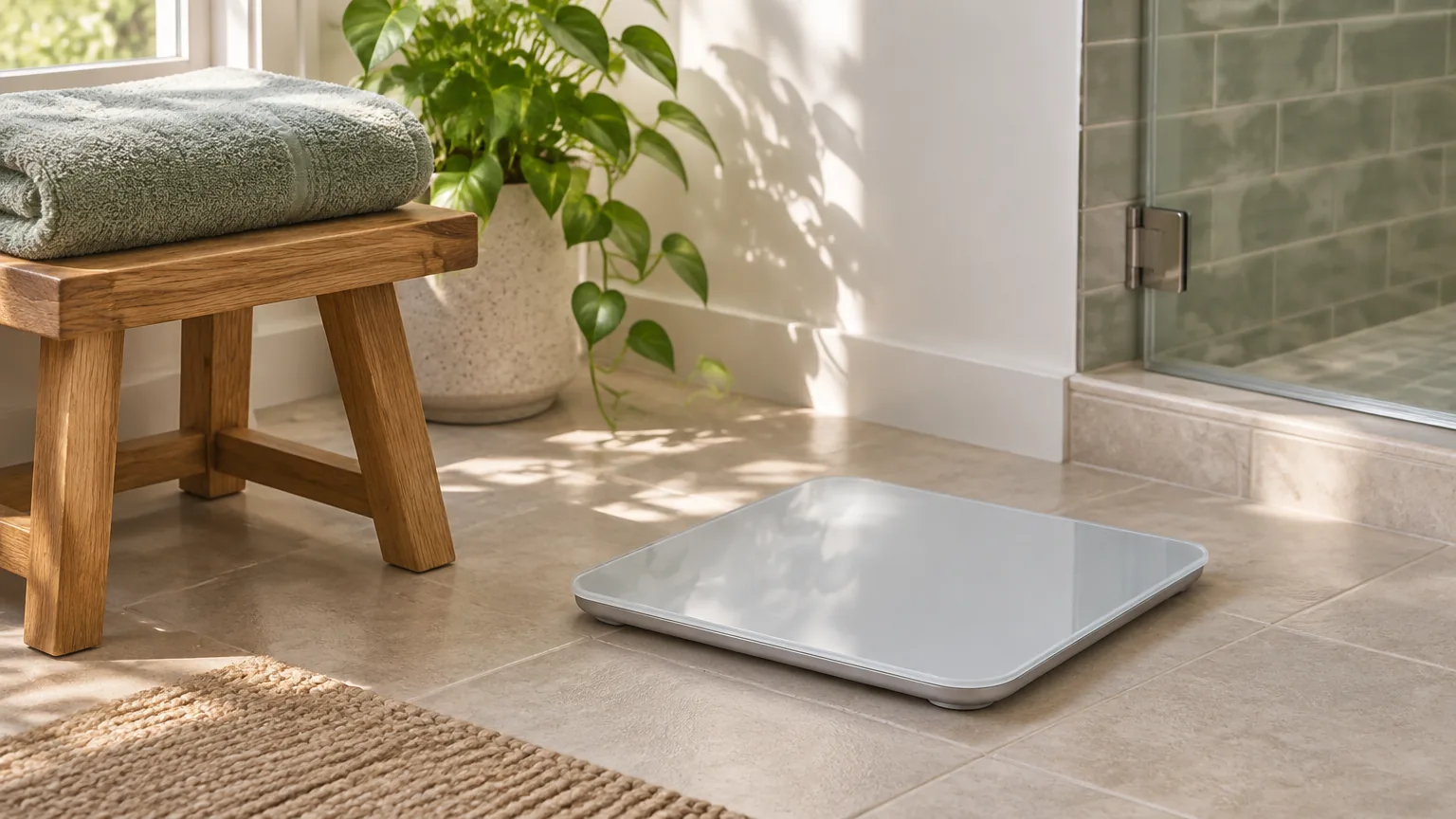
The most accurate smart scales read close to the true value, and they return matching numbers when you step on again under the same conditions. Sensor count, display resolution and repeatability are the specs to compare, and you can check repeatability and a known-weight reading at home with a short routine.
Ranked lists change with every update, and a scale that tops one list can disagree with another. This guide shows you what to compare on a product page, how to check a scale yourself, and which mistakes make any scale look unreliable.
What accuracy means on a smart scale
A smart scale does two separate jobs, and each one has its own kind of accuracy. The first is plain body weight, measured by load sensors in the feet of the platform. The second is a body composition estimate, calculated from a small electrical signal that passes through your feet.
Weight is a direct measurement. Body fat, muscle mass and similar metrics are estimates built on a formula, so they depend on the scale's design, the algorithm and the conditions you stand in. For a closer look at the method, read How Do Body Composition Scales Work? Bioimpedance Explained.
Accuracy, precision and repeatability
These three words get mixed up, so keep them apart when you read a spec sheet.
- Accuracy: how close a reading is to the true value, such as a known reference weight.
- Precision or resolution: the smallest step the display can show, for example tenths of a pound.
- Repeatability: whether repeated readings under the same conditions agree with each other.
A scale can show a fine resolution and still wander from one reading to the next. Repeatability and a known-weight comparison are the two qualities you can check yourself, even without lab equipment.
What body composition metrics cover
Body composition scales typically report body composition metrics such as body fat percentage, muscle mass and visceral fat. All of these are calculated estimates, not direct readings. Treat each as a number to follow on the same scale over time, and read the product page to see which metrics the scale lists and how the maker describes the method.
How to pick the most accurate smart scales: specs to compare
Start with the product page. A seller who wants you to judge accuracy will list the parts and the measuring method in plain terms. If a page only says "precise" or "high accuracy" with no detail, take that as a gap and look elsewhere.
| Spec | What it tells you | What to look for |
|---|---|---|
| Load sensors | How body weight is measured | A stated number of sensors under the platform |
| Impedance electrodes | How body composition is estimated | Electrodes on the surface you stand on, with a barefoot instruction |
| Display resolution | The smallest step shown | A fine increment in both lb and kg |
| Capacity | The heaviest load the platform is built for | A limit that covers everyone in the household |
| Profiles | Whether readings stay separate per person | A stated number of user profiles in the app |
| App and sync | How readings are stored and charted | Bluetooth sync and a readable history |
| Method disclosure | Whether the maker explains the estimate | Named method, such as bioelectrical impedance |
Number of sensors
A higher count of load sensors does not automatically mean an accurate scale, but a stated sensor count shows how the platform is built. For body composition, the number and placement of electrodes matters: some scales read only through the feet, while others add hand electrodes. Check the page for exactly which surfaces the signal passes through.
Resolution
A fine display resolution helps you see small changes, yet it also makes normal variation visible. If a scale shows tenths of a pound, expect the last digit to move between steps. Judge it by how far the readings spread, not by the last digit alone.
Capacity and platform size
Check the stated capacity against the heaviest person in the household. Look at the platform size too, since your feet need to rest on the electrodes if the scale reads body composition. A platform that suits your stance makes it simple to stand in the same position each time.
Repeatability
Few makers publish repeatability, so the home check below is how you find out. You only need a few readings and a known object.
Home consistency check: how to judge a scale yourself
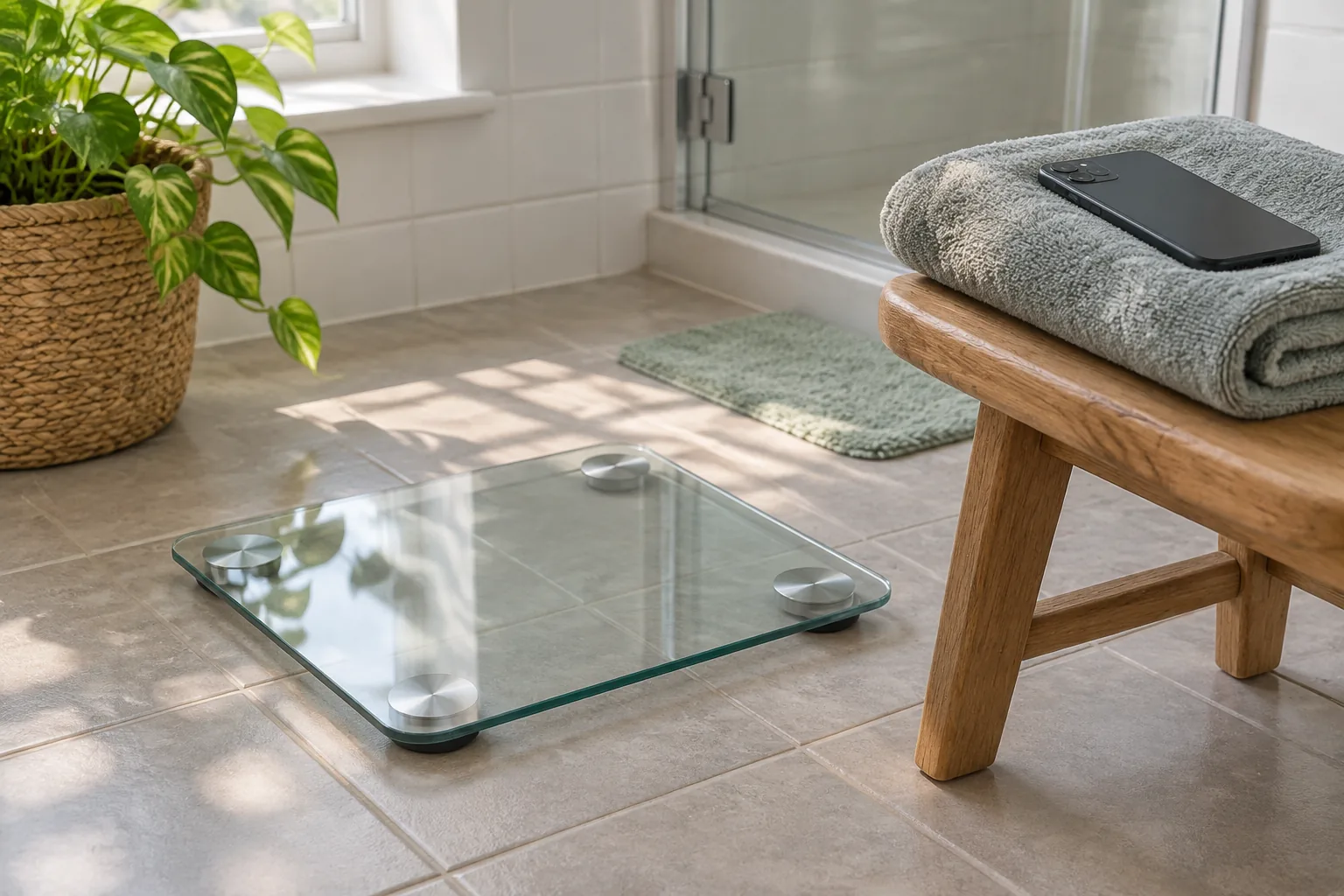
You do not need lab gear to see whether a scale behaves. This routine looks at repeatability, how the scale handles a change in position, and whether it reads sensibly with a known load. Follow the manual for setup, and keep the scale off rugs and uneven floors.
- Place the scale on a hard, flat floor and leave it in that spot for the whole check.
- Step on barefoot, stand still, and note the weight.
- Step off, wait 10 seconds, then step on again and note the reading. Repeat until you have three readings.
- Shift your feet a little toward the edge of the platform and note one more reading, keeping your feet on the electrodes if your model has them.
- Pick up a known object, such as a sealed bag of flour or a dumbbell with a printed weight, and weigh yourself holding it. Subtract your earlier reading and compare the difference with the printed weight.
- Move the scale to a different hard floor spot and repeat step 2.
Write every number down, or let the app log it. Then compare the spread between readings.
| What you see | What it suggests | Next step |
|---|---|---|
| Readings match or differ by the last digit | Good repeatability | Keep using the scale in one fixed spot |
| Readings drift in one direction | Possible low battery or a scale still settling | Check the manual for battery and reset steps |
| Readings change when you shift your feet | Sensitivity to foot placement | Mark a standing position and use it every time |
| Readings change between floor spots | The floor is uneven or soft | Choose a single hard, flat spot |
| Known object adds a different amount | Possible calibration issue | Contact the seller or compare with another scale |
Checking body composition readings
The body fat number needs a different approach, because no household object has a known body fat. Take readings under identical conditions: same time of day, same spot, barefoot, with clean feet. Then judge the repeatability of the estimate the same way as weight. If the body fat number jumps around between back-to-back readings, do not rely on the trend it produces.
Field note
Weigh yourself at the same time of day, on the same floor spot, wearing the same thing, and compare readings only against your own history from that scale.
Where a bioimpedance smart scale fits
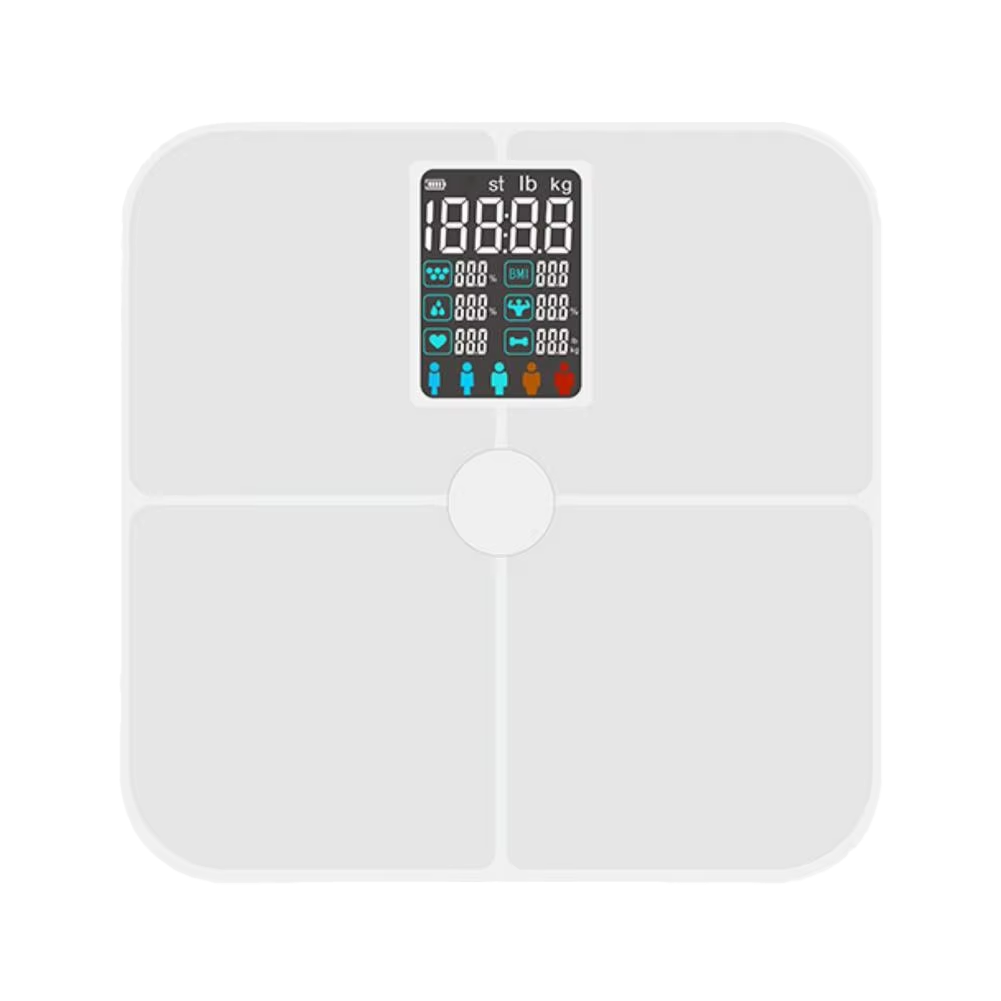
If you want body composition metrics in the same step as your weight, you need a scale with impedance electrodes and an app that stores the results. WeighOrbit is a smart scale that uses bioelectrical impedance sensors to read body composition when you stand on it barefoot. It pairs over Bluetooth with a companion app.
The app keeps eight separate profiles, so each person in a household has their own history of readings. A single step on the sensors returns 13 metrics, and the app draws charts from your saved readings so you can look back over days and weeks.
Use the home check above on any scale you buy, this one included. Read the safety notes in the manual before using body composition mode, and ask a qualified professional if you are unsure whether it suits you. The box holds the scale, companion app access, a full 13-metric report and a quick-start guide.
 In this guideWeighOrbit$129.99View
Digital or analog scales: how to compare accuracy
A digital scale with load sensors and a clear display shows weight to a fine increment. A mechanical dial scale shows weight with a needle and a printed scale, so reading it depends on your viewing angle and on the spring staying consistent. Either type can be reliable when it holds up under the home check.
Smart scales add a second layer: body composition and app storage. Read that layer with extra care, since it is an estimate rather than a direct measurement.
Smart scale estimates versus a lab body scan
A lab-based body scan uses imaging, while a smart scale passes a small electrical signal through your feet. These are different methods, so their numbers can differ. Use the scale's body fat figure as a personal trend line rather than a match to a scan result, and ask a qualified professional about lab-based measurements.
Common mistakes that make a scale look inaccurate
Some accuracy complaints come from setup rather than the scale. Check these before you decide a unit is faulty.
- Carpet or a bath mat under the scale, which changes how the feet carry load.
- Moving the scale between rooms from day to day.
- Wearing socks on a model that reads body composition through the feet.
- Weighing at different times, such as morning one day and evening the next.
- Comparing readings across two different scales.
- Reading a single body fat number instead of a trend.
- Skipping battery checks when readings start to drift.
Fix the setup first, then rerun the home check. If the spread is still wide on a hard, flat floor, use the return window.
Smartphone and app issues
A Bluetooth sync problem does not mean the scale is inaccurate. If readings fail to arrive, check that Bluetooth is on, keep the phone close, and follow the app's pairing steps in the manual.
Buying checklist for the most accurate smart scales
Use this list when you compare two or three scales. A scale whose page answers these questions plainly gives you real detail to work with, unlike one that relies on slogans.
- Does the page state the number of sensors and describe the measuring method?
- Is the display resolution given in both pounds and kilograms?
- Does the load capacity cover everyone who will use it?
- Are profiles included for each person in the household?
- Does the app store readings and chart your history?
- Are the setup and barefoot instructions clear in the quick-start guide?
- Is there a return window so you can run the home check?
If you are also comparing wearables that log activity and vitals, browse the Fitness & Vital Sign Trackers collection. And if you are choosing a band to pair with a scale's trends, How to Choose a Good Fitness Tracker covers features, fit and budget.
Use the scale as a consistent personal measuring tool. A steady trend from one scale in one spot gives you a clearer picture than a one-off number from several.