Under the Desk Exercise: How to Choose a Quiet Leg Exerciser
Under the desk exercise starts with four checks: desk clearance, noise, resistance or speed range, and stability. Here is how to measure and compare before you buy.
The Calvedon Team
November 21, 2026 · 6 min read
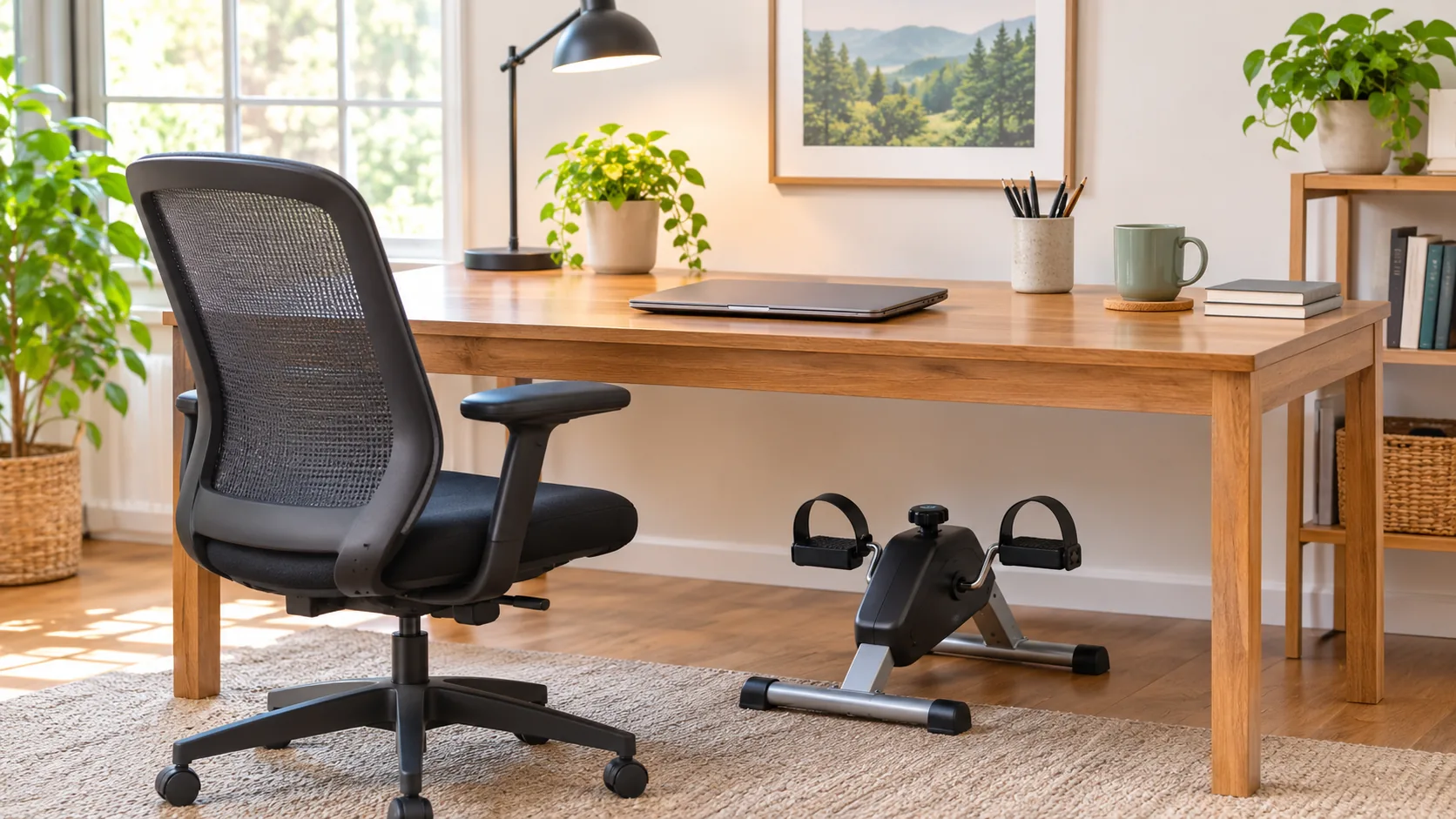
Under the desk exercise means moving your legs with a compact device that fits beneath your desk while you sit, such as a pedal unit, an ellipse-style leg exerciser or a rocking foot rest. Before you buy, check four things: desk clearance, noise, resistance or speed range, and stability on your floor.
This guide gives you a measuring routine, a comparison of device types, a setup checklist and a list of mistakes to avoid. It does not rank products by opinion; it shows you what to check on any product page.
Which types of under the desk exercise equipment exist?
Devices fall into a few groups. Each asks for a different amount of space and a different kind of movement, so pick the group first and the model second.
| Type | Movement | Space it needs | Check before buying |
|---|---|---|---|
| Under-desk bike (pedal unit) | Circular pedaling | Pedal height and knee room | Resistance knob, frame height, pedal straps |
| Ellipse leg exerciser | Oval, seated stride, sometimes in reverse | Low frame, foot travel | Speed control, direction options, power source |
| Rocking foot rest | Back-and-forth foot rocking | Small footprint | Rocking range, base grip, surface texture |
| Under-desk treadmill | Walking | Full floor length | Desk height, standing setup |
| Resistance bands | Pulling, pressing | Almost none | Anchor point, chair stability |
If you want a seated, low-profile choice, the pedal, ellipse and foot rest groups are the ones to compare. A treadmill suits a standing desk and needs the full floor length under or beside the desk.
How much desk clearance do you need?
Clearance is the first filter, because a device that hits your knees or the desk drawer will stay in its box. Measure with your real chair and shoes, not from memory.
- Measure the floor to the underside of the desk, including any drawer unit or crossbar.
- Sit as you normally do and measure the floor to the top of your knee.
- Measure the depth from the front of your chair seat to the nearest desk leg or modesty panel.
- Compare these numbers with the dimensions on the product page, and leave room for your knees to move.
A low-profile frame matters if your desk is fixed height. The VitaPedal has a low-profile frame that slides under desks, sofas and recliners, which suits you if you want to use the same unit in more than one spot.
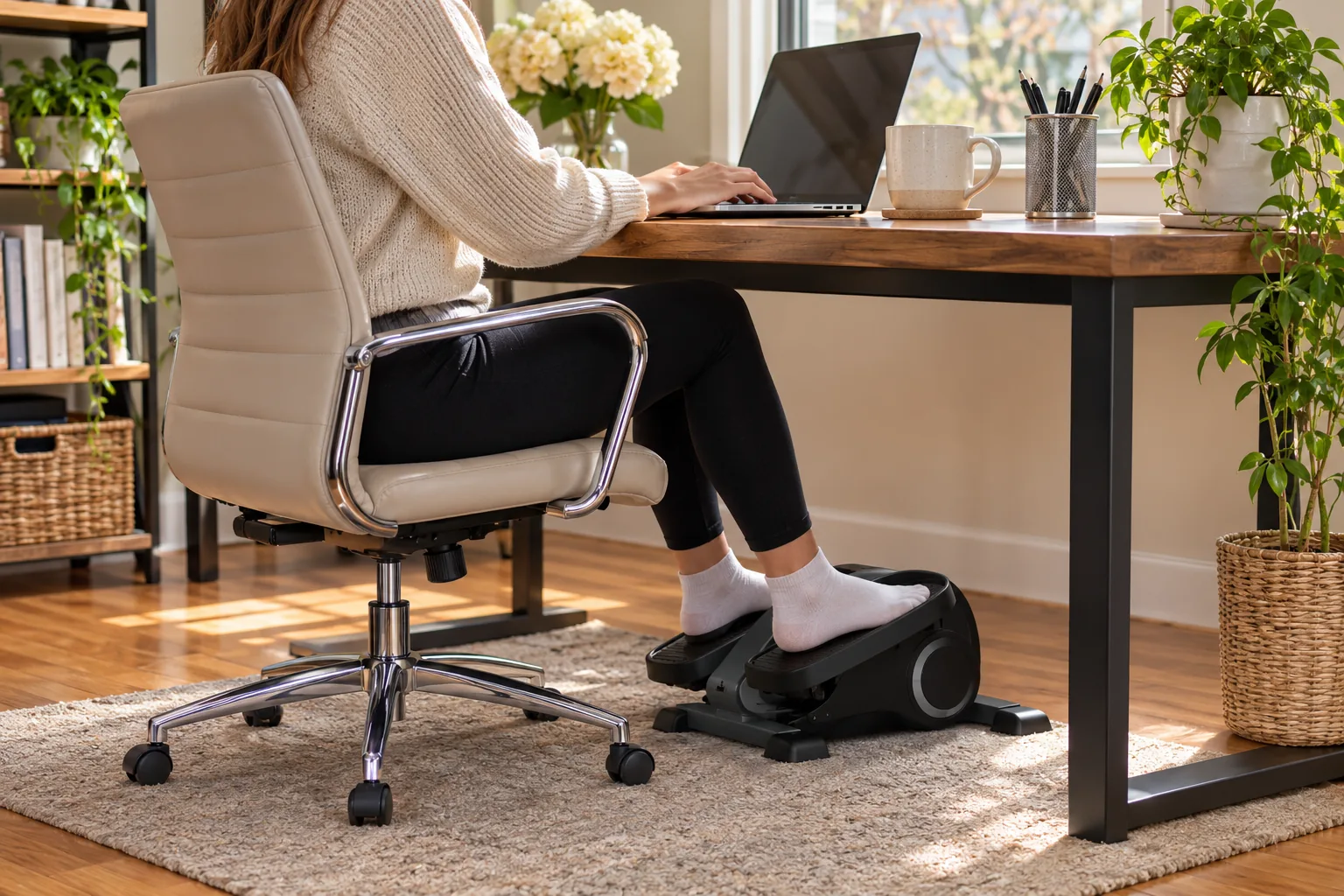
What to check for noise
A quiet leg exerciser matters when you share an office, take calls or work beside someone sleeping. A product page may not list a sound level, so judge noise by design and by how you set it up.
- Look at how the pedals are driven. A listed internal belt drive tells you what turns the pedals; it does not tell you the sound level.
- Check the floor. Hard floors carry vibration, so a mat under the unit helps. Carpet can soften contact with the floor.
- Run the unit at a low speed first and listen for rattles at the joints, then raise the speed.
- Keep the power cable clear of the pedals and your chair wheels.
Try a new unit during a quiet moment, not in the middle of a meeting. If you hear a rattle, unplug it and re-seat the parts as the manual describes.
Field note
Do a call check: run the device at your normal pace while you speak to a family member on speaker. If they can hear it clearly, change the floor surface or the speed before you use it at work.
Resistance, speed and motion: what the controls should offer
Many pedal units use magnetic resistance with several resistance levels set by a knob. Others, like ellipse-style units, set the pace through speed settings. Either way, look for a control you can reach without stopping what you are doing.
Controls you can reach from the chair
A knob on the front of a pedal unit means bending down each time you adjust it. A wireless remote lets you skip that. The VitaPedal comes with a wireless remote, and you use it to pick a manual speed or one of the 12 auto programs while you stay seated.
Direction and variety
Repeating one motion gets dull. The VitaPedal turns forward and in reverse, so you can switch the motion when you want a change. A rocking foot rest takes a different approach: the AlignFlow rocks through a 180° range while your feet rest on top, and its textured rollers sit under your arches.
Pedal surface
Check for non-slip pedals or textured footbeds. The VitaPedal has textured pedals, so your feet have a surface to rest on during a seated routine.
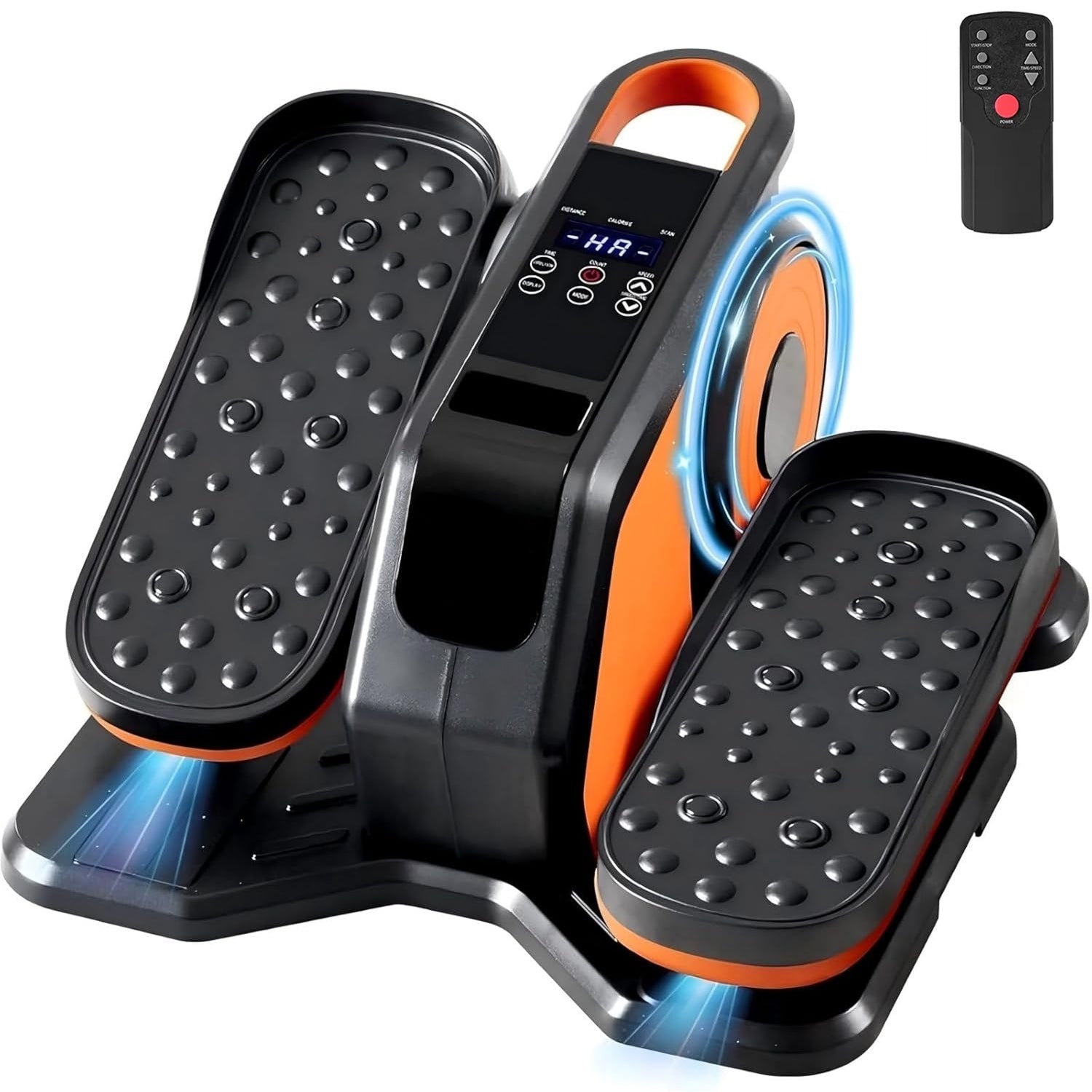 In this guideVitaPedal$229.99View
Stability on the floor and under your chair
A device that creeps across the floor is distracting, and a rolling chair adds to the problem. Check two points: what holds the unit in place and what holds the chair in place.
- Look for rubber pads or feet on the base. The AlignFlow has rubber pads that grip hardwood, tile, laminate and carpet.
- Use wheel stoppers or a chair mat if your chair rolls when you push with your feet.
- Choose a sturdy chair or recliner without a deep tilt, and keep both feet on the pedals as you start.
- Place the device so the cable does not run across your walking path.
Setup also matters. The AlignFlow joins by hand with tool-free bayonet pieces, and the VitaPedal arrives fully built, so you connect the power adapter. Follow each manual before first use.
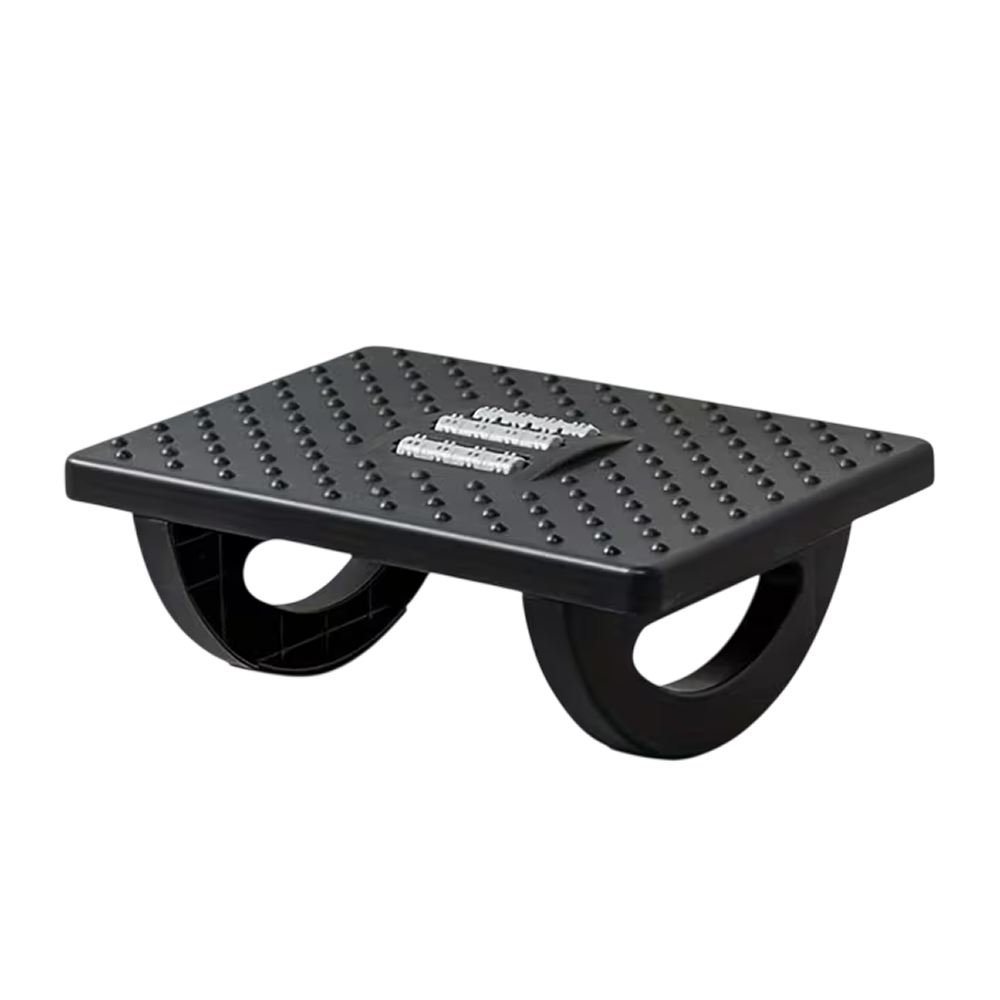 In this guideAlignFlow$39.99View
A setup checklist for your first week
Once the device is on your floor, set up your workstation so you can keep using it. This checklist works for any seated unit.
| Step | What to do |
|---|---|
| 1 | Read the manual and unplug the unit before moving or cleaning it |
| 2 | Put it on a flat spot with room behind your heels |
| 3 | Adjust your chair so your knees are not forced upward |
| 4 | Start at the lowest speed or resistance |
| 5 | Keep the remote or control where you can reach it |
| 6 | Pause if you are unsure, and ask a healthcare provider about your own routine |
Under the desk exercise fits into your day as a routine you can repeat, so tie it to something you already do, such as reading email or watching TV. Short, regular sessions are a simple way to begin.
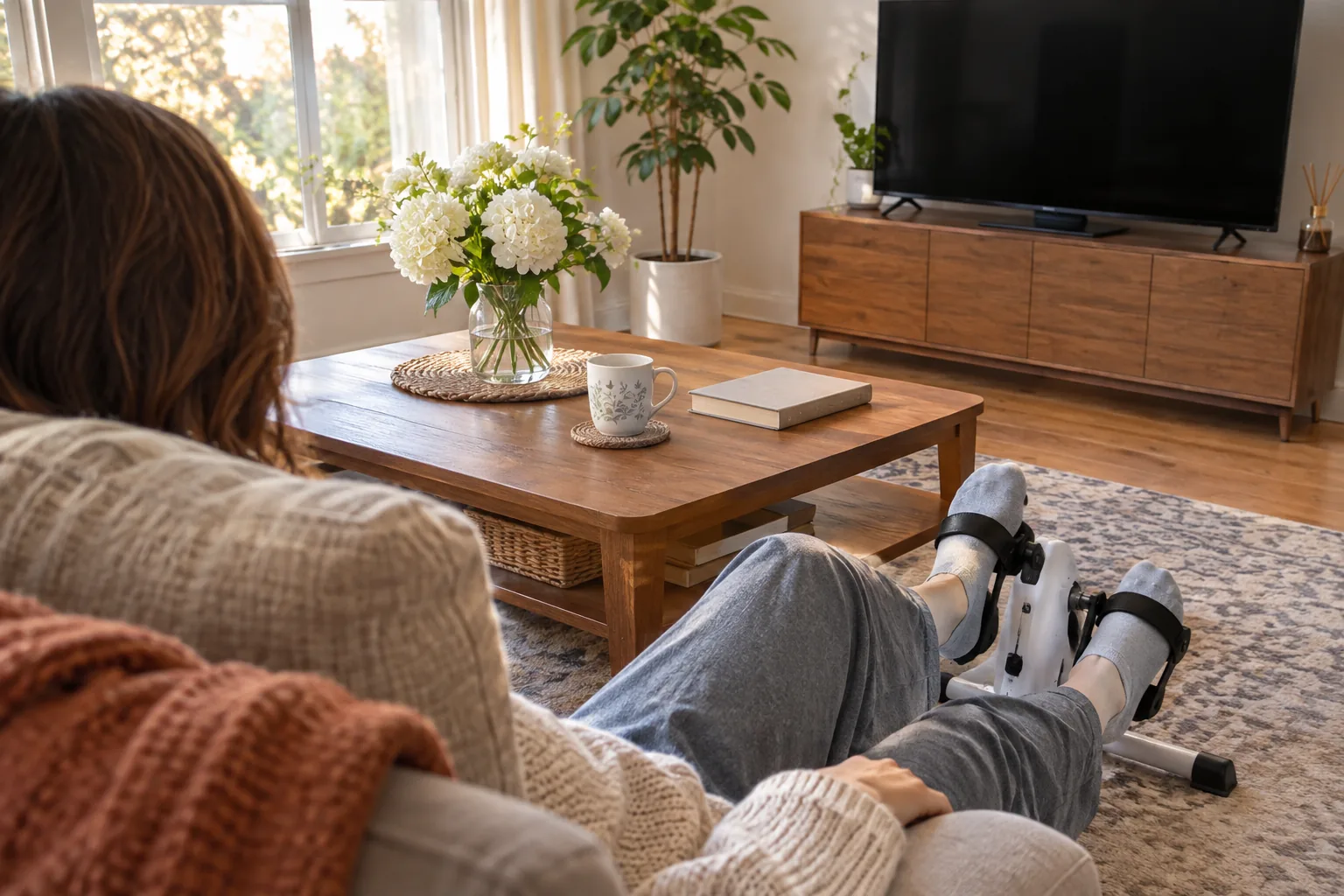
Under the desk exercise for seniors: setup points
For older adults, the checks are about steadiness and control. Choose a chair with arms and a firm seat, set the unit on a non-slip surface, and pick a device with speed control from the seat. A seated ellipse leg exerciser with a remote means you do not lean forward to change settings.
Start at a low setting and follow the manual. Ask a healthcare provider before starting if you have questions about your own routine. For more on staying steady at home, see our guide to fall detection watches for seniors.
Common mistakes to avoid
- Buying before measuring knee height and desk clearance.
- Placing the unit on a rug that slides over a smooth floor.
- Letting the chair roll while you pedal.
- Choosing a device with controls you cannot reach from your seat.
- Starting at the highest setting instead of the lowest.
If you want other foot-focused items for the end of the workday, browse the massagers for neck, back and feet collection.