How to Clean Invisalign Retainer: Daily and Weekly Routine
Rinse in lukewarm water, brush with a soft brush and mild soap, and soak weekly. This guide gives the schedule, the list of what to avoid, and where a cleaning device fits.
The Calvedon Team
November 19, 2026 · 5 min read
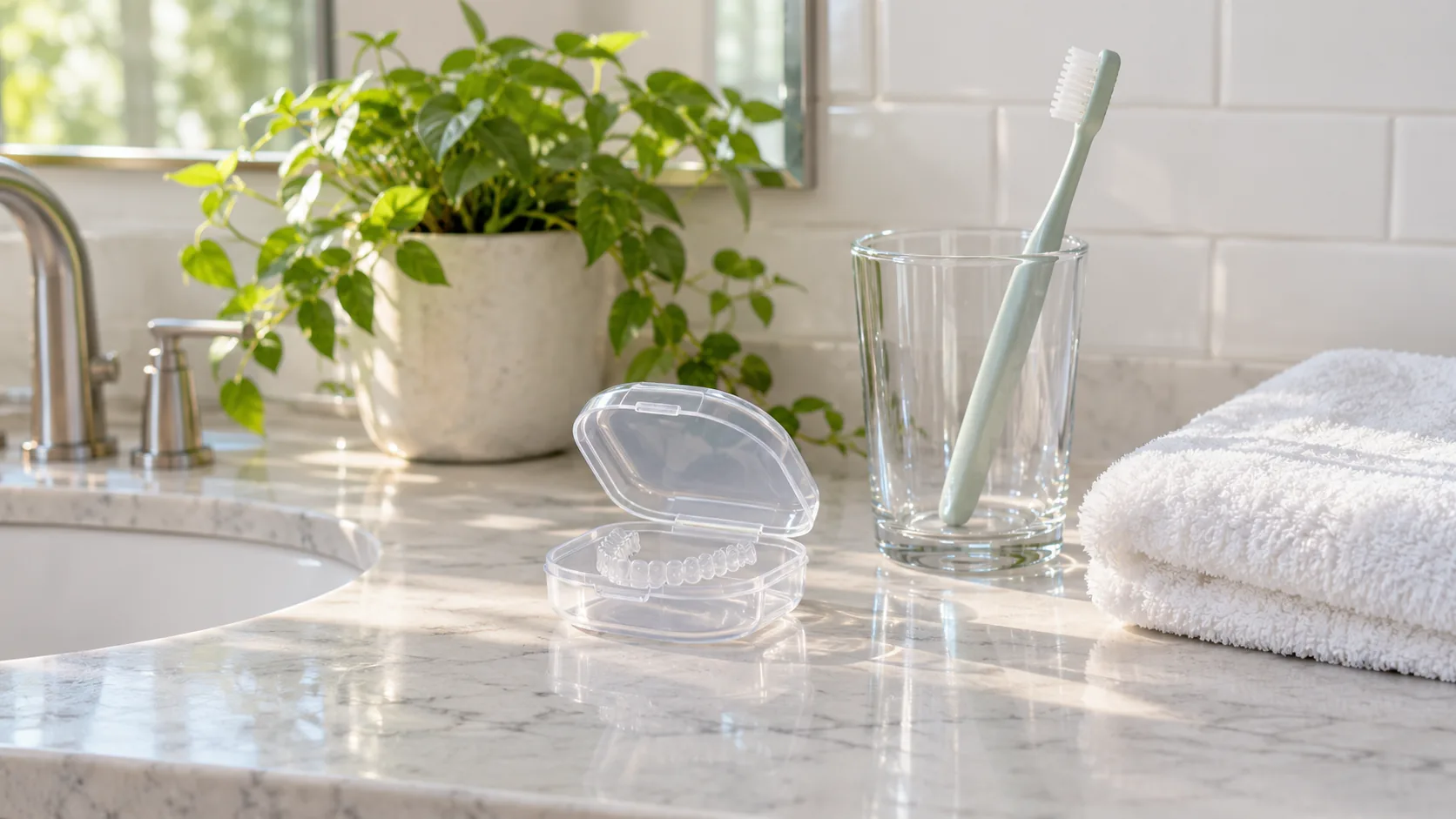
To learn how to clean Invisalign retainer trays, rinse them in lukewarm water every time you take them out, brush them with a soft-bristled toothbrush and a drop of mild, clear soap once a day, and soak them in a retainer cleaning solution once a week. Keep water cool to lukewarm, skip toothpaste and strong chemicals, and store the retainer in its case when it is out of your mouth.
The routine below covers each step, the products to avoid, and how an ultrasonic cleaner can sit alongside the brush and soak. Your orthodontist has the final word on your specific retainer, so check their instructions first.
Why a clear retainer needs a cleaning routine
A clear retainer sits against your teeth for hours. Saliva, food particles and bacteria collect on the plastic, and the surface can turn cloudy or yellow as buildup hardens. Small grooves where the tray meets the biting surfaces hold the most residue.
Regular cleaning keeps the tray clear and helps you notice odors early. It also gives you a chance to look at the plastic for cracks or warping, which you can raise with your orthodontist.
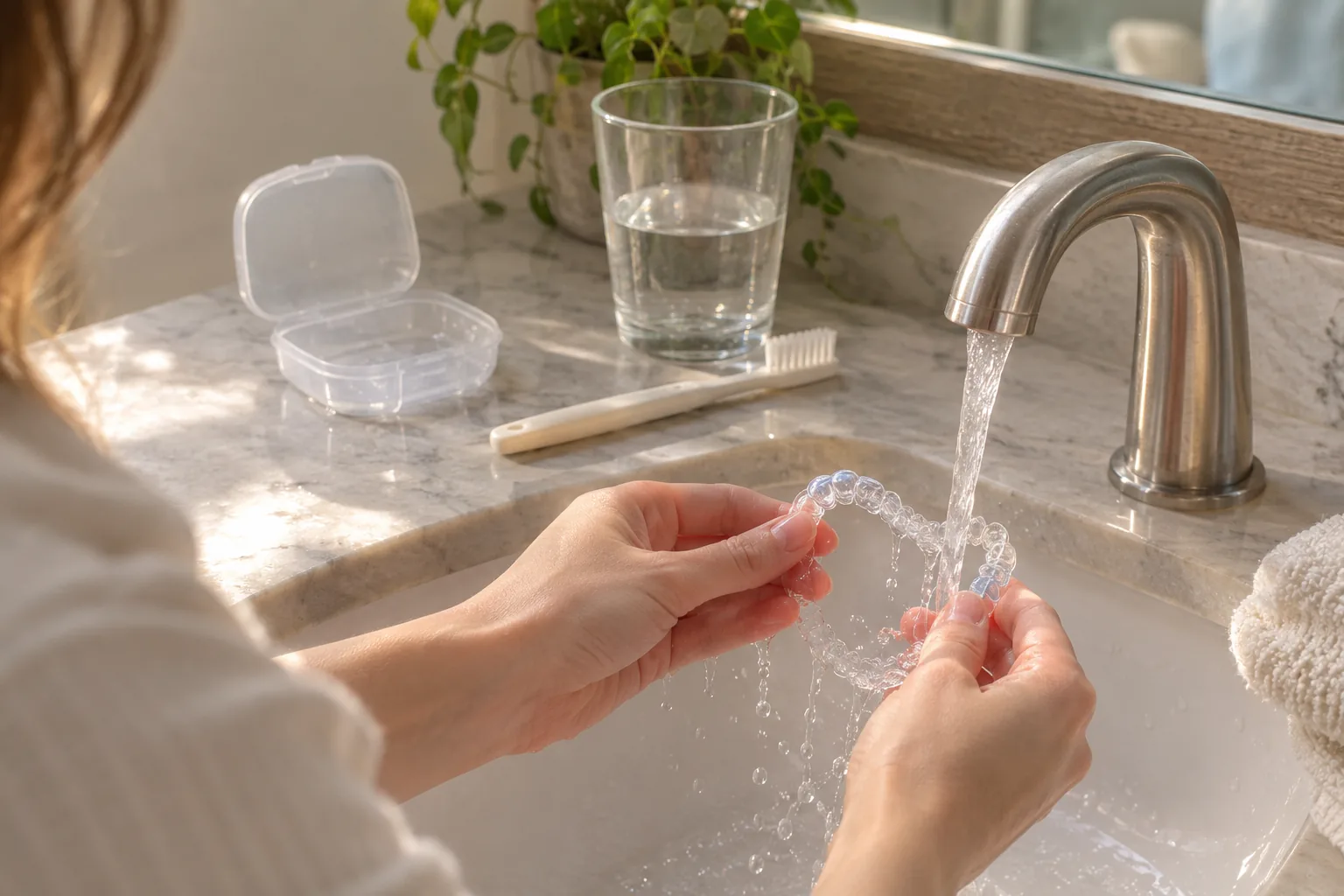
How to clean Invisalign retainer trays every day
The daily routine has three short steps. Do them over a sink with a towel or stopper in place so the tray cannot slip down the drain.
1. Rinse with lukewarm water
Rinse the tray every time you remove it, before saliva dries on the plastic. Use lukewarm water, not hot. Hot water can warp the plastic and change how the retainer fits.
2. Brush gently
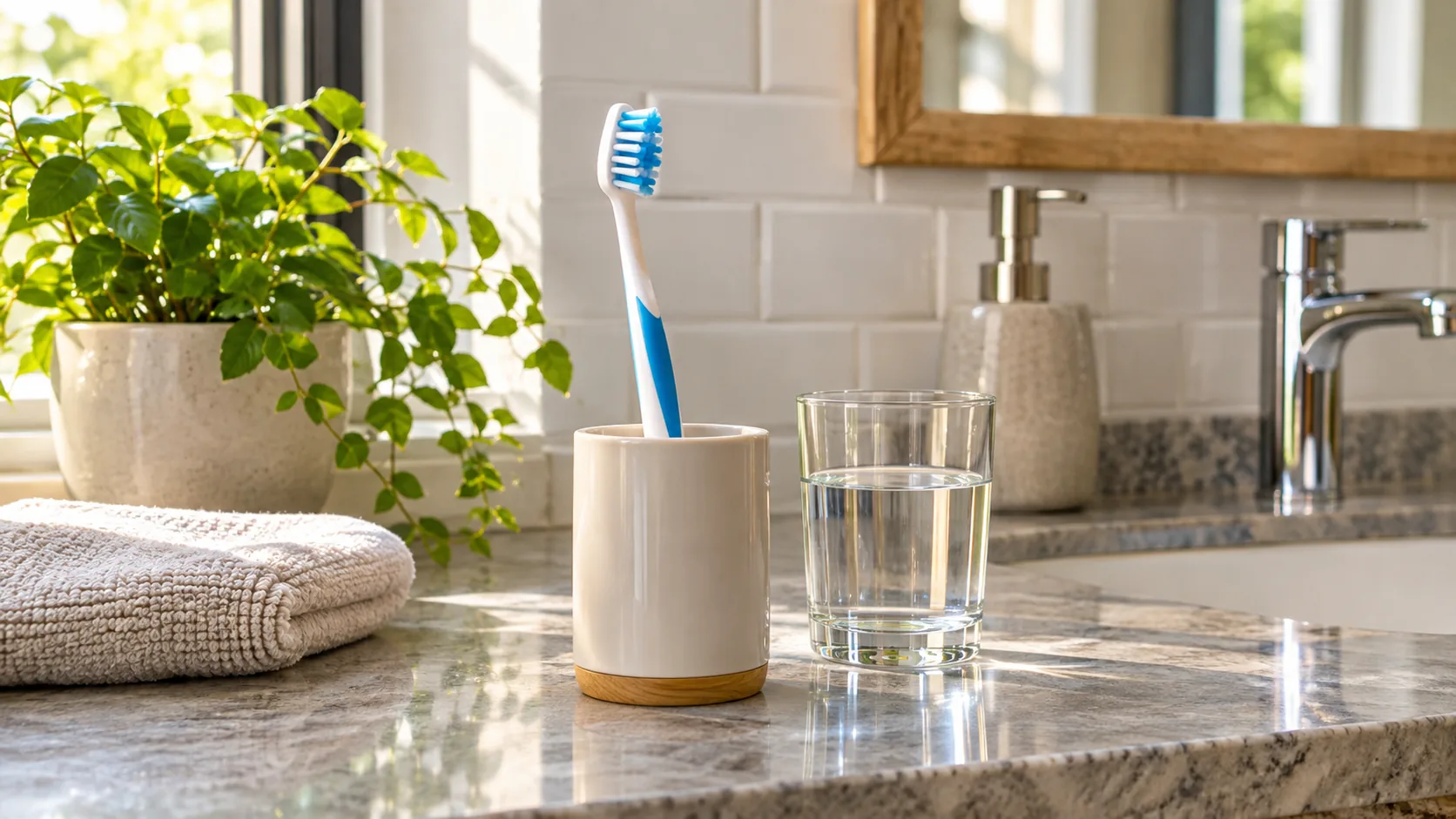
Use a soft-bristled toothbrush kept only for the retainer. Add a small drop of clear, unscented dish soap or liquid hand soap, brush the inside and outside, and rinse well. Brush your teeth before you put the retainer back in.
3. Let it dry, then case it
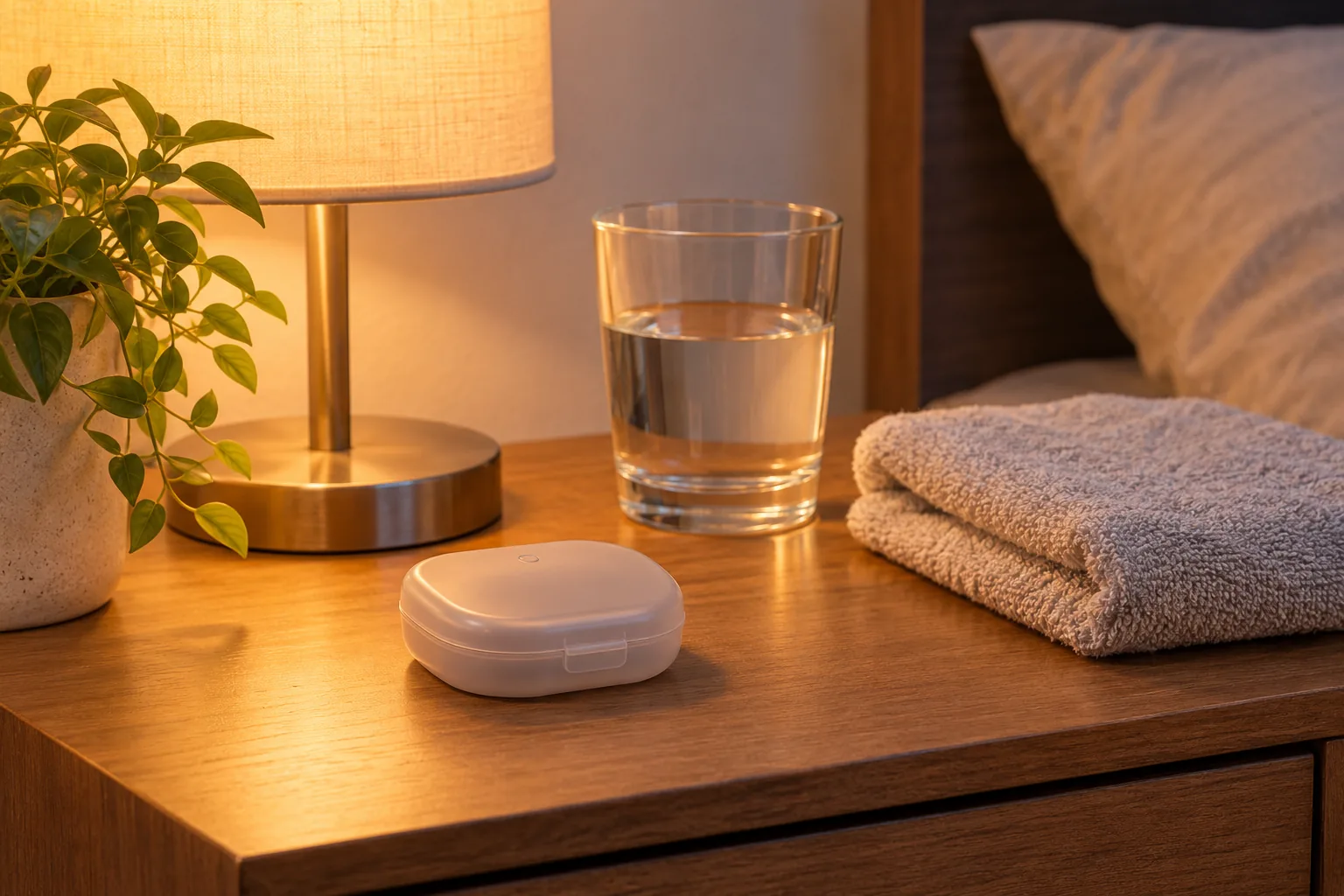
Shake off the water, let the tray air-dry, and put it in its case. Do not wrap it in a napkin or tissue, since that is how retainers end up in the trash.
On a busy morning, rinse and brush are the two steps to keep. The soak can wait for the weekly slot.
Weekly soak and deep clean
Once a week, give the tray a soak to loosen what the brush misses. Pick one of these options.
- Retainer cleaning crystals or tablets: dissolve them in lukewarm water and follow the time printed on the package.
- Denture cleaning tablets: some use them on clear retainers. Pick a colorless, unscented one and confirm with your orthodontist first.
- Diluted white vinegar or hydrogen peroxide: some orthodontists suggest these for occasional soaks. Ask for the exact dilution and soak time before trying either, and rinse the tray well afterward.
- Baking soda: mix it with water as a soak rather than scrubbing with dry powder, since gritty scrubbing can scratch the plastic.
After any soak, rinse the retainer under running water and brush lightly. If the tray still smells or looks cloudy, use a fresh soak solution next time and ask your orthodontist whether the tray needs replacing.
Daily and weekly schedule at a glance
| When | Step | What to use |
|---|---|---|
| Every time it comes out | Rinse | Lukewarm running water |
| Once a day | Brush | Soft toothbrush, drop of clear soap |
| Once a week | Soak | Retainer crystals or another solution your orthodontist suggests |
| Each time you remove it | Store | Ventilated case, away from heat and pets |
| Every visit | Check | Ask your orthodontist about cloudiness, cracks or odor |
What not to use on a clear retainer
Damage to a clear retainer often comes from heat and abrasion. Keep this list near the sink.
| Avoid | Why |
|---|---|
| Hot or boiling water | Plastic can warp, so do not boil a retainer or run it through a dishwasher |
| Toothpaste | Some pastes contain abrasives that leave tiny scratches where buildup can settle |
| Alcohol-based mouthwash | Can dry out and cloud the plastic |
| Colored or scented soaks | Dyes and fragrances can stain the tray or leave a taste |
| Bleach and harsh household cleaners | Strong chemicals are not made for something that goes in your mouth |
| Stiff brushes and scouring pads | Scratch the surface |
Can you boil Invisalign retainers? No. Boiling can warp the plastic and ruin the fit, and a retainer that no longer fits needs a replacement from your orthodontist.
Where an ultrasonic cleaner fits in
A brush bristle often cannot reach the small grooves of a tray. An ultrasonic cleaner sends waves through water so bubbles form around the whole surface, which is why some households add one to the weekly soak or to the daily rinse step.
RetainFresh is an ultrasonic retainer cleaner with UV LEDs. You add water to the tank, place the retainer inside, close the lid and press one button to start a cycle that shuts off on its own. When it stops, take the retainer out and rinse it.
The same tank is made for retainers, clear aligners, mouthguards and full dentures, so one unit can serve a household. It charges over USB and comes with a travel case. Follow the quick-start guide for the water level and keep using your lukewarm rinse and case storage; the device adds a step and does not replace the others.
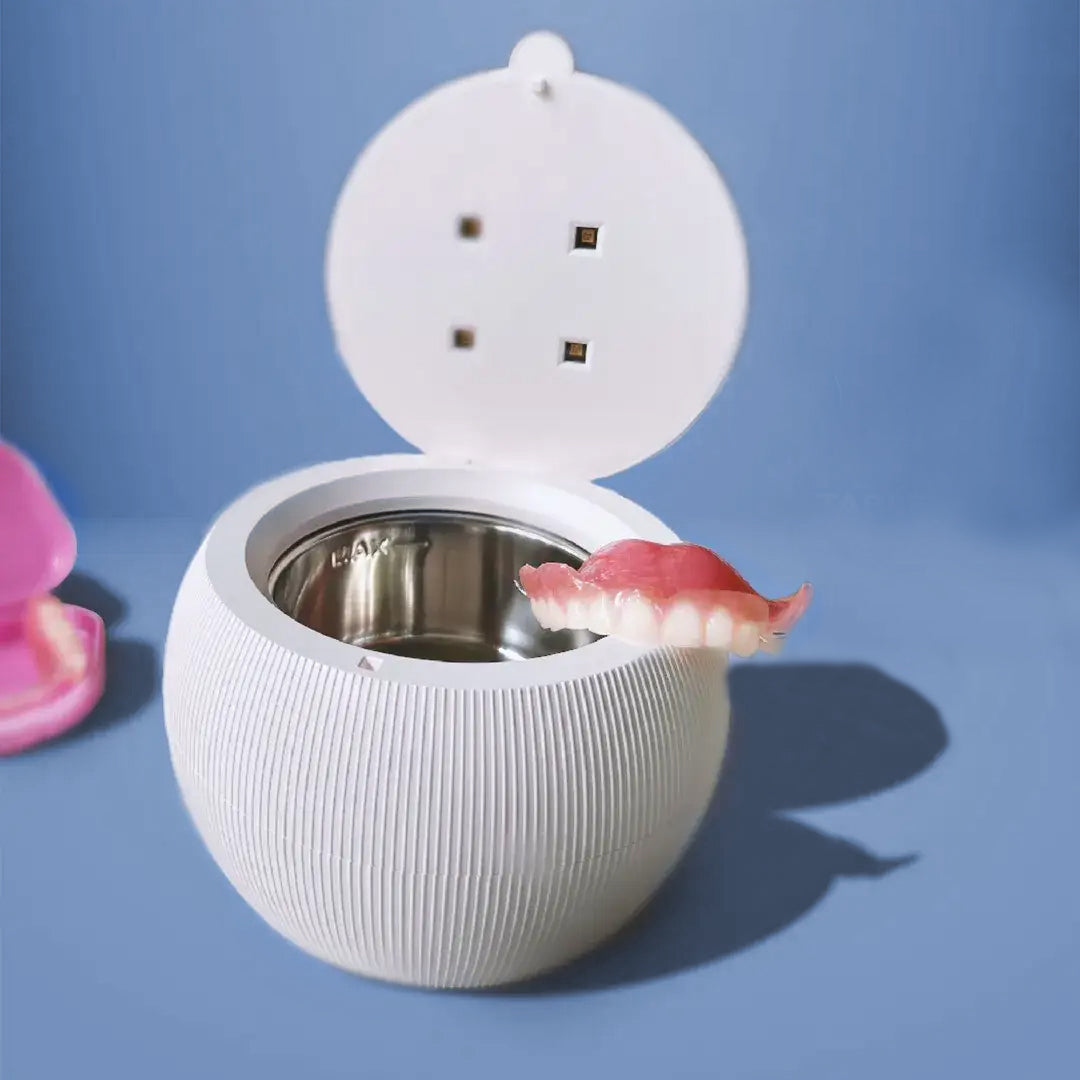 In this guideRetainFresh$99.99View
Field note
Pair the cleaning step with something you already do, such as brushing your teeth at night, so the retainer routine becomes part of the same sequence.
How to clean your retainer if it is a permanent wire
A bonded wire behind your front teeth collects plaque like any tooth surface, and a clear tray cleaner will not reach it. Brush along the wire at the gumline, and slide floss under the wire with a floss threader. A water flosser can help with debris around the wire; how to use a water flosser covers technique and settings.
If hardened buildup (tartar) has formed on the wire, book a dental cleaning rather than scraping at it yourself. For the order of brushing and flossing, see floss or brush first.
Common mistakes and when to call your orthodontist
- Cleaning only when the tray looks dirty. Rinse each time and brush daily.
- Using the same toothbrush for the retainer and your teeth after it has touched stained food.
- Leaving the retainer in a car, on a windowsill or near a heater.
- Soaking for longer than the package says.
- Ignoring a crack, a rough edge or a tray that no longer seats properly.
Call your orthodontist if the tray stays cloudy after a soak, smells after cleaning, or does not fit. They can tell you whether to clean it differently or replace it. For other devices that belong in an oral care routine, browse the Dental & Oral Care Devices collection.