How Does Noise Cancelling Work? Active vs Passive for Sleep
Active noise cancelling plays an opposing sound wave through a speaker, while passive blocking relies on fit. Here is what each handles in a bedroom, and what neither can do.
The Calvedon Team
November 24, 2026 · 6 min read
How does noise cancelling work? Active noise cancelling uses tiny microphones to pick up sound, then a speaker plays an opposing sound wave that cancels part of it before it reaches your ear. Passive noise cancelling uses no electronics at all: the shape and seal of an earbud tip or ear plug physically muffles sound.
The two methods handle different noises, and a bedroom has both kinds. This guide explains each one, then maps common bedroom sounds to the method that suits them.
How does noise cancelling work?
Sound is a pressure wave, with peaks and dips that repeat. If you play a second wave that is the mirror image of the first, the peaks line up with the dips and the two flatten each other. This is called destructive interference.
Active cancelling turns that idea into a loop that runs inside the earbud:
- A microphone listens to the ambient sound around the ear.
- A small processor works out the shape of that wave.
- The speaker plays an inverted copy, the opposing sound.
- The two waves overlap, and the sound that reaches the ear is reduced.
The loop has to keep up with the sound it is copying. That is why active cancelling suits steady, low-frequency sound such as a hum or drone, which changes slowly and is easy to predict. Sudden or irregular sounds change too quickly to copy cleanly.
What is noise cancelling, and does it need a hyphen?
What is noise cancelling in everyday terms? It is a feature that reduces unwanted ambient sound using opposing sound waves. You will also see it called noise cancellation or ANC, short for active noise cancelling.
On spelling, US writing typically uses one l ("canceling"), while "cancelling" with two is the British form. That is why you will see both on product pages.
On the hyphen: use one when the phrase works as a describing word before a noun, as in "noise-cancelling earbuds." Leave it out when the phrase stands alone as a feature, as in "the earbuds have noise cancelling." Pick one style and stay consistent.
Active vs passive noise cancelling
Passive blocking is the older idea. A snug tip, dense foam or a closed shell puts a physical barrier in the path of sound. Active cancelling adds electronics on top of that barrier, so active earbuds often use both.
| Feature | Active cancelling | Passive blocking |
|---|---|---|
| How it works | Microphones, a processor and a speaker play an opposing wave | Tip, foam or shell forms a physical barrier |
| Needs power | Yes, it runs on a battery | No |
| Suits | Steady, low-pitched hum | Higher-pitched and irregular sound, in part |
| Depends on | Microphone placement and tuning | Tip size and seal in the ear |
| Cannot do | Follow sudden sounds | Stop low rumble that passes through materials |
A related term is noise isolation, which is another name for passive blocking. Noise suppression is different again: it is software that cleans up your voice during calls, not a way to quiet the room.
Which bedroom noises each method handles
So how does noise cancelling work against each bedroom sound? Match the noise to the method before you buy anything. The table below describes what to expect from active cancelling, a snug fit and a masking sound. No single column covers every row.
| Bedroom noise | Active cancelling | Passive fit | Masking sound |
|---|---|---|---|
| Air conditioner or furnace hum | Designed for this kind of steady sound | Reduces some | Blends it into the background |
| Refrigerator or fan drone | Designed for this kind of steady sound | Reduces some | Blends it into the background |
| Distant traffic rumble | Reduces some low-pitched content | Reduces some | Covers the gaps |
| Noise from a nearby sleeper | Reduces some | Reduces some | Covers part of it |
| Voices through a wall | Little effect, since speech changes quickly | Reduces some | A steady sound can make it stand out less |
| Door slam or barking dog | Cannot follow sudden sounds | Reduces some | Softens the contrast |
Sound that travels through the bed frame or floor as vibration is also hard for any earbud to stop. If that is your noise, the fix is often in the room, not the ear.
Sleep earbuds: where active cancelling fits
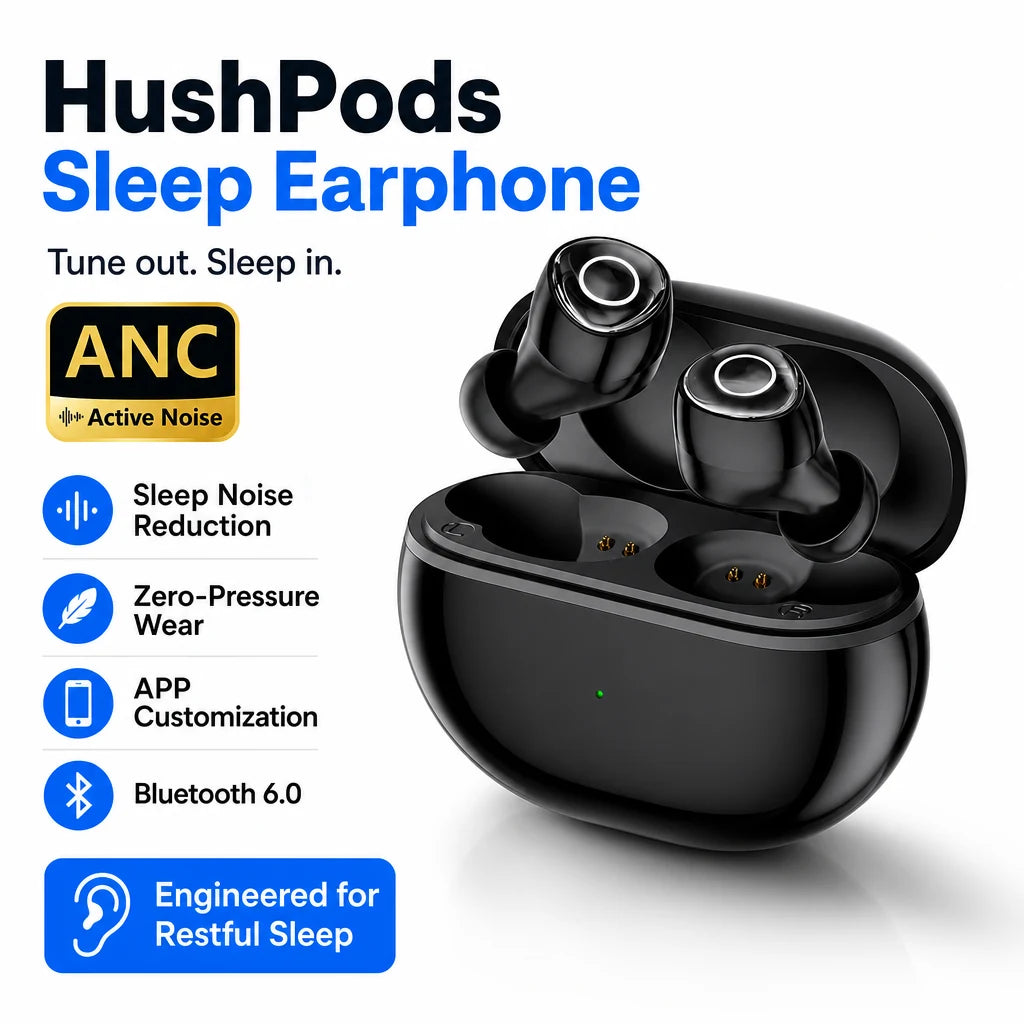
Regular headphones are bulky against a pillow, so sleep earbuds are built flat. HushPods are sleep earbuds that each measure 0.6 cm (about 1/4 inch) thick and weigh 2.5 g (about 0.09 oz), a low shape made for side sleepers who lie with an ear against the pillow.
They use active noise cancellation to reduce ambient sound in the room, such as household hum or noise from nearby sleepers. The hybrid ear tips combine memory foam inside with silicone outside, and three silicone sizes (S, M and L) come with foam inserts, so you can choose the size that fits your ear and adds the passive layer.
 In this guideHushPods$89.99View
Are there complete noise cancelling ear plugs?
No earbud or ear plug blocks every sound. Active cancelling reduces steady noise, passive fit reduces what it can seal out, and some sound still reaches you through the bed itself. Check the product page for what a product actually describes, and read the word "complete" on packaging with care.
Fit is the largest variable. A tip that is too small leaves gaps and lets sound leak around it, which weakens both layers. Try each tip size in the kit and keep the one that sits snug without being forced.
For a deeper checklist on features, see Noise-Canceling Earbuds for Sleep: What to Check Before Buying.
Masking: when you cannot cancel the noise
Sudden and irregular sounds are where cancelling falls short, and that is where masking helps. A white noise machine plays a continuous sound that sits in the background, so a bark or a voice stands out less. It does not remove the noise; it changes what you notice.
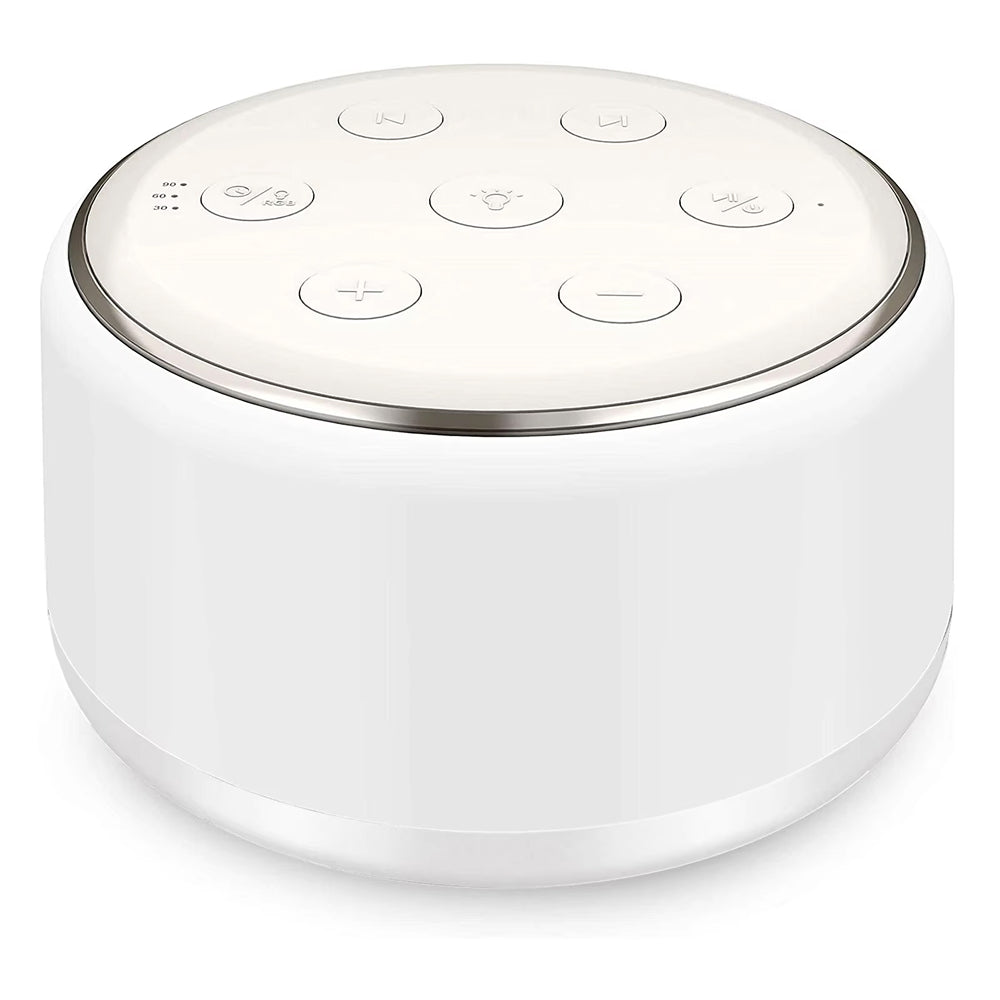
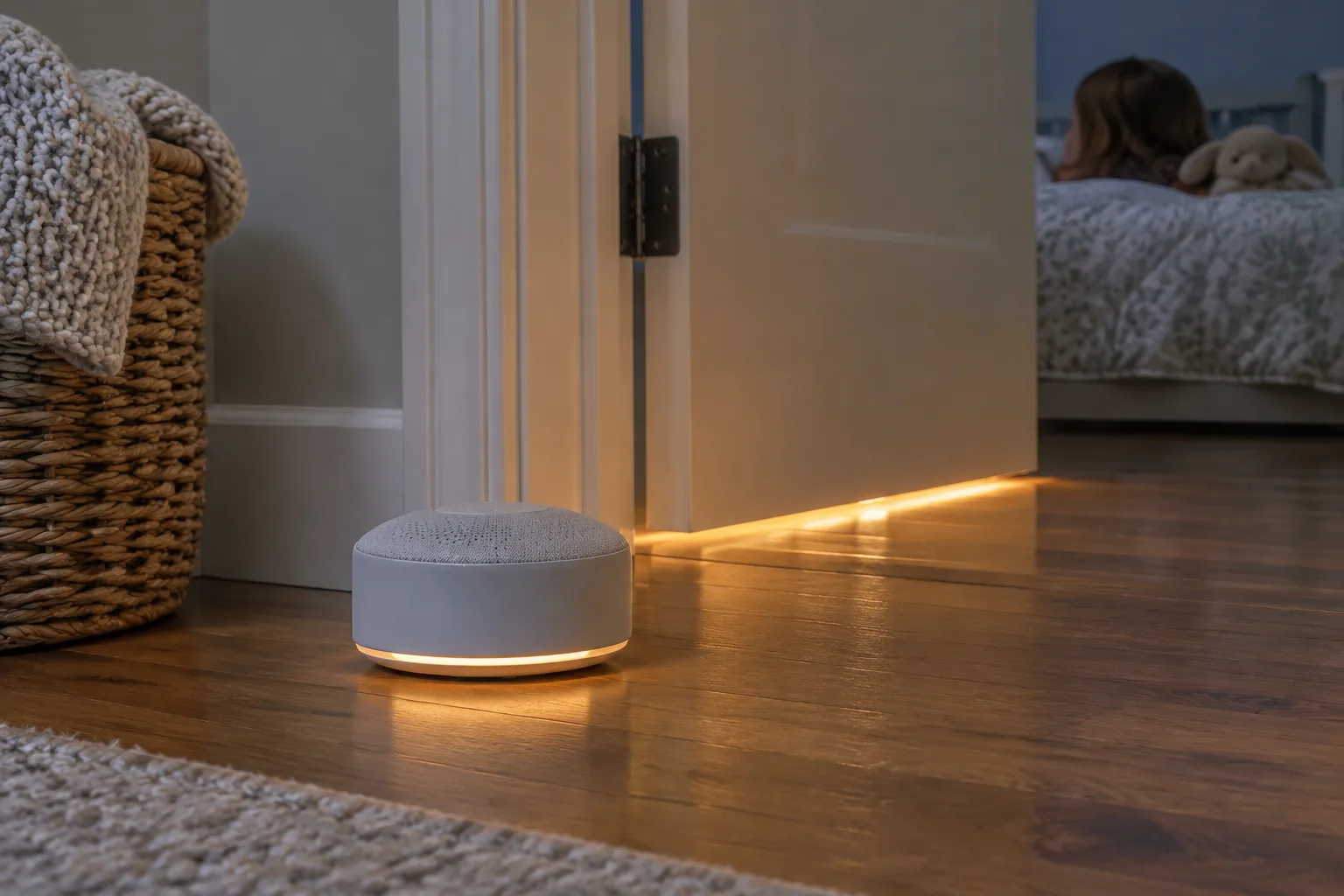
SonaRest is a rechargeable sound machine with 34 soundscapes, a 7-color night light and 32 volume levels. The soundscapes play without a repeating loop. For a door or hallway, set it just inside the door, facing outward.
 In this guideSonaRest$69.99View
To compare fan, rain and other tones, read White Noise Machine Sounds: White, Pink, Brown, Fan and Rain Compared. If you prefer to wear your sound, the White Noise & Sleep Earbuds collection lists the options we stock.
How to turn background noise down at bedtime
Use this order, from the room outward to the ear:
- Name the noise: steady hum, sudden sound or voices.
- Reduce what you can at the source, such as a fan setting or a closed door.
- Choose the method from the table above.
- Fit the earbud tips snugly, then check that sound does not leak around them.
- Add a masking sound if sudden noises still stand out.
With HushPods, take the buds out of the case at bedtime and tap the right bud once to enter sleep mode with white noise. Open the companion app to choose a soundscape, one of six EQ presets or your own audio. Afterward, place both buds back in the case so they charge for the next night.
Field note
Change one thing at a time, such as tip size or masking sound, and use it for a few nights. That shows you which change made the difference.
Common mistakes
- Expecting active cancelling to stop speech or slams, when it is built for steady sound.
- Skipping tip sizes, which leaves gaps in the seal.
- Setting a masking sound loud enough to become a second noise. Keep the volume at a level you can ignore.
- Skipping the cleaning step. The kit includes a cleaning tool for the mesh and tip, so use it as the care guide describes.
For the rest of the bedroom, the Sleep Hygiene Tips checklist covers light, noise and temperature.