Recommended Travel Pillow Types: How to Choose for Your Trip
A recommended travel pillow is the one that matches your trip length, your sleep position and the space left in your bag. This guide gives you the decision steps and a shape-and-fill table.
The Calvedon Team
November 3, 2026 · 8 min read
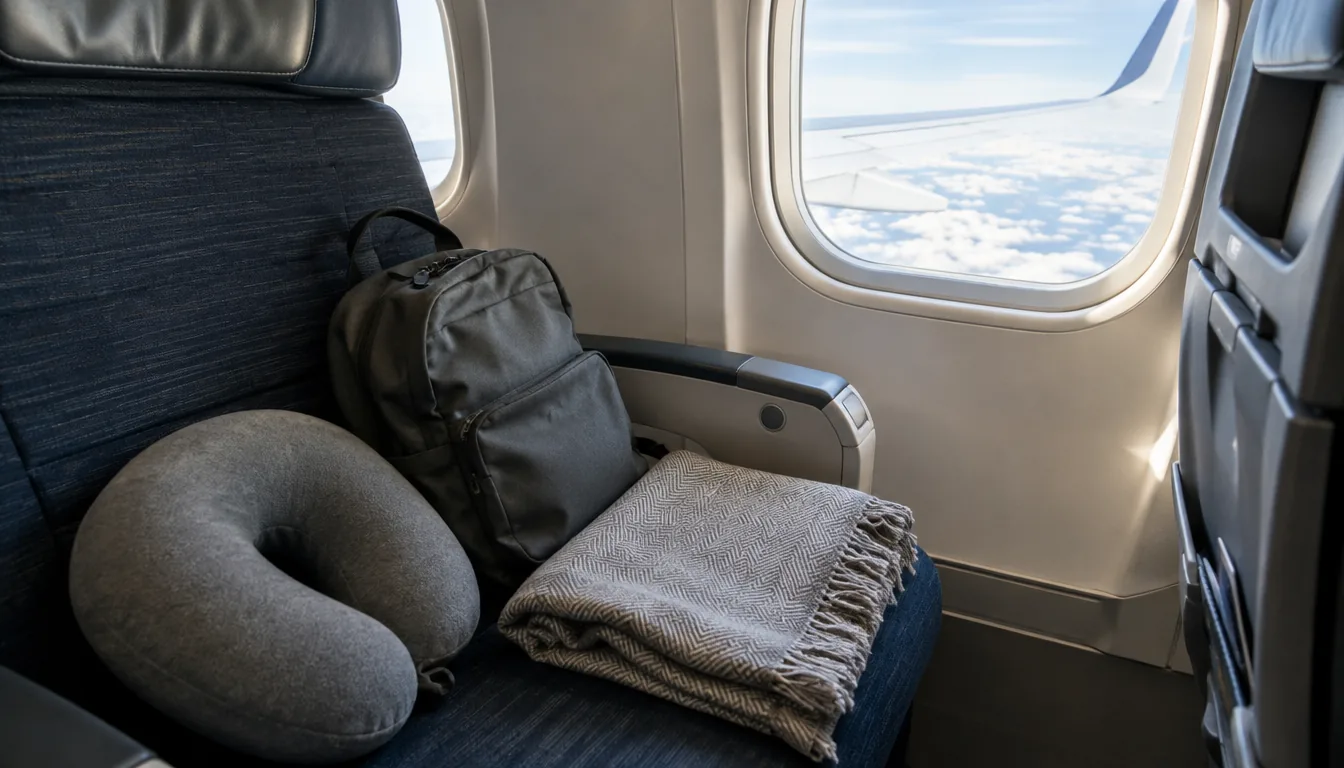
A recommended travel pillow is one that fits three things: how long you sit upright, how your head falls when you doze, and how much room your bag has left. Wraparound memory foam suits upright seats, inflatable styles suit tight packing, and a rolled or lumbar-style cushion suits car rides. Work through the steps below and you can choose a shape and fill without comparing a long list of models.
This guide focuses on the decision itself. Instead of ranking products, it shows how each pillow shape behaves in a seat, which fill suits which trip, and what to check before you buy.
How to choose a recommended travel pillow in four steps
Answer these in order. Each one removes a type from the list, so by step four you are looking at only a few options.
- Pick your trip type: plane, train, bus, car or a mix.
- Note your sleep position in a seat: head forward, head to the side, or head back.
- Measure the space you can spare in a carry-on or personal item.
- Decide how much fit adjustment you need for your neck size.
The sections below take each step in turn, followed by a comparison table you can screenshot or print before shopping.
Trip type and sleep position
Long flights and overnight trains
When you sit upright for hours, your head needs a wraparound neck cushion that holds it in place. A pillow that only sits behind the neck lets the head drop forward or sideways once you doze off. Look for a closed or buckled design with side walls and a front section for neck and chin support.
On an overnight train you may also have a fold-down table or a reclining seat. A pillow with a flat front section can double as a rest for your forearms, while a ring that closes at the front keeps the head steady when the carriage sways.
Short flights and commutes
For a flight of an hour or two, or a daily train ride, a light option is enough. A small inflatable pillow or a thin rolled cushion packs flat and goes back in the bag when you land. Since you are not sleeping deeply, a fully structured pillow adds bulk you may not use.
Buses and shared seats
Bus seats often have low backs and little space beside you. A slim pillow that stays close to the neck takes less of the shared armrest area than a wide ring. Check that the shape does not push your head toward your neighbor when you lean.
Road trips
In a car, the seat has a headrest, so the pillow works differently. A lumbar or headrest cushion fills the gap between the seat and your head or lower back. Neck pillows can also work for passengers. The driver should not wear one while driving: follow local rules and keep any cushion away from the controls.
Mixed trips
If one journey includes a taxi, a train, a flight and a hotel, pick the pillow for the longest upright stretch and make sure it can travel outside the bag. A strap or clip matters more here than the fill, because you will put the pillow on and take it off several times.
Your head position when you doze
Your usual position at home is a poor guide, because a seat changes how your head moves. Think about what happens when you drift off sitting up.
- Head drops forward: choose a design with a raised front or chin section.
- Head tips to one side: choose side walls on both sides, or a wrap that closes at the front.
- Head tips back: choose a thicker rear section, or use a headrest cushion in a car.
- You lean against the window: a rolled cushion or a flat pillow between head and wall can suit you better than a ring.
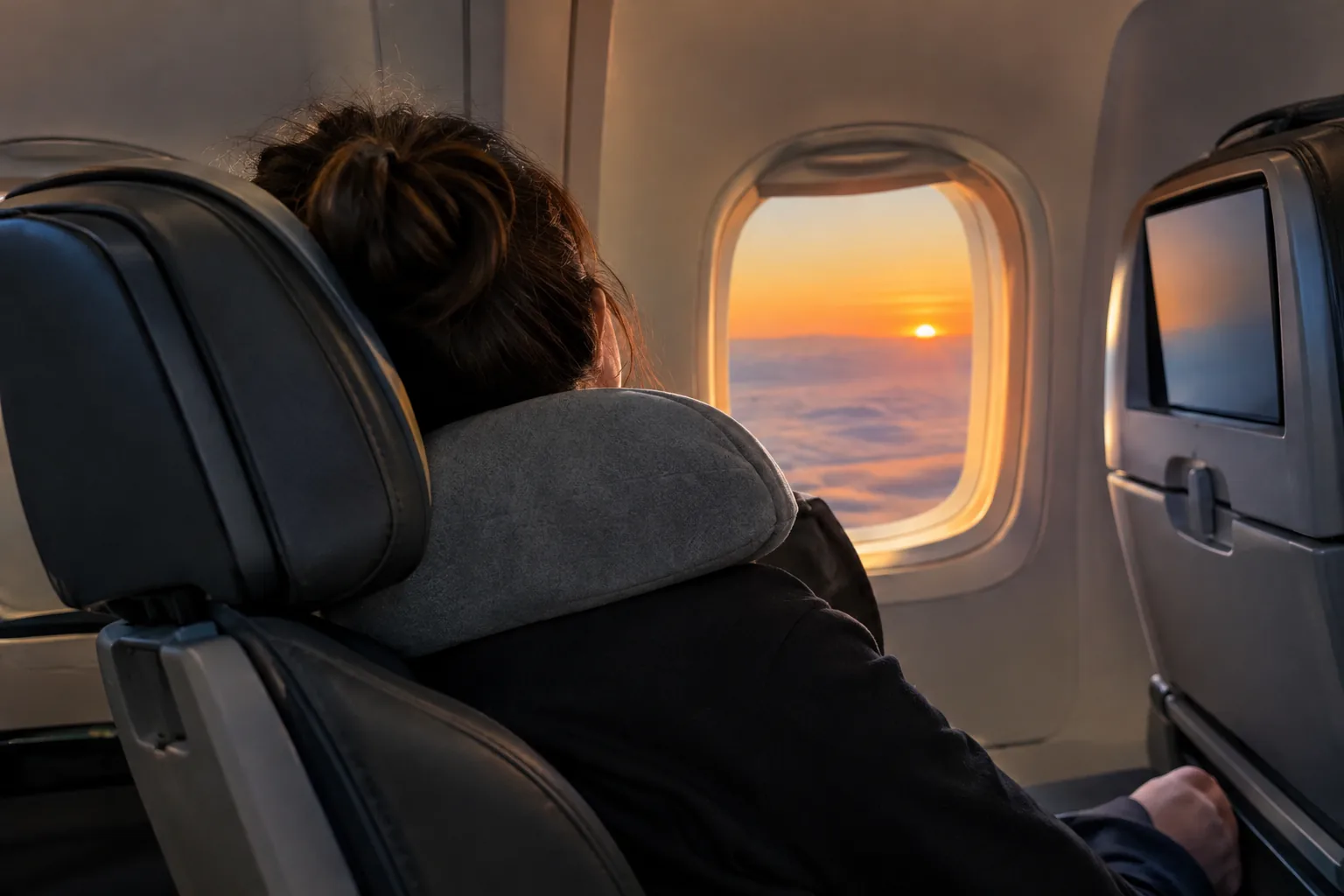
If you prefer a window seat, you will lean at an angle, so an adjustable closure lets you shift the thicker side toward the wall. Side sleepers can rotate a U-shape so the thicker part sits under the ear, or pick a shape with a taller side wall.
Packing space and weight
Compare the pillow's carried size with the room in your bag. A fully structured pillow takes the most space but needs no setup. An inflatable pillow shrinks to a small pouch, and a rolled foam or microbead style can be squeezed into a corner.
Some structured pillows have a way to attach to your luggage. A luggage strap or clip lets you hang the pillow on a handle or bag while you walk through the terminal, so it does not need to fit inside. Check whether the pillow you are considering has one.
Weight matters if you carry the bag for long stretches. Check the listed weight on the product page, and remember that a pillow clipped outside still counts toward what you carry.
Travel pillow shapes and fills compared
Use this table to see how each type is built before you settle on a recommended travel pillow for your own trip. The notes describe shape and material, not a ranking.
| Type | Fill | Packing | Suits | Check before buying |
|---|---|---|---|---|
| Wraparound C-shape | Memory foam | Holds its shape; takes room or clips outside the bag | Planes, trains, upright seats | Adjustable closure, washable cover |
| Classic U-shape | Memory foam or polyester fiber | Medium bulk | Short and mid-length trips | Side wall height, back thickness |
| Inflatable ring or U | Air | Small pouch when deflated | Tight packing, short flights | Valve type, cover fabric |
| Scarf or twist style | Microbeads or soft fill | Squeezes flat | Mixed trips, light packers | How the fill shifts |
| Rolled or lumbar cushion | Foam or fiber | Moderate | Car rides, lower-back gap | Strap for the seat |
| Flat pillow with chin or side support | Foam or fiber | Flat | Window-seat leaners | Fit with your headrest |
Fills behave differently. Memory foam shapes to your neck as it warms and slowly returns to shape, while air is adjustable and packs small but offers no cushion if the valve leaks. Fiber and bead fills are soft and light but can flatten or shift during a long trip.
Inflatable or memory foam
Both can work, so pick the tradeoff you would rather carry. Inflatable pillows suit you if bag space is your main constraint and the trip is short. You set the firmness by adding or releasing air, but you have to inflate the pillow before use, and thin covers can feel slick against clothing or the seat.
Memory foam suits long sits in one seat where you want a constant shape under your head. It takes room, so look for a luggage strap, or plan to wear it through the airport. If you take both long and short trips, a foam pillow for long-haul flights and a small inflatable for short hops can share a travel kit.
Using a pillow with headphones
Over-ear headphones sit where many pillow side walls rise, so the two can push against each other. Look for a low side-wall profile near the ears, or a rear section that is not thick enough to tilt the headband forward. A closure you can loosen lets you move the pillow down the neck until the ear cups sit clear.
Try the pair together at home. If the headphones shift when you turn your head, adjust the closure tension or switch to a flatter pillow shape for that trip.
A wraparound option to consider
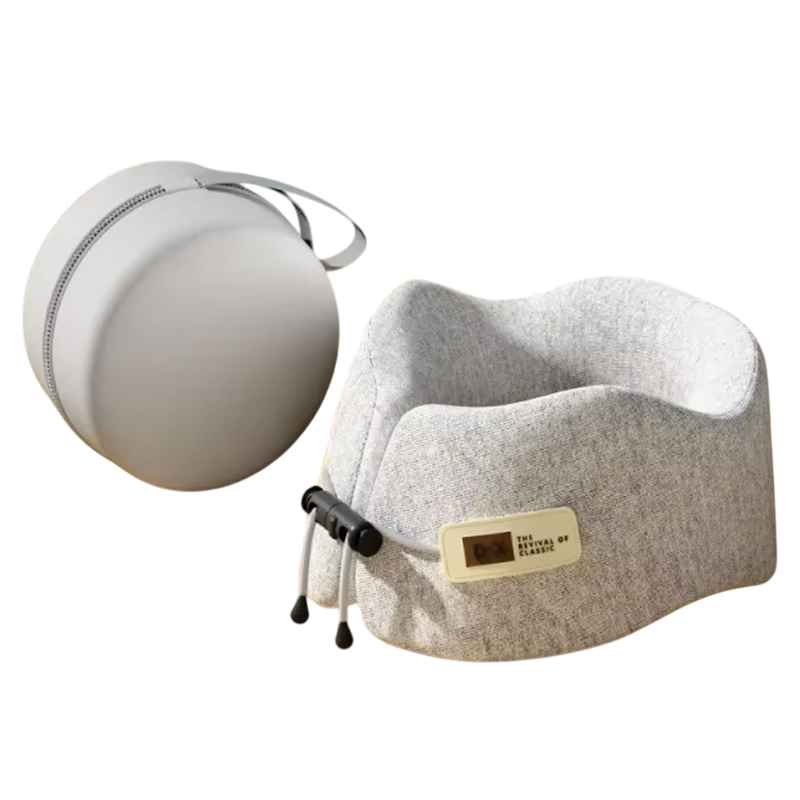
Cervelle is a travel pillow with a Double C memory foam core that wraps around the neck, front and sides, and closes with an adjustable buckle. It is used on planes, trains and in cars. The memory foam core shapes to your neck as it warms, then slowly returns to its shape when you take it off.
Several details connect to the steps above. The quick-release buckle loosens or tightens, so you can set the fit to your own neck and unclip it when you are done. A luggage strap clips the pillow to your bag while you walk. It weighs 0.35 kg (about 0.77 lb). The cover is a breathable poly-viscose-elastane blend that comes off for machine washing.
The box contains the pillow with its Double C memory foam core, a removable machine-washable cover, an adjustable quick-release buckle and a luggage attachment strap.
 In this guideCervelle$69.99View
Fit and setup checklist
A pillow only helps if it sits correctly. Run through this list before you board, not after takeoff.
- Place the pillow around your neck with the open or buckle side at the front.
- Close the buckle or closure, and adjust until the pillow holds without pressing on your throat.
- Sit back against the seat and let your head rest on the cushion.
- Check that your chin has a place to rest if your head tips forward.
- Turn your head each way to confirm you can still look around.
- Release the buckle when you stand or walk, or clip the pillow to your bag.
Field note
Try the pillow at home in a dining chair before your trip, and check the return conditions on the product page before you use it. You will see whether the closure, side walls and cover suit you.
Common mistakes and whether a travel pillow is worth it
- Buying for how you sleep in bed, not how your head moves in a seat.
- Ignoring the closure, so the pillow slides when you shift.
- Choosing a cover that cannot be removed, which complicates cleaning after a trip.
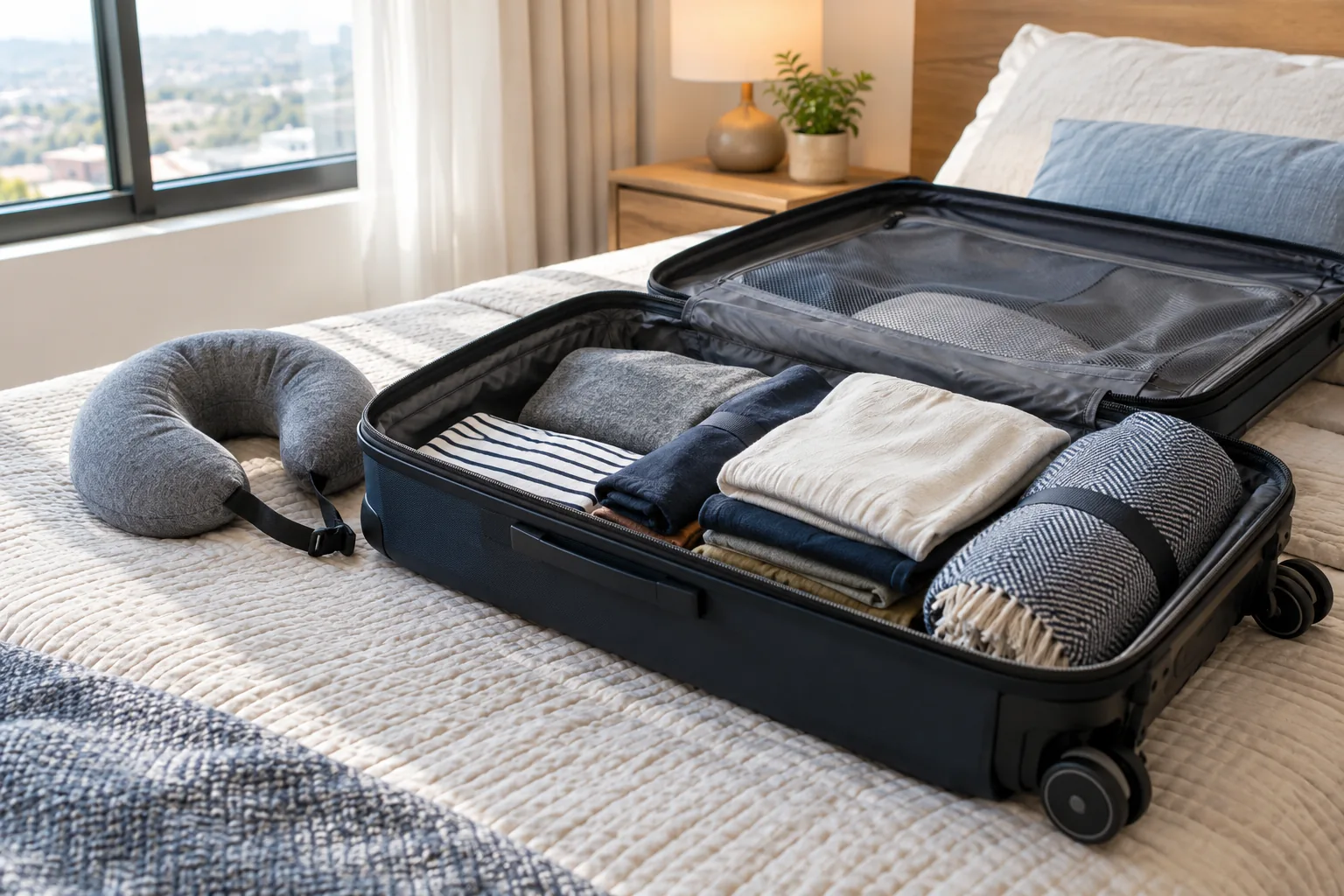
- Skipping the carried size, then finding the pillow does not fit the bag.
- Inflating an air pillow too full, which can push the head forward.
- Wearing a neck pillow in crowded aisles, where it can catch on bags.
A travel pillow is worth buying if you sit upright for long stretches and want your head held in one place. If you rarely doze in transit, a rolled sweater or a small inflatable may be all you need. When your trip type, sleep position and packing space all point to a structured shape, a recommended travel pillow in the foam wraparound style fits that list.
To compare more cushions and support shapes beyond travel, browse our Pillows & Neck Support collection.
Care and storage between trips
Check the care label or manual first. For a pillow with a removable cover, unclip the cover and machine wash it after the trip, then let it dry fully before storing. Keep the foam core out of damp bags, and avoid storing it under heavy items that keep it compressed for months.
Store inflatable models with the valve open so the inside can dry out. Wipe the valve and cover before folding them away.
Once you are home, a steady bedtime setup helps you settle back in. Our guide to the Scandinavian sleep method shows how to set up two duvets in one bed.