
Thermal Brush vs Blow Dryer Brush: Which Fits Your Routine
A blow dryer brush moves hot air through a brush head to dry and shape damp hair. A thermal brush heats the barrel for styling. Use this guide to match one to your hair.
The Calvedon Team
November 6, 2026 · 8 min read · Updated November 17, 2026
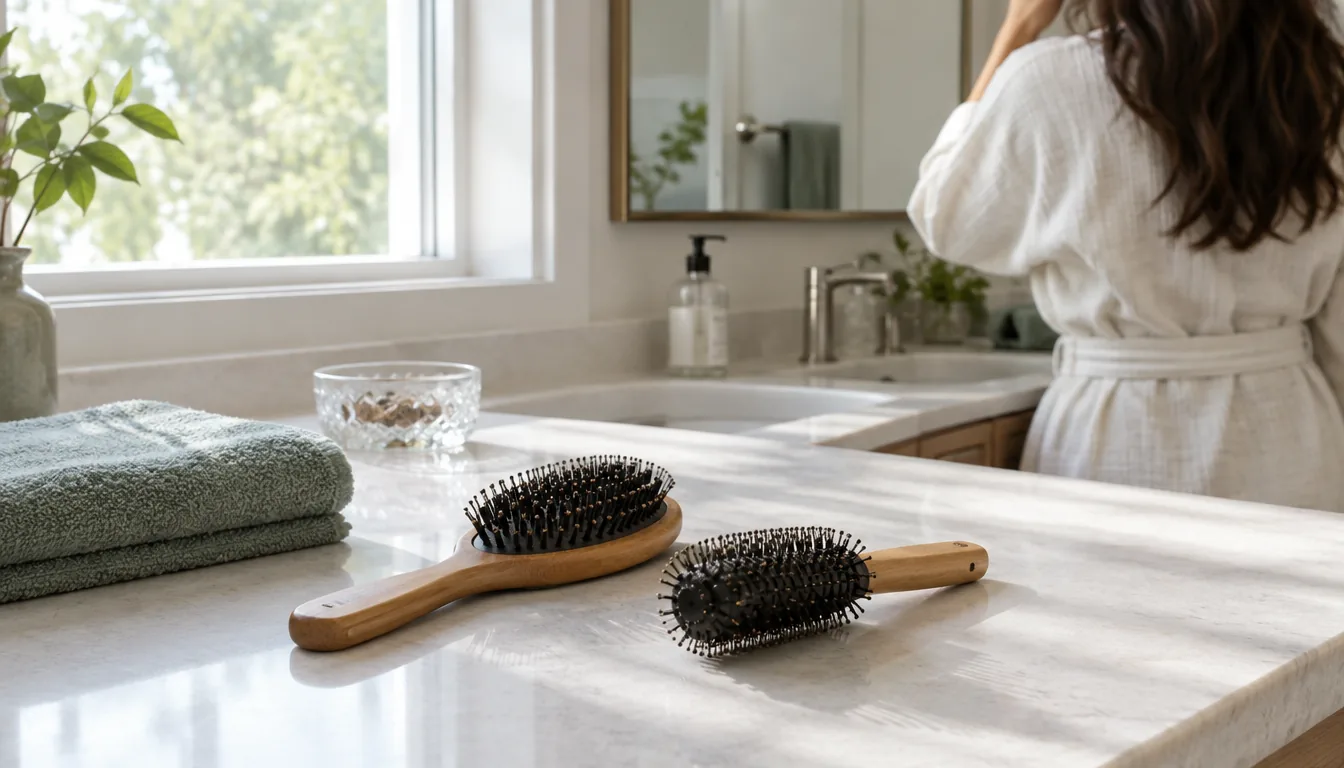
In the thermal brush vs blow dryer brush choice, the difference is where the heat comes from. A blow dryer brush pushes hot air through and around a brush head, so it dries damp hair and shapes it in one pass. A thermal brush heats the barrel itself, so it suits dry or nearly dry hair that you want to smooth, curl or add volume to.
If your routine starts with wet hair after a shower, look at the blow dryer brush first. If you already dry your hair and only want a finish, a thermal brush fits that step. The sections below compare both tools side by side and end with decision steps.
Thermal brush vs blow dryer brush: side-by-side table
This table sums up how the two tools differ. Check the manual for your exact model, because designs vary.
| Factor | Blow dryer brush | Thermal brush |
|---|---|---|
| Heat source | Hot air moved by a motor | Heated barrel, often ceramic or metal |
| Main job | Drying and shaping damp hair | Styling hair that is dry or nearly dry |
| Starting point | Towel-dried hair | Hair already dried, unless the manual says otherwise |
| Contact with hair | Air plus bristles or attachment | Hot surface touches each section |
| Typical uses | Blowouts, volume at the roots, soft curls | Smoothing, flipping ends, touch-ups |
| Technique | Brush through while air flows | Wrap or glide a section, then release |
| Extra gear | Often an outlet and a cord | Corded or cordless, depending on the model |
How each tool delivers heat
Airflow in a blow dryer brush
A blow dryer brush works like a hair dryer built into a round or oval brush. A motor moves air past the heating parts and out through the head, so the air carries heat to the hair as you brush. Because airflow does the drying, damp hair is the normal starting point.
Some models let you pick a heat setting, and some use attachments for different jobs. This is why a single handle can dry, add volume or curl.
Barrel or plate heat in a thermal brush
A thermal round brush heats a barrel, usually a ceramic or metal one, and hair is wrapped around or pulled across it. The warmth comes from direct contact, so the barrel shapes each section as it passes. Some designs use infrared heat or ionic coatings, so read the product page to see what a given model uses.
Straightening brushes work on a related idea, with heated plates between comb teeth instead of a round barrel. These follow the logic of a flat iron, so our guide to good hair straighteners explains plates, width and heat settings worth checking.
Drying vs styling: what each tool is for
The simplest way to separate them is by job. A blow dryer brush is a drying tool that also styles, while a thermal brush is a styling tool that can add a little drying at the end. If you start with soaking or very wet hair, a barrel brush is the wrong first step, and the manual for your model says what moisture level it expects.
For a traditional blowout, you would use a hair dryer and a round brush together, one in each hand. A blow dryer brush combines those two tools into one handle. A thermal brush replaces only the brush, so you still dry your hair first with a separate hair dryer.
For finishing, a thermal brush lets you flip ends, smooth a flyaway section or lift the roots without re-wetting anything. A blow dryer brush can do those too while the hair is still damp, which means the finish happens during drying.
Thermal brush vs curling iron
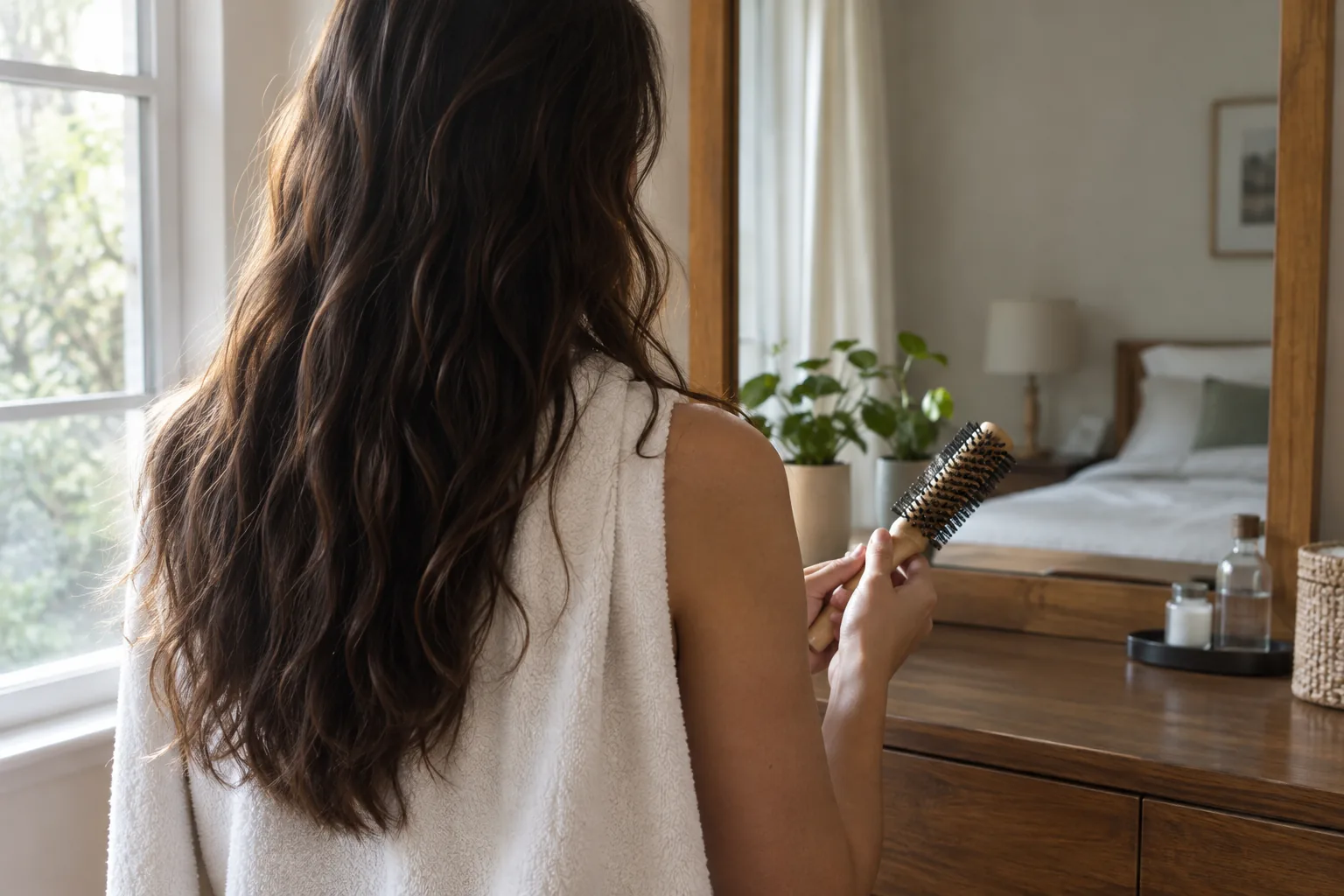
A curling iron holds a section on a narrow heated barrel with a clamp, so it is a tool for defined curls. A thermal round brush has bristles, so it detangles and smooths as it shapes, and the result is usually a looser bend or lifted roots. Choose the curling iron for tight, set curls on dry hair, and the brush for volume and softer movement. Both need heat protectant and a heat-resistant surface to rest on.
Hair type, texture and time
Match the tool to your hair and to how much of your morning you want to spend on it. The table below gives a starting point, not a rule.
| Hair situation | Starting choice | What to check |
|---|---|---|
| Fine, straight hair | Blow dryer brush with a lower heat setting | A setting dial and a low starting level |
| Thick or coarse hair | Blow dryer brush with a higher setting, or a thermal brush on dried sections | Heat settings and barrel width |
| Wavy hair | Either tool, based on whether you dry or touch up | Attachment shapes and section size |
| Curly hair | Blow dryer brush with a drying nozzle or a thermal brush for stretching small sections | Low heat, detangled hair, heat protectant |
| Frizz-prone hair | Thermal brush on small, dry sections | Smooth sectioning and heat protectant |
| Prefer a single tool | One handle that dries and styles | Attachments you actually use |
Fine vs thick hair
Fine and thick hair rarely want the same heat. A dial with several levels lets you set the temperature to your hair, and a lower level is the usual place to start. Increase one step at a time only if the manual allows it.
Curly hair
For curly hair, decide whether you want to stretch curls or keep them. A drying nozzle on a blow dryer brush handles drying while keeping the pattern, and a thermal brush can smooth individual sections after they are dry. Detangle first and apply a heat protectant before any heated step.
Time
Total routine time depends on your hair length and thickness more than on the tool. A two-in-one handle replaces switching between a hair dryer and a brush. A thermal brush adds a second step after drying, so plan for both stages.
Decision steps: pick your tool
Work through these steps to settle the thermal brush vs blow dryer brush question for your own hair.
- Start with your hair state. If you begin with damp hair, lean toward a blow dryer brush. If you begin with dry hair, lean toward a thermal brush.
- List the styles you want. Volume and soft curls point to hot air. Smoothing and ends point to a heated barrel or plates.
- Check the heat settings. Choose a model with a low setting for fine hair and more than one level for mixed textures.
- Check the cord and power. A rotating cord helps with the back of your head, and a cordless body helps when you travel.
- Count the attachments. Choose heads you will actually use.
- Read the cleaning instructions. Hair and product build up on both tools, and our guide to cleaning hair brushes, including heated and thermal brushes covers the routine.
If you land on a blow dryer brush, one option from our dryers, irons and light-based hair devices collection is described below.
A blow dryer brush with several attachments
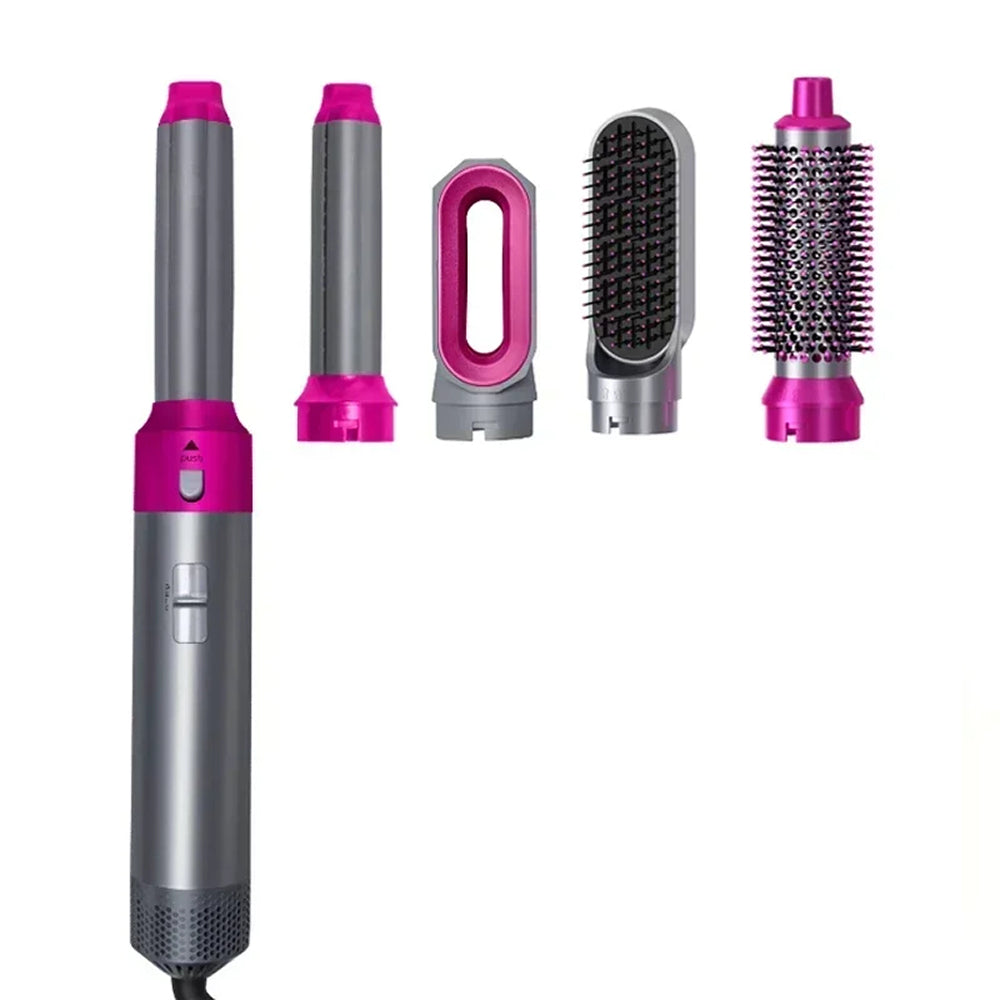
TressWave is a hot air styling brush with five tools that share one handle. You click on the head you want, turn the dial to a heat setting, and dry, curl or smooth your hair. The twist dial has three heat settings, which suits fine or thick hair.
The box holds the styling brush, two air curling attachments, a hot air volumizing comb, a soft detangling brush head and a pre-shaped drying nozzle. The 1000W motor moves air through whichever attachment is on the handle. The cord rotates 360°, and the plug and voltage match your country's outlets.
 In this guideTressWave$119.99View
How to style hair with a thermal brush
These steps assume dry or nearly dry hair. Follow the manual for your model, and unplug or switch off the tool before you set it down or clean it.
- Detangle and apply a heat protectant to dry hair.
- Divide your hair into sections and clip away the layers you are not using.
- Turn the brush on and choose a low heat setting, if the model has one.
- Take a small section, place the barrel at the roots and slowly move it down the length.
- For curls or flips, turn the brush at the ends and hold briefly, then release.
- Let each section cool before you touch it or move on.
- Finish with a light brush through and place the tool on a heat-resistant surface.
Field note
Work in small sections and keep the brush moving. Holding any heated tool in one spot concentrates heat on the same strand.
A cordless straightening brush option
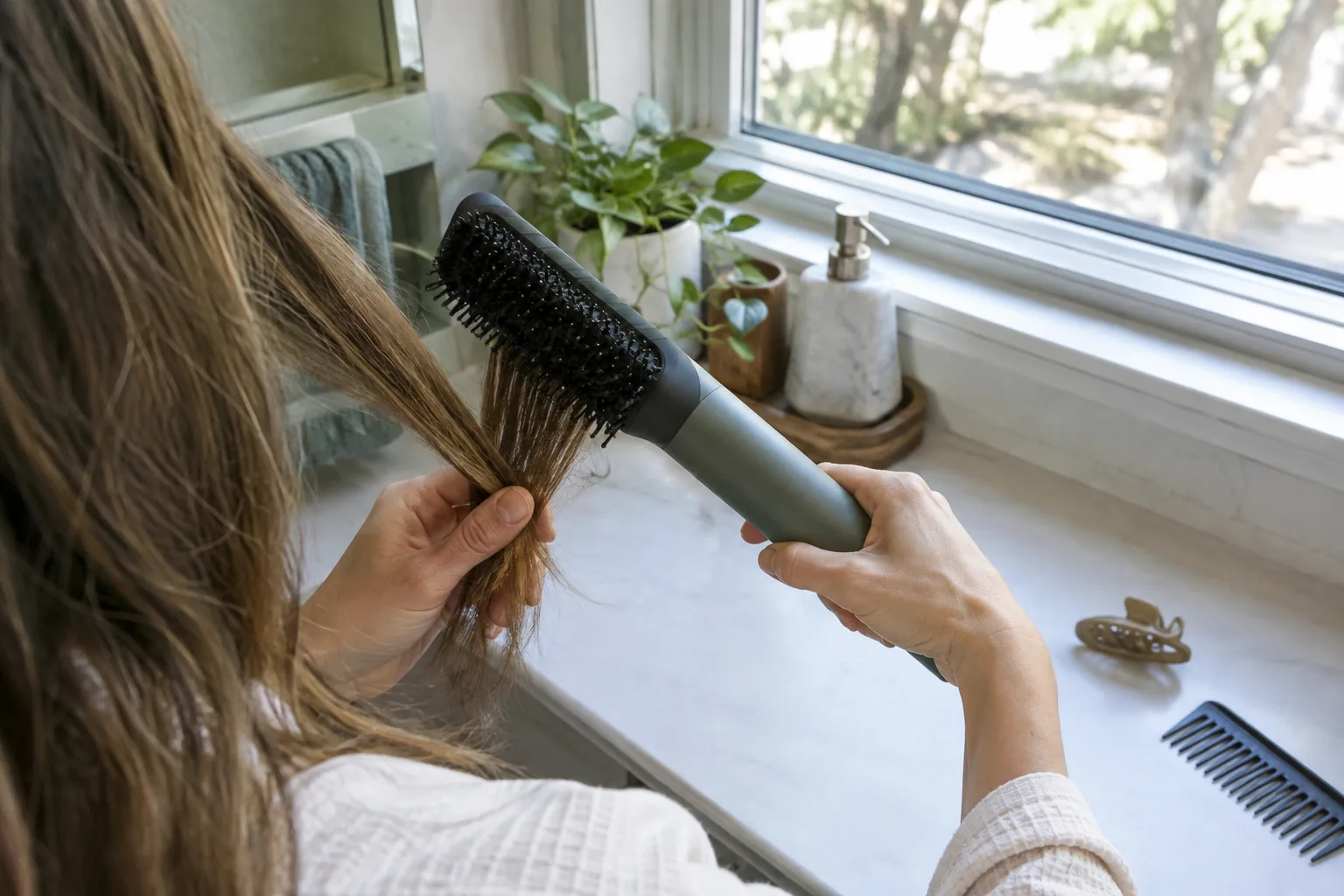
If your goal is smoothing rather than drying, a straightening brush sits close to a thermal brush. SleekWisp is a cordless straightening brush with ionic ceramic plates and an anti-scald comb. You charge it with the included USB Type C cable, choose one of three heat levels, and read the temperature on the LED display. Then you glide it through your hair section by section.
It weighs 210 grams (about 7.4 oz), which makes it practical to pack in a handbag or carry-on. The dual-barrier comb design keeps the heated plates away from your scalp and face as you work, but keep the tool moving and follow the manual.
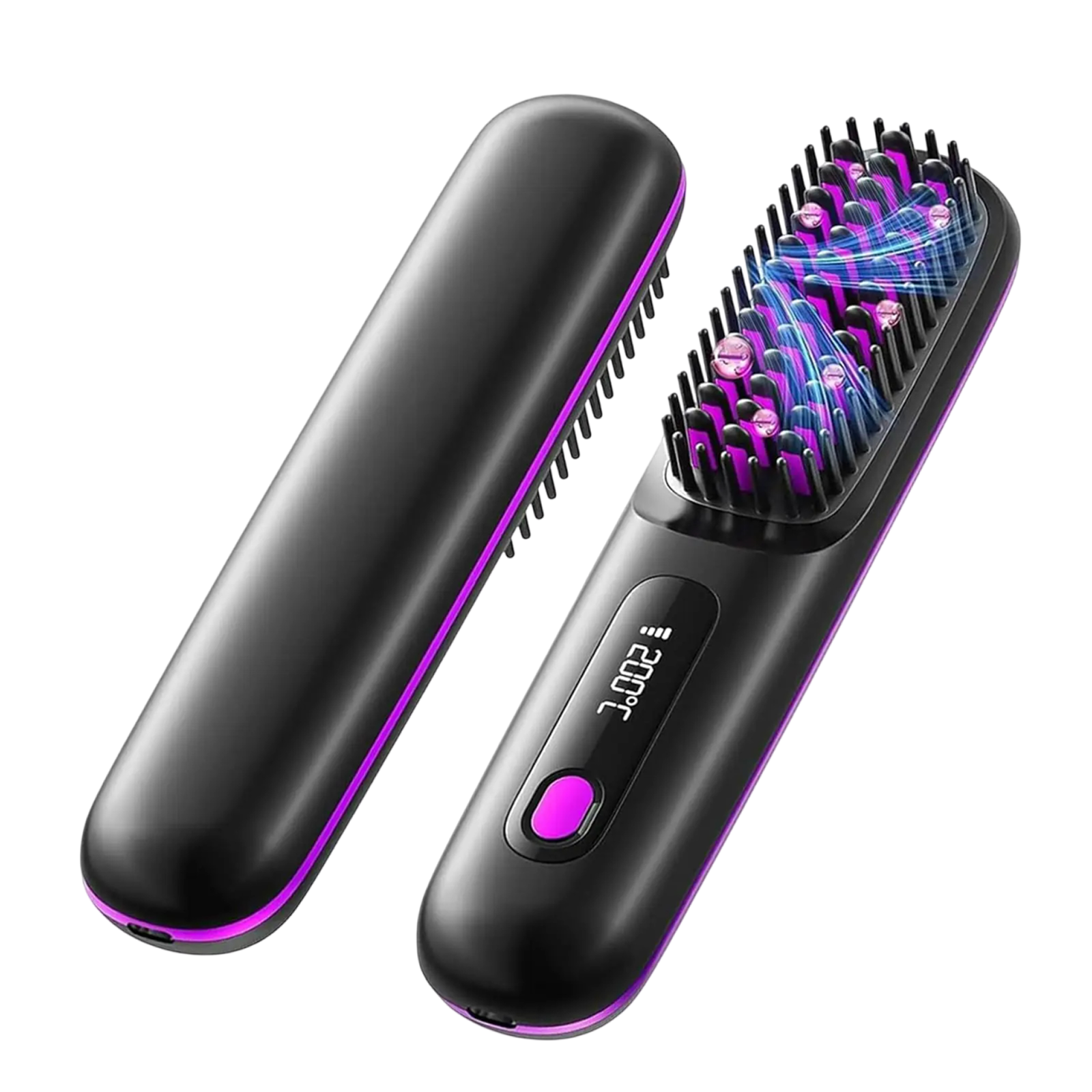 In this guideSleekWisp$59.99View
Heat, care and common mistakes
How hot does a blow dryer get compared to a heat gun?
A heat gun is a paint-stripping and workshop tool designed to run far hotter than tools made for hair. It is not a hair tool, and you should not use it on hair. Use only tools made for hair, and follow their manuals.
Blow-drying or air drying
Either routine works if you handle heat with care. If you blow-dry, use a heat protectant and a lower setting, and keep the tool moving. Some people let hair air dry partway, then finish with a brush. For concerns about scalp or hair condition, ask a stylist or a licensed professional.
Common mistakes
- Starting a thermal barrel on soaking hair.
- Using the highest setting by default on fine hair.
- Wrapping large sections, which leaves the inner layer unstyled.
- Skipping heat protectant.
- Leaving hair and product on the barrel or bristles, which is why regular cleaning matters.
- Going to bed with damp hair after a rushed dry. Our pre-bed drying routine covers that step.
The ionic and ceramic terms on product pages can be confusing too, and our explainer on ionic vs ceramic breaks them down. Once you know your starting hair state, your styles and your heat settings, the thermal brush vs blow dryer brush decision comes down to drying and shaping in one pass or styling as a separate step.
Frequently asked questions
Keep reading
 Dryers, Irons & Light-Based Hair DevicesRound Brush and Hair Dryer: A Step-by-Step Blowout Routine6 min read
 Dryers, Irons & Light-Based Hair DevicesFlat Irons Hair Straighteners: How to Choose Width, Heat and Plates8 min read
 Dryers, Irons & Light-Based Hair DevicesGood Hair Straighteners: Plates, Width and Heat Settings to Check8 min read